 After seeing Zero Dark Thirty as part of my annual Best Picture nominee binge, I exited the theater with just one thought on my mind: I’d hate to be a guy trying to start a new country in this day and age.
It’s a fun daydream, wondering what it would be like to find a deserted island no one’s yet claimed, plant a flag, invite a few friends to be charter citizens, and then declaring yourselves the new sovereign nation of YourNameHereLand. You build at least one impressive building to house your government. You write your own constitution that justifies everything you’ll ever want to do and lays down basic ground rules to protect you from any future jerks who emigrate inside your borders or grow up inside your school system. You figure out how your economy should function, discern your people’s industrial skill sets, plan for necessary imports, form relationships with all the right countries, fill out the proper UN forms, and you’re off and running. You could probably find how-to guides on the Internet that fill in your knowledge gaps, complete with instructional YouTube videos. How cool would that be?
Long-term answer: sooner or later, not very. Continue reading




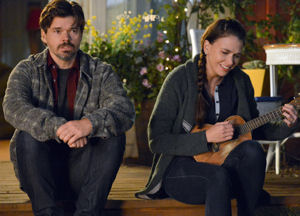 If you’re among those fans rooting for Michelle to remove foot from mouth and get back in good graces with her surfer bartender oceanographer near-beau Godot, this week’s new episode of Bunheads, “The Astronaut and the Ballerina”, may have been a disappointment for you. Michelle approaches, makes bad jokes, digs her hole a little deeper, gifts him with a copy of Finding Nemo because of oceanography, but then watches her baby steps to forgiveness interrupted by a surprise visitor: her deadbeat brother Scotty!
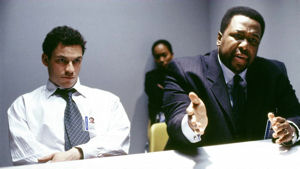 After months of squeezing in an episode here and there whenever time permitted (which was rarely), tonight I finally finished watching all five seasons of The Wire. It’s sixty episodes of the most politically charged, complicated, incisive, meaningful, profane, discomfiting, provocative, challenging television I’ve ever seen. It’s not a show for everyone, but following the storylines of its roughly eight thousand different characters (give or take three) became an unprecedented adventure that part of me secretly hopes has left me scarred and ruined for any other TV show or fictional tale that dares to try impressing me in the future. Its multifaceted examination of life on the streets of Baltimore at every level made my own lower-class upbringing look like the life of a prince, put my comparatively benign hometown in perspective, and has made it hard for me to read any local crime news without wondering how much they’re not telling us.
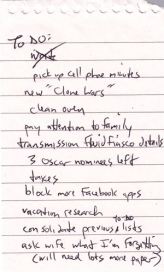 Longtime MCC readers are surely aware of my addiction to writing lists. I confess before you now that my lifelong listaholism extends beyond what you’ve seen here in the past. In our household I appointed myself Chief Grocery List Officer. I keep track of all the comic books I own on Excel sheets. From 2000 to the present I’ve kept Notepad files of every single movie I’ve seen in theaters. Many a Post-It has died in service to my never-ending attempts to remember what chores and repairs need to be done around the house. All the odd sights we see on vacation each year have been made possible by lists, though those are always collaborative efforts with my wife the list-enabler.
 My annual quest to see all the Best Picture Academy Award nominees continued last weekend with the scrappy indie competitor of the lot, Beasts of the Southern Wild, a magical-realism fable about stubborn penury-dwellers who do their best to ignore ripped-from-the-headlines natural disaster and do whatever they want whether it’s healthy for them or not. Not since No Country for Old Men has a film left me so depressed.
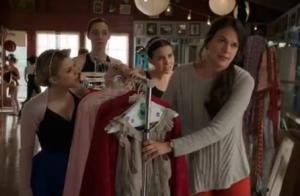 Tonight’s new episode of Bunheads, “I’ll Be Your Meyer Lansky”, saw the return of one of Michelle and Fanny’s most dreaded mutual enemies: their accountant, Eric (Ron Butler). Though they ostensibly “run” a dance studio as an awkward partnership, neither of them is big on bookkeeping, finances, profit margins, simple math, or numbers in general. Consequently, the studio is tanking hard, thanks to the Nutcracker fundraiser disaster, Fanny’s reluctance to bill many of her poorer students, and both instructors’ penchant for canceling classes on a whim and/or plot device.
 I hadn’t originally planned to see Quentin Tarantino’s Django Unchained. Unlike many of my longtime Internet peers, his films aren’t an automatic draw for me. Though Reservoir Dogs has been a qualified favorite of mine since college, the rest have been a mixed bag. His previous work, Inglorious Badwerds, was a mature, complex, riveting film about WWII and about the role of film in WWII, but was hampered by Brad Pitt’s Kentucky-fried B-movie brigade who snuck in from the direct-to-video good-ol’-boys revenge flick next door. From the trailers, Django looked to me like a 2-cool-4-school blaxploitation Western. Call it Shaft in Texas or Black Grit. Despite the talented cast involved and the joyous responses from the critical majority, it didn’t really sound like my kind of movie.

 The advance screening of Broken City I attended last night was made possible through a marketing promotion run by a social-event notification service, from which I’d considered unsubscribing months prior. Lucky for me, their very first useful offer crossed my path at just the right time.
 Some evenings at the theater, the marquee only has two choices: $200 million action blockbusters and $5,000 found-footage camcorder flicks. If you’re yearning for a simple, mid-sized film with no CGI monsters and at least two famous actors, Broken City offers an R-rated option for fans of crime drama in general and tough-talking guys in particular. It’s a capable primer for anyone who’s never seen a film about political scandal or government corruption, and comfort food for those who can’t get enough of watching little guys taking down big dogs.