
Christopher Nolan, never one to keep it simple. (photo credit: charlieanders2 via photopin cc)
Developed from a script by Nolan’s brother, Jonathan Nolan, the sci-fi movie is a time travel epic based on scientific theories developed by American physicist Kip Thorne, who will executive produce. The press release announcing the distribution news describes the film as “a heroic interstellar voyage to the furthest reaches of our scientific understanding.”
For now, that’s all we have. Collaborations between the Nolan brothers have yet to create dreadful results. Their track record tells us it won’t be a straightforward ninety-minute shoot-’em-up. Based on the precedents set by Nolan and Nolan’s innovative narrative explorations of dreams, memory, anarchy, class warfare, and Robin Williams’ serious side, I expect a time travel tale crafted under their watch to be a mind-bending reexamination of that sci-fi subgenre in a way we didn’t already see in Back to the Future, Bill and Ted’s Excellent Adventure, the various conflicting Terminator products, and several hundred Star Trek episodes.
If the Nolans plan to incorporate the work of a real physicist into the script instead of borrowing from other time-travel films (which is typically how those films are made), you can bet that at some point half the audience will be lost, no matter how hard they concentrate, no matter how many pages of grad-school textbook exposition are seamlessly woven into the dialogue.
The proactive solution is obvious: if we intend to enjoy Interstellar to the fullest, then we have nineteen months to subject ourselves to as many intensive, self-taught science classes as possible before it arrives in theaters. Continue reading

 Whereas the first two editions of “MCC Q&A” were comprised of tongue-in-cheek responses to odd queries and sentence fragments that brought search engine users to my humble doorstep, this one is devoted to a single question from an MCC commentator. Far be it from me to allow the plaintive mumblings of nameless strangers to monopolize this slightly recurring feature.
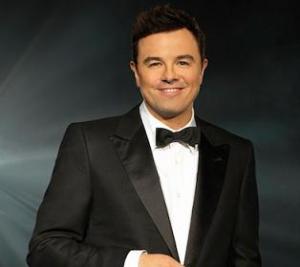 As my seventh annual foray into this personal fun ritual, presented below anyway is the timeline of events as I witnessed them during tonight’s ABC telecast of the 85th Academy Awards. All quotes are approximate as best as possible without benefit of rewatching, cribbing from national news outlets, or much proofreading. Our household does not own a DVR; all recollections are a combination of short-term memory and notes hastily handwritten on a legal pad, not a copy/paste reassembly of a distracted live-tweet flood. When I’m seated in front of a TV, I’d much rather watch than type.
 I already explained
  As mentioned previously, I’ve seen every Academy Award winner for Best Picture from Wings to The Artist, retaining varying degrees of recollection. I’ve also seen every Best Picture nominee from 1997 to the present, and have embarked on a slow, low-priority, extra-long-term quest to see how far backwards in time I can extend that date. Right now I’m stalled on 1996 because the DVD version of Secrets & Lies is out of print, secondhand copies are priced much higher than I’d prefer, and I’ve never caught it airing on a cable network. Someday I’ll overcome that obstacle and continue down the line in reverse order.
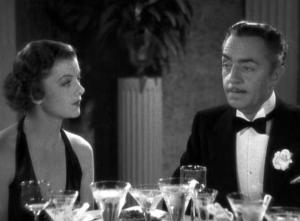 Everyone who watches the Academy Awards has their disagreements with the Academy. Not one living person would look at the complete list of Best Picture nominees and argue that the right movie has won every single year since Wings. We all have our own ideas about what makes one movie better than other movies. The idea of separate, distinct works of art being forced to compete against each other in an expensive dog-and-pony show may seem crass, especially considering the plethora of talents, genres, budgets, studio systems, sweetheart agent deals, and marketing departments that are fundamentally incomparable in any reasonable aesthetic discussion. Big-budget award-grubbing machines and high-minded shoestring-budget indie flicks shouldn’t be fighting each other; they should be working side-by-side, providing viewers with a vast assortment of reasons for film lovers to remain invested in the medium, and maybe even teaming up for the occasional crossover.
 After
After  It’s that time of year again, the week before the Academy Awards ceremony, when anyone who pontificates online about movies to any degree is compelled to reflect on Oscar winners of years past and mine their history for writing material in lieu of relevant news updates and Oscar pool handicapping. I suppose I should add my two cents quickly, lest I risk being last in line, though I’m sure all mine are taken by other Oscar fans now, if not necessarily in matching quantity. Years ago I completed a lengthy quest to see every Best Picture winner from Wings to the present, just to see what would happen. Some I’ve long since forgotten, some were travesties I wish I could unsee, but many were worthwhile experiences.
 If you fear the aging process and aren’t remotely excited in seeing your possible future as a senior citizen writ large without any regard for your afterlife possibilities, chances are Michael Haneke’s new film Amour will be your scariest encounter of the year.
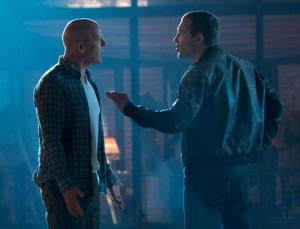 To Die Hard or not to Die Hard: that is the question now before me.
 I saw Silver Linings Playbook over a week ago and have been procrastinating saying anything about it because it’s tough to express my opinion without ruining the ending. I suppose the ads aren’t that coy about the gist of the film, but part of my enjoyment was derived from that rare feeling of having no idea what would happen next. Under the guidance of director David O. Russell (previously appreciated for The Fighter and Three Kings), I wasn’t sure if Playbook would be predictably atypical or deceptively Hollywood about the strange relationship between its May/December starring couple. Would it end in for-your-Oscar-consideration breakup and tears? Would it opt for the mushy happily-ever-after ending, complete with gratuitous dance party at the end? Would the payoff be just-good-friendship, like Lost in Translation? Would they both die horribly of movie cancer? My second-guessing was useless against it.
 Each year since 2009 my wife and I have made a day-long date of visiting Keystone Art Cinema, the only dedicated art-film theater in Indianapolis, to view the big-screen release of the Academy Award nominees for Best Live-Action Short Film and Best Animated Short Film. Results vary each time and aren’t always for all audiences, but we appreciate this opportunity to sample such works and see what the Academy of Motion Picture Arts & Sciences deemed worthy of celebrating, whether we agree with their collective opinions or not. A few of the past marathons have varied wildly in quality, but this year’s proved a superb bunch. To be honest, this is the first time in memory that I’ve preferred the live-action contenders to their animated colleagues.
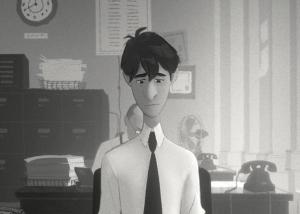 Each year since 2009 my wife and I have made a day-long date of visiting Keystone Art Cinema, the only dedicated art-film theater in Indianapolis, to view the big-screen release of the Academy Award nominees for Best Live-Action Short Film and Best Animated Short Film. Results vary each time and aren’t always for all audiences, but we appreciate this opportunity to sample such works and see what the Academy of Motion Picture Arts & Sciences deemed worthy of celebrating, whether we agree with their collective opinions or not.
 After seeing Zero Dark Thirty as part of my annual Best Picture nominee binge, I exited the theater with just one thought on my mind: I’d hate to be a guy trying to start a new country in this day and age.

 My annual quest to see all the Best Picture Academy Award nominees continued last weekend with the scrappy indie competitor of the lot, Beasts of the Southern Wild, a magical-realism fable about stubborn penury-dwellers who do their best to ignore ripped-from-the-headlines natural disaster and do whatever they want whether it’s healthy for them or not. Not since No Country for Old Men has a film left me so depressed.
 I hadn’t originally planned to see Quentin Tarantino’s Django Unchained. Unlike many of my longtime Internet peers, his films aren’t an automatic draw for me. Though Reservoir Dogs has been a qualified favorite of mine since college, the rest have been a mixed bag. His previous work, Inglorious Badwerds, was a mature, complex, riveting film about WWII and about the role of film in WWII, but was hampered by Brad Pitt’s Kentucky-fried B-movie brigade who snuck in from the direct-to-video good-ol’-boys revenge flick next door. From the trailers, Django looked to me like a 2-cool-4-school blaxploitation Western. Call it Shaft in Texas or Black Grit. Despite the talented cast involved and the joyous responses from the critical majority, it didn’t really sound like my kind of movie.
