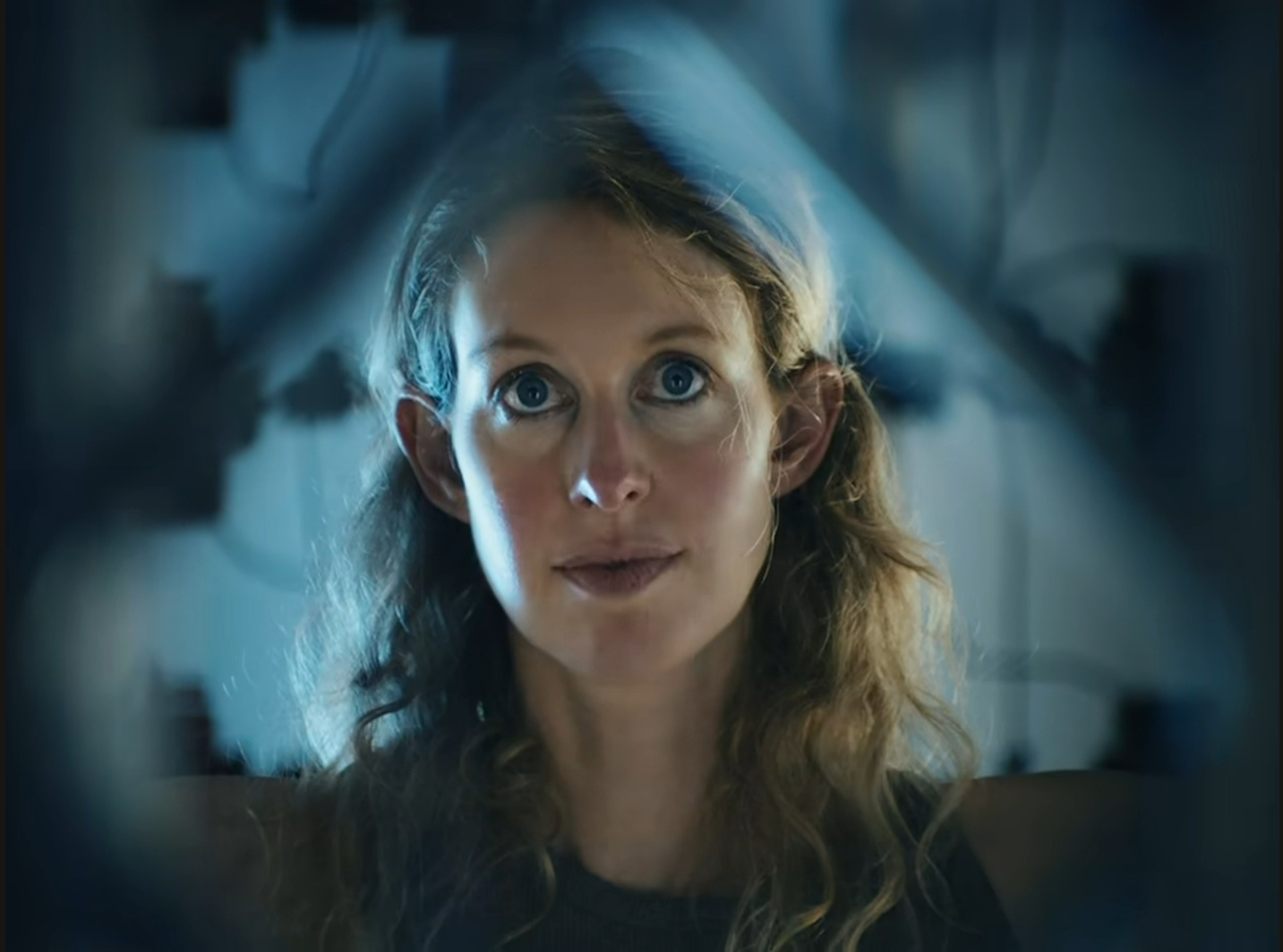
Elizabeth Holmes, founder of the erstwhile Theranos, which is a portmanteau of “ER” and “Thanos”.
Previously on Midlife Crisis Crossover: Once in a blue moon I’ll see a documentary in theaters! Usually those blue moons wax during Oscars season, then wane for the other forty-odd weeks of the year. Last month I already met my non-Oscars documentary quota for the decade with Linkin Park’s half-doc/half-concert film, but that one was a special occasion for music fandom. Here we are again with another brand new doc, and for one of the oldest moviegoing reasons of all: it’s The New Movie No One Online Will Shut Up About — not critics, not entertainment sites, not even my local comic shop, which doesn’t sell movies and stands to gain nothing from bringing it up.
Last weekend You Can See Everything was the #2 film at the American box office, right behind the big video-game flick and well ahead of the entire Halloween-season horror parade. It mesmerized critics when it premiered last month at Telluride Film Festival, who were converted into its front-line proselytizers and have now preempted all other programming and trains of thought just so they can keep extolling its surreal nesting-doll structure of eye-popping twists within twists with as few spoilers as possible. I’ll try doing the same here, because it is worth walking into unwittingly, but there is just so much to it.
The Gist: I never paid close attention to the headline news about Elizabeth Holmes, her ostensible medical-gizmo company Theranos, or her conviction for multimillion-dollar investor fraud. Apparently she wasn’t entirely honest about the company’s sole product, a magical box that could test a single drop of blood and detect all of a patient’s current maladies, diseases, allergies, anxieties, genetic defects, broken bones, ugliest moles, what day they’ll die, every victim they’ve ever murdered, where they were on 9/11, and their favorite Smurf. Odds are you know far more about the case than I do. If you don’t, a few years ago the Hulu miniseries The Dropout gave Holmes the true-crime treatment and earned an Emmy Award for its star Amanda Seyfried, once the ghostly Lily Kane who pressed her still-living friend Veronica Mars to pursue the truth of her murder. I haven’t seen that miniseries either, but it’s an option if you want to do any homework before seeing this.
Other optional supplements include the previous works of its co-director and interviewer, Nathan Fielder, the star and creator of the Comedy Central business-advice satire series Nathan for You, in which he tries to help ailing businesses by giving them terrible advice (I watched the first three episodes in the 18 hours leading up to my Everything screening); and HBO’s The Rehearsal, in which a slight variation on his low-key, socially awkward, fake-buffoonish persona tries to help people through dramatic reenactments (haven’t seen it, but the season-2 finale’s already been spoiled for me). Joining him in his latest endeavor is co-director Lance Oppenheim, the young yet prolific documentarian whose narrative debut Primetime is also still in a few theaters. Between the two of them, they’ve largely constructed Everything as a self-contained work with enough backstory covered for clueless newcomers like me to figure it out.
The duo aren’t here to retell the entire history of the case or take us step-by-step through all her crimes and sins, which were already covered in journalist John Carreyrou’s 2018 exposé Bad Blood: Secrets and Lies in a Silicon Valley Startup (more optional homework for ya!). This project wasn’t even their idea: Holmes approached A24 along with her techbro husband Billy Evans, whom she met after the investigations into her began, and with whom she now has two kids. Like many a reality-show character who wants us to think they’re normal, they were looking for someone to film their everyday life and ostensibly show everyone the “real” Elizabeth Holmes, because everyone knows reality shows are awesome at humanizing and flattering their stars, and at winning over skeptics who totally aren’t hate-watching.
Fielder and Oppenheim negotiated their way into the assignment, and were permitted into Holmes’ beachside home to observe her family in the weeks leading up to the date when she’d have to report to prison and begin serving her sentence. Holmes hopes to make the case that she’s just a misunderstood genius if only the rest of the world could get to know the real her, to the extent that anyone is ever “real” when they’re aware of cameras on all sides and have had plenty of time to write and rehearse their public version before the first clapperboard claps.
The familiar faces: Yes, there are two. Besides Holmes and Fielder, I mean. One of them is Wolf Man‘s werewolf Christopher Abbott, who’s easy to overlook because of his bland face, which makes him perfect for the task that’s assigned to him late in the game.
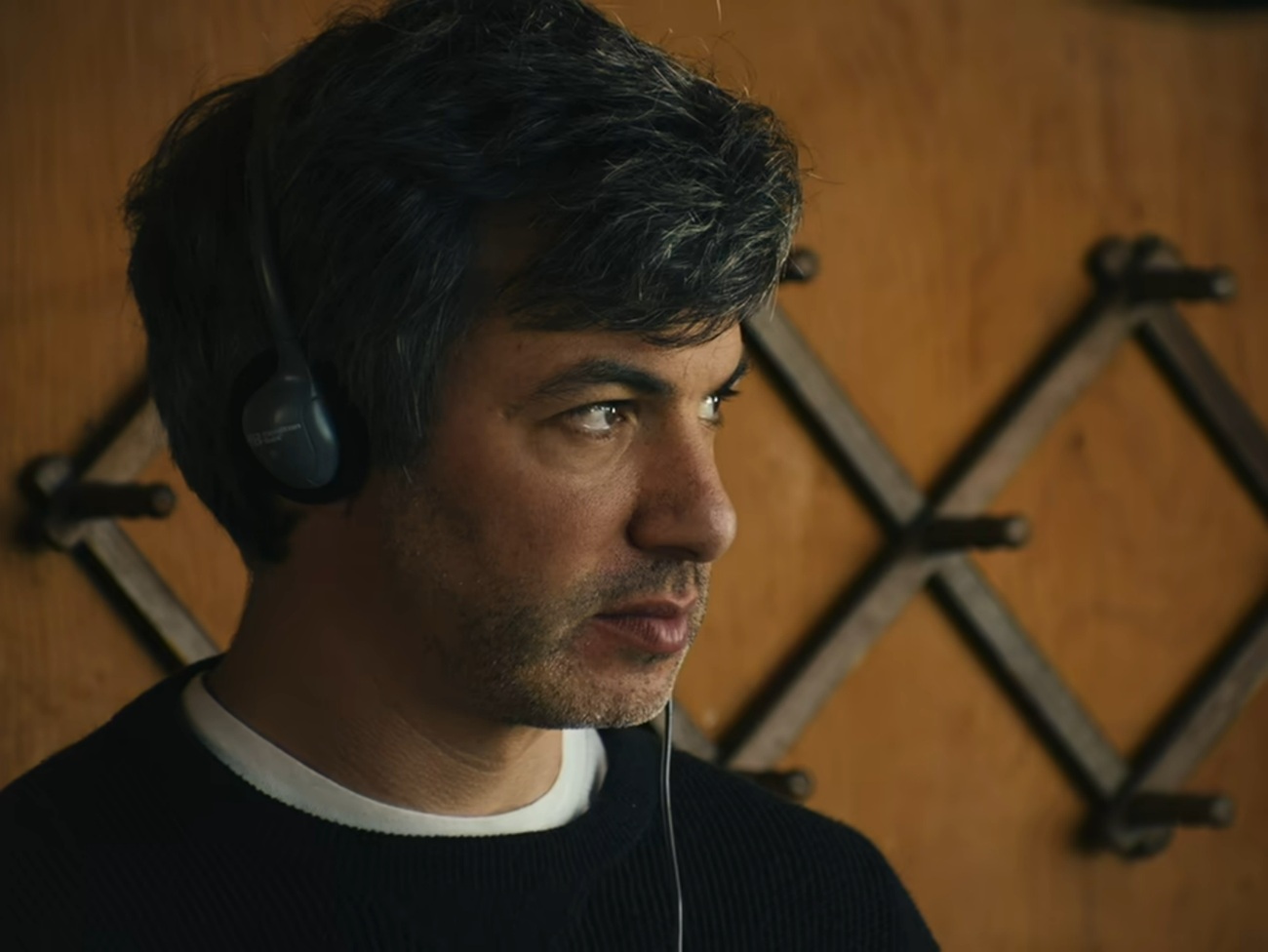
Would you let this reality-show eccentric stay in your guest house for weeks and ask you probing questions about your criminal trial?
The Impressions: As the film’s first half casually leads us through Holmes’ final days of freedom, shes’s seemingly impenetrable as she feigns unlimited candor, unless she’s really that shallow and contains no depths. She maintains that glazed facade with her Kewpie-doll eyes through Fielder’s lines of questioning, discomfiting intrusions, drawn-out silences, and occasional disagreements with Billy, who’s slightly less inscrutable under his manly veneer of protectiveness. He might be looking out for the woman he loves more than anything in the world and/or he might be guarding his most precious long-term investment. Each have their modes of selective honesty and insistence of innocence despite all the investigations, accusations, whistle-blowing, court proceedings, and so on.
If anyone can crack their exteriors, Fielder might just have been the perfect man for the job. First appearing onscreen as a creepy lurker in the Holmes rental-home’s shadows during equipment setup, he’s spent years honing his particular mindset into a model of fearless inquisitiveness with little notice of boundaries and no gauge for cringe factor. At times he’s so close to unlocking the gate to her own seeming neurodivergence. You can just barely see a flicker in her unwavering gaze, her exterior temperature ticking up a degree or two as she gets more comfortable around him. He’s hardly a therapist, but at the very least, for her he becomes a rare listener trying to reach her where she is…or so we might infer as we argue amongst ourselves what’s pure versus what’s performative. Again, remember the huge crimes. The part where Billy eventually gets fed up with their interloping guests definitely feels true.
You Can See Everything keeps sidled up to its subject and to us, intimate to the point of suffocation in some rooms — framed in old-timey 4:3 aspect ratio and hazy with the sort of muted palette that reminds me of 1970s brown-paneled suburbia. The crew seem to make surprisingly little use (if any) of parabolic mics, so (mostly) only authorized voices are captured. The cameras, led by Primetime cinematographer David Bolen, dwell at length on intense facial closeups, often held in silence for several seconds too long on purpose while we wait to see who wins each staring contest, whose tics break their poker faces first. Meanwhile in another dimension, Ari Balouzian’s edgy Jonny-Greenwood-vs.-Stravinsky score imagines the sound of billions of neurons concocting new fabrications, sometimes implies menace where none is visible to the naked eye, and makes Fielder’s stares seem all the weirder till they stop being the weirdest happenings in the room.
And that’s mostly just the film’s first half. We didn’t feel the three-hour runtime zipping by as new surprises are revealed, each one cascading into the next and daring us to blink and miss something, even in the calmer segments. Among my favorite tidbits we can’t talk about because spoilers:
- Evans’ current projects
- Relatives’ job histories
- The “Who’s on First” study
- Collective Soul’s “Shine”
- The prison camp sign fit for tourist selfies
- The A.I. use
- The trippiest scene I refer to in my mind as “Holmesception”
…and the question haunting Fielder at the end, when the observer becomes the observed and one wonders if he might’ve been self-imposing a few boundaries without realizing it, or at least without admitting it to us.
Long after the cameras retreat, Holmes remains in prison, Billy remains free, and we’re left to ponder the fascinating complications of PR damage control, final-cut control, self-control and control of others; to debate the truths doled out, the self-unaware secrets, and who knows or feels what when; and if it’s really any different from any other documentary where stoic impartiality might be just another facade. Either those other filmmakers don’t think about it, or they hope you don’t. Trust Fielder to goad everyone into the most unflattering lights, himself included, no matter how uncomfortable that might make him feel for once.
The end credits? No, there’s no scene after the You Can See Everything end credits, but the Special Thanks section includes members of the directors’ families and Academy Award Winner Emma Stone, whose connections help make certain happenings happen.
Discover more from Midlife Crisis Crossover!
Subscribe to get the latest posts sent to your email.
