
It is written! Hollywood Reporter and other official sources have confirmed the Bat-hunt is over: Academy Award Winner Ben Affleck will be following in the footsteps of Christian Bale as the new Batman in the still-untitled DC film, allegedly a Man of Steel sequel even though Batman has more box-office clout, sells more comics, and inspires funnier memes.
Tag Archives: movies
Wizard World Chicago 2013 Photos, Part 1 of 3: Costumes Not from Marvel, DC, or Star Wars
This past Saturday my wife and I spent quality time together once again at this year’s Wizard World Chicago. Due to multiple complications we had to settle for one-day admission, but we did our best to cover the territory and explore our entertainment options as much as we could within our limitations. We appreciated that the show floor was expanded across two levels to allow for much wider aisles and consequently a lot less congestion and personal-space invasions than we endured in years past.
We kick off our mandatory photo collection with, of course, a selection of costumes. It’s one of my favorite parts of any given convention. I’m frequently impressed by the effort and creativity that fellow fans pour into these lavish recreations, whether they select characters that everyone else is also trying on, or they go obscure and bring to life the characters known only to a few hardcore lucky ones.
The average movie geek knows of King Arthur and his knights, wielding requisite coconuts for accurate horsey clip-clopping sound effects, possibly retrieved from the beak of some nearby swallow.

“Elysium”: Heavy are the Burdens of the Exosuit Gladiator
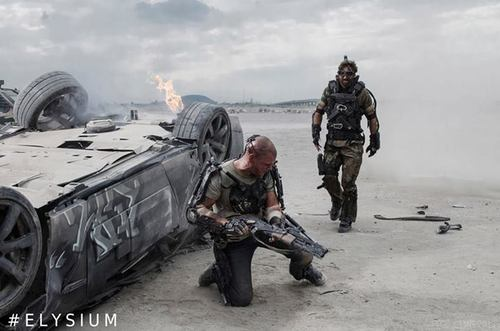
Answering the most important question first: no, Elysium is nowhere near as revelatory as writer/director Neill Blomkamp’s previous film, the Oscar-nominated District 9. Constructed with four times the budget and ten times the star power, Blomkamp’s latest Important-Message sci-fi actioner is just as visually accomplished, but delivers a fraction of the impact.
America Lines Up to Preorder Sharknado Quality Merchandise
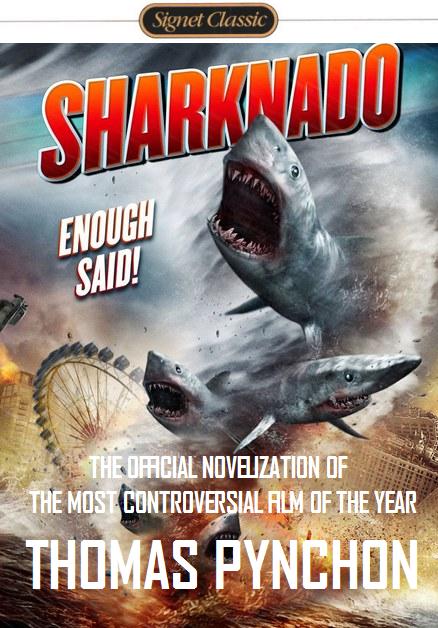
When my wife and I threw caution to the wind and watched Sharknado on Syfy (as previously reported), we were curious to know why the internet wouldn’t shut up about it. By the time the end credits sped by and Ian Ziering was transformed from a 90210 also-ran into a chainsaw-wielding hero soaked in shark fluids, we had learned an important lesson and vowed never to be curious about anything ever again. We also didn’t speak to the internet for three days.
Outside our household, Sharknado-mania is allegedly sweeping the nation. Consider the following recent headline stories:
So There’s a Scene During “The Wolverine” End Credits
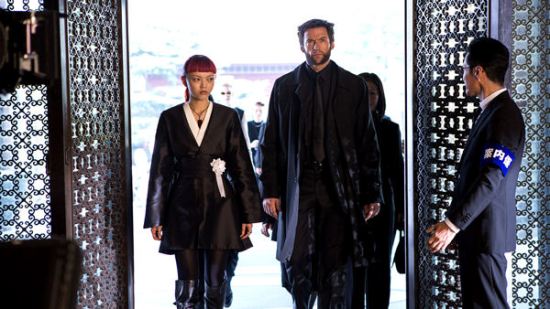
For the first 2½ acts, The Wolverine is an engrossing slow-burn psychological thriller about the crippling effects of grief, powerlessness, sin, rediscovering your life’s purpose, and stranger-in-a-strange-land culture clash, all nestled inside an outlandish but well-oiled martial-arts flick that easily outclasses the previous Wolverine solo film. That being said, this is a rare instance of a Marvel film that would’ve functioned more cohesively if super-villains had been kept out of it altogether.
“Superman/Batman” vs. “Batman/Superman”: Can This Odd Couple Be Saved?
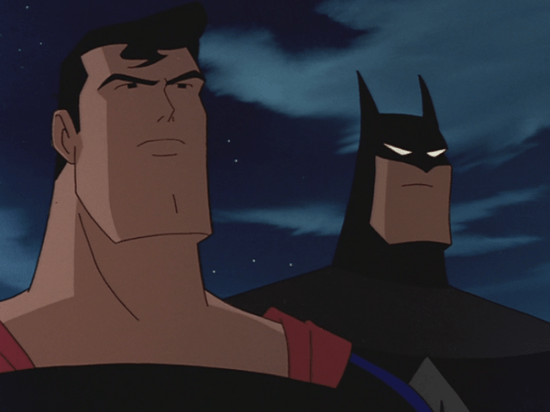
They’ve worked well together before, but never in live-action. Can two super-heroes share a tentpole film without driving each other crazy?
Despite my previously expressed skepticism, I wouldn’t say the announced Superman sequel with Batman in it — or vice versa — is guaranteed to fail. I’m sure much deliberation and debate will occur behind the scenes as the filmmakers work together for the common goal of creating the best possible superhero moneymaking machine. If it’s bearable to watch more than once, then hey, bonus points.
What could possibly happen? I can imagine several outcomes, not all of them great.
San Diego Comic Con 2013: the Best and Least-Best News as Seen from the Cheap Seats
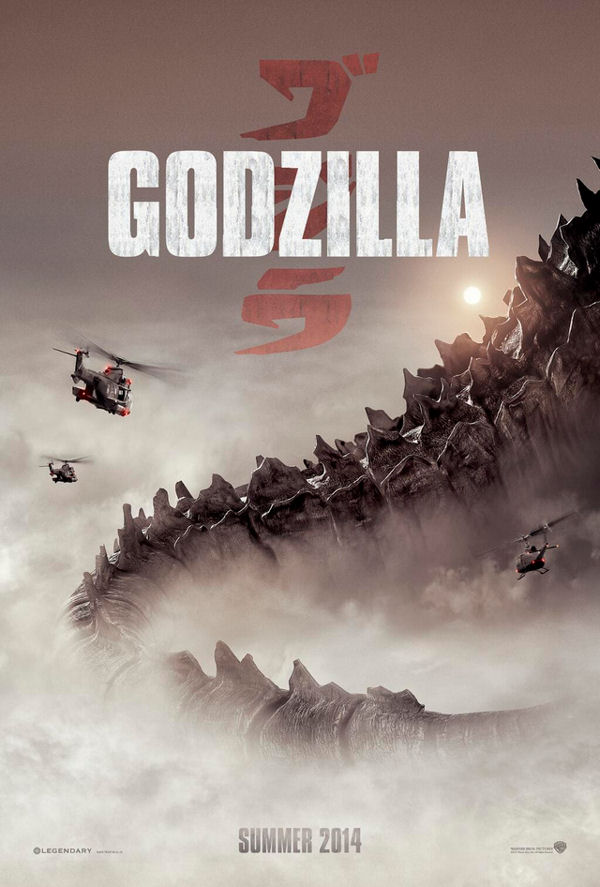 Anyone who followed the entertainment news as it flooded out of 2013’s San Diego Comic Con found themselves shocked and surprised by two or more bombshells dropped from above, as the movie and comic book companies kept trying to top each other with the Greatest Announcement of All.
My general impressions follow of what stood out to me most, whether good, bad, or both.
“Turbo”: Routine Underdog Learns Lessons about Perseverance, Self-Promotion
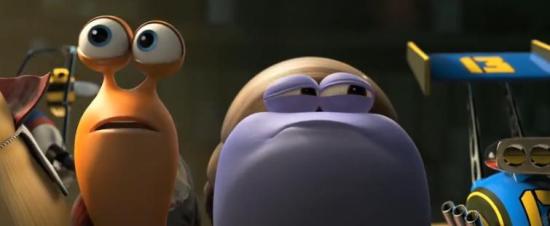
Reynolds. Giamatti. Turbo.
That was my first impression, anyway. It’s rare that Hollywood sets a big-budget motion picture in my hometown. The last film to use us, Eagle Eye for a single action scene, couldn’t be bothered to research our geography on Google Maps and pretended that 72 West 56th Street is a crowded financial district like downtown Boston. Local pro tip for future filmmakers: 72 West 56th puts you in a highly tree-filled residential area between the wooded Butler University campus and the trendy bars of Broad Ripple.
So There’s a Scene During the “Pacific Rim” End Credits
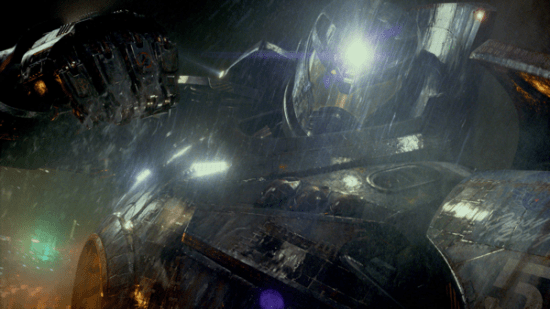
Midlife Crisis Crossover calls Pacific Rim the Best Men’s-Adventure Film of the Year!
So far, anyway. I’ll admit my opinion is skewed because I don’t watch every theatrical release. I certainly didn’t see 6 Fast 6 Furious, which might or might not be a five-star men’s-adventure flick for all I know, but the 6F6F trailers showed a sign of weakness: two female characters sharing a scene, even though it was a scene of angry pummeling. Not counting extras or one-line background fillers, I counted four female characters in all of Pacific Rim: two robot drivers; one of those drivers as a young girl; and, with 95% certainty, at least one of the monsters. None are onscreen at the same time, spaced apart by several men and minutes, just as you’d expect from an awesome boys-club tale of manly-man heroics.
“Sharknado” Watched on a Dare

Shark from above!
Last week during our vacation, all the chatter from our usual signals was about two different travesties. One was covered on a dozen different TV channels and therefore lost me on oversaturation principle. The other was the latest Syfy Original Movie, Sharknado. It’s not often that my wife and I watch something on TV simply because other people won’t shut up about it, but we were curious as to why this particular cheesy production received more attention than Syfy’s last fifty slapdash offerings. I can report with a straight face that it met my exact expectations, by which I mean UGH.
Seven Happy Reasons for Much Ado About “Much Ado About Nothing”

Wesley and Fred, together at last!
Seriously, in a world where romantic comedies are either R-rated sexfests or direct-to-video beneath-my-notice nice tries, how many true romantic comedies are the studios releasing theatrically per year now? Two? Maybe three? Of which I see zero per year at most. According to my personal moviegoing records, the last romantic comedy I paid to see writ large was 2003’s Down with Love. It’s been a while.
Yes, There’s a Scene After the “Monsters University” End Credits
 Honest truth as of this evening: Midlife Crisis Crossover calls Monsters University “the Best Film of the Year”! So far. Yes, the year is young. Proclamation subject to change without notice, possibly during Oscar preseason.
Seriously, though: looking back at my last several summer action blockbuster spectacular experiences, this Disney/Pixar reboot of Revenge of the Nerds requires less forgiveness of plot holes; boasts characterization truer to the original cast; doesn’t overwrite wide-scale urban destruction with perfunctory offscreen-slapdash-reconstruction happy ending; refuses to play bait-and-switch with its antagonists; and, like Toy Story 3, is a surprisingly top-notch sequel with its own topic to explore rather than acting as a hollow, superfluous extension of the original.
“Man of Steel”: a Farewell to Role Modeling
 In Part One of this two-part non-epic, I covered what I liked best about Man of Steel, the new Superman treatment from director Zack Snyder, producer Christopher Nolan, and screenwriter David S. Goyer. As I mentioned there, despite the team’s successes on numerous fronts, I thought the film had room for improvement.
Those examples require a courtesy spoiler alert because a few of my complaints happen toward the film’s back end and involve major plot points. If you plan to see it pristine and unspoiled for yourself, abandon the reading trail here, and I look forward to seeing you next time.
…
…
Onward, then, to what I liked least:
“Man of Steel”: the Greatest Zack Snyder Film of All Time
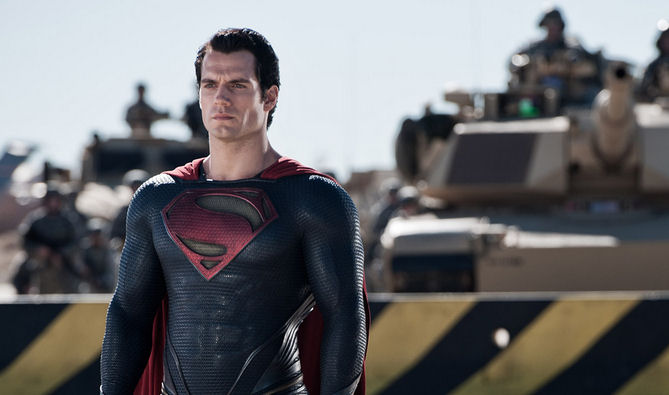 After seeing Man of Steel today, that sweeping statement occurred to me and required two minutes’ worth of thought to confirm. It helps that I’ve seen all six of director Zack Snyder’s feature films to date, even the animated ones.
Of the other five: Dawn of the Dead was not bad for what it was — arguably his second-best, but not quite essential. 300 broke visual ground and set new standards for faithfulness in graphic-novel-to-movie adaptations, but makes me snicker in a few extraordinarily hammy spots. I’m glad someone finally adapted Watchmen so we could all say it’s been done and move on with our lives, but its brazen attempt to do for super-hero movies what the original miniseries did for super-hero comics didn’t have nearly the same intellectual impact or coherence. Legend of the Guardians: The Owls of Ga’Hoole admirably demonstrated the visual techniques of 300 for an all-ages audience, but was incomprehensible unless you’d read the entire book series beforehand and could spot the dozens of pages’ worth of vital backstory that was excised for the big screen. (Thankfully my son was a fan and explained the crucial omissions.) And Sucker Punch was a skeevy, disjointed orphanage for outlandish sci-fi skirmishes that had apparently wandered away from the nonexistent movies that spawned them.
In comparison to the rest of the Snyder oeuvre, Man of Steel stands tall as his boldest achievement yet.
Minimal Notes from Inside Our Spoiler-Free Bunker
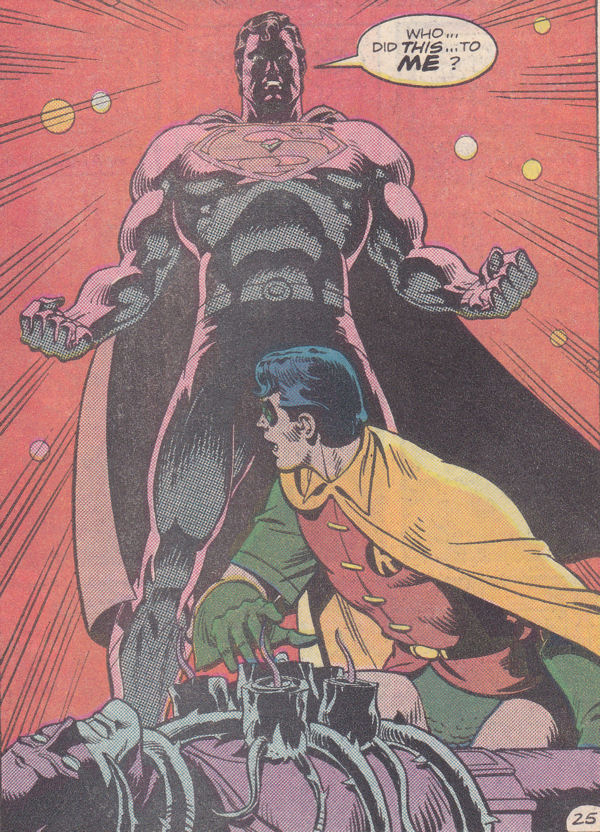
Superman doesn’t like it when someone ruins his story. (Art by Dave Gibbons from 1985’s Superman Annual #11.)
I’ve shunned Twitter’s outbreak of Man of Steel discussion groups. I’ve refused to read any reviews, whether they carry a courtesy spoiler alert or not. I’m even temporarily resisting the urge to read what I understand from several sources (while held at arm’s length, mind you) is a fascinating dissection of the movie by Superman: Birthright writer Mark Waid, a generally awesome comics creator who’s also one of the universe’s most devout Superman fans. Someday I’d love to read his thoughts, but it won’t be this moment.
“Now You See Me”: When Magic Loses Its Magic
 The trailers for Now You See Me telegraph up front that you should expect a twist along the way. You’re teased and beguiled by the possibility of having the wool pulled over your eyes, and taunted for daring to look too closely. Sooner or later, this movie swears it will fool you.
It’s no spoiler, then, to reveal that yes, the movie does eventually have a twist. Despite the fancy stage-magician trappings, its base template is the heist-film genre, in which the viewer’s homework assignment is trying to guess which character will be revealed as a mole or a double-crosser by the end. In that sense, the genre expectations are fulfilled here, including the part where that big revelation turns several previous scenes into utter nonsense if you retrace your steps and rethink them too deeply.
Tips for Running a Movie Theater for Fun and Profit
 The last time my family went to the theater, the ads that ran from the film’s scheduled showtime until the moment the feature presentation began spanned over twenty minutes. Many of the ads were movie trailers, but not all of them. Ads for new cars, smartphones, TV shows, and soft drinks are routine pre-show entertainment while you’re settling into your seat, mentally preparing yourself for temporary phone deprivation, swapping notes with your companions, and consuming your snack too early. Even when it’s ostensibly showtime, the commercial parade isn’t over yet, because a lot of manufacturers want a moment of your time, in exchange for keeping your theater in business.
According to a Hollywood Reporter article this week, the National Assocation of Theater Owners have decided that movie studios are taking advantage of your presence, and it’s all their fault that your time is being wasted. Obviously the owners can’t simply run fewer spots, because then here comes the poorhouse. To that end, NATO members are demanding an amended guideline limiting trailers to a maximum of two minutes, slashed from the current 2½-minute boundary.
We can infer from various statements in that THR article that owners believe this will reduce the length of the pre-show, instead of giving them latitude to run even more ads that eat up the same allotted minutes. They believe that it would be harder for shorter trailers to give away the entire movie, apparently forgetting that most romantic comedies can be boiled down to their primal essence in twelve seconds flat. They seem to think the current limit is a recent abuse of creative power, somehow unaware that trailers in the ’40s and other nostalgic decades could occasionally run well past the three-minute mark, sometimes spooling entire scenes instead of mere quick-cut snippets.
“Star Trek Into Darkness”: Ongoing Reboot Uses Lying as Brilliant Marketing Tool
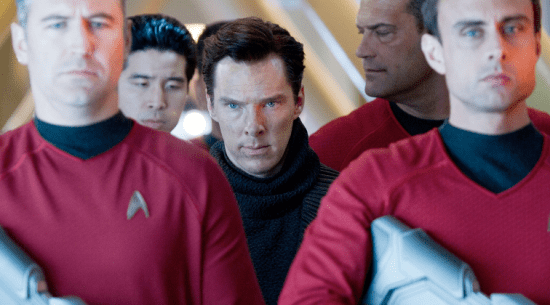
Does Benedict Cumberbatch’s new entourage stand a chance against hordes of delighted Sherlock groupies?
Nick Fury’s Day Off: an “Iron Man 3” Deleted Scene
 (Courtesy spoiler alert: the following segment takes place roughly 100 minutes into Iron Man 3, give or take a repartee exchange. Proceed at your own risk.)
[Nick Fury, Agent of S.H.I.E.L.D., is somewhere far away from espionage — somewhere therapeutic, idyllic, free from strife and warfare and stimulation. Let’s say a random hotel bar in Charleston, West Virginia. Fury is required by company guidelines to take a vacation at least once every ten years. S.H.I.E.L.D. agents may consider most HR guidelines a joke, but HR wins one out of every 1,000 battles. Mandatory decennial vacations was one of them. Saving the world may be a 24/7/365/eternal vocation, but Fury for once has drink in hand and nothing on his mind but sweet, rare solitude.
His eye is fixed on his Product Placement Phone lying on the tabletop. Predator is streaming via Product Placement MovieStreamCloud App thing.]
FURY: Man, I haven’t watched this in ages. The scrawny, four-eyed guy is even stupider than I remember.
[The worst scene in the movie is interrupted by the S.H.I.E.L.D. Priority Alpha Mega Alpha One Supreme Alert shrieking-HD-klaxon app. Fury sighs and taps the SPAMOSA icon. Agent Dodge, a relative nobody of an underling, is on the other line.]
NICK FURY: You just lost two pay grades.
Yes, There’s a Scene After the “Iron Man 3” End Credits
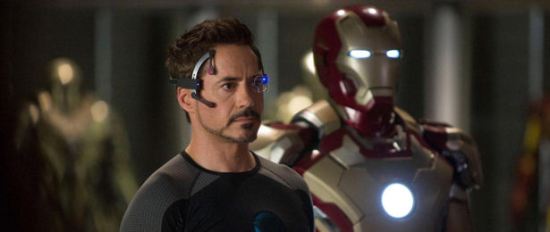
Tony Stark and his sidekick, the Bot Wonder.

