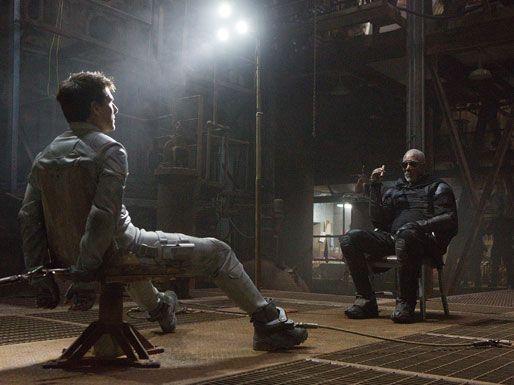
 As with most big-budget sci-fi films nowadays, many viewers will spend half the running time of the new Tom Cruise vehicle Oblivion mentally tallying how many refurbished components they recognize from other sci-fi flicks. That doesn’t automatically make the film bad in my book, but it can be a pervasive distraction that turns my viewing experience into one long Highlights for Children puzzle. (Score one point for every borrowed element you spot! If you spot ten or more, you’re a Certified Movie Maven!) Oblivion is the second feature film from Joseph Kosinski, the director of Tron: Legacy, which was a visual wonderland and a surprisingly classy act considering it was a Disney sequel to a film I’ve disliked since I was ten.
Tag Archives: movies
Will “Man of Steel” Be the First Good Superman Film Since Jimmy Carter Was in Office?
 You’ve seen the newest trailer for Man of Steel that was just released Tuesday evening, right? The one labeled as “Trailer #3”, with lots more Jor-El in it? At least once?
No? Really? No one mentioned it in your social circles? Do you believe in watching movie trailers online? Is your Internet connection above 56K? You don’t hate super-hero movies, do you? Not that I wouldn’t respect that, mind you. My oldest relatives aren’t super-hero fans, either. I’ve included it at the end of this entry, just in case. See, I even saved you a few seconds of Googling.
“GI Joe: Retaliation”: a Big-Budget, Old-Fashioned Military Cartoon

Once again our old friend the White House is humiliated, this time in G.I. Joe: Retaliation.
“Room 237” Asks: Was “The Shining” About ALL the Things?
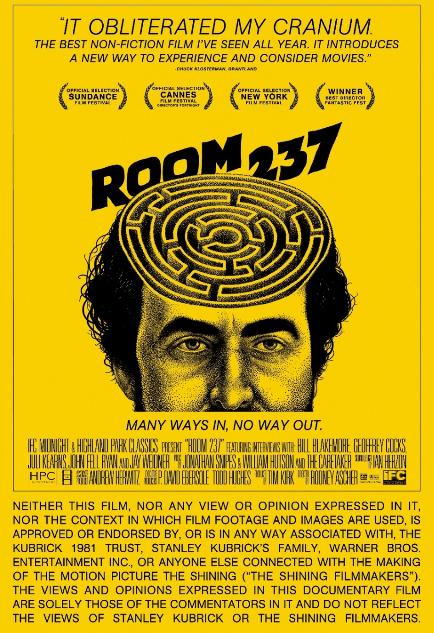 One of my least favorite moments in college was sitting in an intense English class and concentrating on maintaining a straight face while a classmate explained his theory of how the scene from Edgar Allan Poe’s “The Murders in the Morgue” in which a gorilla stuffs a victim up a chimney somehow, in his mind, represented a return-to-the-womb motif. I have no idea how he thought that related to the rest of the story at all. After the few first few sentences my mind turned to white noise in self-defense.
This evening I had flashbacks to that moment while watching Rodney Ascher’s thought-provoking new documentary Room 237, an examination of hidden meanings in Stanley Kubrick’s film adaptation of Stephen King’s novel The Shining. Whether you hated or loved either or both, few would accuse Kubrick of taking a slapdash approach to the project, regardless of the lengthy list of differences between it and the book. Room 237 is narrated by five Shining enthusiasts: ABC News war correspondent Bill Blakemore; playwright/novelist Juli Kearns; author/conspiracy theorist Jay Weidner; history professor Geoffrey Cocks; and Excepter frontman John Fell Ryan. Each one has their own interpretation of the recurring motifs and subliminal imagery buried in the mix, all adding up to a grand design on Kubrick’s part in their minds. The nature of that grand design, though, varies wildly by viewer…very wildly, in this case.
Siskel & Ebert at/and/with/for/vs./because of the Movies
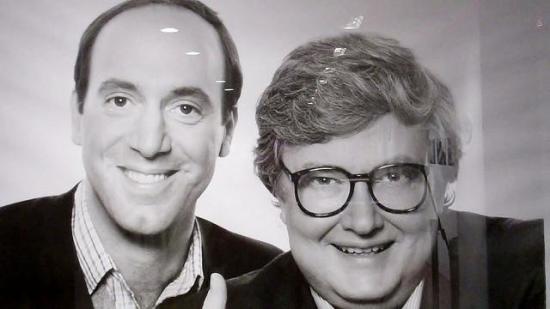
photo credit: Articulate MediaWorks via photopin cc
I can’t remember what impressionable age I was when I first encountered their popular syndicated movie-review series Siskel & Ebert at the Movies. Our local affiliates sometimes aired it on Saturday afternoons, sometimes in the dead of night, and occasionally found it useful for filling any programming holes outside primetime. I’d never seen anything like it; thirty minutes of two movie fans sitting in a deserted theater balcony and telling viewers whether they thought the latest movies were good or bad. It sounded like a dull concept for a TV show. I could imagine the fun if they were brandishing weapons, but just sitting there? Talking? Why?
“White House Down” Trailer: Starring the Jean Grey of American Landmarks
 We saw the White House blow up in Independence Day. We saw it blow up again in 2012. As I type this it’s being blown up yet again in theaters in Olympus Has Fallen. Add your own memories here of the White House’s repetitive history of exploding again and again and again at the movies, whether at the hands of terrorists, invaders, or bad weather.
Now add one more death scene to the list, as director Roland Emmerich, the White House’s arch-nemesis, has directed yet another film in which the poor, beleaguered establishment takes a discouraging beating for entertainment’s sake. In the trailer for Emmerich’s new film White House Down, the President’s workspace is targeted neither by aliens nor by Mother Nature. This time the bombs are coming from inside the country:
Yes, There’s a Scene After “The Croods” End Credits
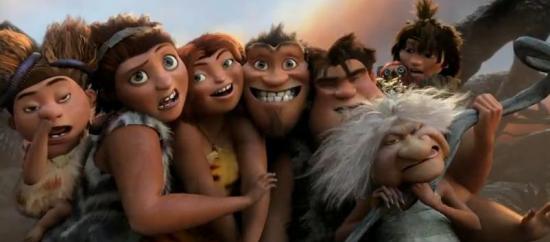 As unimpressed as I was with the trailer, The Croods turned out to be an unexpected delight, with a sincere message for parents who want to protect their children from the world, but struggle with the knowledge that someday that job won’t be theirs anymore. (Says the nervous guy counting down the days until his son begins college.)
Fight Scenes Among Cultures of Pop, Geek, and Rape

This judge handed down the guilty verdict. Clearly this is all his fault. LET’S GET HIM.
We can read about the verdict in the now-infamous Steubenville trial, in which two high school football players have been convicted of rape in a juvenile court, much to the consternation of local football fans, bookies, rape advocates, and anyone who treats sports as their church of choice. Sidebar: the victim probably remains traumatized, possibly even sad. Local newshounds have been unable to confirm if she’s allowed the incident to affect her views on this year’s draft or on March Madness.
“Following”: the Last Gap in Your Christopher Nolan Collection
 As of this weekend, I can now say I’ve seen every full-length motion picture directed to date by Christoper Nolan. In December 2012 his debut, Following, earned a Criterion Collection re-release. Shot in 1998 in 16mm black-and-white, it was minimally restored for this edition, with the original aspect ratio and much of the old-media grittiness retained for historical verisimilitude. Its seventy speedy minutes contain an amateur no-star cast (as well as crowds of unwitting “extras” captured on the fly) and were shot for just five thousand dollars, a bargain compared to other self-financed B&W debut films from the same decade (e.g., Kevin Smith’s Clerks, Robert Rodriguez’ El Mariachi). With such budgetary constraints and no established names involved in the creative process, a casual browser would expect Following to feel like a young-adult vanity project fit only for YouTube.
Shame on that casual browser, then, with so little faith in the Nolan brand name. Continue reading
“Veronica Mars: the Motion Picture”: My List of Demands

File Photos Guaranteed Not to be Used on Anyone Else’s Veronica Mars Article #49: the time she went undercover as a gamer.
I later caught up with the DVDs and stuck with the show to the bitter end, by which I mean I was bitter. Eventually I moved on, but I’m not opposed to revisiting Veronica’s world if the occasion warrants.
The March 22nd issue of Entertainment Weekly summarizes creator Rob Thomas’ planned premise:
Set a decade after the show’s third and final season, the plot has Veronica returning to her hometown of Neptune, Calif., after much schooling (a bachelor’s from Stanford; a Columbia Law School degree) when she gets a distress call from ex-boyfriend Logan: His pop-star girlfriend has been murdered, and he’s the prime suspect.
“Veronica Mars” Kickstarter Success Raises Unreasonable Hopes in Fans of Every Canceled Series Ever
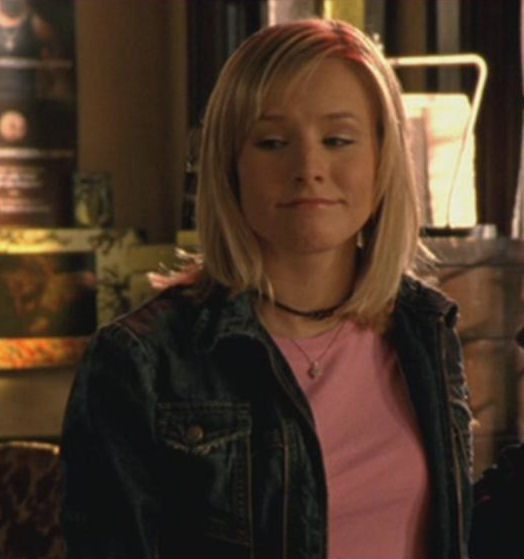 Just as Star Wars fans spent weeks celebrating in the streets at the news that their beloved childhood franchise will return to theaters, so is another fan base breaking out the party hats this week…and, more importantly, their wallets.
In a first for a major-studio intellectual property, Warner Bros. has allowed producer/creator Rob Thomas to use the power of crowdfunding to extract Veronica Mars from mothballs and feature her in a major motion picture. Thomas launched a Kickstarter campaign less than 48 hours ago with a lofty goal of $2,000,000.00. As Thomas describes the conditional deal with Warner Bros.:
Of course, Warner Bros. still owns Veronica Mars and we would need their blessing and cooperation to pull this off. Kristen and I met with the Warner Bros. brass, and they agreed to allow us to take this shot. They were extremely cool about it, as a matter of fact. Their reaction was, if you can show there’s enough fan interest to warrant a movie, we’re on board. So this is it. This is our shot. I believe it’s the only one we’ve got. It’s nerve-wracking. I suppose we could fail in spectacular fashion, but there’s also the chance that we completely revolutionize how projects like ours can get made. No Kickstarter project ever has set a goal this high. It’s up to you, the fans, now. If the project is successful, our plan is to go into production this summer and the movie will be released in early 2014.
Thomas worried for naught. Pledges from tens of thousands of fans reached that formidable goal in a record-setting, jaw-dropping twelve hours, leaving 29½ days for slower fans and curious bandwagon-jumpers to keep adding to the budget in hopes of upgrading the film from niche project to wide-release underdog, maybe even with action scenes and trained stuntmen. At the rate the pledges are accumulating, they’ll have enough money to set it in 2030 and equip Veronica and her dad with robot sidekicks.
DVD Shelving Systems: Where All Collectors Agree to Disagree
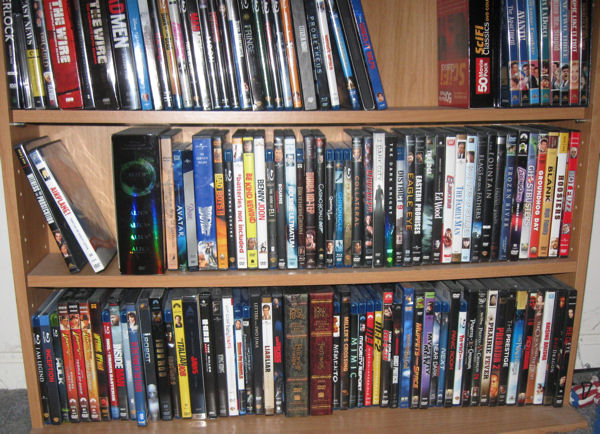
Alphabetization is my friend, but it doesn’t rule everything I own. Honest.
In a brief side discussion after a previous entry, I mentioned in passing how my DVD organizational system suits me but not necessarily my family. If they watched DVDs more often, this might be a more pressing issue. They’re well aware I’m happy to help them locate specific titles, just as any helpful librarian, curator, or clerk might. Besides, if I allow them too much input into the process, they’ll do as they please, sticking any given DVD in any open slot, turning it all into a pell-mell pit of chaos. Everything would be ruined and I’d cry.
Is There Ever a Good Day for “A Good Day to Die Hard”?
 As much as I contemplated bowing out in a previous entry, I just couldn’t quit John McClane. Besides, I had a relative desperate to get away from home for a while, which is one of the commonest rationalizations for doing something you know won’t end well.
Fortunately for impatient viewers, the “plot” portion of A Good Day to Die Hard occupies only the first ten minutes. Legendary neo-cowboy John McClane travels to Russia, where his son, a mere toddler without lines in the original Die Hard, stands trial for murder alongside another political prisoner named Komarov (Sebastian Koch, whom I last saw as the playwright under surveillance in the Oscar-winning The Lives of Others). Little does Dad know that Jack (Jai Courtney, suppressing his Australian accent just fine) is a CIA agent with a plan. Little does Jack know that he’s not the only one gunning for Komarov and the MacGuffin he holds. Little do Komarov’s pursuers know that he’s not as helpless as they think. And everyone but everyone knows sooner or later there’ll be explosions, bullets, and death-defying feats that would kill the average super-hero.
Have You Inventoried Your Directors Lately?
 Easy, time-consuming, stress-reducing exercise for movie lovers who pay too much attention to the credits: brainstorm as many film directors as you can recall; then review their output (IMDb, WikiPedia, your massive home library, wherever) and see which directors you’ve followed the most throughout your life, whether you realize it or not. To simplify the vetting processing, limit yourself to feature films only — no episodes of TV shows, no short “segments” in any movies, no writer/producer/executive producer credits whatsoever. Just the count the movies they directed that received a theatrical release.
My results tallied are as follows, for better or for worse. I’m certain I missed a few. I gave up on cross-referencing pre-1990 Disney films because it might’ve kept me up all night. Perhaps I can edit and follow up another time.
That list, then:
Christopher Nolan’s “Interstellar”: Big-Budget Crowd-Pleasing Holiday Blockbuster About Quantum Mechanics

Christopher Nolan, never one to keep it simple. (photo credit: charlieanders2 via photopin cc)
Developed from a script by Nolan’s brother, Jonathan Nolan, the sci-fi movie is a time travel epic based on scientific theories developed by American physicist Kip Thorne, who will executive produce. The press release announcing the distribution news describes the film as “a heroic interstellar voyage to the furthest reaches of our scientific understanding.”
For now, that’s all we have. Collaborations between the Nolan brothers have yet to create dreadful results. Their track record tells us it won’t be a straightforward ninety-minute shoot-’em-up. Based on the precedents set by Nolan and Nolan’s innovative narrative explorations of dreams, memory, anarchy, class warfare, and Robin Williams’ serious side, I expect a time travel tale crafted under their watch to be a mind-bending reexamination of that sci-fi subgenre in a way we didn’t already see in Back to the Future, Bill and Ted’s Excellent Adventure, the various conflicting Terminator products, and several hundred Star Trek episodes.
If the Nolans plan to incorporate the work of a real physicist into the script instead of borrowing from other time-travel films (which is typically how those films are made), you can bet that at some point half the audience will be lost, no matter how hard they concentrate, no matter how many pages of grad-school textbook exposition are seamlessly woven into the dialogue.
The proactive solution is obvious: if we intend to enjoy Interstellar to the fullest, then we have nineteen months to subject ourselves to as many intensive, self-taught science classes as possible before it arrives in theaters. Continue reading
MCC Q&A #3: How “Kill Bill Vol. 1” Ruined Revenge Flicks for Me
 Whereas the first two editions of “MCC Q&A” were comprised of tongue-in-cheek responses to odd queries and sentence fragments that brought search engine users to my humble doorstep, this one is devoted to a single question from an MCC commentator. Far be it from me to allow the plaintive mumblings of nameless strangers to monopolize this slightly recurring feature.
In my previous entry about Django Unchained, I mentioned in passing that Kill Bill Vol. 1 remains my least favorite Quentin Tarantino film to date. To be fair, that statement was limited in scope since I’ve seen neither Kill Bill Vol. 2 nor Death Proof. I’ll concede that either or both could be worse. As of this writing, I wouldn’t know.
In response, reader Tommy Gardner wrote:
What do you have against Kill Bill? It was a perfect live-action anime. I don’t watch much anime because I think very few of them are really good (Trigun, Ghost In Shell, FMA) and Kill Bill nailed the genre in a very R rated way.
My answer involves the little girl in the above photo. Continue reading
Oscars Blow-by-Blow 2013
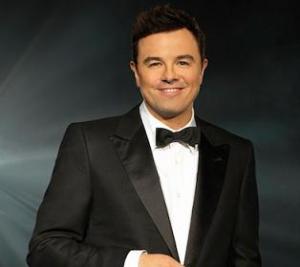 As my seventh annual foray into this personal fun ritual, presented below anyway is the timeline of events as I witnessed them during tonight’s ABC telecast of the 85th Academy Awards. All quotes are approximate as best as possible without benefit of rewatching, cribbing from national news outlets, or much proofreading. Our household does not own a DVR; all recollections are a combination of short-term memory and notes hastily handwritten on a legal pad, not a copy/paste reassembly of a distracted live-tweet flood. When I’m seated in front of a TV, I’d much rather watch than type.
8:30 — Our host Seth MacFarlane takes the stage with minimal intro and his first joke: “The quest to make Tommy Lee Jones laugh begins.” Naturally he jokes that he was only offered the gig after the producers were turned down by everyone else “from Whoopi on down to Ron Jeremy.” MacFarlane seems at ease and on his game most of the night, albeit with occasional edginess, such as a Rihanna/Chris Brown joke that seems more dated than offensive.
My 2013 Oscar Picks, 100% Accurate on Some Alternate Earth
 I already explained in a previous entry about my predilection for the greatest spectacle in movie awarding. The last four entries were my version of a very special Oscar-themed week (located here, here, here, and here). All that remains before the big ceremony, then, is the burning question: my personal picks for the 85th Academy Awards.
If I were a card-carrying member of the Academy of Motion Picture Arts and Sciences, the following list would represent my hypothetical ballot selections. These are not my predictions as to who will win, which is a slightly different but even more useless list. To be honest, my Oscar guessing rate is abysmal. Of all the fans worldwide who go to the trouble of watching all Best Picture nominees, I’m the last one you want to ask for hot gambling tips. I’m not plugged in to the Hollywood zeitgeist, the trendiest groupthink sects, or nearly as many movie news sites as I ought to be. In fact, I’m pretty sure I’ve jinxed a lot of nominees in previous years and owe a round of apologies to numerous filmmakers who lost their races specifically because I picked them. (Sorry about that, The Social Network. My fault.)
A Few Best Picture Nominees That Didn’t Deserve Better
 As mentioned previously, I’ve seen every Academy Award winner for Best Picture from Wings to The Artist, retaining varying degrees of recollection. I’ve also seen every Best Picture nominee from 1997 to the present, and have embarked on a slow, low-priority, extra-long-term quest to see how far backwards in time I can extend that date. Right now I’m stalled on 1996 because the DVD version of Secrets & Lies is out of print, secondhand copies are priced much higher than I’d prefer, and I’ve never caught it airing on a cable network. Someday I’ll overcome that obstacle and continue down the line in reverse order.
I watched a lot of those winners and nominees on cruddy VHS copies, many recorded from Turner Classic Movies at EP speed for maximum storage conservation, and therefore suffered subpar A/V quality and the dreaded pan-‘n’-scan method that ruined countless widescreen films for the sake of home video as it existed back then. I wouldn’t mind revisiting some past winners and nominees in upgraded formats as time and funding allow. (Tonight, for example, I watched The Sound of Music on Blu-ray, my first time seeing the original widescreen presentation with the composition and gorgeous Alpine scenery intact. Massive difference.)
The following list is a sampling of Best Picture nominees that not only lost the Oscar, but also lost me when I did my best to stomach them, and won’t entice me to an encore presentation, not even as a thrifty Blu-ray with myriad extras.
The loser nominees are:
* Chocolat. The citizens of an all-Catholic town who’ve apparently never studied the Bible find themselves easily tempted away from their convictions during Lent when a dismissive heathen outsider opens a chocolate shop and mocks their fasting. I can see the groundwork laid here for a meaty Stephen King novel, if we modify Act Two so that the lady turns out to be an underworld minion whose Satanic powers manifest in the form of evil bonbons. Call it Needful Things 2: Day of the Truffles. Alas, no, the lady is typical and the self-righteous moral of the story is snacks are better than God. Though the town has other underlying problems that sugar somehow cures, my diagnosis would be that the town merely needed a more competent minister to guide and edify that particular flock.
* The Reader. My wife doesn’t share my quixotic quest and is consequently under no obligation to see films against her will. If I think a film has merit, I’ll regale her with a précis of the better parts, spoilers and all. Some films, I really don’t want to summarize. No loyal husband wants to confront the innocent question of “How was the movie?” with an answer like “It was basically Kate Winslet having lots of wild sex with a teenager.” In the theater I tried to stay focused on her character’s role as a gruff German guard who may or may not have been a Nazi war criminal. I lost that focus completely when her deep, dark secret — which I predicted several minutes in advance — reminded me of the “Oscar Clip” scene from Wayne’s World. After my little flashback, I couldn’t stop laughing all through her deadly serious court trial. So that ended poorly.
A Few Best Picture Nominees That Deserved Better
 Everyone who watches the Academy Awards has their disagreements with the Academy. Not one living person would look at the complete list of Best Picture nominees and argue that the right movie has won every single year since Wings. We all have our own ideas about what makes one movie better than other movies. The idea of separate, distinct works of art being forced to compete against each other in an expensive dog-and-pony show may seem crass, especially considering the plethora of talents, genres, budgets, studio systems, sweetheart agent deals, and marketing departments that are fundamentally incomparable in any reasonable aesthetic discussion. Big-budget award-grubbing machines and high-minded shoestring-budget indie flicks shouldn’t be fighting each other; they should be working side-by-side, providing viewers with a vast assortment of reasons for film lovers to remain invested in the medium, and maybe even teaming up for the occasional crossover.
Just the same, the Academy of Motion Picture Arts and Sciences insists on the annual flickfights. Sometimes Academy voters pick the right winner. Sometimes they struggle with hard choices. Sometimes they get it wrong. Sometimes they do it on purpose to upset the rest of the world, or at least me specifically.
The following Best Picture nominees from decades past represent a few differences of opinion between my biases and the questionable preferences of the Hollywood voting majority. While I have the advantage of limited, selfish hindsight peering back from outside their contemporary context, they have the advantage of being famous artists and filmmakers whose personal valets make more in a month than I do in a year. Thus do they have the privilege of deciding whose names are engraved on the statues and which ones have to settle for “I coulda been a contendah” jokes.
Some of those nominees are:
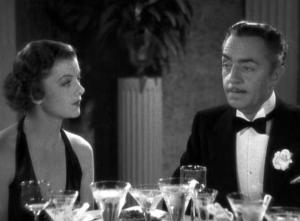
* The Thin Man (1934). Not that I have anything against the fun romance of It Happened One Night, but Nick and Nora Charles are five times the fun, not to mention one of the most solid husband/wife couples in anything ever, fellow detectives or otherwise. Living in a bygone era where “politically incorrect” wasn’t a thing yet, their methodology was questionable (gather all the suspects and hope someone tips their hand? Foolish but genius); Nick’s alcohol dependence was played for a few laughs but not taken entirely for granted (he grudgingly quit drinking in later films); and their relationship was 100% unflappably rock-solid (in one hectic scene, Nick saves Nora from a bullet by punching her in the face, somehow without destroying their marriage — good luck pulling off that trick outside a tasteless R-rated comedy today). “They don’t make ’em like they used to” doesn’t begin to describe the series’ legacy. The happy couple regrettably didn’t stand a chance against a shirtless Clark Gable.

