 The last time my family went to the theater, the ads that ran from the film’s scheduled showtime until the moment the feature presentation began spanned over twenty minutes. Many of the ads were movie trailers, but not all of them. Ads for new cars, smartphones, TV shows, and soft drinks are routine pre-show entertainment while you’re settling into your seat, mentally preparing yourself for temporary phone deprivation, swapping notes with your companions, and consuming your snack too early. Even when it’s ostensibly showtime, the commercial parade isn’t over yet, because a lot of manufacturers want a moment of your time, in exchange for keeping your theater in business.
According to a Hollywood Reporter article this week, the National Assocation of Theater Owners have decided that movie studios are taking advantage of your presence, and it’s all their fault that your time is being wasted. Obviously the owners can’t simply run fewer spots, because then here comes the poorhouse. To that end, NATO members are demanding an amended guideline limiting trailers to a maximum of two minutes, slashed from the current 2½-minute boundary.
We can infer from various statements in that THR article that owners believe this will reduce the length of the pre-show, instead of giving them latitude to run even more ads that eat up the same allotted minutes. They believe that it would be harder for shorter trailers to give away the entire movie, apparently forgetting that most romantic comedies can be boiled down to their primal essence in twelve seconds flat. They seem to think the current limit is a recent abuse of creative power, somehow unaware that trailers in the ’40s and other nostalgic decades could occasionally run well past the three-minute mark, sometimes spooling entire scenes instead of mere quick-cut snippets.


 While plumbing the deepest, darkest regions of our pantry for quick supper ideas tonight, my wife discovered an ancient artifact not seen by mortals for uncountable years: a mysterious can of applesauce that expired April 7, 2011.
 In the wake of recent conflicting headlines regarding the revolving-door employment status of its longtime participants, ABC’s The View announced a new initiative to move forward into a bold new era by hiring Internet sensation


 Literacy pundits wept this week over a
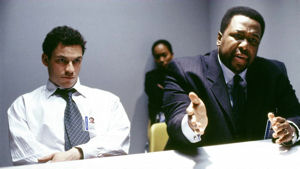 After months of squeezing in an episode here and there whenever time permitted (which was rarely), tonight I finally finished watching all five seasons of The Wire. It’s sixty episodes of the most politically charged, complicated, incisive, meaningful, profane, discomfiting, provocative, challenging television I’ve ever seen. It’s not a show for everyone, but following the storylines of its roughly eight thousand different characters (give or take three) became an unprecedented adventure that part of me secretly hopes has left me scarred and ruined for any other TV show or fictional tale that dares to try impressing me in the future. Its multifaceted examination of life on the streets of Baltimore at every level made my own lower-class upbringing look like the life of a prince, put my comparatively benign hometown in perspective, and has made it hard for me to read any local crime news without wondering how much they’re not telling us.
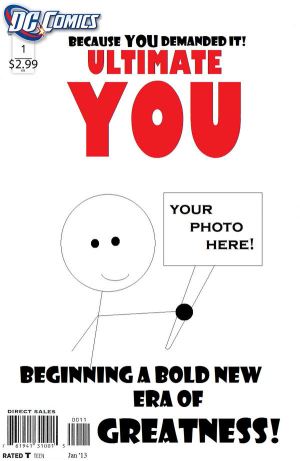 All around you are family, friends, and strangers using the excuse of a new January 1st to restart, relaunch, or reboot their lives. You may doubt their sincerity, their dedication, or their grasp on reality, but you’re not in charge of their story arcs. For whatever reason, they’ve decided their “series” needs to begin again from scratch. Some of them aren’t so sure about what they’re doing, but they firmly believe the results will justify the scheme. Some of them will be wrong, but it’s possible a few of them may be on to something.
 Imagine the following scenario:
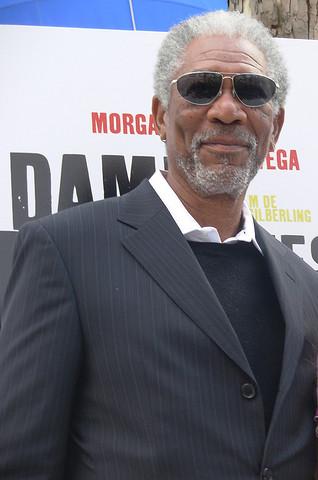 During the solemn, lamentable weekend following last Friday’s senseless tragedy in Newtown, Connecticut, Facebook users who were already struggling with their own reactions, the reactions of their friends, and the fights breaking out between friends of conflicting reactions all found themselves interrupted dozens of times over the course of the weekend by the reassuring face of Academy Award Winner Morgan Freeman, perceived as one of the kindliest, most grandfatherly figures in all of Hollywood. His face was attached to a short essay decrying the culpability of mass media in encouraging too many broken young men to become power-tripping mass murderers because of the seedy allure of posthumous headlines and ten minutes of front-page infamy. Few would argue with the content of the well-meaning essay, but this wasn’t just any old essay written by an ostensibly intelligent typist. This was an essay attached to a photo of Academy Award Winner Morgan Freeman.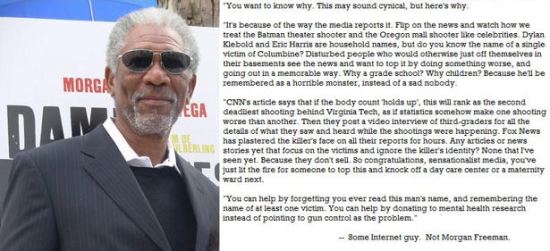
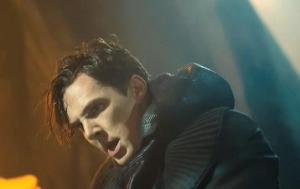 Most of you have already seen the new “announcement trailer” for Star Trek: Into Darkness, apparently heralding the real teaser trailer scheduled for release on December 17th. Internet fans continue debating the exact identity of the villain played by TV’s Sherlock, the inimitable Benedict Cumberbatch. The early rumor-mongers assumed he was Khan, but the more recent consensus is the superhuman Gary Mitchell from the original series’ second pilot, “Where No Man Has Gone Before”. 1966 special effects limited Mitchell’s displays of power, but if that’s SuperCumberbatch’s true identity, then today’s cinematic tools have upgraded him to the same weight class as General Zod, Hancock, and the Chronicle teens. I look forward to seeing him punch the Enterprise out of orbit, and to watching the new Captain Kirk devise something besides an instant avalanche to end their rebooted confrontation.
 Midlife Crisis Crossover!