As mentioned previously, I’ve seen every Academy Award winner for Best Picture from Wings to The Artist, retaining varying degrees of recollection. I’ve also seen every Best Picture nominee from 1997 to the present, and have embarked on a slow, low-priority, extra-long-term quest to see how far backwards in time I can extend that date. Right now I’m stalled on 1996 because the DVD version of Secrets & Lies is out of print, secondhand copies are priced much higher than I’d prefer, and I’ve never caught it airing on a cable network. Someday I’ll overcome that obstacle and continue down the line in reverse order.
I watched a lot of those winners and nominees on cruddy VHS copies, many recorded from Turner Classic Movies at EP speed for maximum storage conservation, and therefore suffered subpar A/V quality and the dreaded pan-‘n’-scan method that ruined countless widescreen films for the sake of home video as it existed back then. I wouldn’t mind revisiting some past winners and nominees in upgraded formats as time and funding allow. (Tonight, for example, I watched The Sound of Music on Blu-ray, my first time seeing the original widescreen presentation with the composition and gorgeous Alpine scenery intact. Massive difference.)
The following list is a sampling of Best Picture nominees that not only lost the Oscar, but also lost me when I did my best to stomach them, and won’t entice me to an encore presentation, not even as a thrifty Blu-ray with myriad extras.
The loser nominees are:
* Chocolat. The citizens of an all-Catholic town who’ve apparently never studied the Bible find themselves easily tempted away from their convictions during Lent when a dismissive heathen outsider opens a chocolate shop and mocks their fasting. I can see the groundwork laid here for a meaty Stephen King novel, if we modify Act Two so that the lady turns out to be an underworld minion whose Satanic powers manifest in the form of evil bonbons. Call it Needful Things 2: Day of the Truffles. Alas, no, the lady is typical and the self-righteous moral of the story is snacks are better than God. Though the town has other underlying problems that sugar somehow cures, my diagnosis would be that the town merely needed a more competent minister to guide and edify that particular flock.
* The Reader. My wife doesn’t share my quixotic quest and is consequently under no obligation to see films against her will. If I think a film has merit, I’ll regale her with a précis of the better parts, spoilers and all. Some films, I really don’t want to summarize. No loyal husband wants to confront the innocent question of “How was the movie?” with an answer like “It was basically Kate Winslet having lots of wild sex with a teenager.” In the theater I tried to stay focused on her character’s role as a gruff German guard who may or may not have been a Nazi war criminal. I lost that focus completely when her deep, dark secret — which I predicted several minutes in advance — reminded me of the “Oscar Clip” scene from Wayne’s World. After my little flashback, I couldn’t stop laughing all through her deadly serious court trial. So that ended poorly.
 Everyone who watches the Academy Awards has their disagreements with the Academy. Not one living person would look at the complete list of Best Picture nominees and argue that the right movie has won every single year since Wings. We all have our own ideas about what makes one movie better than other movies. The idea of separate, distinct works of art being forced to compete against each other in an expensive dog-and-pony show may seem crass, especially considering the plethora of talents, genres, budgets, studio systems, sweetheart agent deals, and marketing departments that are fundamentally incomparable in any reasonable aesthetic discussion. Big-budget award-grubbing machines and high-minded shoestring-budget indie flicks shouldn’t be fighting each other; they should be working side-by-side, providing viewers with a vast assortment of reasons for film lovers to remain invested in the medium, and maybe even teaming up for the occasional crossover.
 After
After  It’s that time of year again, the week before the Academy Awards ceremony, when anyone who pontificates online about movies to any degree is compelled to reflect on Oscar winners of years past and mine their history for writing material in lieu of relevant news updates and Oscar pool handicapping. I suppose I should add my two cents quickly, lest I risk being last in line, though I’m sure all mine are taken by other Oscar fans now, if not necessarily in matching quantity. Years ago I completed a lengthy quest to see every Best Picture winner from Wings to the present, just to see what would happen. Some I’ve long since forgotten, some were travesties I wish I could unsee, but many were worthwhile experiences.
 Tonight’s new Bunheads episode, “It’s Not a Mint”, begins with Sasha experiencing every new renter’s worst nightmare: a possible burglary. Maybe. She arrives home with groceries in arms and finds her front door standing wide open. She smartly opts not to go inside, clumsily drops her groceries, and calls for help. The other Bunheads’ phones all go to voice mail. Her neighbor Mrs. Weidemeyer won’t answer the door. Sasha even turns to Siri to dial 911 for her because dialing three whole digits is too much work. Unfortunately her iPhone comes preloaded with the standard sitcom version of Siri that’s equipped with the hearing of a senile grandmother. (To be fair, it’s for the best that every fictional version of Siri malfunctions. If it worked according to specs, I’d roll my eyes and accuse the show of product placement. Siri just can’t win.)
 I spent the first thirty-five years of my life in rented dwellings. As a child, making holes in the wall was a major no-no. The adults were allowed to hang a few nails for photo display purposes, and for one calendar. Otherwise, I was informed countless times that the big bad rental management frowned upon holes. Wall holes were bad. The way I was told left me with the impression that if the maintenance men ever came inside to repair something and discovered holes in the wall, we’d all be in big trouble.
  If you fear the aging process and aren’t remotely excited in seeing your possible future as a senior citizen writ large without any regard for your afterlife possibilities, chances are Michael Haneke’s new film Amour will be your scariest encounter of the year.
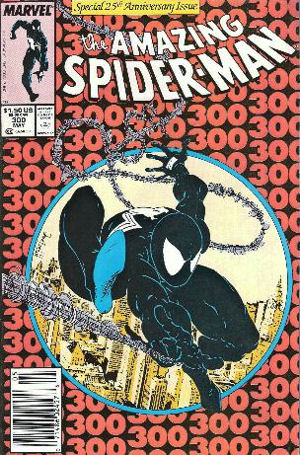 If my entire comic book collection were in mint condition, one of the more valuable modern-age collectibles would be Amazing Spider-Man #300. Not only was it part of the run that cemented Todd McFarlane as a bankable superstar, it also introduced Venom, who in my teenage eyes became one of Spidey’s scariest adversaries, up until Marvel later saturated the market with tons of Venom miniseries and crossovers. Though he wore out his welcome, I still hold a few fond memories of that era in the field.
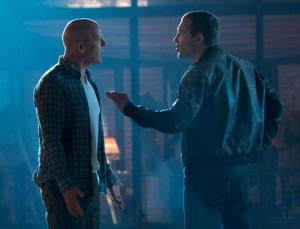 To Die Hard or not to Die Hard: that is the question now before me.
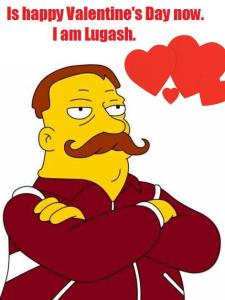 When you’re sitting at a ballpark or other sports stadium, the crowd is doing the Wave, and you see the crest heading straight for your section, do you rise and raise your arms in rhythm with your neighbors? Or do you scowl, remain in your seat, and lecture your friends about how the Wave is conformist tomfoolery?
 I saw Silver Linings Playbook over a week ago and have been procrastinating saying anything about it because it’s tough to express my opinion without ruining the ending. I suppose the ads aren’t that coy about the gist of the film, but part of my enjoyment was derived from that rare feeling of having no idea what would happen next. Under the guidance of director David O. Russell (previously appreciated for The Fighter and Three Kings), I wasn’t sure if Playbook would be predictably atypical or deceptively Hollywood about the strange relationship between its May/December starring couple. Would it end in for-your-Oscar-consideration breakup and tears? Would it opt for the mushy happily-ever-after ending, complete with gratuitous dance party at the end? Would the payoff be just-good-friendship, like Lost in Translation? Would they both die horribly of movie cancer? My second-guessing was useless against it.
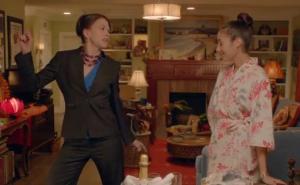 On tonight’s new episode of Bunheads, “There’s Nothing Worse Than a Pantsuit” (that’s the episode title, not the main clause of this sentence), our heroine Michelle is forced to cope with two (2) formidable challenges. First up, as spoiled in the episode title: pantsuits! With Fanny MIA from an episode once again, Michelle is left alone to work with Milly on the next step of the Millicent Stone Performing Arts Center process: zoning approval from the town committee. Michelle nearly tries to go it alone, but Milly scolds her for not keeping her in the loop on any important issues. (“Anything that can’t be answered by reading a Judy Blume novel? CALL ME.”) Such formal requirements, in Milly’s estimation, cannot be completed while wearing anything except a pantsuit. Leave it to Truly and the magic of Sparkles to provide Michelle with options, all equally businesslike and hard to tolerate, even with meatball-sized beads and whatever “color blocking” is. Later in the episode she comes to terms with this temporary fashion detour and recognizes the inherent advantages — fewer wardrobe malfunctions; more pockets than dancewear has; and, on a metaphysical level, the pantsuit is “binding, so it keeps all your powers in.”
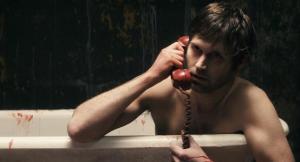 Each year since 2009 my wife and I have made a day-long date of visiting Keystone Art Cinema, the only dedicated art-film theater in Indianapolis, to view the big-screen release of the Academy Award nominees for Best Live-Action Short Film and Best Animated Short Film. Results vary each time and aren’t always for all audiences, but we appreciate this opportunity to sample such works and see what the Academy of Motion Picture Arts & Sciences deemed worthy of celebrating, whether we agree with their collective opinions or not. A few of the past marathons have varied wildly in quality, but this year’s proved a superb bunch. To be honest, this is the first time in memory that I’ve preferred the live-action contenders to their animated colleagues.
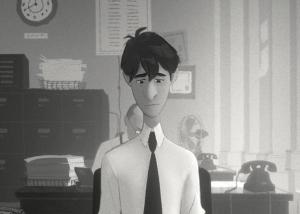 Each year since 2009 my wife and I have made a day-long date of visiting Keystone Art Cinema, the only dedicated art-film theater in Indianapolis, to view the big-screen release of the Academy Award nominees for Best Live-Action Short Film and Best Animated Short Film. Results vary each time and aren’t always for all audiences, but we appreciate this opportunity to sample such works and see what the Academy of Motion Picture Arts & Sciences deemed worthy of celebrating, whether we agree with their collective opinions or not.
 Literacy pundits wept this week over a
 Fun trivia: I bought my very first ebook at
 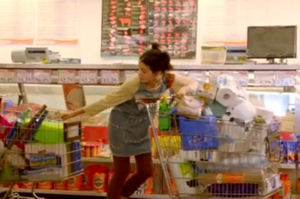 Sasha’s parents may be divorcing and deserting Paradise in separate directions, but judging by the evidence presented in tonight’s new episode of Bunheads, “Take the Vicuna”, their forgotten credit cards are keeping their daughter company in their absence. Their magically limitless credit line is enough to secure her new luxury apartment, cover the utilities bills (and hopefully the learning curve that goes with those), provide two carts’ worth of startup food and accessories, and still have thousands left over to throw a righteous housewarming party for her core friends, several classmates, the grownups who didn’t abandon her, and for reasons unknown Aubrey (Victoria Park), her onetime cheerleading captain. The snacks are plentiful, the guests receive parting gifts, and the decor is so over-the-top ornate, you’d think Sasha shares an interior decorator with Tom Haverford from Parks and Rec.