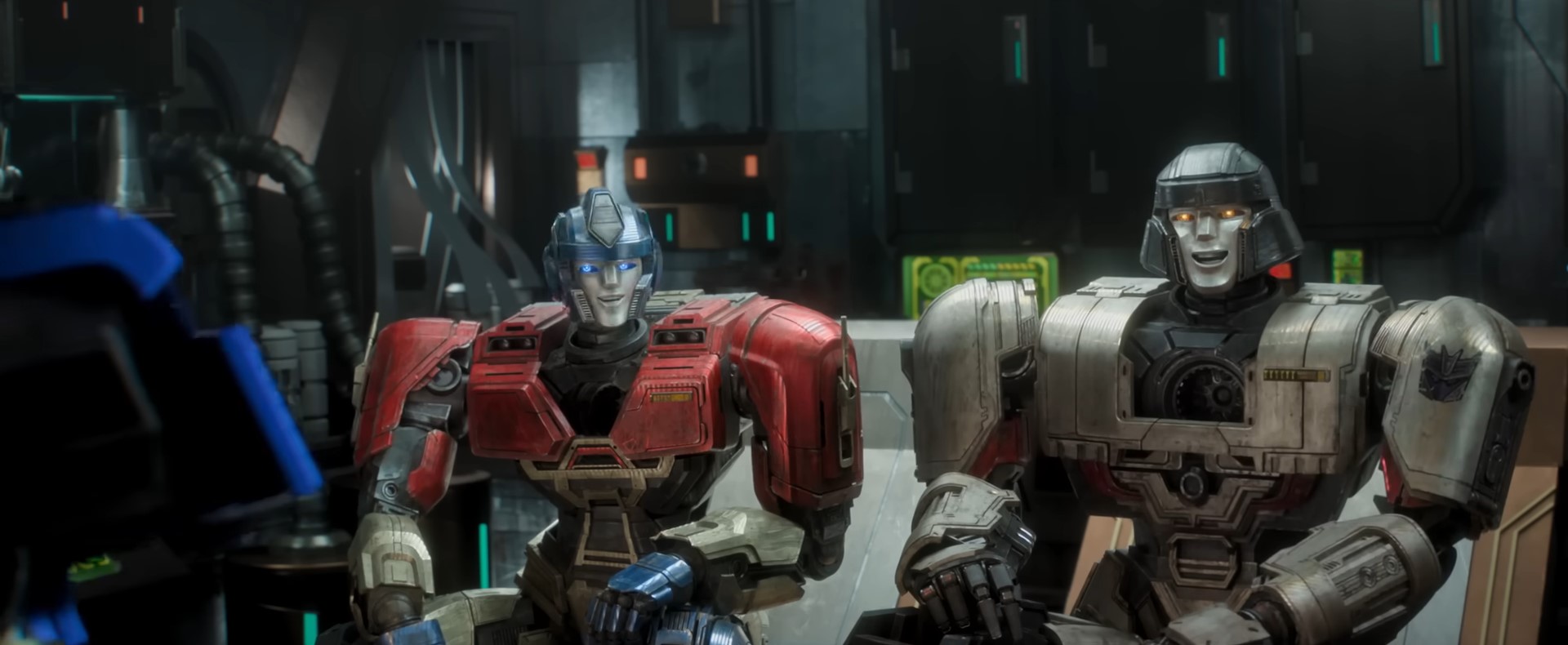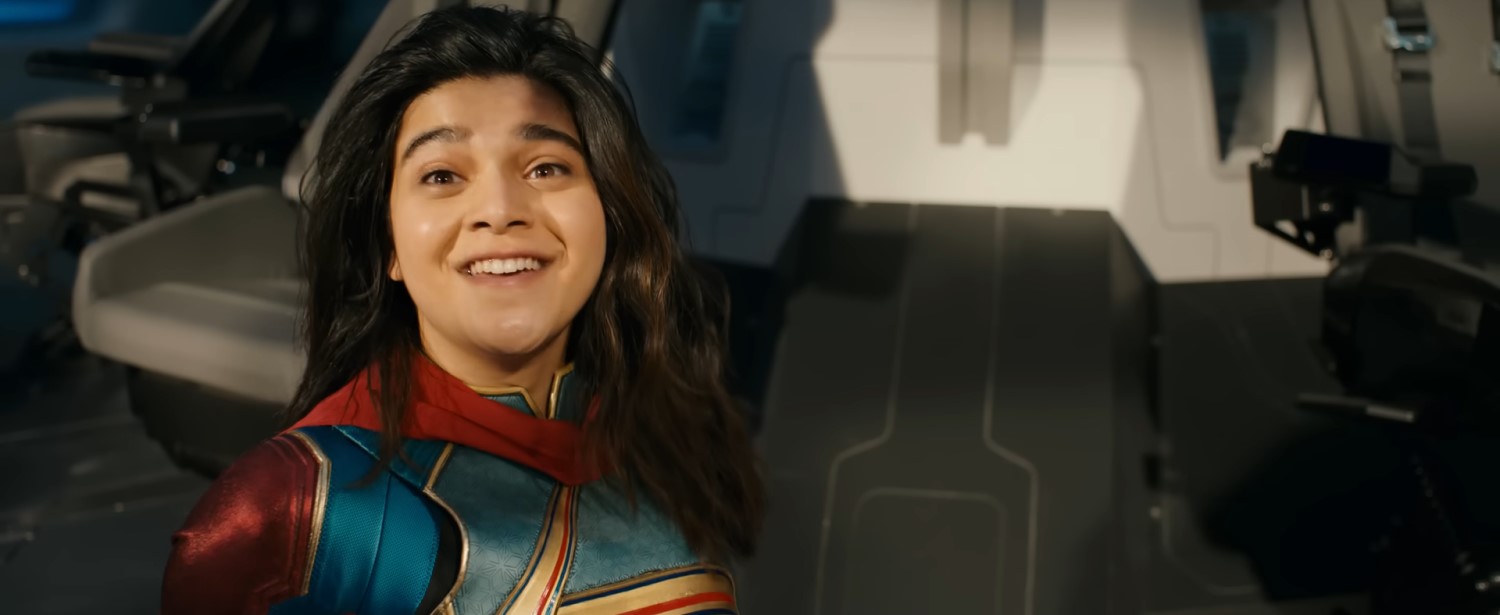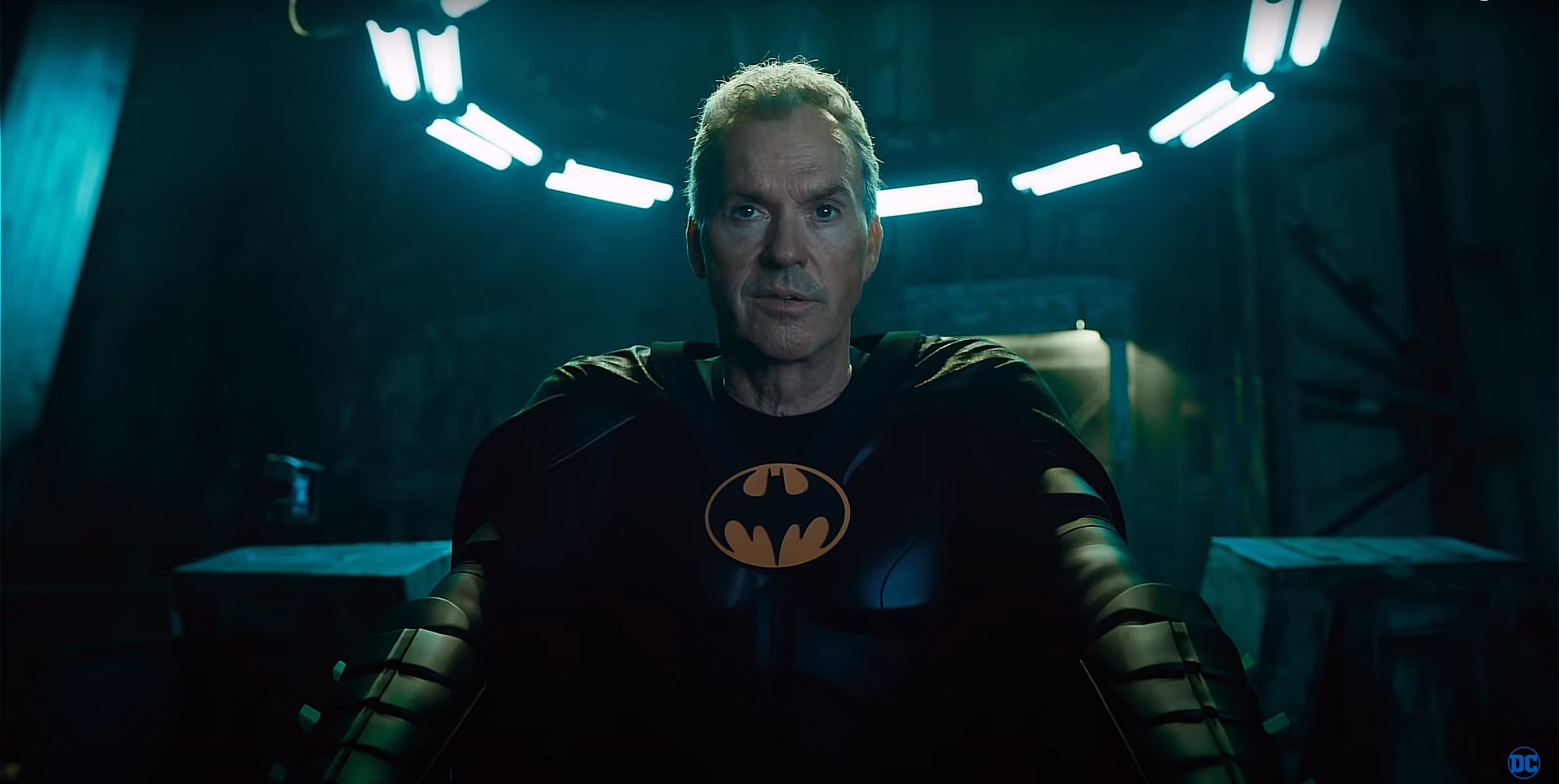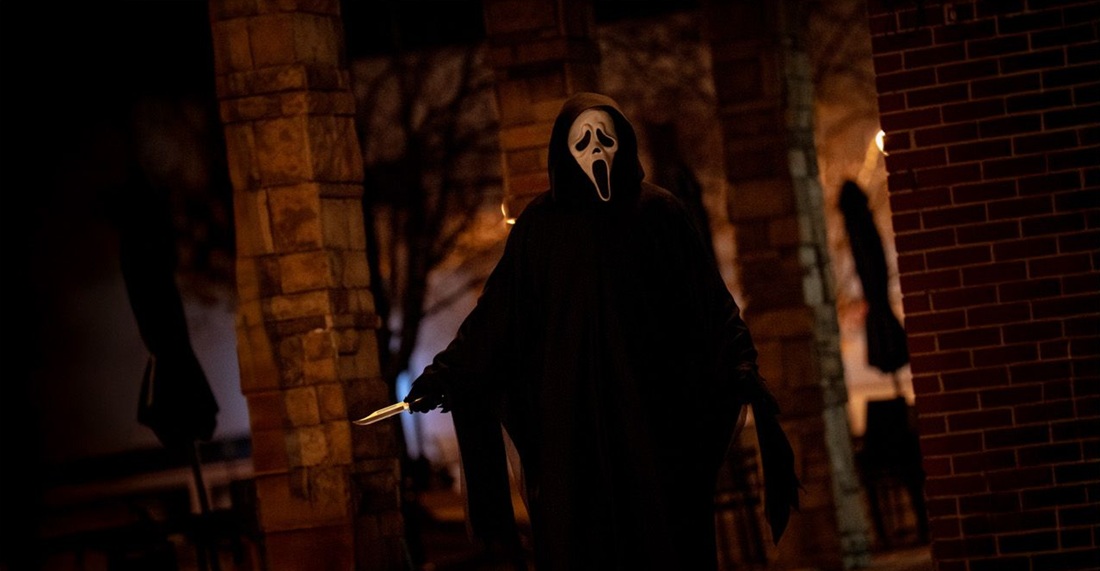
Yes, There’s a Scene During the “Tron: Ares” End Credits

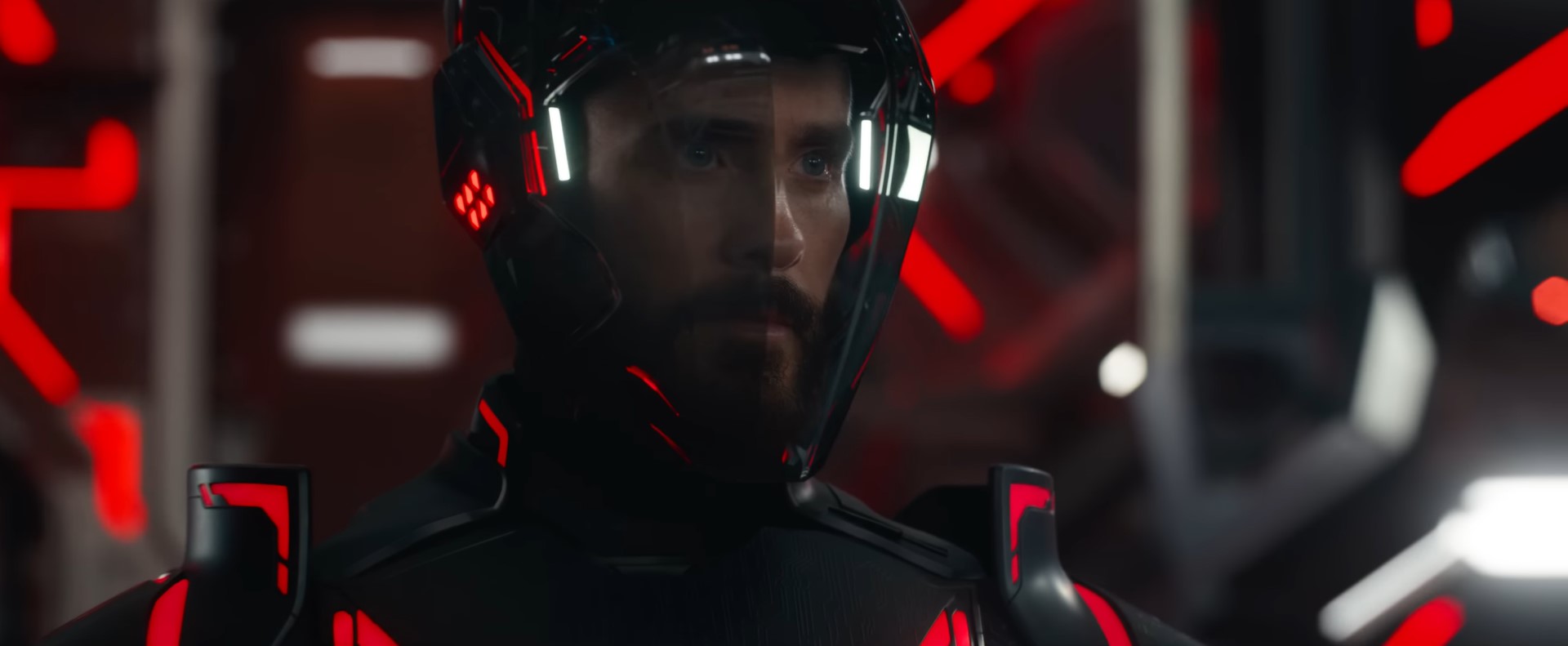
Jared Leto in black and red CGI armor. The glass faceplate retracted partially to reveal his face. Everything around him is red lines.

In a better film we’d see Morbius evolve into Morpheus and leave the Grid for the Matrix.

When I was 10, the original Tron was one of the last films I saw at the Westlake Drive-In before it closed a month later. I remember being bored, my typical response to a lot of Disney live-action, and got more fun out of the 4-in-1 arcade game even though some malls charged double to play it (i.e., fifty whole cents, a ripoff at the time). My son was a teenager when we saw Tron: Legacy and quickly forgot most of it, though the action sequences were impressive enough that I noted fledgling director Joseph Kosinski’s name before he went on to bigger, better works. In between those wobbly goalposts, Nine Inch Nails’ 1989 debut Pretty Hate Machine was in heavy rotation in my various high school cassette players, so a young Trent Reznor’s industrial synth-metal assaults hold a certain place in my pop-culture heart even though I haven’t kept up with his later, lesser albums. (Fun trivia: Reznor and I share a birthday!)

Nostalgia isn’t an automatic drug of choice for me, but sometimes I’ll play along with its corporate pushers just to see what they think might get me high by injecting my own liquefied childhood into my eyeballs. Fifteen years later Disney has turned Tron‘s CPU off and back on again to install its latest IP expansion pack Tron: Ares, whose marketing tries awfully hard to target Gen-X as if anyone my age yearned for this to be a trilogy to save on our DVD shelves until we die and our beneficiaries give all our boxed sets to Goodwill. The thin dimensional boundaries between video games and the real world have been breached quite a bit since 1982 (Wreck-It Ralph! Pixels! Ready Player One!), to say nothing of invasions from their kid cousin Virtual Reality (from The Lawnmower Man on up), so really, what’s Tron have to offer besides grasping for an extended warranty on its own obsolescence?

Continue reading

Yes, There’s a Scene After “The Naked Gun” End Credits

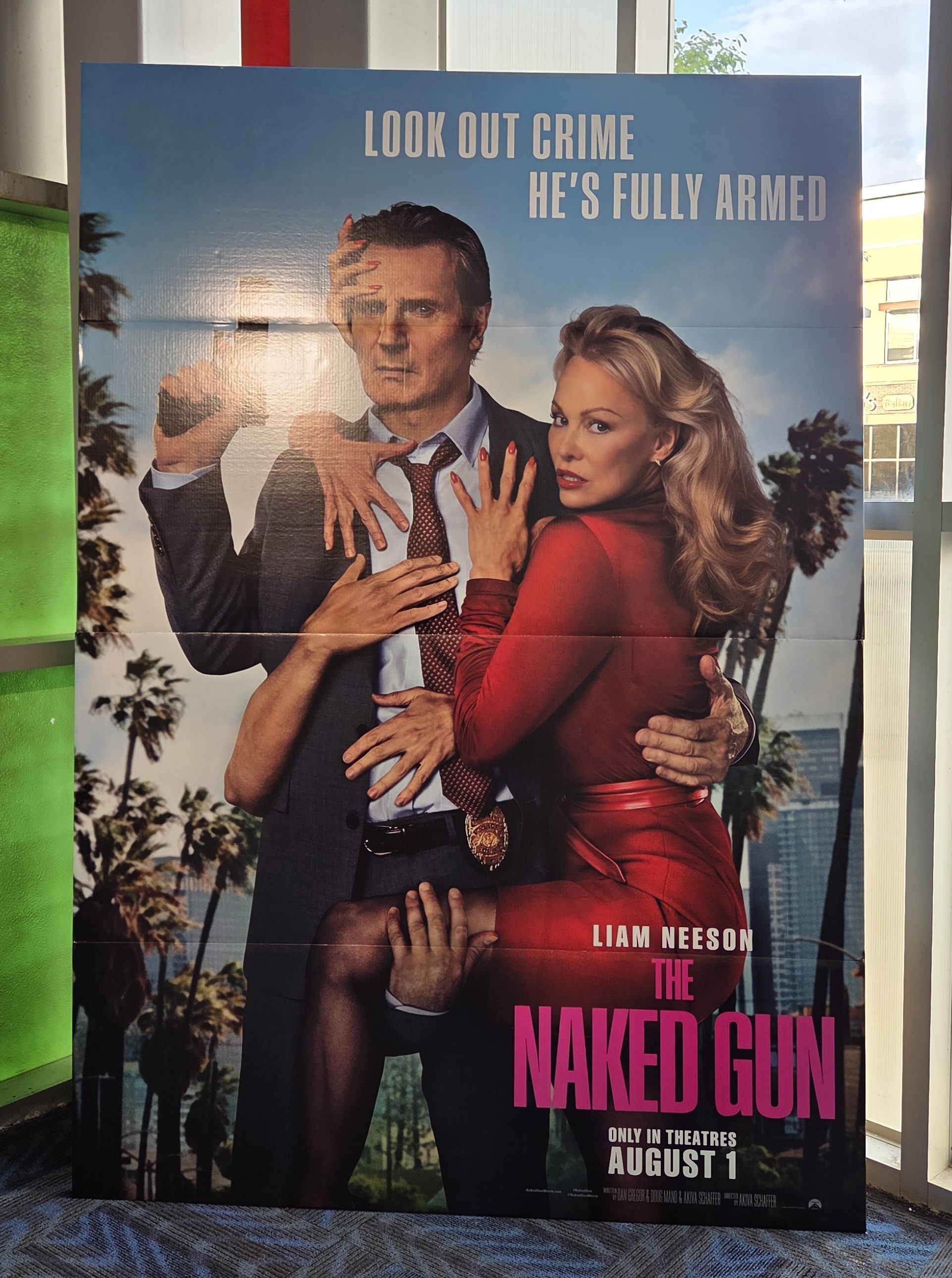
Theater lobby standee with Liam Neeson in character groping at Pamela Anderson with five different hands while brandishing his gun with a sixth.

The long arm of the law takes a more hands-on approach.

Sure, laughter is fun, but the more pop culture fractured into separate camps over the decades, the less everyone could agree on what was funny. TV sitcoms and the rise of the internet in the 2000s — when we all took turns giving away laughs for free, high on the power of free expression — met my daily chuckle-quota while American filmgoers voted for Jim Carrey, Adam Sandler, the diminishing returns of other SNLers, and Hollywood’s slowly mutated “wisdom” that comedies absolutely had to be R-rated F-bomb barrages because those, they thought, were funnier than actual jokes, despite entire decades’ worth of classic examples that worked just fine without them. Yadda yadda yadda, comedy disappeared from cinemas, except as a secondary component in incessantly quippy blockbusters.

In my childhood the epitome of comedy in any medium was Airplane!: The Movie, that goofy parody of ’70s airport-disaster dramas whose quick-witted reflexes and nonstop Easter-egg sight gags would be embedded in the DNA of The Simpsons and all the other hyper-accelerated comic works since. The skewing of dialogue clichés and the perfectly straight-faced delivery of the most dreadful puns in the world were a tremendous joy, though as a long-term consequence it would become an intrinsic link in the evolutionary chain leading to today’s “Dad Jokes”. For a time I was a disciple to its hilarity-trinity of directors David and Jerry Zucker and Jim Abrahams. Eventually they parted ways and went on to make their own separate comedies with varying degrees of hit-or-miss. David Zucker kept on spoofing longer than the other two until diminishing returns set in as he got older. (His last time in a director’s chair was a 2008 conservative lampoon of Michael Moore called An American Carol, which Zucker’s recent interviewers chose not to bring up.)

Continue reading

Yes, There Are Scenes During and After “The Fantastic Four: First Steps” End Credits

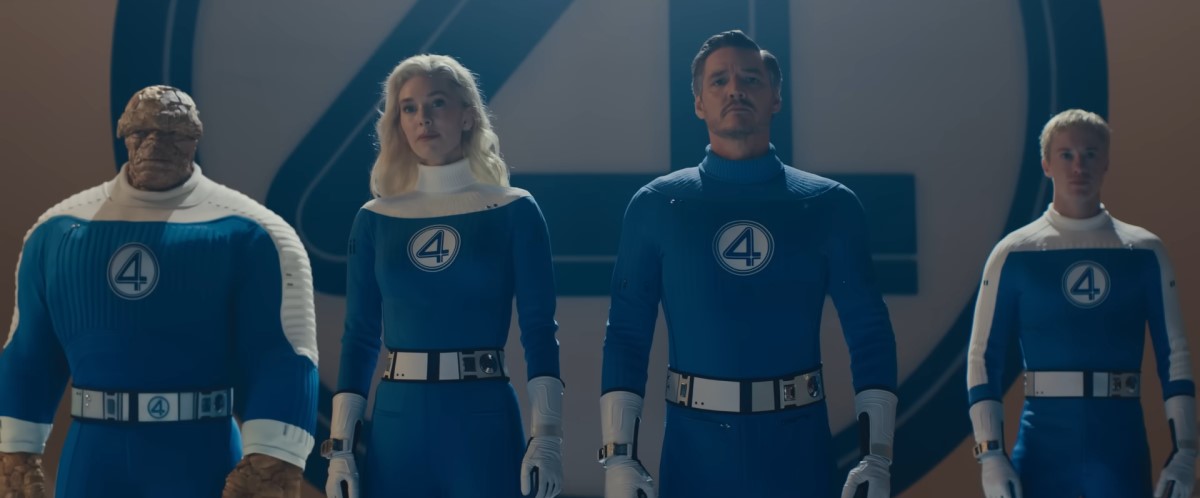
Fantastic Four cast in movie costumes, just standing and staring. Big blue 4 logo takes up the wall behind them.

The World’s Greatest Comic Magazine™, now in theaters!

Critics call The Fantastic Four: First Steps the Greatest FF Film of All Time! It’s a low bar to crawl over, but it’s a relief Marvel didn’t smack themselves in the face with that particular rake again.

After Tim Story’s two earnest but awkward sitcom episodes and Josh Trank’s grimdark body-horror take — whose second half was amputated and replaced with prosthetic superheroics (and which “celebrates” its tenth anniversary next month) — most of us had given up on seeing Stan Lee and Jack Kirby’s greatest co-creation writ large on the big screen without half-baked compromises of what makes these intrepid scientist-adventurers tick. We settled for key cameos in the second Doctor Strange and Deadpool & Wolverine, but those tongue-in-cheek callbacks only gave us one member apiece sans the Richards’ dynamic. Writing solo comic relief is easy; writing affectionate, super-powered teamwork is hard, unless you’re Brad Bird paying homage with The Incredibles.

If we disqualify Roger Corman’s unreleased zero-budget fan-film available only as a bootleg (and for a reason), then fourth (ha!) time’s the charm as the First Family has been wrested from its former Fox overlords and eased into the Marvel Cinematic Universe via gentle alternate-Earth reboot courtesy of director Matt Shakman, who handled the amazing WandaVision but whose only previous feature, 2014’s barely existent Cut Bank, made less than 300 grand worldwide. Working with at least five different screenwriters (including Sarah Connor Chronicles showrunner Josh Friedman and Thunderbolts co-writer Eric Pearson), Shakman understandably kept the odds of success manageable by revisiting Lee and Kirby’s FF #48-50, the original Galactus Saga, which Story’s 2007 sequel Rise of the Silver Surfer bungled. Last time a classic non-origin comics tale was adapted twice to film, the end result was the abjectly time-wasting Dark Phoenix.

Thankfully First Steps avoids Rise‘s mistakes and not only better recaptures the essence (e.g., not making Galactus a hungry space cloud) but elevates Our Heroes’ comeback into grandiose science-fiction myth-making of the sort that comics used to do best, on a level meant to inspire our broken world even while barely resembling it. Among its many idealistic propositions: sure, everyone loves found families in movies and TV, but what if just once in modern times the day were saved by an actual family-family? Plus Dad’s best friend as honorary Fun Uncle?

Continue reading

Yes, There Are Scenes During and After the “Thunderbolts*” End Credits

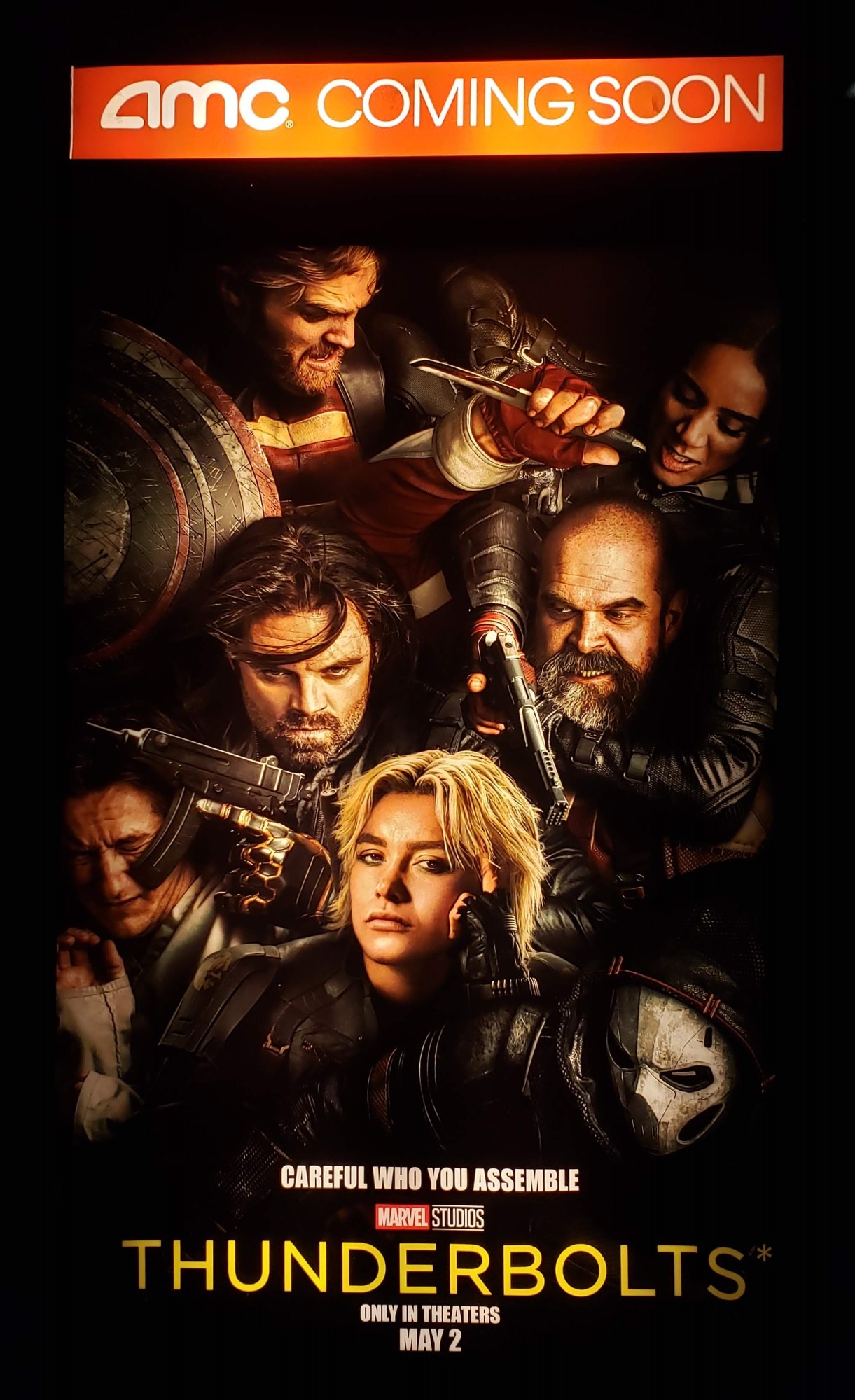
Movie poster with the entire cast squirming to fit into the frame at the same time. Florence Pugh is disgusted to be here.

They’re here to save Marvel from themselves.

Previously on Midlife Crisis Crossover: we mention Marvel a lot! It isn’t perfect, but it’s our thing — the movies, the comics and the TV shows, though I generally only compel myself to write about the movies. We enjoy keeping up with all the shows as well, for better or worse, which has been a boon to our viewing comprehension as the Marvel Cinematic Universe (which turns 17 this month!) has accumulated an entire transmedia continuity that sees characters commuting back and forth between small screens and the silver screen with very few footnotes to catch up latecomers. The filmmakers do try to simplify matters in the theatrical releases, recapping in thin brushstrokes and sometimes reducing years-old backstories to loglines buried inside badinage, like a stapler suspended in Jell-O. You can reach in, grab it and deal with the mess; or just stare at it hanging there and go on with your day.

Sometimes strong performances can go a long way toward convincing an audience to just roll with it. Such is the case with Thunderbolts*, the MCU’s 36th feature film and the final film in Phase V, which means nothing anymore. In the same way our last Marvel film Captain America: Brave New World was essentially a sequel to 2008’s underrated Incredible Hulk, Thunderbolts* is a direct follow-up to 2021’s pandemic-hobbled Black Widow, where much of the cast debuted. The events here mean a lot more if you watched that first (among a few other prior works), but director Jake Schreier (Paper Towns, Netflix’s Beef), Widow screenwriter Eric Pearson, and co-writer Joanna Calo (The Bear, BoJack Horseman) do a noteworthy job of tying character arcs together while balancing accessibility for first-timers.

(And really, why not invite more partygoers from outside? Hard as it might be to believe, every MCU film is someone’s first. One of my coworkers never watched a single Marvel movie before sitting down in front of Avengers: Endgame. Yes, she definitely had questions, but my point is it happens. In an era where we keep hearing Theaters Are Dying, the solution is not to imitate comics’ impenetrable continuity and turn them into a geek country club, a market-driven approach that’s arguably contributed to the last three or four Comics Are Dying eras.)

Continue reading

Yes, There Are Scenes During and After the “Sinners” End Credits

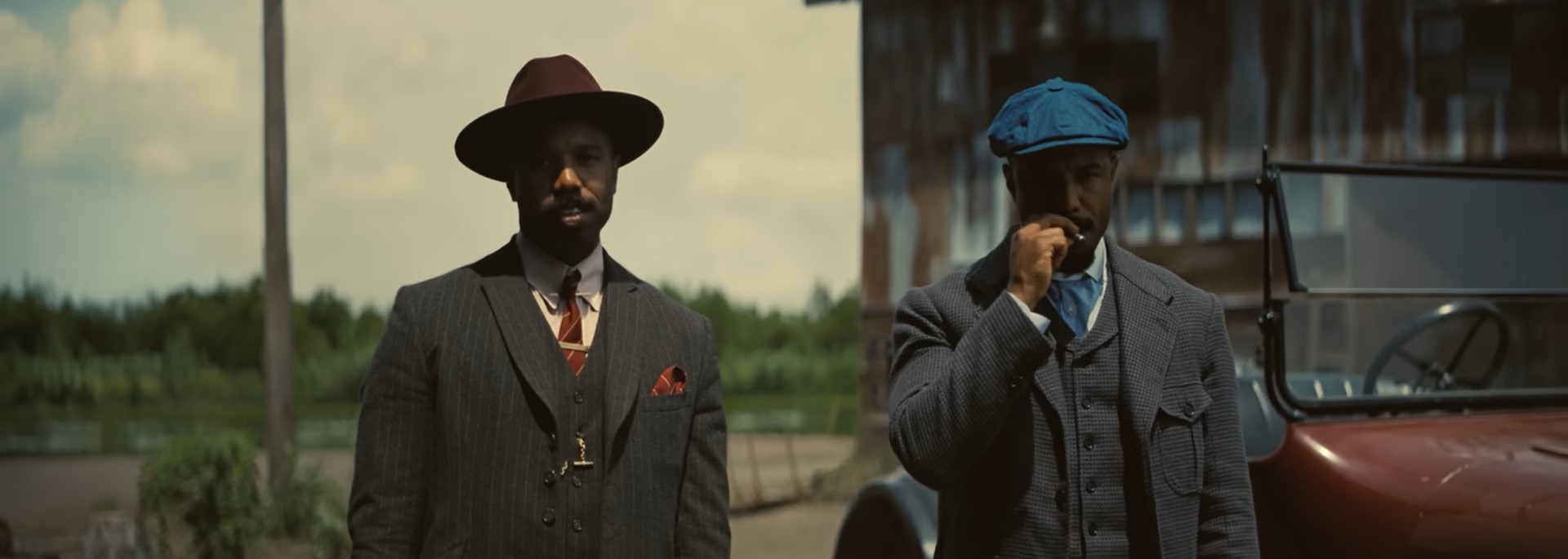
Michael B. Jordan in dual roles as 1932 gangsters, one with a red hat and one with a blue hat.

Thankfully it’s easy to tell which one’s Raphael and which one’s Leonardo.

Previously on Midlife Crisis Crossover: Ryan Coogler rules! The writer/director/producer’s film career began a year after I launched this blog in 2012. I’ve seen them all in theaters and written about them along the way. His devastating indie debut Fruitvale Station was my favorite film that year (back when Coogler was still on Twitter and tossed me a Like for my efforts!). The legacy sequel Creed thoroughly wrecked me at the end. The Academy Award-Winning Black Panther is still one of the MCU’s best entries despite some janky CG in the underground-railroad climax. Its sequel Wakanda Forever is — microscopically splitting hairs — his least-best to date despite that powerful prologue, a worldwide wake for the late Chadwick Boseman. It’s still streets ahead of most Marvel films that followed in its shadow, but it buckled under the weight of the company’s self-perpetuating marketing plans.

With only four films grossing almost a combined $2.5 billion in international box office (well, now he’s passed that mark), the auteur stepped back from work-for-hire and threw some earned clout toward a project of his own, the very first to feature characters of his own creation without shouldering any inherited IP mantles. With that creative control Coogler scores another win in Sinners, once again collaborating with actor Michael B. Jordan, who’s been in all his films to date (erm, light Wakanda Forever spoilers, sorry) and who’s one of this blog’s frequent excuses to name-check The Wire whenever gratuitously possible. (We will never forget Wallace. NEVER.) It defies easy pigeonholing as a vampire survival-horror period-piece musical that demands a 21st-century Black Cinema Renaissance rise up and keep up with him. For anyone who thought the Panther films were still a liiittle bit white at heart, Sinners is here for you.

Continue reading

Yes, There’s a Family Photo Album During the “I’m Still Here” End Credits

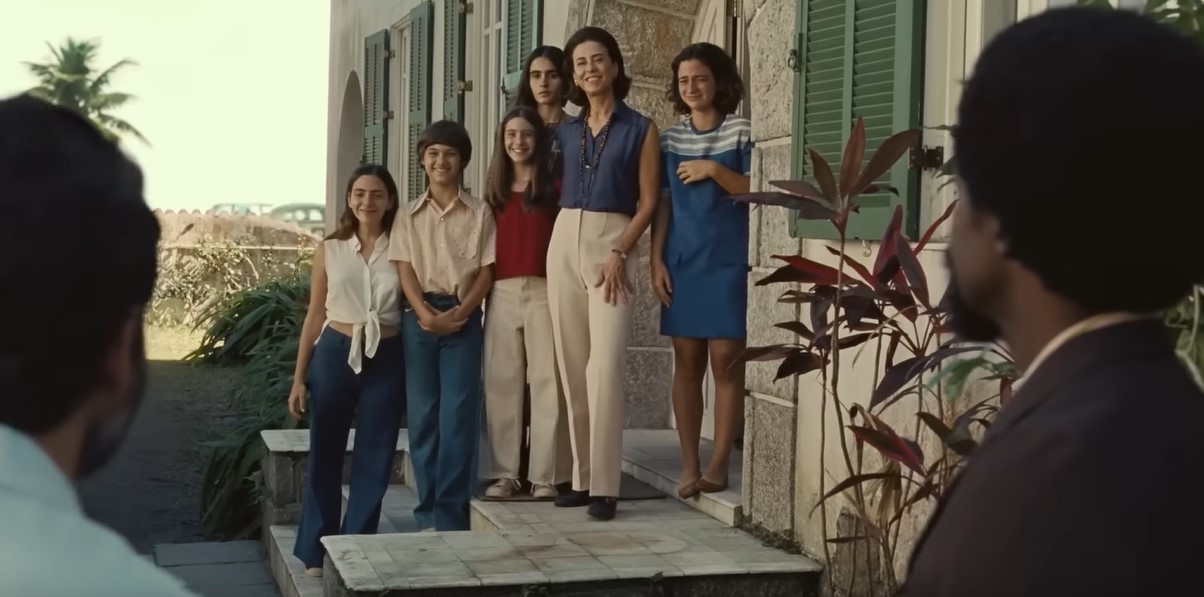
A Brazilian mom poses on outdoor stairs for a photo with her five kids. All but two are smiling. Dad is not around.

We’re a happy family! We’re a happy family! We’re a happy family! Me, Mom, and…oh.

Previously on Midlife Crisis Crossover: Oscar Quest ’25 continues! Once again we see how many among the latest wave of Academy Award nominees I can catch before the big ABC ceremony. That includes any and all works I never heard of before they were nominated. I have no fear of subtitles — I relish them, in fact — and I’m always happy to learn more about the world history they failed to teach me in school, which was nearly all of it.

One of the interesting side effects of AMPAS’ membership diversification efforts of the past few years (contrasting with all their many other years of existence) is the Best Picture nominee lineups offer more surprises from other countries — works that only film-festival attendees could’ve possibly seen in their official year of release. Nominees about dictatorships are sadly commonplace across several categories, which is understandable considering our sinful humankind has spawned far too many tyrants throughout the millennia and on most continents. Most of those works used to be Holocaust films, but in recent times filmmakers from other countries have been taking turns sorting their own tragic histories. Next up is Brazil with I’m Still Here, following in the footsteps of recent-vintage, Oscar-recognized tales of South American regimes such as Argentina, 1985 and (technically) El Conde.

Continue reading

Yes, There’s a Scene After the “Captain America: Brave New World” End Credits

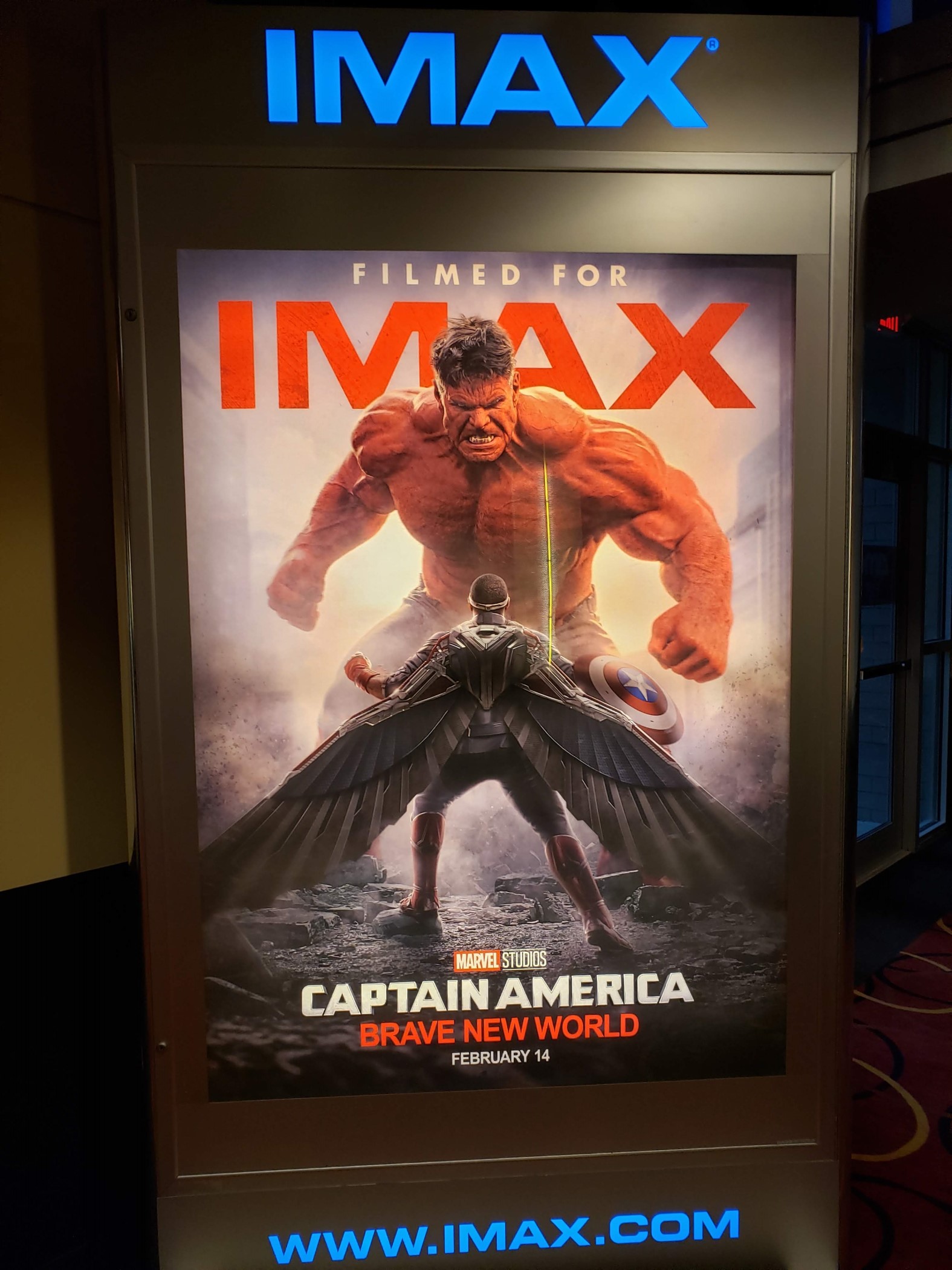
IMAX lobby poster of Red Hulk towering menacingly over Anthony Mackie's Captain America.

Every heart bleeds true under Red, fight and BOOM.

Previously on Midlife Crisis Crossover: our family keeps up with the Marvel Cinematic Universe line of comic-book screen adaptation and transmutation products! Yes, we’ve even watched the ones that show up at the low end of every “Every MCU Movie and TV Show, Ranked” listicle whose criteria change whenever new interns update it. Someone needs to sort those with an “Every MCU Ranking Listicle, Ranked” listicle, but it won’t be me. Between the Marvel Zombies that give every release an A only because they have the “Marvel” cattle-brand stamped on them, and the four-hour YouTube anti-“woke” tantrum-throwers who think hate-watching is a wise use of their limited lifespans, I’d never get more than halfway through most of the contenders without developing listicular cancer.

I was perhaps a tad less cranky than the pro critics who groused about the MCU’s 35th film, Captain America: Brave New World, and the curious decision to devote Anthony Mackie’s first solo Marvel marquee to sewing up dangling threads from previous works. I can’t say it’d go in the top half of my own MCU rankings, but it got some things right, though part of the plan involved pleasing Disney’s superiors by forcing the MCU to diverge into a completely different political backdrop, quainter than our own reality.

Continue reading

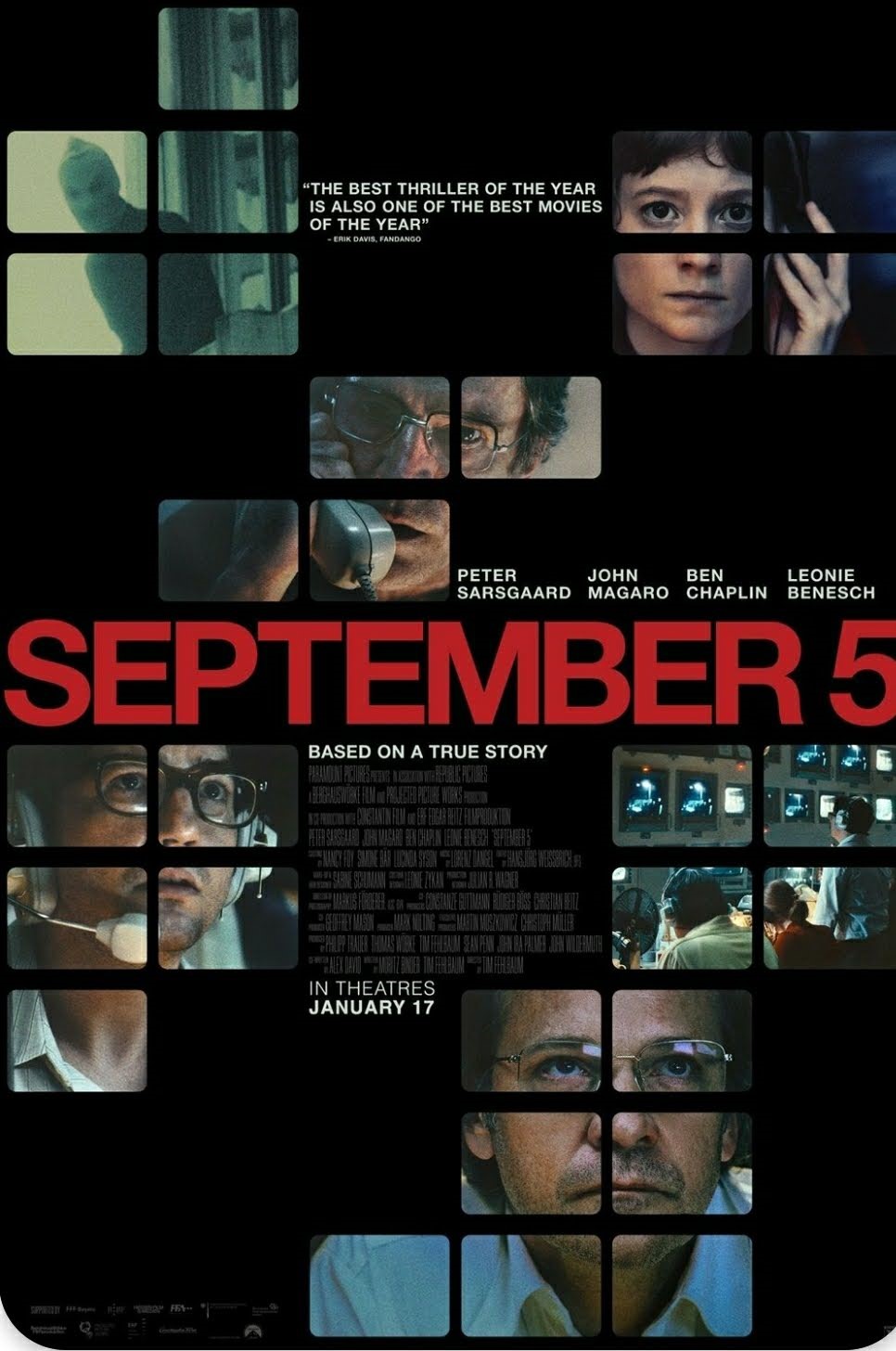
Yes, There’s a Q&A After the “September 5” End Credits

Movie poster for "September 5" depicting the four main cast members, each visage divided across multiple TV screens.

We are all made of screens.

Previously on Midlife Crisis Crossover: Oscar Quest ’25 continues! Once again we see how many among the latest wave of Academy Award nominees I can catch before the big ABC ceremony, even those named in just one category. In a possible historical first, one of our nominees is actually about ABC.

The last time Peter Sarsgaard starred in a true-life tale of journalism and ethics, Shattered Glass was riveting and remains The Greatest Hayden Christensen Film of All Time. Sarsgaard returns to the news beat in September 5, moving from newsprint to live TV in an unofficial yet historically sequential headline-news prequel to Steven Spielberg’s 2005 Best Picture nominee Munich. It’s a true-life drama that’s half found-footage suspense and half You Are There recreation of one of the most horrifying moments in sports history.

Continue reading

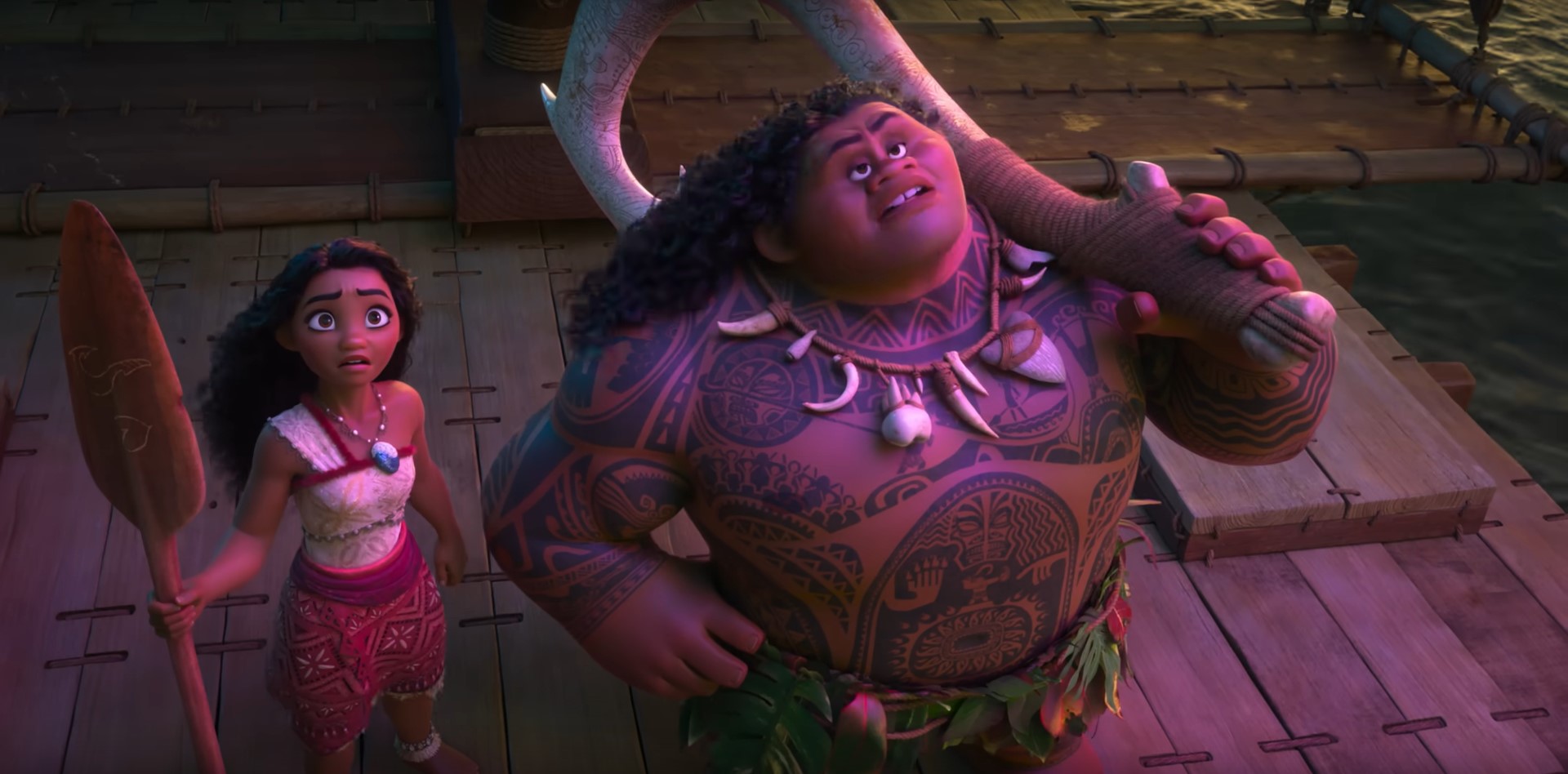
Yes, There’s a Scene During the “Moana 2” End Credits

Moana holding an oar, Maui holding his giant hook, both standing on a boat and looking upward.

They’re back! And they brought their favorite tools!

Previously on Midlife Crisis Crossover: in Walt Disney Pictures’ century-long quest to devote at least one major animated feature to every human community or geographic region ever, they turned their attention to the Pacific Islands for Moana, a rousing high-seas mythical adventure that featured the lyrical stylings of Lin-Manuel Miranda during his post-Broadway movie-musical phase and a strong duo at its core — Auli’i Cravalho as the titular heroine whose connection to her environment brought an end to her home island’s cursed isolation; and Dwayne Johnson (on break from like twelve other acting jobs) as the vain demigod Maui who helped save the day with his magic tattoos, animal shapeshifting, and enchanted Saw-hook.

Moana and Maui are back with Moana 2, which was conceived as a Disney+ series before execs remembered movies can make way more money than TV, especially if the movie doesn’t suck. The reworking of that proposed material may explain why we have three credited directors and only two writers (the latter of which include Jared Bush, who was one of eight on the first one), but it works well enough for anyone who simply wants more Moana and Maui and isn’t finicky about the rest. The tremendously upgraded budget helps, one befitting a Disney theatrical release rather than simply stapling together whatever rough animatics were already in the can. It isn’t perfect and the first one’s better, but it’s better than the dregs of, say, The Fox and the Hound 2.

Continue reading

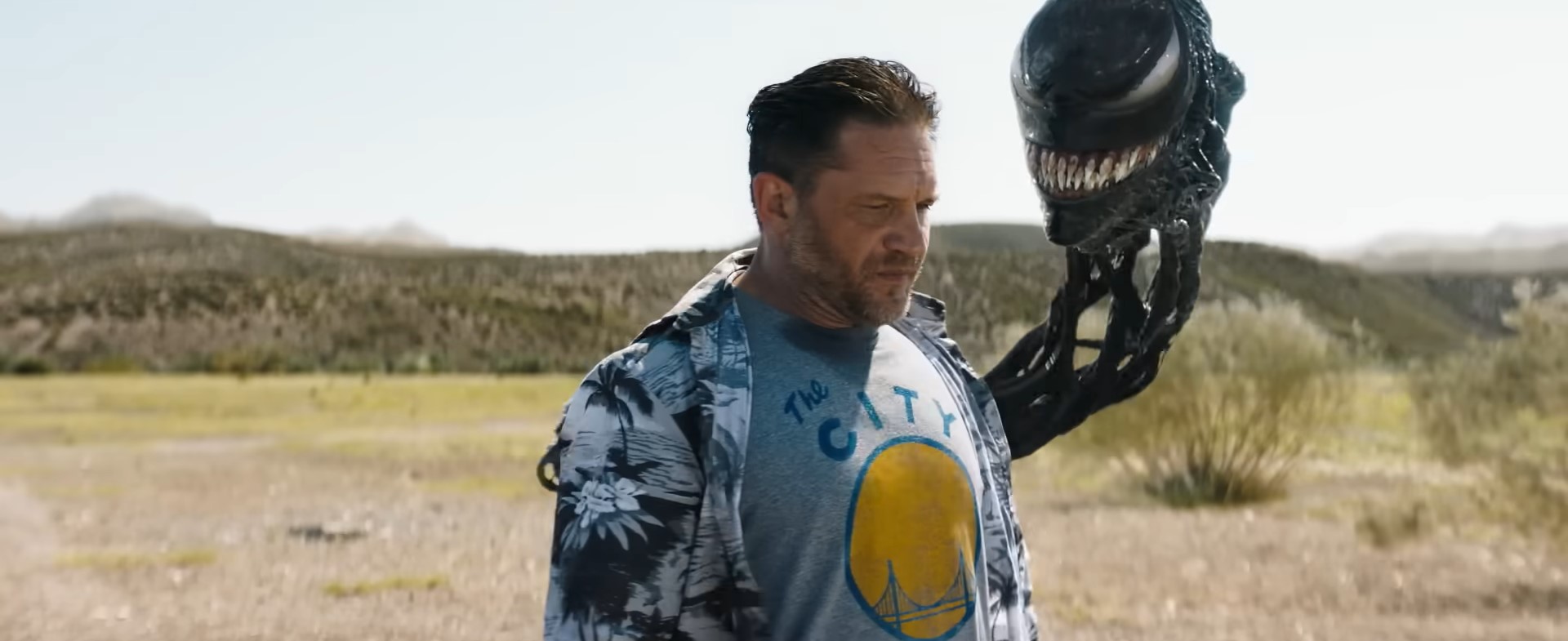
Yes, There Are Scenes During and After the “Venom: The Last Dance” End Credits

Tom Hardy walking in a desert with a CGI balloon tethered to his back. The balloon had scary teeth and Spider-Man eyes.

The Mirror Universe version of The Red Balloon.

Midlife Crisis Crossover calls Venom: The Last Dance the least worst Venom film in cinema history! Unless we count movies about snakes containing literal venom!

Continue reading