
Just think: those poor, carefully cultivated flowers would’ve had no screen time at all if this had been shot as a made-for-TV movie.
My wife and I were impressed by the first two seasons of Veronica Mars and jilted into a mutual depression spiral by season three. When creator/writer/director Rob Thomas launched the famous Kickstarter project to bring back the infamous detective for an unlikely feature film, I had mixed emotions. Surprise that yet another well-written but mercilessly treated series was taking the Firefly route to a post-cancellation revival. Disappointment that the campaign occurred during my still-in-effect Kickstarter moratorium and would therefore receive no pre-production dollars from me, through no fault of its own. Good cheer when the campaign succeeded without me. Skepticism at some of the clunky lines in the trailer. A tinge of geek entitlement because someone still owed me reparations for season three.
Unlike five other Kickstarter campaigns that have yet to keep their promises to me, the Veronica Mars project has borne fruit within a month of its original stated deadline, resulting in a finished product that opened in nearly 300 theaters this past weekend and is simultaneously available for rental via Google Play. At last the lingering question was answered: did anything positive ever happen in Veronica’s life again after that dreary series finale?

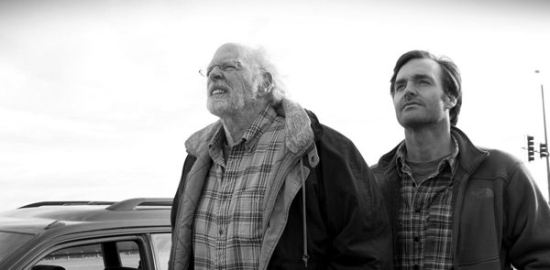 Alexander Payne’s new film Nebraska perfectly replicates that forlorn Midwest sensation of being trapped in rooms with hordes of impressionable, elderly relatives all living on the same slow-motion wavelength, visiting and reminiscing and comparing their amnesia levels and enjoying life’s remaining minutes at the speed of molasses, except when they’re jumping to conclusions at hyperspeed. When that happens to me, I put on a brave front while suppressing the desperate urge to crawl out of my skin. With SNL’s Will Forte acting as my proxy and reenacting my childhood family vacations so vividly, I’m surprised I didn’t convulse in my seat with flashbacks.
 Older fans of Matthew McConaughey’s spate of ’90s romantic comedies may be in for a shock when they walk into Dallas Buyers Club and see him playing Christian Bale’s character from The Machinist. He and costar Jared Leto (both radically transformed and up for Oscars this year) underwent severe weight loss for their roles in this based-on-a-true-story underdog drama that’s one part can’t-we-all-just-get-along and four parts sticking-it-to-The-MAN.
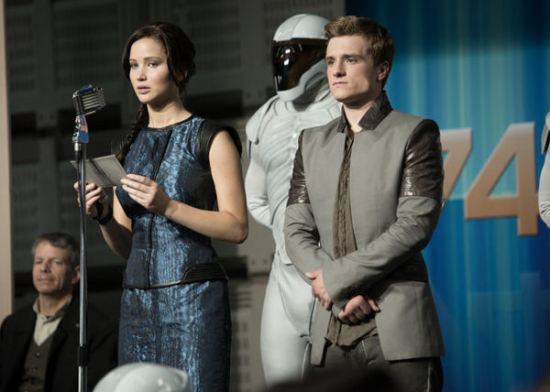
 If the stakes were catastrophic enough, the training techniques were sufficiently intensive, and the world were just that unforgiving, who’s to say preteens couldn’t be accelerated to maturity and transmogrified into hardened soldiers like today’s eighteen-year-old American military volunteers?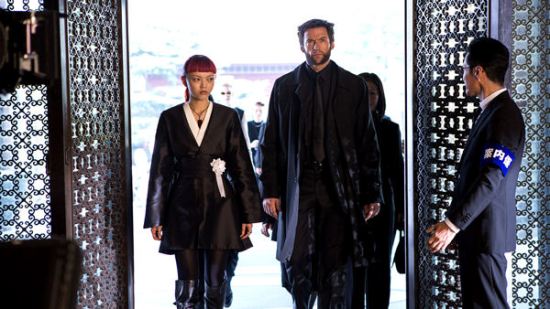
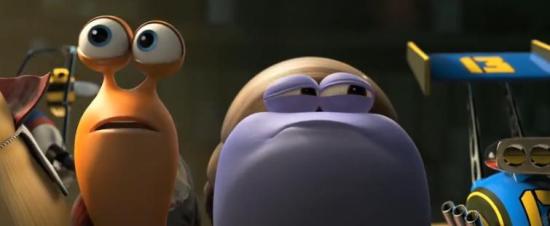
 Honest truth as of this evening: Midlife Crisis Crossover calls Monsters University “the Best Film of the Year”! So far. Yes, the year is young. Proclamation subject to change without notice, possibly during Oscar preseason.
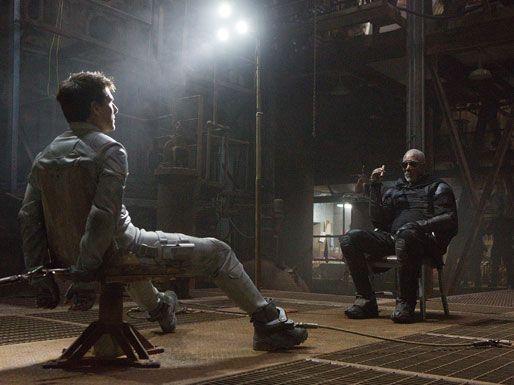 As with most big-budget sci-fi films nowadays, many viewers will spend half the running time of the new Tom Cruise vehicle Oblivion mentally tallying how many refurbished components they recognize from other sci-fi flicks. That doesn’t automatically make the film bad in my book, but it can be a pervasive distraction that turns my viewing experience into one long Highlights for Children puzzle. (Score one point for every borrowed element you spot! If you spot ten or more, you’re a Certified Movie Maven!) Oblivion is the second feature film from Joseph Kosinski, the director of Tron: Legacy, which was a visual wonderland and a surprisingly classy act considering it was a Disney sequel to a film I’ve disliked since I was ten.
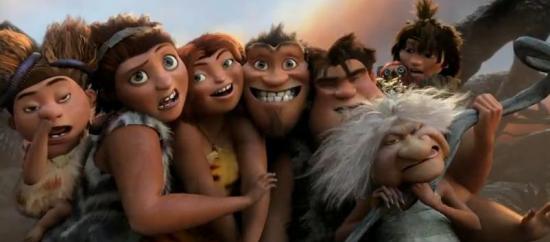 As unimpressed as I was with the trailer, The Croods turned out to be an unexpected delight, with a sincere message for parents who want to protect their children from the world, but struggle with the knowledge that someday that job won’t be theirs anymore. (Says the nervous guy counting down the days until his son begins college.)
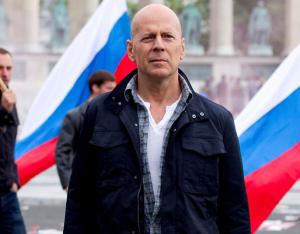 As much as I contemplated bowing out
  I hadn’t originally planned to see Quentin Tarantino’s Django Unchained. Unlike many of my longtime Internet peers, his films aren’t an automatic draw for me. Though Reservoir Dogs has been a qualified favorite of mine since college, the rest have been a mixed bag. His previous work, Inglorious Badwerds, was a mature, complex, riveting film about WWII and about the role of film in WWII, but was hampered by Brad Pitt’s Kentucky-fried B-movie brigade who snuck in from the direct-to-video good-ol’-boys revenge flick next door. From the trailers, Django looked to me like a 2-cool-4-school blaxploitation Western. Call it Shaft in Texas or Black Grit. Despite the talented cast involved and the joyous responses from the critical majority, it didn’t really sound like my kind of movie.
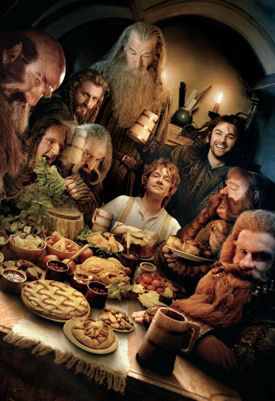 Of all the movies I wanted to see most in theaters this year, none required as long a wait as The Hobbit: An Unexpected Journey did. Due to circumstances beyond my control, I had to sit quietly and wait until its third whole weekend of American release before all schedules properly aligned. Those of you who wait to catch movies on DVD or via basic-cable hatchet job may roll your eyes at my impatience if you must, but I like keeping current on my movies, especially those that have been pinned on my mental calendar for months.

