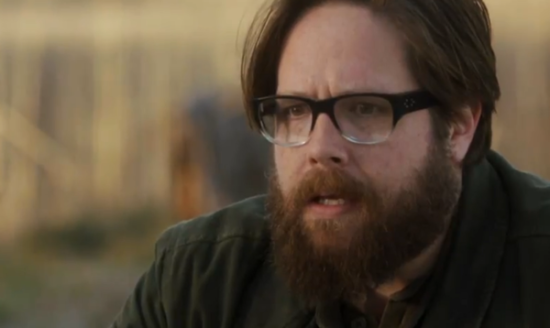
Former Google executive Aaron Pittman (Zak Orth), possibly the only sci-fi character in history that I can convincingly cosplay at conventions.
Former Google executive Aaron Pittman (Zak Orth), possibly the only sci-fi character in history that I can convincingly cosplay at conventions.
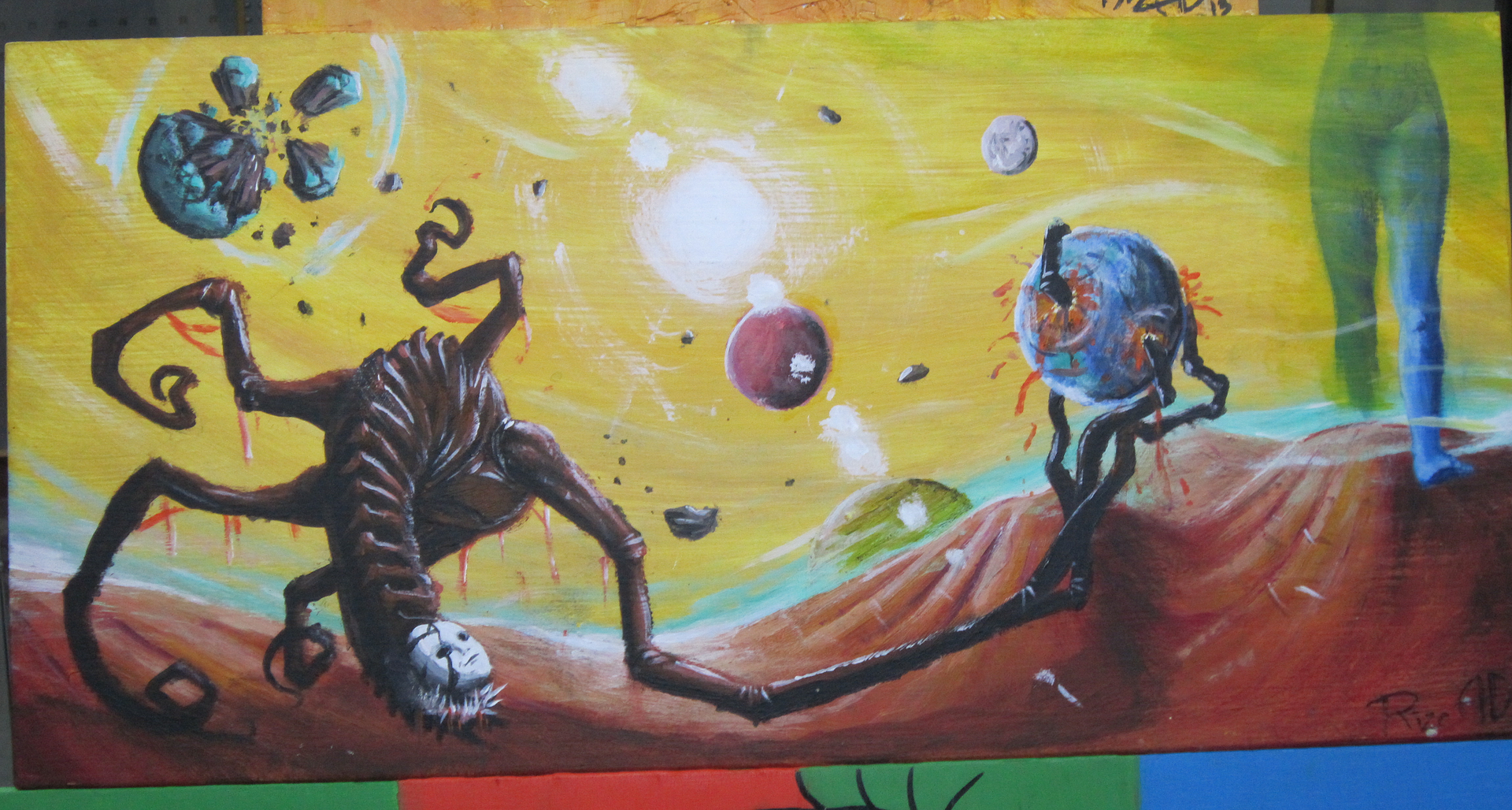
This weekend our local school system held its biennial art fair, a celebration of the efforts and creations of students of music and art from all age groups. I had one or two drawings on display in my junior year, though two decades later I no longer remember which ones. My wife and I were pleased to learn that my son, now in his final month of high school, would have several pieces on display this year. We made a point of checking out the fair not just for the sake of parental beaming, but because we knew this might be our last chance to view his works.
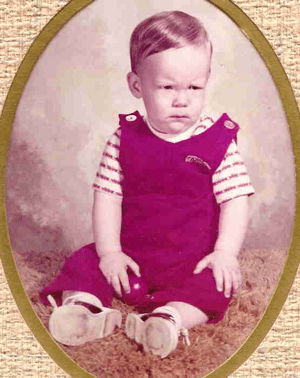 Behold the author at age two, picture taken by a professional photographer circa 1974. To this day I can’t believe my mom agreed to pay for copies. I do understand the parental compulsion to save memories and moments of our offspring’s precious childhoods. Judging by my scornful expression, I gather this was a day in my life better off forgotten. I’d hate to see the rejected takes.
This expression also sums up my mood for too much of today — a poisonous mixture of mandatory overtime in unhealthy, sleep-depriving amounts; stupid chronic muscle pain; a block’s worth of trudging through a nasty downpour without rain gear or even a jacket; and capped with a surprise medical bill from an office visit fifteen months ago. It was the kind of day that inspires little creativity and copious moping if I allow it to consume me. Ibuprofen and caffeine in varying doses soothed to limited extents, as did my wife’s usual daily abundance of kindness. She’s nifty like that.
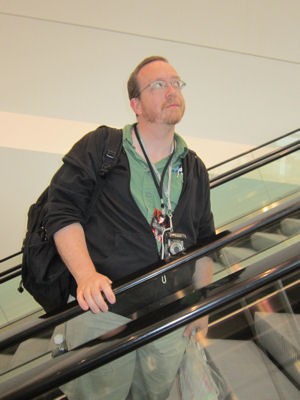
Portrait of the would-be writer at C2E2 2012. Appropriate soundtrack: the theme from Laverne & Shirley.

My son and I liked NBC’s short-lived, suspenseful Persons Unknown so much, we had to watch the last two episodes online after NBC had given up on it, even when we hadn’t. The cast included Chadwick Boseman (42), Daisy Betts (Last Resort), and Alan Ruck (Bunheads!). Not pictured: Reggie Lee from Grimm.
In this present age of DVD boxed sets, TV series completism is easier than it’s ever been in world history. Buy a complete-series set (or collect seasons one by one as funding permits); set aside multiple weekends for binge-viewing; repeat until you’ve become an authority on the series long after it departed the airwaves. Cable networks provide reruns of many series for your catch-up pleasure, if you’re patient enough to wait until the ones you missed take their turn. Even easier to complete are those fledgling upstarts that grab your attention, air two or three episodes, and find themselves axed by ill-tempered TV execs who’d rather be flooding the airwaves with cost-effective reality stunts instead.
 On April 28, 2013, the blog you’re presently skimming celebrated its very first birthday. Strange but true! I would’ve marked the occasion sooner and in a timelier fashion, but longtime readers might’ve noticed I had a hard time shutting up about that blasted C2E2 event for a few minutes. Even though our official six-part photo gallery is completed, I still have at least three posts’ worth of C2E2-related material in store from a different angle. Out of respect to my readers who might not be as enthralled as I am by local comics conventions, a broader, general-audience digression seemed in order. Also, I’d like to mark the occasion sometime before next New Year’s.
It was a singular event that inspired me to launch this humble site out of a combination of frustration and curiosity. (Expect the story behind said event in an upcoming entry. Enough time has passed, I think, that I can share it with fewer sour grapes.) I set forth on this strange journey to discover the answers to a long list of questions for myself, including but not limited to:
1. How many consecutive evenings in a row can I find a reason/excuse to write about something before I stumble and fail?
2. How much am I willing to sacrifice for the sake of writing?
3. Can I start such a project without a preexisting audience?
4. Is it possible to build an audience from the ground up? Not counting spammers?
5. What sorts of writing will I like best? And what kinds might become a dreary chore?
6. Is there a question #6?
7. Can I enjoy myself without being jealous of those who do this regularly for money?
8. Will anyone I know even care?
9. Am I alone in this?
10. Do I really like writing? If not, what am I supposed to be doing with my life?
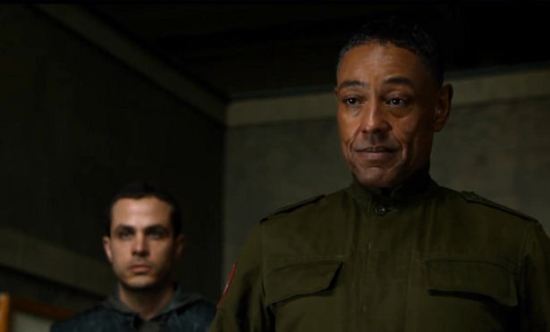
Meet Miles Matheson’s new partner! Can these two dangerous men share a post-apocalypse without driving each other crazy?
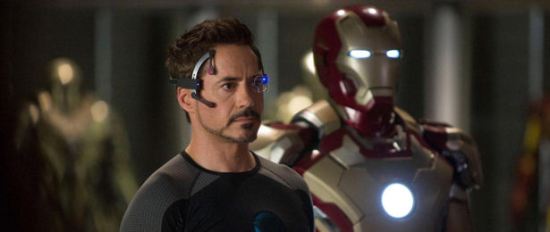
Tony Stark and his sidekick, the Bot Wonder.
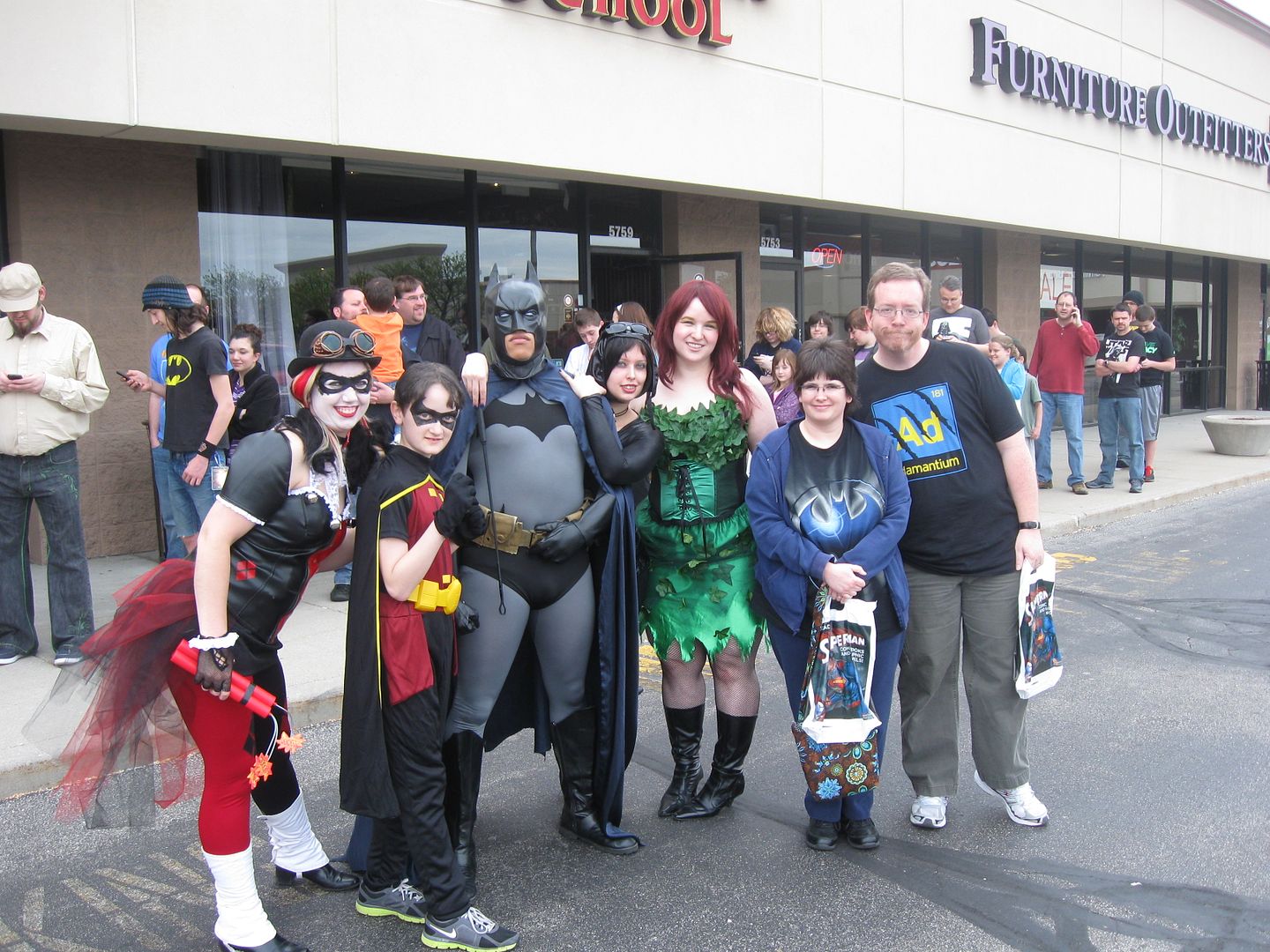
My wife and I are pleased to report that Free Comic Book Day 2013 was certainly a success at Downtown Comics on Indianapolis’ northside location. Not only were the costumed heroes out in full force as shown above — not to mention villains such as Harley and Ivy, and sometimes Catwoman –but in all of FCBD’s twelve years of existence and outreach, this was the first time I’ve had to wait in line for over half an hour to enter the shop.
The miniseries finale! The show-stopping conclusion! Our final batch of C2E2 2013 photos! Not including pics we took at panels, which I’m saving for separate entries! Otherwise it means we might finally move on to other subjects eventually! But not yet! Exclamation is an energy!
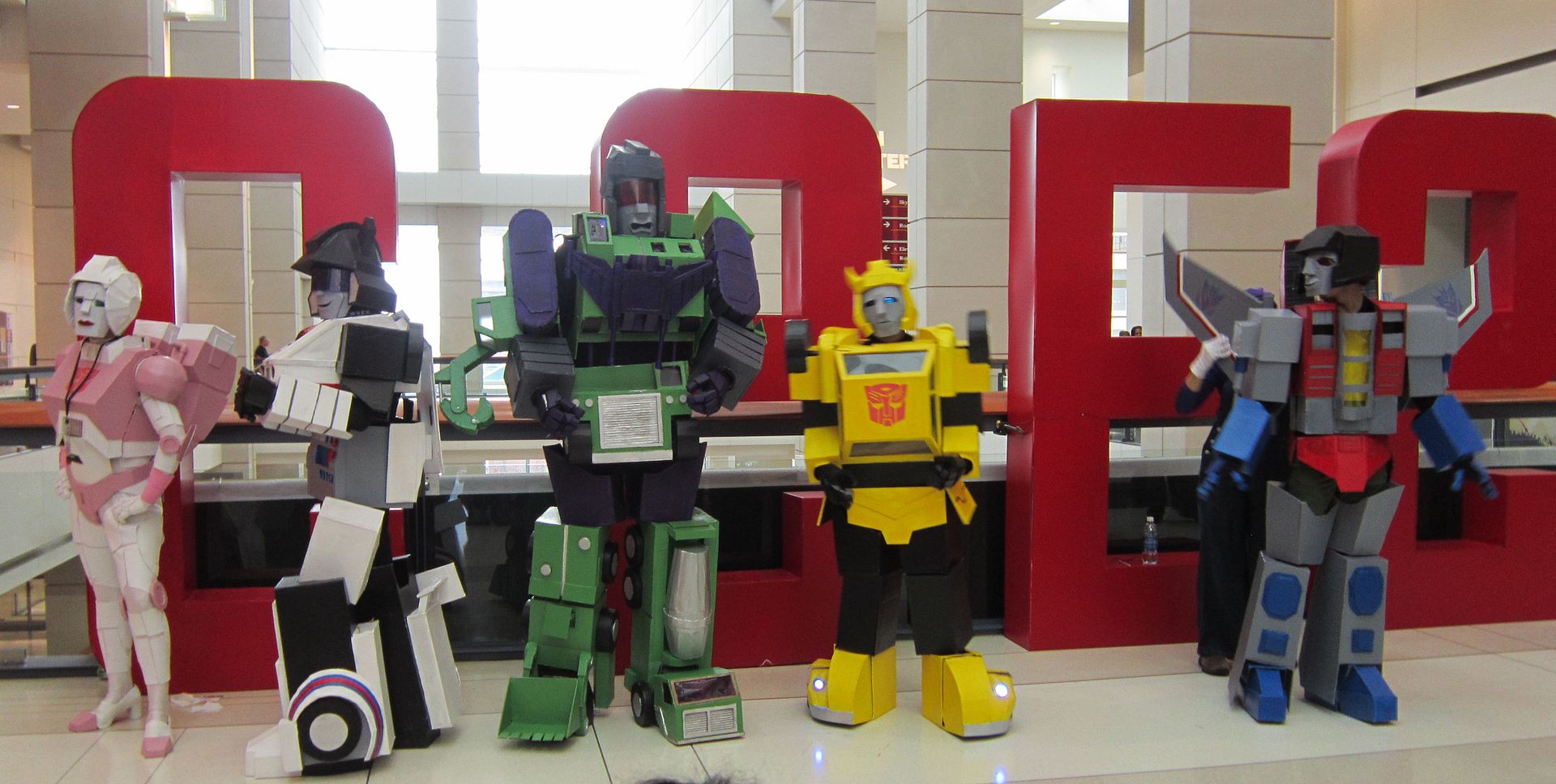
For my cousin the Transformers fan: Transformers unite for a logo photo shoot.
 I would be remiss in my comics fandom if I didn’t take a moment to plug the heck out of the twelfth annual Free Comic Book Day. And no one likes being remiss. No one.
Each year since 2002, American comic book shops participate in the hobby’s largest outreach effort, to alert the world that comic books are still being published, aren’t all terrible, and would be even better if more people bought them so that they could afford to make even more comics, or at least afford to make their current comics even better and prevent their writers and artists from being lured away by other, better-paying media. To that end, comic shops nationwide hand out free comics to any and all visitors — not all their comics, mind you, or else they all go bankrupt and Free Comic Book Day defeats itself. Rather, all the major comic book publishers, an impressive number of semi-major publishers, and a crowd of eager indie startups each publish their own FCBD specials for the occasion — usually all-new stories available nowhere else, except for a couple of Scrooge-like companies who serve lukewarm reprints, under the impression that newcomers will be none the wiser.
Continuing our coverage of last weekend’s fourth annual Chicago Comic and Entertainment Exposition (“C2E2”), this episode covers the sci-fi actors and comic book creators we met this year. With one exception, all of these were folks we’d never met before. My wife wanted to meet a few veterans of the Star Wars saga; I wanted to meet writers and artists responsible for great works.
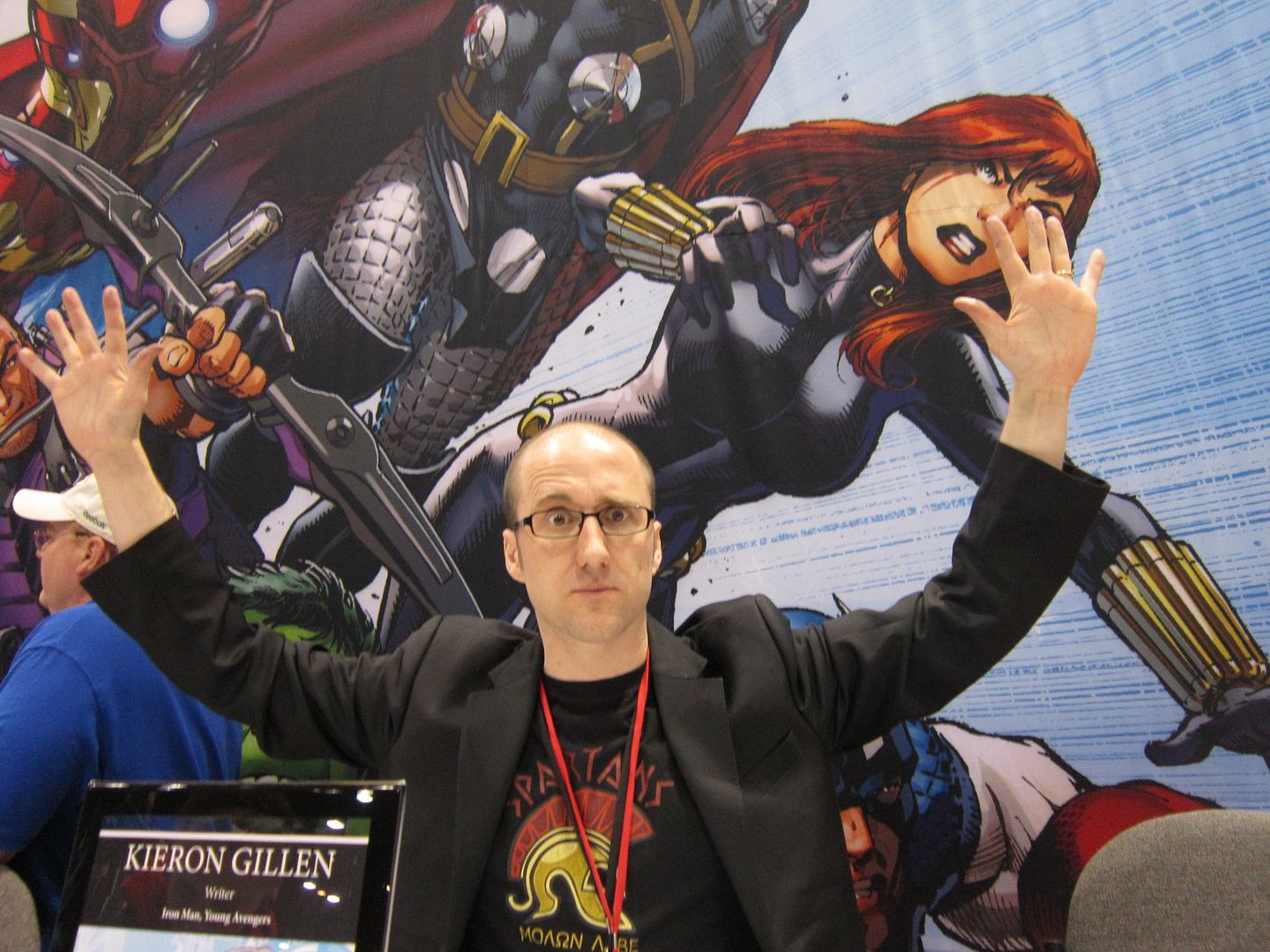
Highest priority on my own list: British music journalist turned comics writer Kieron Gillen. His two-year run on Journey into Mystery turned Kid Loki into one of the funniest, most heartbreaking characters in the Marvel Universe. His creator-owned Phonogram (two miniseries and counting) is a sharp fantasy mixing music, magic, and the people who live for both. Current gigs include Iron Man and Young Avengers, which both tend to rise to the top of my weekly reading pile.
Also: my favorite photo of the weekend. If you haven’t read at least one of his books, you’re what’s wrong with comics.
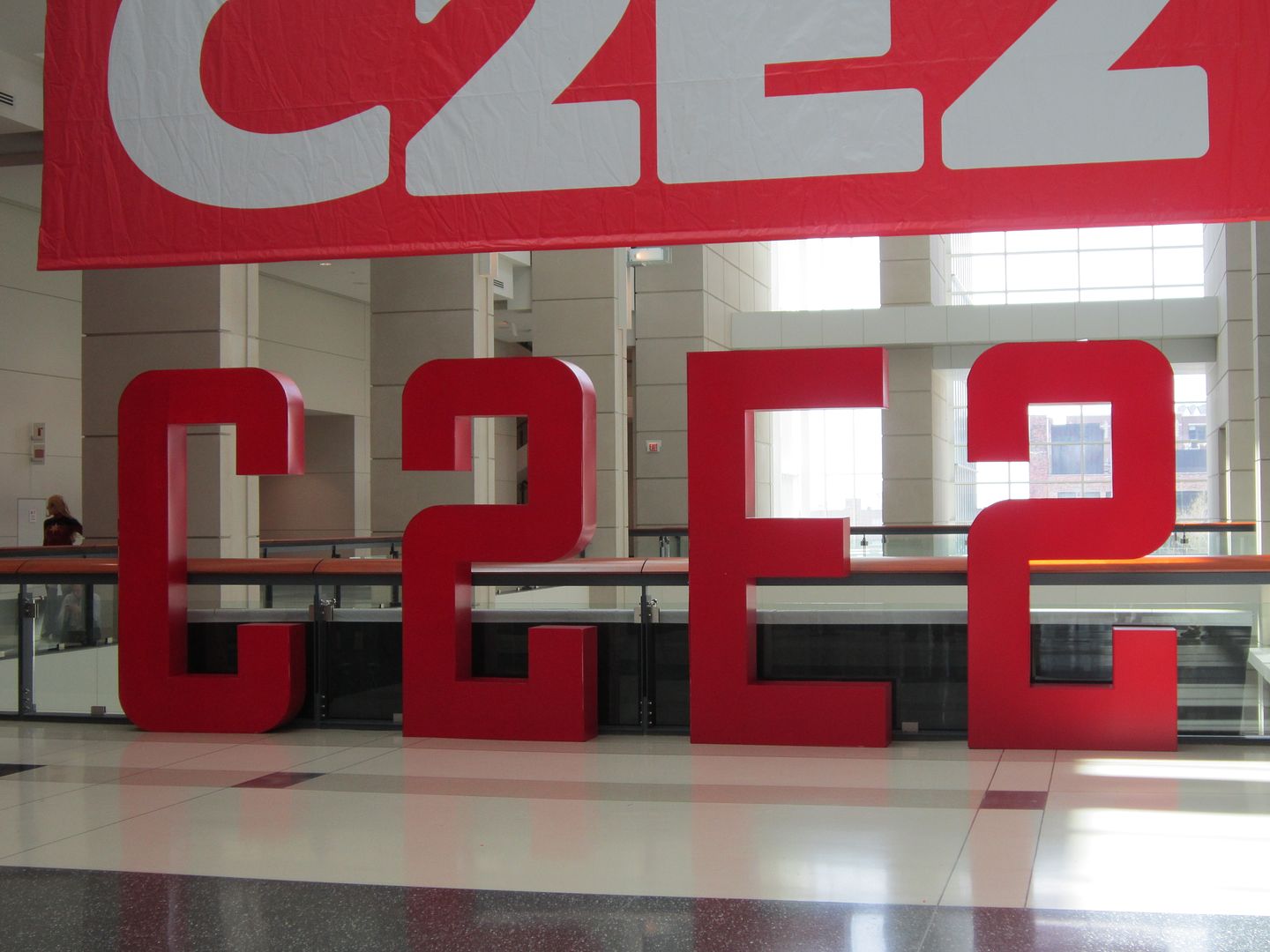
As we continue our coverage of last weekend’s fourth annual Chicago Comic and Entertainment Exposition (“C2E2”), we pause the cavalcade of costume photos and momentarily turn our cameras in other directions — starting with our surroundings. According to the Chicago Tribune, over 53,000 of us packed into McCormick Place over three days to share our common interests without fear, to celebrate the characters and stories that made a difference to us even when no one else got them, to encounter extraordinary sights beyond the purview of humdrum everyday life, and to buy cool stuff in person instead of from the distant comfort of our isolated world surveillance caves.
Every geek convention has its prerequisite components. And as any comic book collector knows, everything cool needs its own logo.
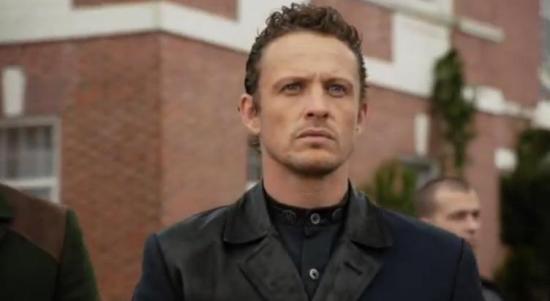
If something compels General Monroe to stop sulking in Independence Hall and walk around in open daylight, you know things just got real.
Continuing our coverage of C2E2 costumes and other notable sights from April 26-27, 2013. Disclaimers are same as before. Corrections are always welcome.
In this installment: comic-book characters! At last, Marvel fans can thrill to the sight of Juggernaut versus Deadpool, no holds barred. Meanwhile, the tenth Doctor Who looks on and laughs as if he’s above such tomfoolery.
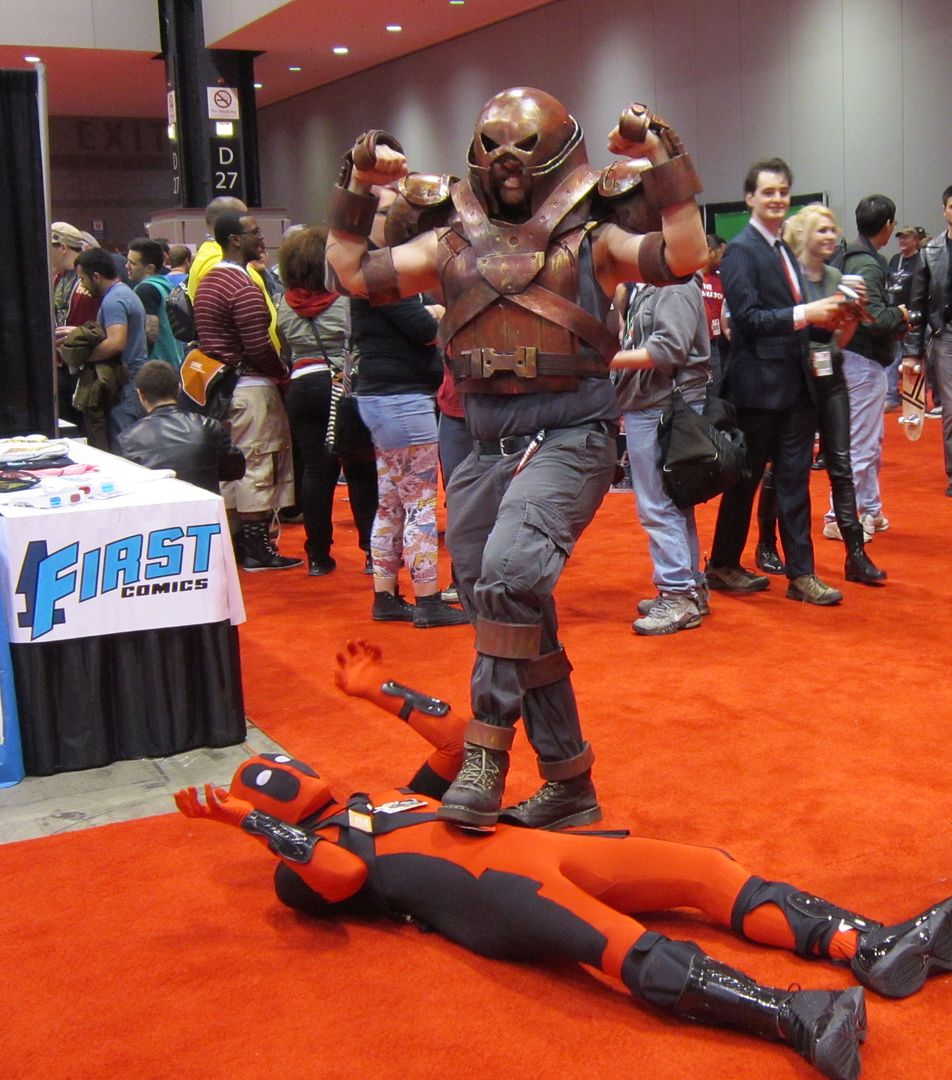
Continuing our coverage of C2E2 costumes and other notable sights. Disclaimers are same as before. Corrections are welcome.
Many of this year’s superhuman costumes were based on their filmic counterparts rather than the print versions. I wasn’t surprised to see Bane number among this year’s popular choices. If nothing else, the Dark Knight Rises version is warmer and less revealing than his original luchador ensemble.

As I type this, the fourth annual Chicago Comic and Entertainment Exposition (“C2E2”) its wrapping up this year’s three-day run, April 26-28, 2013. C2E2 dreams of becoming the Midwest’s answer to the fabled San Diego Comic Con, or any of the large-scale comic-book conventions that all your glamorous coastal cities hold and monopolize to a sickening, sybaritic excess. Not that we easily dismissed, frequently deprived, flyover-state residents are bitter. My wife and I missed the first year, but have attended every year since then. I’m there for the comics; my wife’s there for the entertainment. Our respective hobbyist enthusiasms enable a sort of synchronized synergy so that neither of us is bored all weekend long.
This week I’ll be sharing photographic souvenirs from our C2E2 experience, divided into media categories, to be apportioned and shared as quickly as possible. Many of them are costume pics, but not all of them. Several attendees may find themselves strolling through backgrounds as living, walking, oblivious Easter Eggs.
Four caveats for first-time visitors to Midlife Crisis Crossover:
1. My wife and I are not professional photographers, nor are we worthy of press passes. You’ll notice that right off. These were taken as best as possible with the intent to share with fellow fans out of a sincere appreciation for the works inspired by the heroes, hobbies, artistic expressions, and/or intellectual properties that brought us geeks together under one vaulted roof for the weekend. We all do what we can with the tools and circumstances at hand.
2. Though two of us took the photos, Midlife Crisis Crossover is written and cobbled together by this one old guy, who suffers from the continuing distractions of a full-time job. I plan to post our results as quickly as possible, but they won’t be instant. If any C2E2 attendees out there are searching desperately for pics of themselves or of other specific costumes they saw, I’ll gladly check our files and, if we actually caught you on camera, will cheerfully move you closer to the front of the line, or at least let you know which installment will be yours. We didn’t catch everyone. Despite DC Comics’ insulting expectations to the contrary, McCormick Place is kind of big and was filled with many, many people this weekend. Oversights happen.
3. We didn’t attend Sunday. Sincere apologies to anyone we missed as a result.
4. Corrections and comments are always welcome. I like learning new things, especially when I’m trying to write about characters and series that are beyond my particular geek foci.
Onward!
* * * * *
This year C2E2 had a separate costume contest each and every day. Friday’s was a smaller affair, but Saturday’s had a large corporate sponsor, bigger prizes, and (coincidentally?) fancier entries. Winners were selected in five different categories, along with a Grand Prize winner who took home $250.00 in American cash.
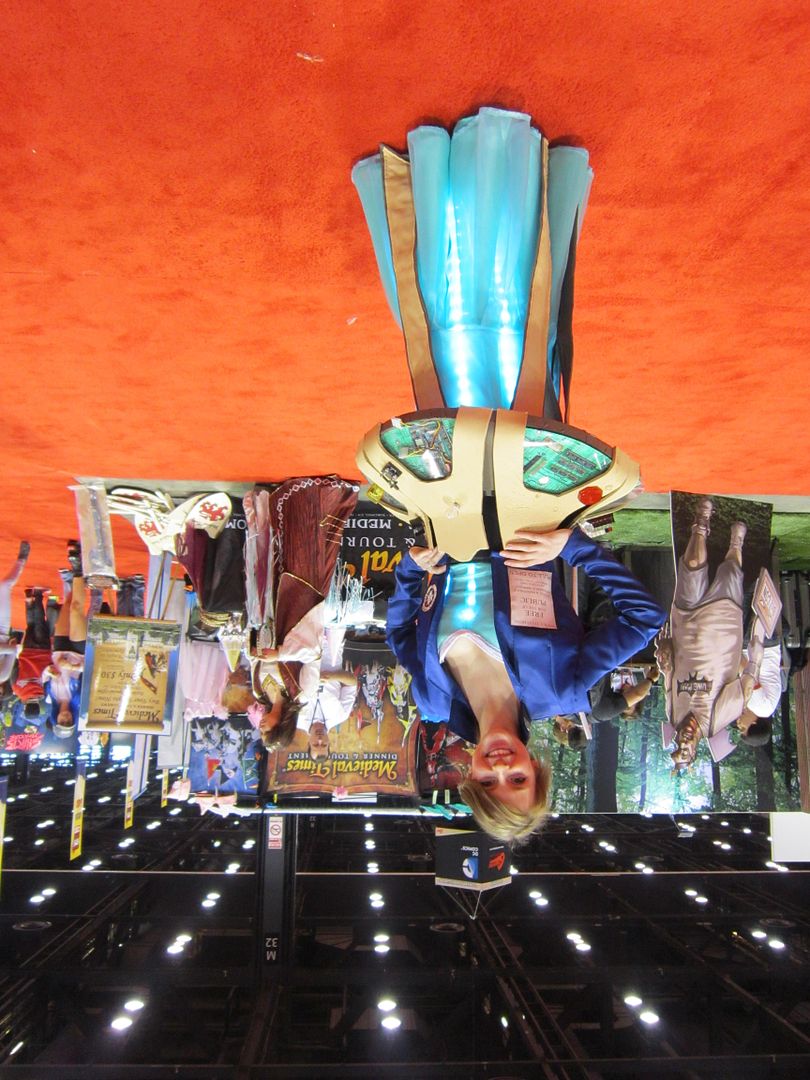
The Grand Prize winner: a living embodiment of the TARDIS console. Not quite “The Doctor’s Wife”, but circuit boards and working LEDs served as fascinating accessories.
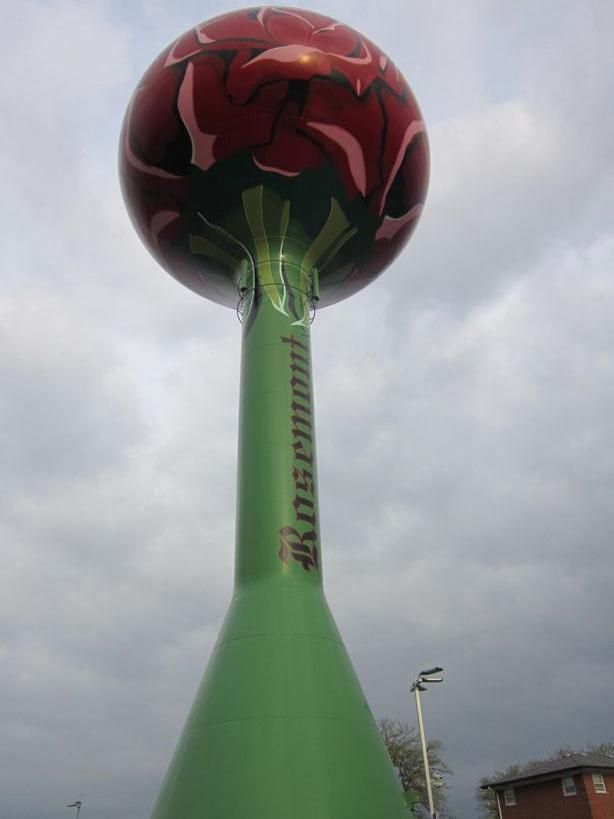 Greetings from busy, action-packed Illinois! After several hours spent at Day 1 of C2E2, my wife and I are glad to relax at last, off our feet and without our backpacks burdening us any longer. So far we’ve had a delightful experience, met several comics creators and a few Star Wars actors, acquired a few freebies and several quality items, and made plans for Day 2 on Saturday. Until then we’re enjoying the quiet ambiance of a particular hotel that’s treated us well before, up in the scenic village of Rosemont, down the street from the Donald E, Stephens Convention Center.
Careful readers, and anyone with a passing knowledge of the Chicago geek convention scene, may notice a discrepancy: C2E2 is being held at McCormick Place, a different convention center in a different Chicagoland section altogether, nearly twenty miles away. According to conventional convention wisdom, we’re doing it wrong.
We don’t mind. We have our reasons:
Previously on Midlife Crisis Crossover:
[This coming] weekend is the fourth annual Chicago Comic & Entertainment Expo (that “C2E2″ thing I won’t shut up about) at Chicago’s McCormick Place convention center, which my wife and I will be attending for our third time. As a tribute to this fascinating city, and an intro to C2E2 newcomers to provide ideas of what else Chicago has to offer while they’re in town, a few of this week’s posts will be dedicated to out experiences in the Windy City when we’re not gleefully clustered indoors with thousands of other comics and sci-fi fans.
Part One was worm’s-eye views of the skyscrapers and other upward fixtures about town. Part Two looked at Chicago from other angles. Part Three was our art appreciation festival. Today in Part Four: some of the local businesses that caught our attention and imaginations.
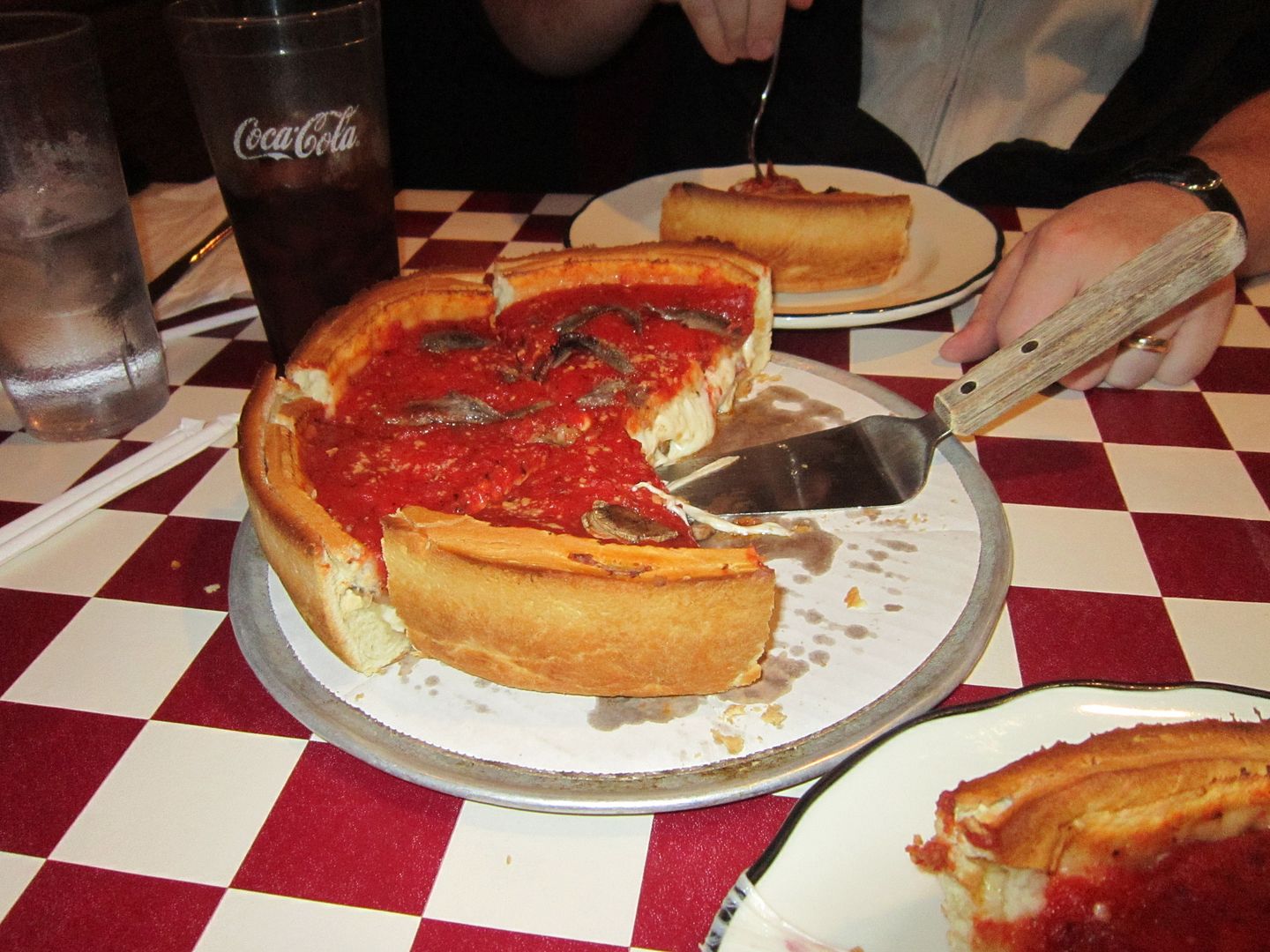
When you mention Chicago to anyone who’s ever been there, any restaurant discussion inevitably turns to deep-dish pizza. Chicago has no shortage of pizza places, and I’m sure everyone has their favorite. One of their largest, most well-known chains is Giordano’s. I’d trade half the nationwide pizza franchises in Indianapolis for a Giordano’s near us.
Pictured below: a pie of my own choosing, topped with sausage and anchovies. I’m the only person I know who stomachs anchovies, steeped as they are in salty richness.

If this isn’t filled with cool things by the time the convention is over, you’re doing it wrong. (Photo credit: cdedbdme via photopin cc)
Between us I’m the one most likely to forget to bring something. After attending so many of these shindigs, you’d think I would have a system in place by now. If you’ve never attended a convention but might someday when funding and opportunity permit, I’d suggest adding a few of the following items to your personal brainstorming list. I’m sharing this not only to spur your own ideas and decision-making processes but also to remind myself before the big day. I guarantee I’ll forget something anyway.

