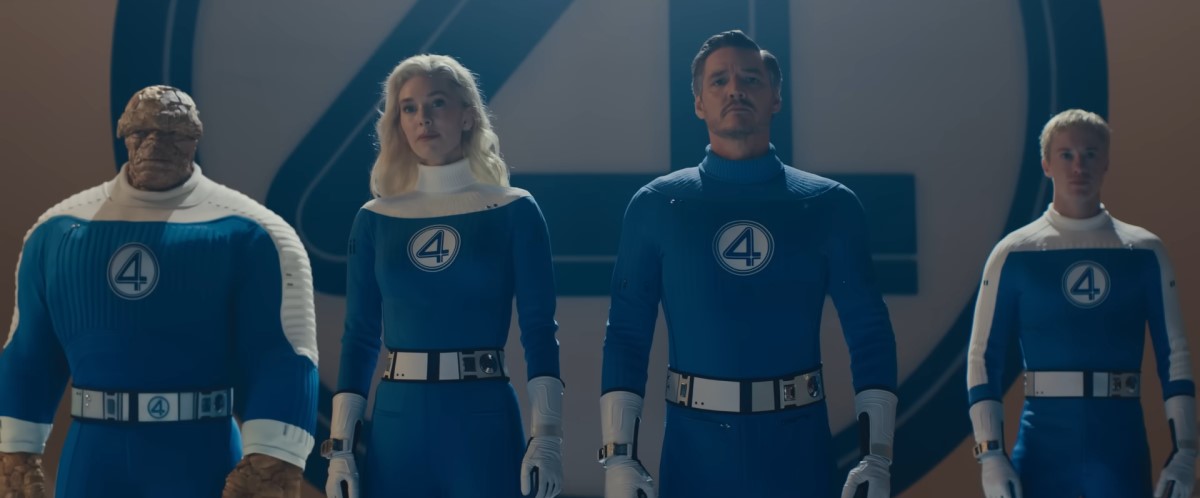
The World’s Greatest Comic Magazine™, now in theaters!
Critics call The Fantastic Four: First Steps the Greatest FF Film of All Time! It’s a low bar to crawl over, but it’s a relief Marvel didn’t smack themselves in the face with that particular rake again.
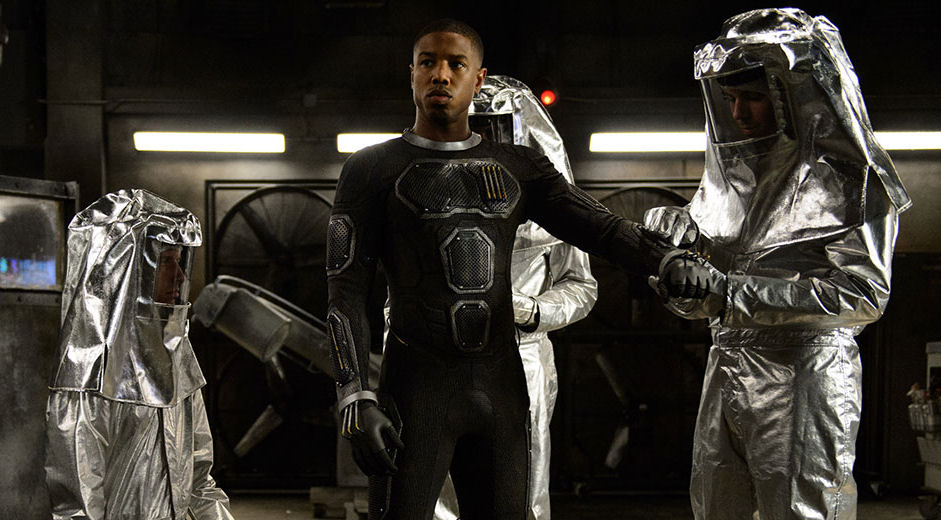
After Tim Story’s two earnest but awkward sitcom episodes and Josh Trank’s grimdark body-horror take — whose second half was amputated and replaced with prosthetic superheroics (and which “celebrates” its tenth anniversary next month) — most of us had given up on seeing Stan Lee and Jack Kirby’s greatest co-creation writ large on the big screen without half-baked compromises of what makes these intrepid scientist-adventurers tick. We settled for key cameos in the second Doctor Strange and Deadpool & Wolverine, but those tongue-in-cheek callbacks only gave us one member apiece sans the Richards’ dynamic. Writing solo comic relief is easy; writing affectionate, super-powered teamwork is hard, unless you’re Brad Bird paying homage with The Incredibles.
If we disqualify Roger Corman’s unreleased zero-budget fan-film available only as a bootleg (and for a reason), then fourth (ha!) time’s the charm as the First Family has been wrested from its former Fox overlords and eased into the Marvel Cinematic Universe via gentle alternate-Earth reboot courtesy of director Matt Shakman, who handled the amazing WandaVision but whose only previous feature, 2014’s barely existent Cut Bank, made less than 300 grand worldwide. Working with at least five different screenwriters (including Sarah Connor Chronicles showrunner Josh Friedman and Thunderbolts co-writer Eric Pearson), Shakman understandably kept the odds of success manageable by revisiting Lee and Kirby’s FF #48-50, the original Galactus Saga, which Story’s 2007 sequel Rise of the Silver Surfer bungled. Last time a classic non-origin comics tale was adapted twice to film, the end result was the abjectly time-wasting Dark Phoenix.
Thankfully First Steps avoids Rise‘s mistakes and not only better recaptures the essence (e.g., not making Galactus a hungry space cloud) but elevates Our Heroes’ comeback into grandiose science-fiction myth-making of the sort that comics used to do best, on a level meant to inspire our broken world even while barely resembling it. Among its many idealistic propositions: sure, everyone loves found families in movies and TV, but what if just once in modern times the day were saved by an actual family-family? Plus Dad’s best friend as honorary Fun Uncle?
 Midlife Crisis Crossover!