 After yesterday’s mandatory entry, it’s still the week before the Academy Awards ceremony, when Oscar fans have the best excuse to wax eloquent about the greatest awards show of all time. Also, they can indulge in as much hyperbole as they want without fear of retribution. ‘Tis the season.
As I mentioned yesterday, I saw all the Best Picture winners over the course of a several-year journey back in the 1990s. Some were invaluable enterprises that I’m glad I went out of my way to catch. Some…not so much. It’s been my geek experience that when you dedicate yourself to absolute completism on a given subject without fail or compromise, you find yourself having to tolerate a lot of damaged goods that you’ll regret later, in exchange for those bragging rights.
My list of the most regrettable Best Picture winners to date is thankfully shorter than my Best Best Pictures list. I’ve seen several Best Picture nominees that were far more toxic than most of these, but that doesn’t improve their own letter grades in my amateur-appreciator book.
Presented in no conscious order:
* The English Patient. Seinfeld mocked this beloved non-linear adaptation years before I saw it. I allowed it an impartial chance to stand or fall on its own merits nonetheless. I even watched it twice in order to grasp the complexities of the interwoven timelines. Despite my efforts, it never had a chance. Fun trivia: stories in which I’m expected to sympathize with adulterers will find me next to impossible to win over. It’s a sore spot inflicted by my own personal history, a flagrant bias I have no interest in setting aside. Out of Africa failed me for this same reason, though at least Meryl Streep didn’t compound her sins by abetting the Nazis in the name of lust.
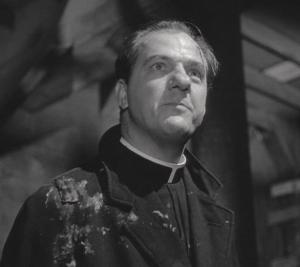 It’s that time of year again, the week before the Academy Awards ceremony, when anyone who pontificates online about movies to any degree is compelled to reflect on Oscar winners of years past and mine their history for writing material in lieu of relevant news updates and Oscar pool handicapping. I suppose I should add my two cents quickly, lest I risk being last in line, though I’m sure all mine are taken by other Oscar fans now, if not necessarily in matching quantity. Years ago I completed a lengthy quest to see every Best Picture winner from Wings to the present, just to see what would happen. Some I’ve long since forgotten, some were travesties I wish I could unsee, but many were worthwhile experiences.
 If you fear the aging process and aren’t remotely excited in seeing your possible future as a senior citizen writ large without any regard for your afterlife possibilities, chances are Michael Haneke’s new film Amour will be your scariest encounter of the year.
 I saw Silver Linings Playbook over a week ago and have been procrastinating saying anything about it because it’s tough to express my opinion without ruining the ending. I suppose the ads aren’t that coy about the gist of the film, but part of my enjoyment was derived from that rare feeling of having no idea what would happen next. Under the guidance of director David O. Russell (previously appreciated for The Fighter and Three Kings), I wasn’t sure if Playbook would be predictably atypical or deceptively Hollywood about the strange relationship between its May/December starring couple. Would it end in for-your-Oscar-consideration breakup and tears? Would it opt for the mushy happily-ever-after ending, complete with gratuitous dance party at the end? Would the payoff be just-good-friendship, like Lost in Translation? Would they both die horribly of movie cancer? My second-guessing was useless against it.
 After seeing Zero Dark Thirty as part of my annual Best Picture nominee binge, I exited the theater with just one thought on my mind: I’d hate to be a guy trying to start a new country in this day and age.
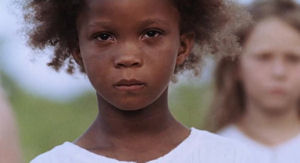 My annual quest to see all the Best Picture Academy Award nominees continued last weekend with the scrappy indie competitor of the lot, Beasts of the Southern Wild, a magical-realism fable about stubborn penury-dwellers who do their best to ignore ripped-from-the-headlines natural disaster and do whatever they want whether it’s healthy for them or not. Not since No Country for Old Men has a film left me so depressed.
 I hadn’t originally planned to see Quentin Tarantino’s Django Unchained. Unlike many of my longtime Internet peers, his films aren’t an automatic draw for me. Though Reservoir Dogs has been a qualified favorite of mine since college, the rest have been a mixed bag. His previous work, Inglorious Badwerds, was a mature, complex, riveting film about WWII and about the role of film in WWII, but was hampered by Brad Pitt’s Kentucky-fried B-movie brigade who snuck in from the direct-to-video good-ol’-boys revenge flick next door. From the trailers, Django looked to me like a 2-cool-4-school blaxploitation Western. Call it Shaft in Texas or Black Grit. Despite the talented cast involved and the joyous responses from the critical majority, it didn’t really sound like my kind of movie.
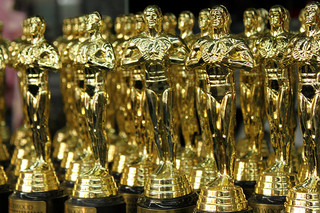 Every year I follow exactly one (1) awards ceremony, ye olde Oscars. I care not one whit for the Golden Globes, the Peoples Choice Awards, or the various awards from industry guilds or critics’ cliques. I have no use for the Emmys, the Grammys, the American Music Awards, the Harveys, the Eisners, any award set beginning with “MTV”, or the Tonys, though I might be amenable to the latter if Manhattan ever moved next door to me. Since I don’t care for sports, I’m also left out of everyone else’s trophy excitement for the Super Bowl, the World Series, or whatever basketball calls their season finale.
 Midlife Crisis Crossover!