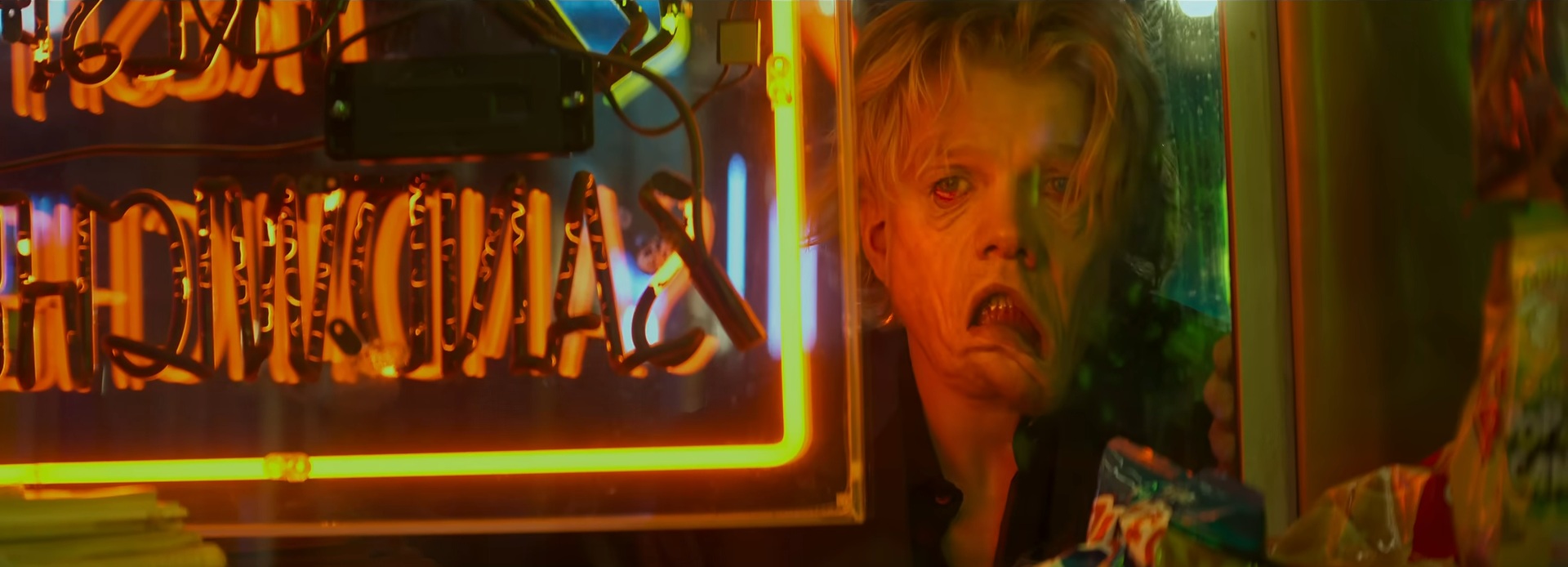
“Clayface”: Revenge of the Incredible Melting Man

Clayface looks through a nighttime, neon-lit store window, his face drooping like spilled pancake batter.

Oh, what a world, what a world…

Previously on Midlife Crisis Crossover: Under the supervision of James Gunn and Peter Safran, so far the all-new all-different DC Universe has been a welcome improvement over the DC Extended Universe, which collapsed after one flop too many. Maybe Gunn’s storytelling instincts provide more insightful guidance to their filmmaking recruits than meddling Warner Brothers execs ever did. As a trade-off, though, Gunn’s edgier predilections lean toward content aimed mostly at “mature readers”, as the comics warning labels used to say back in the day. Apart from Superman and a small portion of Supergirl, the DCU’s reboots — especially on its HBO Max front lines — have been catered toward a more “adult” audience. Only a fraction of DC’s total comics output used to push that boundary, even during the Vertigo imprint’s heyday, but now it’s their TV/movie standard. The contrast isn’t lost on those of us who grew up in the mainstream-media era of a thousand articles proclaiming their shocking discovery from the outside looking in: “Zap! Pow! Comics Aren’t Just for Kids Anymore!”

Aiming for the R or the TV-MA too often means shutting out some of those prospective merchandise buyers, but it’s also afforded them the latitude to take bigger chances with lesser-known, weirder characters from the dustier corners of their IP catalog, or dabble in tales that don’t lend themselves to classic good-vs.-evil superhero morality plays. Prime example: grotesque body horror! Filling that totally unnoticed gap in DC’s genre spread is Clayface, which by all rights should’ve been duller. It’s an origin story for one of the oldest Batman villains who never got to fight Adam West and Burt Ward. (Not to be confused with False Face, who was a different guy.) The mucky, shape-changing second-stringer finally gets the spotlight courtesy of director James Watkins (The Woman in Black, last year’s Speak No Evil) and the joint screenwriting talents of Hossein Amini (The Wings of the Dove, The Snowman) and the very busy horror master Mike Flanagan (though do not get me started on Carrie). It’s a wild, disturbing throwback to superhuman revenge thrillers of yesteryear — say, Cronenberg’s The Fly or Darkman or, well, Carrie — with a warning to us all: with creepy power comes really creepy temptations.

Continue reading →

“The Life of Chuck”: A Celebration in Dance and Math

Tom Hiddleston as a four-eyed accountant looking wistful toward an offscreen sundown.

Has the day arrived when we can watch new Tom Hiddleston projects without joking about Loki variants?

Stephen King is large! He contains multitudes! Your elderly parents’ dismissal of him notwithstanding, he hasn’t been “just” The King of Horror since at least the mid-’80s, though it can be hard to keep in mind considering the King-based film majority. Whenever one of his 60,000 works are adapted into something other than a zero-budget splatterpunk B-movie or modestly funded “elevated horror” streamer-filler, the trailers will always caution, “No, hey, don’t make that face, it’s cool, we promise this isn’t the Stephen King of Sleepwalkers or Maximum Overdrive or The Lawnmower Man! This is the OTHER Stephen King! Y’know, the one who single-handedly kept the basic-cable industry alive with looping reruns of Stand by Me and The Shawshank Redemption!”

That Stephen King returns with a semi-fantasy of bittersweet lyricism in The Life of Chuck, whose box-office figures have been grim, yet might hopefully earn a home-video renaissance in its next medium, where it doesn’t have to compete against the bigger studios’ re-nuked kiddie leftovers. Alas, today’s theaters can only contain up to 1.5 multitudes at a time.

Continue reading →

“Doctor Sleep”: Terms of Psychic Warfare

Doctor Sleep!

“After that night, I could never watch The Tonight Show again.”

I read The Shining during my big Stephen King phase back in high school. devouring nearly all his books from Carrie up through Gerald’s Game. I’ve run across Stanley Kubrick’s version countless times in TV reruns over the years and I think I’ve seen the entire film, but never in one uninterrupted, sequential sitting….though I did catch the 2013 documentary Room 237, which tabulated conspiracy theories about Kubrick’s deep, dark, double-secret meanings with which the film was allegedly fraught if you paid more attention to the backgrounds than to the actors.

Decades later, King returned to the remains of the Torrance family with the sequel novel Doctor Sleep, which I haven’t read. The sequel film it inspired from writer/director Mike Flanagan (Netflix’s The Haunting of Hill House) was escorted surreptitiously into theaters in the middle of an unusually packed November release schedule, then quietly ushered out the back doors, as if it were trying to escape the spotlight before Jack Nicholson came after it with an ax. As we prepare to trudge defensively into this long weekend in which internet folks will be slap-fighting over sequels that cling slavishly to their 40-year-old progenitors, why not pause and pay respects to a sequel that struck a dexterous balance between old confections and new directions.

Continue reading →