“Oppenheimer”: In the Shadow of Manhattan

Cillian Murphy with hair slicked back, sitting with a lit cigarette and staring wide-eyed into the distance as an offscreen General Matt Damon asks important questions that annoy him.

J. Robert Oppenheimer lit up more cigarettes than nuclear bombs. Believe it or not!

It’s 1986. DC Comics has begun publishing Alan Moore and Dave Gibbons’ Watchmen in monthly installments. It is one of several contemporaneous works that change the medium, for better or worse. Its most powerful character is Jonathan Osterman, a nuclear physicist turned by a freak laboratory accident into the nigh-omniscient, nigh-omnipotent Dr. Manhattan fourteen years after the end of World War II. Although the word “quantum” is never used in-story, his origin and intimidating powers are directly tied to the Atomic Age and the emergence of quantum mechanics. The American government employs him as an ultimate weapon, wins the Vietnam War, and changes the world and its timeline, for better or worse. As extrapolated by Moore as a sort of offshoot from quantum superposition, Dr. Manhattan perceives everything that has ever happened, is happening, or will happen to him all at once, rather than in chronological order, within/outside of each and every second that ticks by for us mortals (up to a pivotal event in the concluding chapters):

“There is no future. There is no past. Do you see? Time is simultaneous, an intricately structured jewel that humans insist on viewing one edge at a time, when the whole design is visible in every facet.”

It’s 2023. Oppenheimer is the new film from Christopher Nolan, the celebrated writer/director whose works often play with time-shifting and experiment with our perceptions in their storytelling construction, for better or worse. Tenuous connections stretch between the leapfrogging reminiscence of the fictional Dr. Manhattan and Nolan’s narrative of the real-life Mr. Manhattan Project himself, theoretical physicist Dr. J. Robert Oppenheimer. Much as Dr. Manhattan’s life is portrayed as a series of flashbacks that are out-of-order to us mortals yet interlock conceptually by the end, Nolan likewise eschews the standard Hollywood biopic formula (this happened, then this happened, then this happened, then The End), with a slightly modified form of the other standard Hollywood biopic formula (ordinate flashbacks within an end-of-timeline story frame) to chronicle the lives of the masters of the atom from interwoven character arcs. Certain images recur from one era to the next for foreshadowing and epiphanies and so forth. Ultimately the audience needs to experience the whole tapestry before they can truly see each component for what it is.

Continue reading

“Tenet” abed? Tides reversed it? Debate, ‘Net.

Tenet!

walking into a 2020 theater like

Has Christopher Nolan’s Tenet conked out too soon in its beleaguered theatrical run, snoozing while no one’s watching? Would it have performed proportionately better had it not capsized in the vast, tumultuous sea change that is the Age of Coronavirus? Perhaps it isn’t fair to argue over its meager box office profits while much of the American theatrical market is shut down or heavily restricted, but argue over it we must, for we are Of The Internet. Sometimes we must ponder things deemed insignificant in the grand scheme, and sometimes we go to tortuous lengths to justify our painfully contrived palindromic headlines.

Continue reading

“Dunkirk”: Three Short Films About a Big Busy Beach

Dunkirk!

Probably the closest we’ll ever get to a Bane solo movie.

Before we begin our usual movie discussion format, I present to you a historic milestone here on Midlife Crisis Crossover: our first guest movie reviewer! Reprinted here in its entirety is the full summation of Christopher Nolan’s latest Best Picture nominee Dunkirk as presented to me by my wife Anne, a lifelong World War II student/expert who can deliver literally hours’ worth of speeches on numerous aspects of it without using a single note card. It’s extremely rare for Anne to write or co-write anything here on MCC because she thinks of this site as my thing and prefers to read my creative takes on our experiences. She’s contributed to maybe three or four past entries, tops, but now we can add our Dunkirk entry to her official MCC bibliography.

Take it away, Anne:

“THEY TOOK THE MIRACLE AT DUNKIRK AND MADE IT BORING!

…ladies and gentlemen, a round of applause for Anne, won’t you?

Continue reading

Top 10 Best Scientific Inaccuracies in “Interstellar”

Interstellar!

The stars of Zero Dark Thirty and Gone Baby Gone spent months crafting an accurate portrayal of apocalyptic farm life.

[Courtesy Spoiler Warning. Plot points ahead.]

So you and your friends have turned Interstellar nitpicking into your new favorite spectator sport? You say you’re not content with forgiving the movie its flaws, or with engaging in the more challenging activity of brainstorming reasons why they’re maybe not flaws? Or you’re possibly dissatisfied because Christopher Nolan’s new movie barely passes the Bechdel test and only scores 1/3 on the Blackdel Test. (The latter is of course rarer and tougher, requiring a movie to contain (1) at least 2 black characters (2) who talk to each other (3) about anything except race. And a 1/3 is an amazing score compared to most other major-studio films.)

Internet users have had no shortage of axes to grind over the movie, and it’s telling that Interstellar has pulled in over $120 million at the U.S. box office without winning the position in its first three weeks of release. It’s on track to become Nolan’s lowest-grossing film since The Prestige, possibly because everyone has been quick to dissect it and find faults since it doesn’t meet their narrow expectations of what a film about spaceflight should look like. Or everyone’s still bitter about The Dark Knight Rises. Hard to say.

Personally, I liked what Interstellar tried to do and appreciated what it accomplished, even if it may not become The Film That Saved NASA. I embraced it despite its problems, theorized why some viewers may have been overthinking it, and thought that some of its errors, omissions, and outrageous fallacies were actually pretty cool.

From the Home Office in Indianapolis, IN: Top 10 Best Scientific Inaccuracies in Interstellar:

10. Tom eating a giant dust burrito and exclaiming, “Mmmmm, farm-to-table dust!”
9. The tap-dance shoe-clicking in Anne Hathaway’s zero-G musical number
8. McConaughey insisting he needs to lose forty pounds
7. The ship slingshots around the black hole and reappears in the Enterprise‘s 1986 humpback-whale tank
6. Waterworld suspiciously free of the wreckage of Kevin Costner’s career
5. Reciting the same poem three times somehow does not summon the ghost of Dylan Thomas
4. Fifth Dimension ruled by a black gay female Mr. Mxyzptlk
3. Rocket fuel magically synthesized from used copies of Failure to Launch
2. Matt Damon in a movie without top billing

And the number one Scientific Inaccuracy in Interstellar:

1. God appears to the crew; reveals His true name is Oscar Consideration.

“Interstellar”: Space Enough at Last

Interstellar!

“Hey, kids! Wanna journey into a wondrous land whose boundaries are that of imagination?”

Not all of Christopher Nolan’s films are five-star masterpieces (here’s nodding off at you, Dark Knight Rises), but the foundation of new ideas that underpin each production guarantees we’re in for a unique cinematic experience rather than prefab Hollywood conveyor-belt product. Witness the debate-class spectacle that is Interstellar — one-half homage to 2001: a Space Odyssey, one-half admitted love letter from Nolan to his daughter bearing messages of hope, curiosity, science, human achievement, and the strength of intangible, immeasurable bonds that keep us connected even when we’re parsecs apart.

Continue reading

“Man of Steel”: a Farewell to Role Modeling

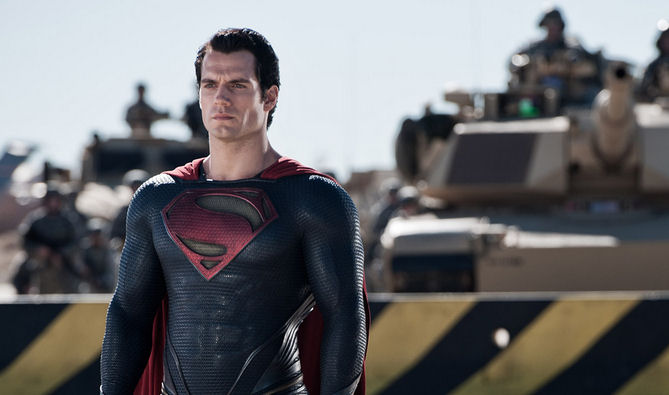
Henry Cavill, Superman, Man of SteelIn Part One of this two-part non-epic, I covered what I liked best about Man of Steel, the new Superman treatment from director Zack Snyder, producer Christopher Nolan, and screenwriter David S. Goyer. As I mentioned there, despite the team’s successes on numerous fronts, I thought the film had room for improvement.

Those examples require a courtesy spoiler alert because a few of my complaints happen toward the film’s back end and involve major plot points. If you plan to see it pristine and unspoiled for yourself, abandon the reading trail here, and I look forward to seeing you next time.

Onward, then, to what I liked least:

Continue reading

“Man of Steel”: the Greatest Zack Snyder Film of All Time

Henry Cavill, Superman, Man of SteelAfter seeing Man of Steel today, that sweeping statement occurred to me and required two minutes’ worth of thought to confirm. It helps that I’ve seen all six of director Zack Snyder’s feature films to date, even the animated ones.

Of the other five: Dawn of the Dead was not bad for what it was — arguably his second-best, but not quite essential. 300 broke visual ground and set new standards for faithfulness in graphic-novel-to-movie adaptations, but makes me snicker in a few extraordinarily hammy spots. I’m glad someone finally adapted Watchmen so we could all say it’s been done and move on with our lives, but its brazen attempt to do for super-hero movies what the original miniseries did for super-hero comics didn’t have nearly the same intellectual impact or coherence. Legend of the Guardians: The Owls of Ga’Hoole admirably demonstrated the visual techniques of 300 for an all-ages audience, but was incomprehensible unless you’d read the entire book series beforehand and could spot the dozens of pages’ worth of vital backstory that was excised for the big screen. (Thankfully my son was a fan and explained the crucial omissions.) And Sucker Punch was a skeevy, disjointed orphanage for outlandish sci-fi skirmishes that had apparently wandered away from the nonexistent movies that spawned them.

In comparison to the rest of the Snyder oeuvre, Man of Steel stands tall as his boldest achievement yet.

Continue reading

C2E2 2013 Photos, Part 2 of 6: Costumes from Screens Big and Small

Continuing our coverage of C2E2 costumes and other notable sights. Disclaimers are same as before. Corrections are welcome.

Many of this year’s superhuman costumes were based on their filmic counterparts rather than the print versions. I wasn’t surprised to see Bane number among this year’s popular choices. If nothing else, the Dark Knight Rises version is warmer and less revealing than his original luchador ensemble.

Bane, Dark Knight Rises, C2E2

Continue reading

Will “Man of Steel” Be the First Good Superman Film Since Jimmy Carter Was in Office?

Henry Cavill, Superman, Man of SteelYou’ve seen the newest trailer for Man of Steel that was just released Tuesday evening, right? The one labeled as “Trailer #3”, with lots more Jor-El in it? At least once?

No? Really? No one mentioned it in your social circles? Do you believe in watching movie trailers online? Is your Internet connection above 56K? You don’t hate super-hero movies, do you? Not that I wouldn’t respect that, mind you. My oldest relatives aren’t super-hero fans, either. I’ve included it at the end of this entry, just in case. See, I even saved you a few seconds of Googling.

Continue reading

“Following”: the Last Gap in Your Christopher Nolan Collection

Christopher Nolan, Following, Criterion CollectionAs of this weekend, I can now say I’ve seen every full-length motion picture directed to date by Christoper Nolan. In December 2012 his debut, Following, earned a Criterion Collection re-release. Shot in 1998 in 16mm black-and-white, it was minimally restored for this edition, with the original aspect ratio and much of the old-media grittiness retained for historical verisimilitude. Its seventy speedy minutes contain an amateur no-star cast (as well as crowds of unwitting “extras” captured on the fly) and were shot for just five thousand dollars, a bargain compared to other self-financed B&W debut films from the same decade (e.g., Kevin Smith’s Clerks, Robert Rodriguez’ El Mariachi). With such budgetary constraints and no established names involved in the creative process, a casual browser would expect Following to feel like a young-adult vanity project fit only for YouTube.

Shame on that casual browser, then, with so little faith in the Nolan brand name. Continue reading