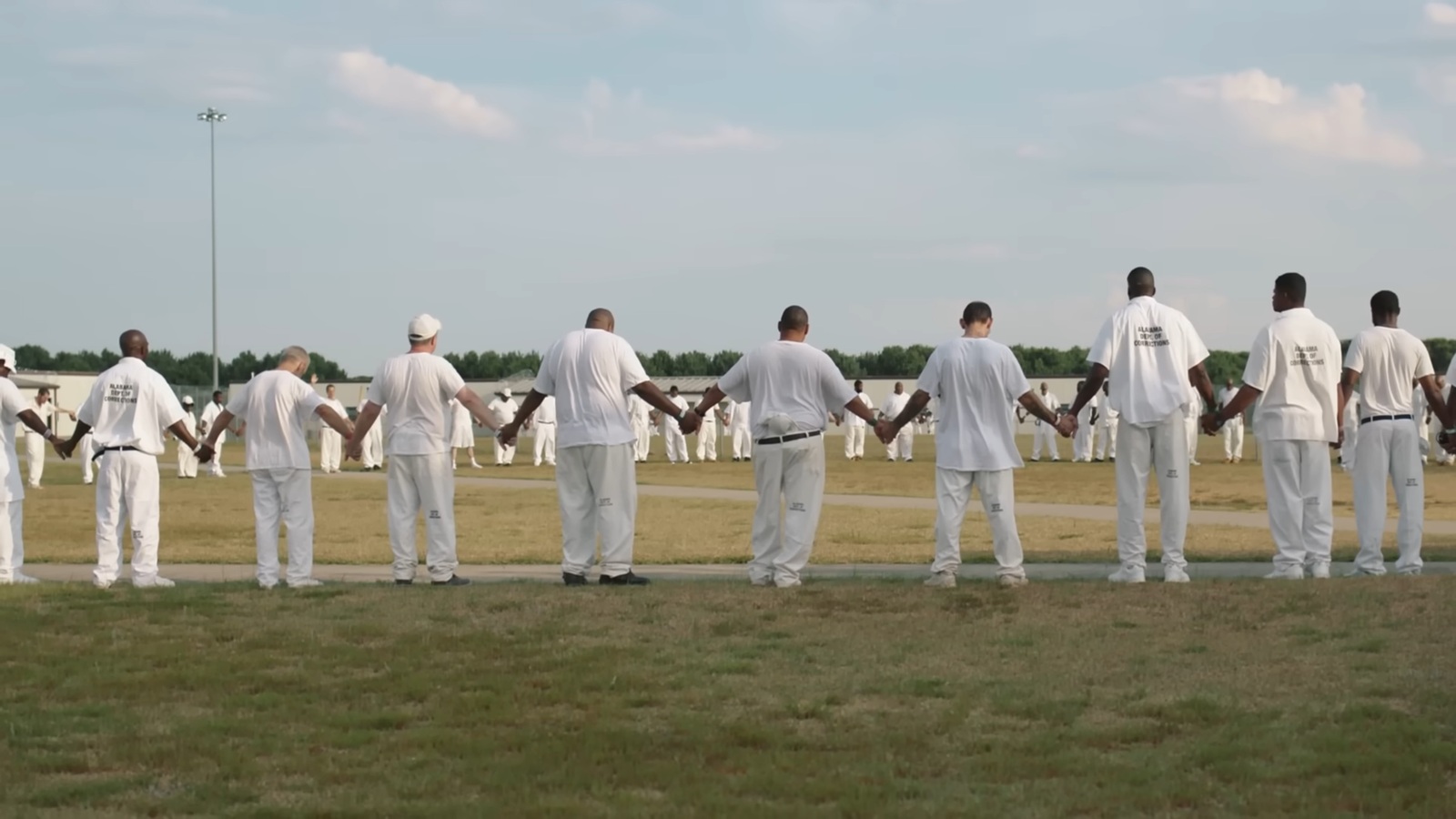
A prison community comes together and tries to be better men in The Alabama Solution, when they’re not festering in filth and the guards aren’t beating them to death.
Previously on Midlife Crisis Crossover: Oscars Quest ’26 continues! Once again we see how many among the latest wave of Academy Award nominees I can catch before the big ABC ceremony on March 15th, including entire genres that I’m terrible about sidestepping during the other 10½ months of the year.
Documentaries can be keen, but much like reality TV, they aren’t part of my routine intake. Guided by the recommendations and/or questionable motives of the voting body of the Academy of Motion Picture Arts & Sciences, I’m compelled to watch at least five of them every year. In that spirit this wordy bumpkin presents a rundown of this year’s nominees for Best Documentary Feature in all their instructive, immersive, saddening, maddening, hilarious, harrowing, bewildering natures. I streamed all five online, though one of them had a narrow window of opportunity. These are recapped alphabetically, not ranked — I’d recommend any of them, though you might not want to watch them back-to-back unless sudden-onset depression is your idea of a good time. Just like the Documentary Short Subject category, apparently everyone forgot to document any excellent inspirational triumphs last year.
The Alabama Solution (Max). Current generations never learned the hard lessons of Attica — or for that matter the previous nominee about same — judging by this harrowing prison exposé down in the heart of Dixie, where one inmate single-handedly tries to run a prison’s entire mental-health and rehab wing on his own after their accredited counselor resigns. In the midst of the murder of Steven Davis, a white inmate allegedly thrashed by a Black guard, directors Andrew Jarecki (Capturing the Friedmans, HBO’s The Jinx) and Charlotte Kaufman follow the underground resistance led by Robert Earl Council (a.k.a. “Kinetik Justice”), Melvin Ray, and others asserting their human rights and dignity using their access to law books, smuggled smartphones, and grassroots connections with peers in other Alabama prisons. While they rebuke the squalid living condition and violent overseers, meanwhile on the outside Governor Kay Ivey announces her big plan to spend $900 million to replace eleven existing prisons with three slightly more rehabilitative mega-prisons. The climactic statewide protest, coordinated among all the prisons’ populations, doesn’t end as savagely as Attica’s did, but it’s no less despairing to see law enforcement doing less rehabilitating and more oppressing, not unlike captors in some of the countries America professes to be better than.
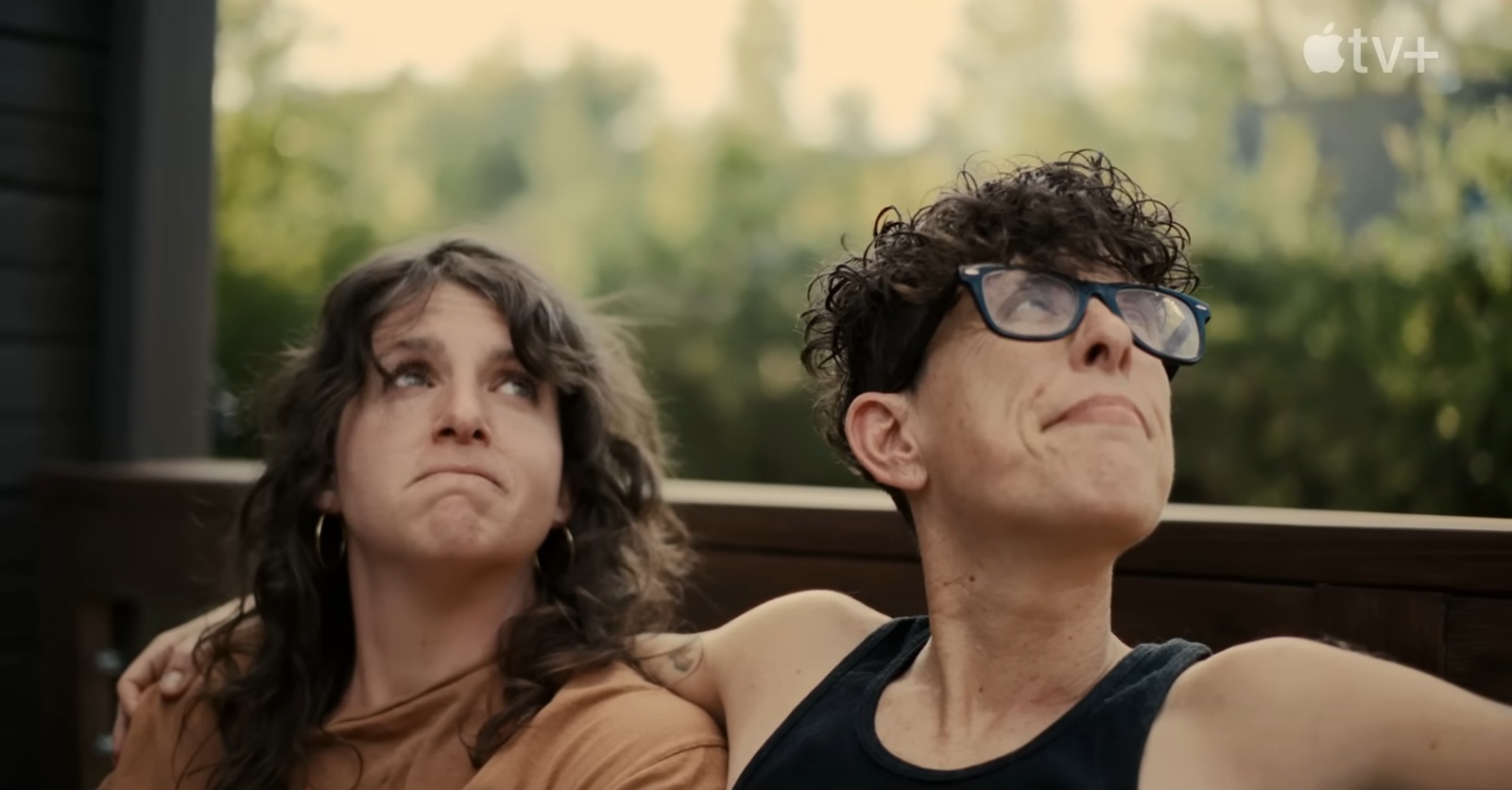
Bittersweet times for happy writer/editor couple Andrea Gibson and Megan Falley.
Come See Me in the Good Light (Apple+). Director Ryan White (Netflix’s The Keepers) evokes a more traditional kind of mourning than the other nominees — a tribute to genderqueer spoken-word poet Andrea Gibson, living life as loudly, proudly, hopefully, eloquently, and fervently as possible in the final years of a slow-burn cancer ordeal. Little victories alternate with major setbacks, while loved ones do what they can to make the most of their final days, culminating in one last sold-out performance, which welcomes a nifty cameo from producer and opening act Tig Notaro, among other friends who pop in here and there. As a square peg who doesn’t always get insights into all the existent circles out there, I laughed, I teared up, I leaned in, I noted a dedication to pronouns that never comes up much in the pop-culture mainstream, and I lamented missing an entire body of work during the beloved artist’s lifetime. And I teared up again just now while trying to grab a screen shot from the trailer, which speaks to how deeply this one’s burrowed into me.
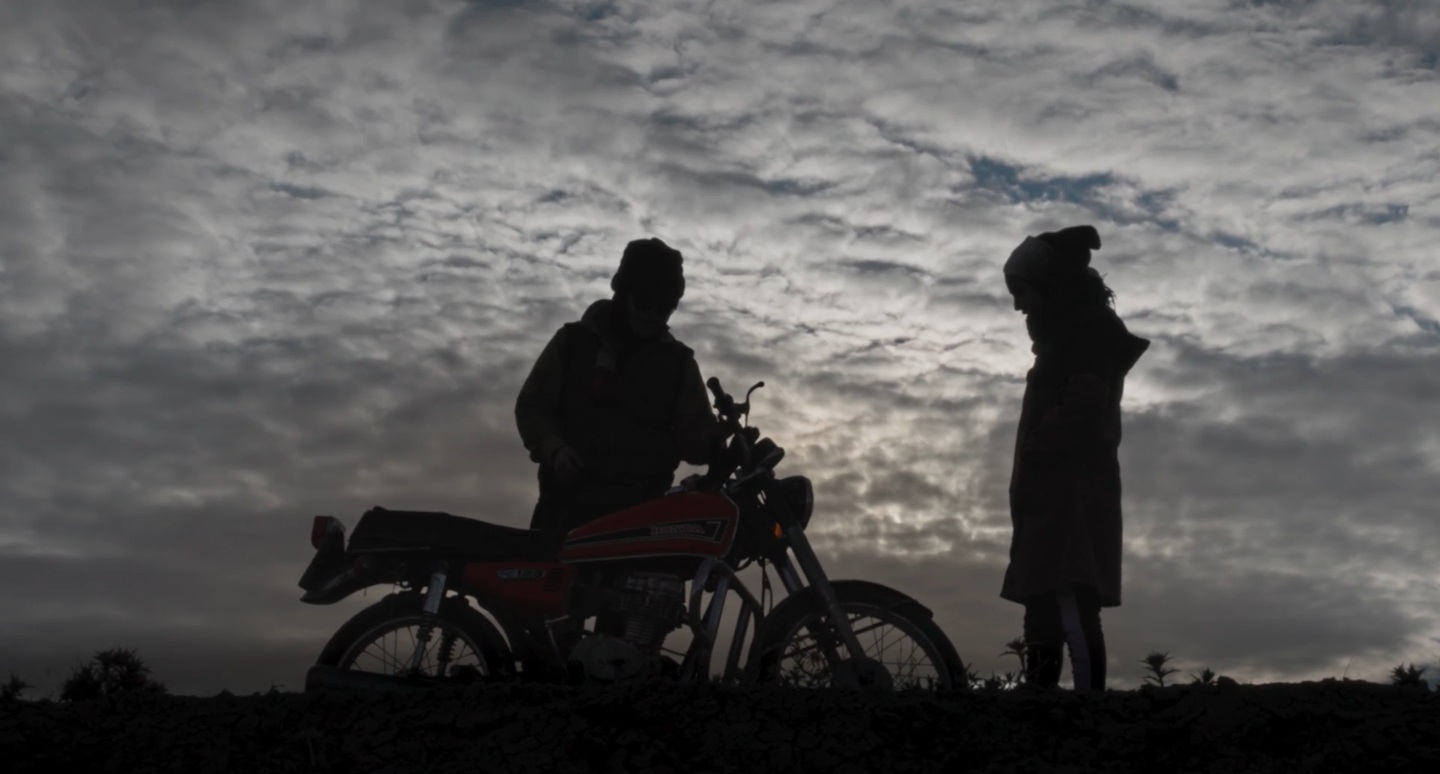
The Real Bikeriders of Iran.
Cutting Through Rocks (L.A. County Museum of Art via Slipstream, available 2/20 – 2/26 only; will reportedly be on DocPlay/Prime March 2nd). Also from the Department of Gender-Nonconforming Pioneers: Sara Shahverdi is a 43-year-old unmarried Iranian woman who’s elected to councilwoman against the odds and pours all her energies into fighting for the rights of the local girls not to be married off at puberty to icky older men, and instead to receive educations in the four Rs — reading, ‘riting, ‘rithmetic, and, for her teenage students, riding motorcycles. An apt, longer-form companion piece to the Afghanistan-set Oscar winner Learning To Skateboard In A Warzone (If You’re A Girl), Rocks is occasionally lighthearted as the townspeople celebrate their local crusader and the girls learn the ins and outs of The Wild One way, but grows more ominous as Shahverdi butts heads with the broader patriarchy-at-large and is eventually forced to defend her very gender identity in court. If she’s judged to be too uppity, the potential consequences include a forced sex-change operation (perhaps an “old world” term, but it’s the term they use). Though not all is ultimately lost and the denouement is discouraging, at least it ends with an optimistic, gently defiant epilogue — one last ride into the sunset.

A happy classroom with happy learning, just like the good ol’ days before the current century of propaganda doom.
Mr. Nobody Against Putin (Prime rental). “Love for your country is not about putting up a flag. It is not about singing the anthem either. It’s not about exploitation and propaganda. Love for your country means saying, ‘We have a problem.'” Haunting words of wisdom from Pavel Talankin, event coordinator and videographer for a school in Karabash who loved the students and his job until Russia’s agenda for the 2022 Ukraine invasion expanded into revisionist propaganda requirements for schools, all the better to inculcate them into an unquestioning zeal and line ’em up for the call-of-duty as disposable cannon fodder. With an offscreen assist from credited co-director David Borenstein (a Nova contributor), Talankin set his fears aside, stuck with his job and recorded everything — the faxed federal directives, the frightened and confused staffers, the bootlicking history teacher whose favorite historical figures were Stalin’s cruelest henchmen, and more. America may have its own problems, but it’s the nadir of despair to be brought face-to-face with so many kids drowning in lies and eager to sign up for the never-ending war on Eastasia.

“I have evidence of all these happy Black kids running around outside and being kids. YOU HAVE TO DO SOMETHING.”
The Perfect Neighbor (Netflix). Arguably the most enraging nominee of the lot records the risible actions not of a totalitarian regime in a faraway land, but rather those of one of America’s deadliest enemies right here at home: Florida Woman. Acclaimed Emmy- and Peabody-winning filmmaker Geeta Gandbhir (also nominated this year for co-directing Children No More: Were and Are Gone) takes an unusual editing approach with a headline-news controversy sourced mostly through police body-cams. In this case the subject herself made it possible: a cranky harridan moves into an average neighborhood where kids run and play outside (just like the good ol’ days!), hates the happy-kiddie noises and their supposed missteps on the wrong grass (earning her nickname “The Karen” among everyone), and frivolously calls 911 so many times, Gandbhir likely had metric tons of footage at her disposal. That includes numerous closeup scenes with the subject herself as well as interviews with local mom Ajike Owens before a final confrontation with The Karen ends with Owens shot dead. A vigorously verité indictment of “Stand Your Ground” laws veers close to becoming just another didactic “white person murders innocent Black and gets away with it” tragedy, and I’m not 100% sure we should be witnessing Owens’ kids at the exact moment they’re told their mom’s dead, and the soul-crushing tears that the body-cams keep watching and watching and watching, but the tale’s final twist is a wholly unexpected grace note and a laudable PSA to trigger-happy folks who’re feeling a bit too emboldened and thinking they can just open fire on their neighbors with impunity.
Discover more from Midlife Crisis Crossover!
Subscribe to get the latest posts sent to your email.
 Midlife Crisis Crossover!
What a wonderful service to fellow film lovers to watch all five documentary nominees and write them up so thoroughly. The Alabama Solution sounds genuinely harrowing and important, and the framing of Robert Earl Council fighting for dignity from inside is exactly the kind of story that should be seen. I really appreciate the honest note at the end about it not being ideal back-to-back viewing since that kind of honesty helps readers prepare for what they’re signing up for. Outstanding Oscars coverage!
LikeLike