“Godzilla Minus Zero” vs. Ghidorah the Exploder

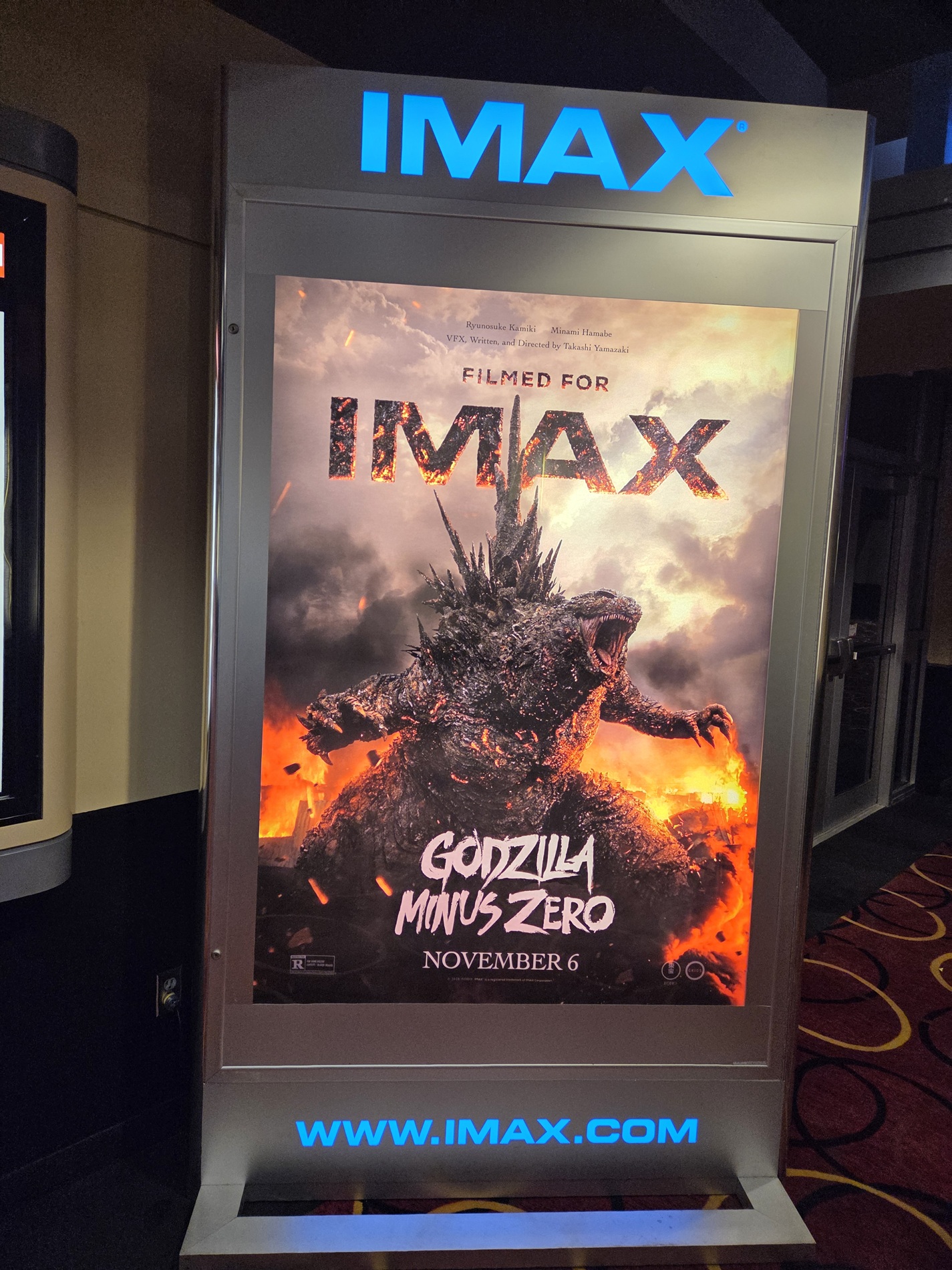
IMAX poster for "Godzilla Minus Zero" standing in an IMAX theater. Monster real big go RAWR.

Yep, we saw an IMAX screening! Warning: roars and explosions may deafen sensitive viewers.

Previously on Midlife Crisis Crossover: We hailed the anointing of Academy Award Winner Godzilla when the amazing colossal Godzilla Minus One snatched the Best Visual Effects Oscar away from four American blockbusters, the first Japanese film ever to receive that honor. Beyond the impressive monster-mashing magic, writer/director Takashi Yamazaki’s greatest achievement was developing human characters whose fates mattered to us — the downtrodden soldiers and citizens who suffered the devastating consequences of their warmongering leaders’ hubris and were left to stand up for themselves against the wrath of the famous giant lizard while officials sat in their burning offices and insisted, “THIS IS FINE.”

Following in the footstep craters of that origin reboot, Yamazaki and our human heroes return in Godzilla Minus Zero, The King of the Monsters’ first R-rated feature. The sequel’s historical outrage feels dimmer, but the casualties and the gargantuan viscera are more disturbing than ever, especially if you’re in the sixth row of an IMAX showing and wondering to yourself, “Wait, is all the blood…actually red? In a Godzilla movie?”

Continue reading →

Yes, There’s Foreshadowing After the “Godzilla Minus One” End Credits

Japanese woman on a train looking out the window, which hazily reflects a rampaging Godzilla heading her way.

Warning: objects in reflection may be scarier than they appear.

In 2019 writer/director Takashi Yamazaki’s historical-fictional The Great War of Archimedes voiced a younger generation’s righteous anger at the hawkish military statesmen who may have deceitfully goaded Japan into World War II and examined the question, “What if one lone hero had risen up to expose their lies and tried to avert the war? Also, what if he were a math whiz?” After their country’s resignation from the League of Nations, officials who oppose elder colleagues’ proposal to build the ultimate super-battleship — clearly the herald of a forthcoming offensive rather than an ostentatious precautionary defense — recruit an antiwar savant to prove the mega-boat would be wildly more expensive than they’re letting on and hopefully foil their plot. The filmmaker best sums up the hubris of those would-be conquerors in a chilling boardroom debate where one contemptuous admiral dismisses the will of the people that is so beneath him: “Without the state, the people are nothing.”

Currently available for streaming on Amazon Prime and some ad-supported services, Yamazaki’s fast-paced high-stakes calculus melodrama expresses regret over the arrogant leadership of yore and proves their audiences are far more open-minded to supporting niche sub-subgenres than Americans are. But it’s especially striking for its opening set piece, a flash-forward to the final fate of the Yamato — a harrowing, five-minute ocean-disaster modern-CG epic mash-up of Titanic and Pearl Harbor bloodier than both films combined. Viewers will know The End going in, yet watch in escalating horror how some dissenting officers might’ve foreseen that outcome but played along anyway.

Four years later Yamazaki’s American theatrical debut follows the same train of recriminating thought as he shifts focus from pre- to post-war Japan. Amid the remains of its decimated cities — not just the two commemorated in all “NEVER AGAIN” speeches and essays ever since — he reemphasizes the past sins of the ruling class and celebrates the indomitable spirit of the Japanese people who rise up to defend their homeland against a flagrantly aggressive common foe. They band together not with their government but despite their government. As it happens, that foe is a famous giant lizard.

Continue reading →