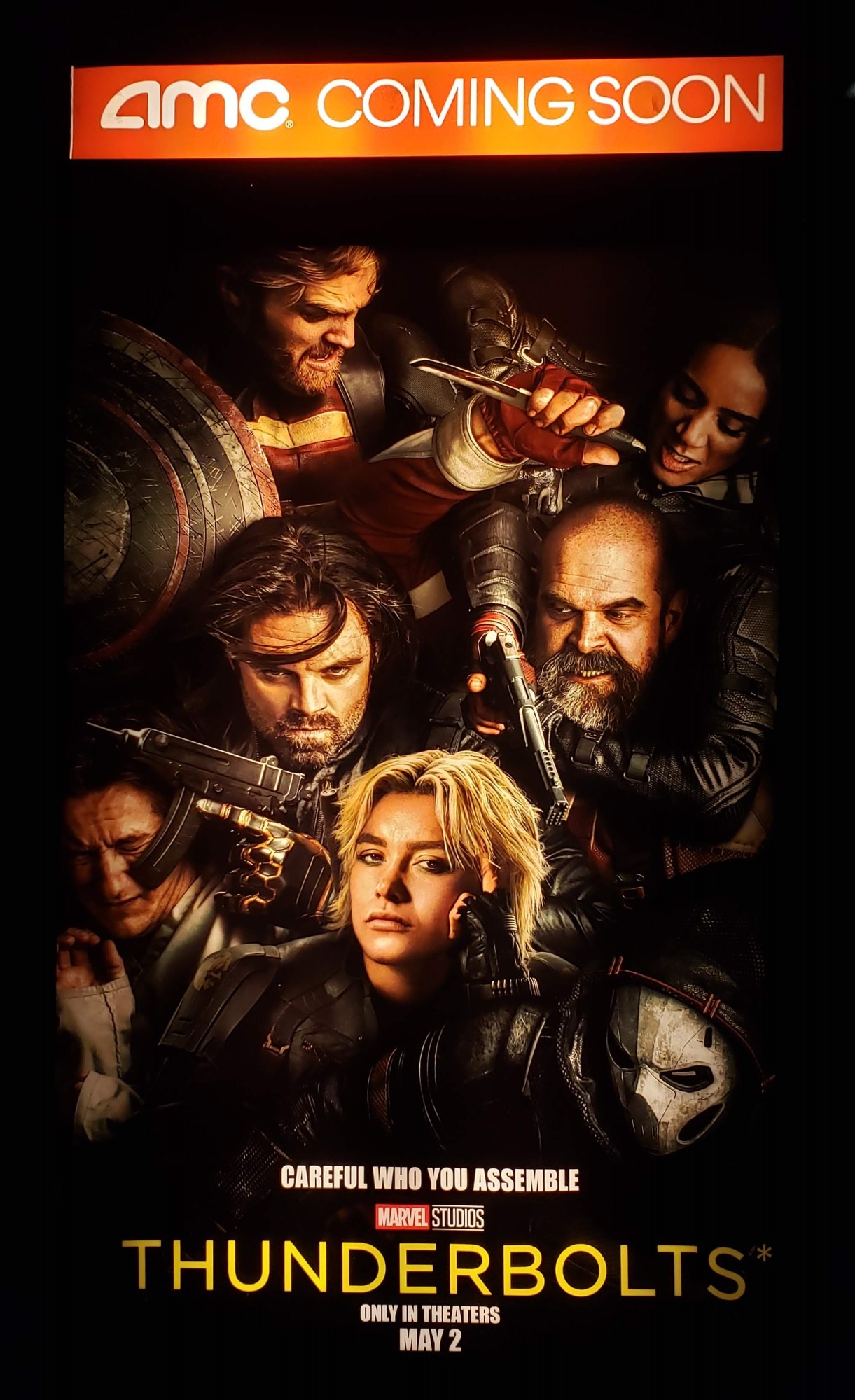
Yes, There Are Scenes During and After the “Thunderbolts*” End Credits

Movie poster with the entire cast squirming to fit into the frame at the same time. Florence Pugh is disgusted to be here.

They’re here to save Marvel from themselves.

Previously on Midlife Crisis Crossover: we mention Marvel a lot! It isn’t perfect, but it’s our thing — the movies, the comics and the TV shows, though I generally only compel myself to write about the movies. We enjoy keeping up with all the shows as well, for better or worse, which has been a boon to our viewing comprehension as the Marvel Cinematic Universe (which turns 17 this month!) has accumulated an entire transmedia continuity that sees characters commuting back and forth between small screens and the silver screen with very few footnotes to catch up latecomers. The filmmakers do try to simplify matters in the theatrical releases, recapping in thin brushstrokes and sometimes reducing years-old backstories to loglines buried inside badinage, like a stapler suspended in Jell-O. You can reach in, grab it and deal with the mess; or just stare at it hanging there and go on with your day.

Sometimes strong performances can go a long way toward convincing an audience to just roll with it. Such is the case with Thunderbolts*, the MCU’s 36th feature film and the final film in Phase V, which means nothing anymore. In the same way our last Marvel film Captain America: Brave New World was essentially a sequel to 2008’s underrated Incredible Hulk, Thunderbolts* is a direct follow-up to 2021’s pandemic-hobbled Black Widow, where much of the cast debuted. The events here mean a lot more if you watched that first (among a few other prior works), but director Jake Schreier (Paper Towns, Netflix’s Beef), Widow screenwriter Eric Pearson, and co-writer Joanna Calo (The Bear, BoJack Horseman) do a noteworthy job of tying character arcs together while balancing accessibility for first-timers.

(And really, why not invite more partygoers from outside? Hard as it might be to believe, every MCU film is someone’s first. One of my coworkers never watched a single Marvel movie before sitting down in front of Avengers: Endgame. Yes, she definitely had questions, but my point is it happens. In an era where we keep hearing Theaters Are Dying, the solution is not to imitate comics’ impenetrable continuity and turn them into a geek country club, a market-driven approach that’s arguably contributed to the last three or four Comics Are Dying eras.)
Continue reading

Yes, There’s a Scene After the “Black Widow” End Credits

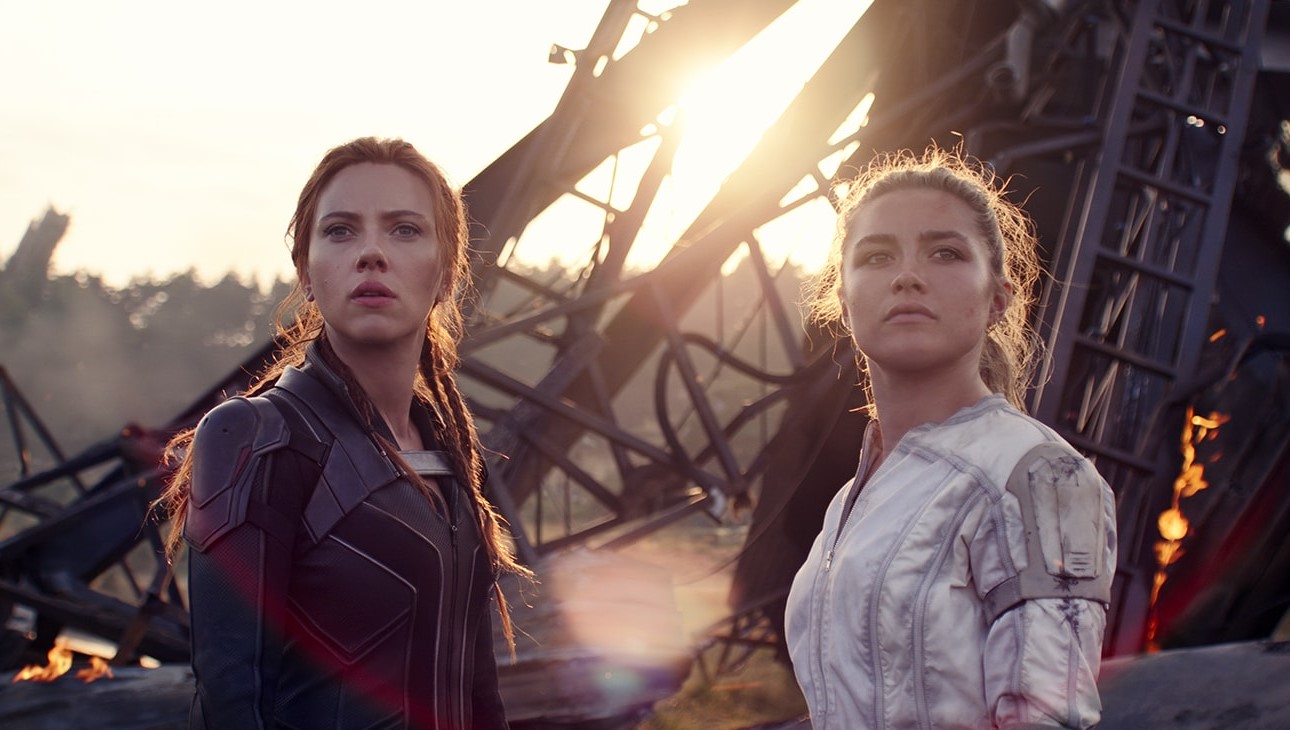
Marvel's Black Widows!

Never, ever mess with war Widows.

Nearly a decade in the making and fourteen months in the releasing, the next chapter in the Marvel Cinematic Universe is here at long last, two years after Spider-Man: Far From Home capped off Phase III in theaters. Fans had to content themselves with Marvel’s new above-average TV fare on Disney+ (or, I guess, some comics) until the world was ready for Black Widow…or at least a lot of the world. Calling them “most of the world” might be an overstatement considering the pandemic has not yet been called off in numerous countries and states. Alternatively, Disney+ subscribers who can’t wait for the home video release in October can cough up thirty bucks and slightly expand that virtual library of above-average TV fare.

Continue reading

“Little Women”: What Is It Like Being a Woman in Old-Timey Arts?

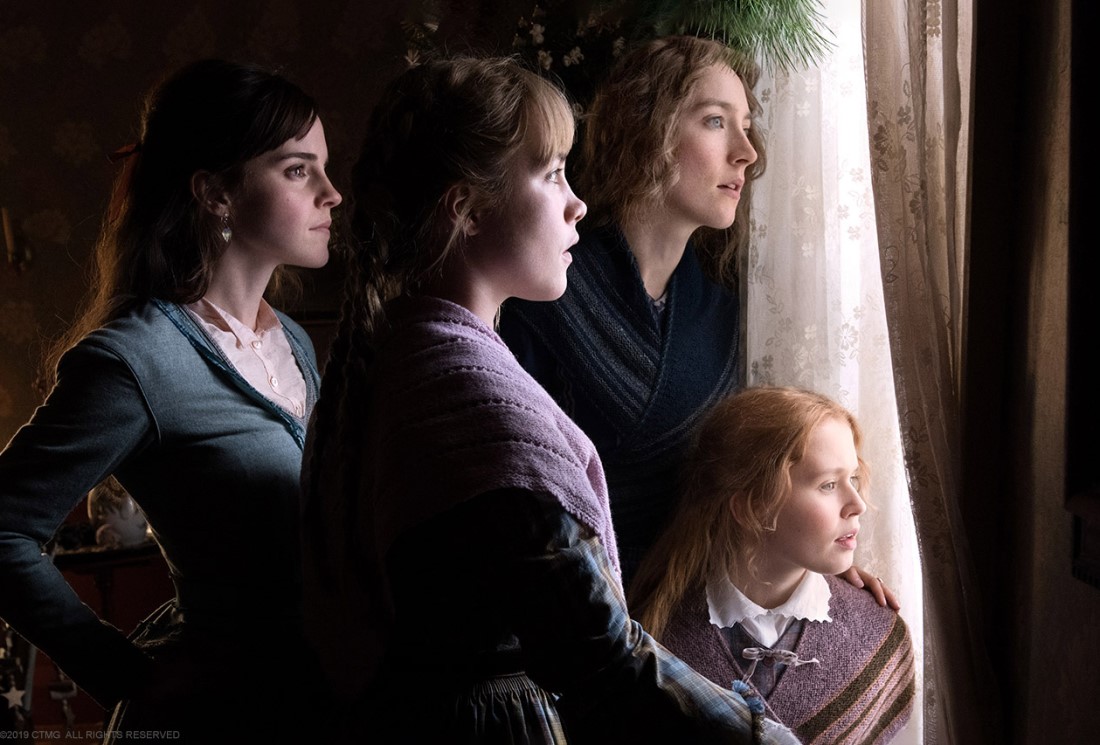
Little Women!

You can have your Charlie’s Angels. I’m here for the March matriarchy.

Previously on Midlife Crisis Crossover: writer/director Greta Gerwig’s Lady Bird was one of my favorite films of 2017 and left me looking forward to her future endeavors. She’s finally returned to theaters with her take on Louisa May Alcott’s Little Women, the 1868 novel that many of you were probably required to read in school, or perhaps cheerfully read on your own because someone trustworthy recommended it to you or it was shelved in a special library display alongside numerous other 19th-century books written by women that you’d already read. Either way, chances are your Little Women experience goes back farther than mine.

How far back are we talking? Full disclosure: prior to 2019 my Little Women experience consisted of a hazy memory from decades past in which I saw the scene where one of the girls-who-would-be-women gets a drastic haircut for altruistic reasons. I have no idea if I ran across one of the first four cinematic adaptations on TV when I was a kid, or if some sitcom paid it homage. All I know is I already knew of that plot point. I deemed that insufficient data and decided to do some homework before heading out to the theater: I rented Gillian Armstrong’s 1994 version on YouTube. I enjoyed that in and of itself (so many familiar faces!), and appreciated that it conveyed the novel’s basics so I’d have an idea of what was supposed to happen in case Gerwig sold out and bowdlerized the whole thing into a ripoff of Hustlers.

Thankfully this did not happen. Little Women is among the hundreds of “classic” novels I failed to read in my youth, but if it intrigued the director of Lady Bird, then it was bound to intrigue me. I was a little annoyed in advance that one site recently chose to run a dubious thinkpiece about how men were supposedly avoiding the film in droves, based entirely on one (1) tweet from one (1) critic who cited her scientific research drawn from chats with three (3) whole males. It’s been 28 years since my last statistics class, but I still recognize an extraordinarily poor sampling pool when I see one.

Regardless: I, a male, willingly saw Little Women in defiance of the three dudes who purported to represent the grossly generalized aesthetic will of 150 million other dudes. And it was my idea to see it in theaters, not my wife’s. I refuse to pretend this counts as some groundbreaking accomplishment.

Continue reading