“28 Years Later: The Bone Temple”: Jimmies Eat World

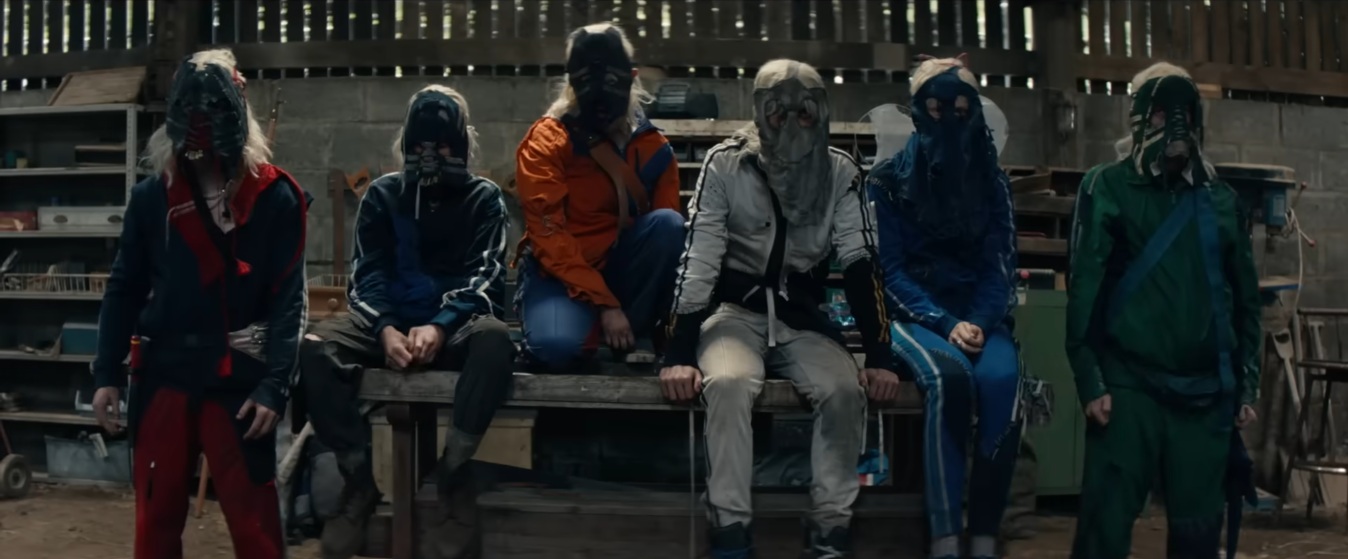
Six weirdos in blond wigs, droopy canvas masks and jumpsuits.

Mighty Morphin’ Jimmy Rangers!

Previously on 28 Years Later: Director Danny Boyle and writer Alex Garland reunited to imagine further adventures and new terrors in the world of their 2003 speed-freak zombie nightmare 28 Days Later, which redefined the subgenre’s rules for years to come. I wrote of 28YL, “Boyle shifts gears to a more measured pace as Garland reveals the film’s true heart — one of vain hopes in a hopeless environment, of love in an arena of rage, of reconnecting with inner humanity in the middle of the killing fields. Audiences gripped by fiercer bloodlust craving their EPIC KILLS NOW NOW NOW might then revolt. Given Garland’s recent track record for sometimes denying our base cravings, it’s worth wondering if maybe the best zombie movies are the ones that veer from the storytelling dead end by transforming into another kind of movie.” I didn’t expect Boyle to test me on this right then and there: the film’s last five minutes needle-scratched off the turntable into one last out-of-nowhere cliffhanger throwdown that felt like a Skittles ad starring Mr. T’s cartoon teen gymnastic squad.

That was never meant to be The End, though. Their planned trilogy continues with 28 Years Later: The Bone Temple, for which Boyle retires to a producer’s chair and invites guest director Nia DaCosta (The Marvels, the Candyman remake) to team up with Garland and lay fresh eyes on what happens next. Once again most of the undead are reduced to incidental critters in favor of Man’s Inhumanity to Man, but the foregrounded terrors are all the scarier for it. That goes double for the dance number.
Continue reading

Yes, There’s a Scene During “The Marvels” End Credits

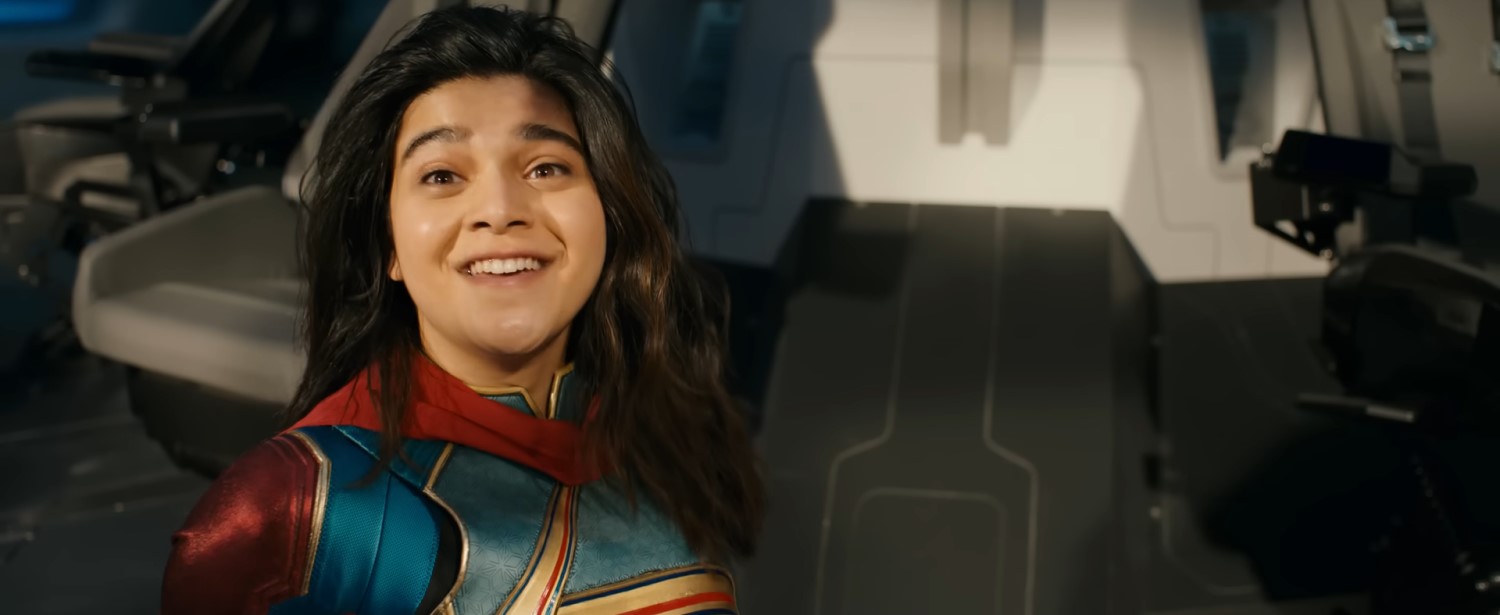
Iman Vellani in costume as Ms. Marvel, standing in a spaceship cockpit and smiling starstruck at an off-screen Captain Marvel.

I rarely do entries about Marvel’s TV shows, but I really, really should’ve done one about the cheerfully grade-A Ms. Marvel before now.

Critics in the long run can be a slowly forgiving bunch whenever films break old rules, up until a film breaks one of the rules they happen to like. More than any other series since the end of the Rin Tin Tin canon, the Marvel Cinematic Universe’s narrative/marketing design has ceased any and all compliance with their longstanding preference for every film to be a self-contained work unto itself, welcoming any and all newcomers and generously bringing all viewers up to speed on preexisting elements without requiring homework or unconditional obsession. I read four different professional reviews of Marvel’s The Marvels before I saw it for myself, and three of them admitted up front they hadn’t kept up with the Disney+ shows that are now integral to the overall continuity. In possibly unrelated news, none of them gave it five stars or an A++.

To be fair, no one — pro, amateur, or non-writing casual — is obligated to love Marvel, embrace superhero films in general, or keep tabs on it all. The cosmopolitan scholars out there who routinely write book-length essays on the works of Abbas Kiarostami or Apichatpong Weerasethakul may not have much recreational use for “popcorn flicks” or TV shows in general. They may, in fact, want to spend their downtime away from screens. For our family, the MCU is one of our bonding rituals, each new film or episode an occasion in which we all put away our respective devices and gather before a single device for an hour or three. Fans who’ve followed along moment-of-release can tell you it isn’t actually that hard to keep up. Sometimes entire months fly by without new MCU stories. It only piles up if you step away for years. With very few exceptions (Anne, like many, still rejects Eternals) we’ve kept up and we helpfully remind each other of characters or plot developments that we’ve forgotten along the way. We’re the Goldens. It’s who we are and what we do.

So I can say with at least a modicum of hobbyist authority that the baffling incoherence of The Marvels‘ first half has nothing to do with forgotten lore or skipped content; its structure is shoddy and wobbly entirely on its own terms. In deference to the intent of director/co-writer Nia DaCosta (the fourth Candyman) to bring the runtime under two hours, she and co-writers Megan McDonnell (WandaVision) and Elissa Karasik (Loki) whittled the proceedings down to 105 minutes, making this 33rd MCU entry the shortest one to date, but tried to economize by front-loading it with action and shuffling too much useful exposition and cause-and-effect basics to the middle of the film.

I’d be more irritated if The Marvels also weren’t so delightfully all-out fun, provided your brain has an MST3K-programmed “You Should Really Just Relax” mode, which comes in handy for 1950s B-movies and for occasions like this. If it helps, I can sort through some of that disjointedness without major spoilers. Not all of it, mind you.

Continue reading