Our Day at the Eiteljorg Museum (Beyond Jingle Rails 2024)

Dialogue with a Deer!

Harry Fonseca, Dialogue with a Deer, 1995. (I’m reminded of the Deer Lady from Reservation Dogs.)

Previously on Midlife Crisis Crossover: last weekend my wife Anne and I visited the Eiteljorg Museum of American Indians and Western Art in our hometown of Indianapolis and checked out their annual, widely advertised Jingle Rails exhibit — a festive collection of elaborate toy train dioramas that recreate a variety of well-known settings using myriad natural materials to exacting specifications and festooned with Christmas trimmings. Walking laps around the hall in childlike, wide-eyed wonder was a neat feeling.

Obviously the Eiteljorg has more to offer beyond the one special happy-holiday attraction. I’ve worked a few blocks away from the Eiteljorg for years, but the last time we went there was waaay back in early 2007 to view a special exhibit of Roy Lichtenstein’s rarely mentioned Old West-themed works from his pre-Pop Art days. The two of us were online regulars back in that pre-MCC, pre-social-media era, but I don’t think we ever posted about it anywhere. I aimed to rectify that oversight for this special occasion and the rest of the museum.

Continue reading

Heartland Film Festival 2024 Screening #3: “Jazzy”

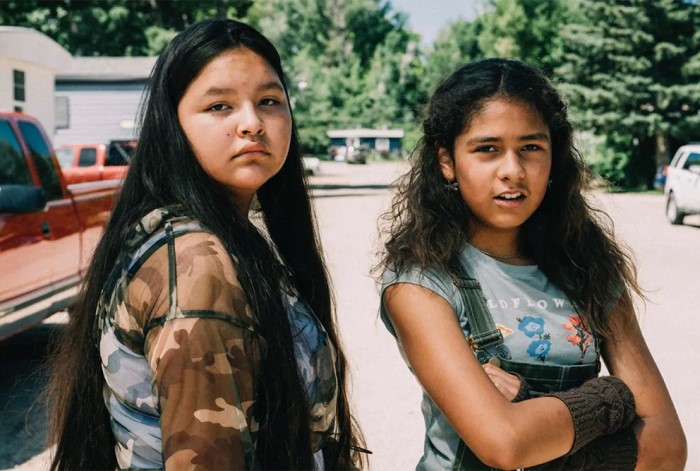
Two Lakota girls looking at the camera.

THEY FIGHT CRIME! THEY SOLVE MYSTERIES! THEY…wait, no, this isn’t that kind of film.

Previously on Midlife Crisis Crossover:

It’s that time again! Since 1992 my hometown of Indianapolis has presented the Heartland International Film Festival, a multi-day, multi-theater celebration of cinema held every October. Local moviegoers have the opportunity see over a hundred new works in the realms of documentaries, narrative features, shorts, and animation made across multiple continents from myriad points of the human experience. Some participants stop in Indy on their grand tour of Hollywood’s festival circuit; some are local productions on shoestring budgets; and a wide spectrum of claims are staked in the innumerable niches between, projects with well-known actors screening alongside indies with enormous hearts.

Heartland’s 33rd edition runs October 10-20, for which I’ve made plans to catch at least eight films in all (Lord willing). Longtime MCC readers know the rule: every film I see in theaters gets its own entry…

Last year one of my favorite Heartland entries was Fancy Dance, a Native-focused drama co-written and directed by Erica Tremblay, who’d worked on the most excellent TV series Reservation Dogs (11/10, among the best ever) and Dark Winds (whither season 3?). Its star Lily Gladstone had appeared in a few Rez Dogs episodes, but commanded wider attention as the Oscar-nominated costar of Martin Scorsese’s Killers of the Flower Moon, where she had to put up with being surrounded by powerfully attention-grabbing white men, and so did her character.

Once an artist emerges from such overshadowing as an independent force on their own terms, it’s absolutely cool seeing them use their newfound fame to encourage and enable other storytellers to come forward and take a shot at reaching a wider audience. Just as Taika Waititi “co-created” Rez Dogs and directed its pilot, thereby launching it with an extra little push (though the show was obviously, lovingly Sterlin Harjo’s baby), I braked while reading Heartland’s Narrative Feature roster when I spotted the listing for Executive Producer Lily Gladstone affixed to Jazzy, an adorable coming-of-age drama that premiered at Tribeca Festival last June and might’ve gotten overlooked among Heartland’s voluminous offerings if not for her name standing out to me.

Continue reading

Heartland International Film Festival 2023 Screening #3: “Fancy Dance”

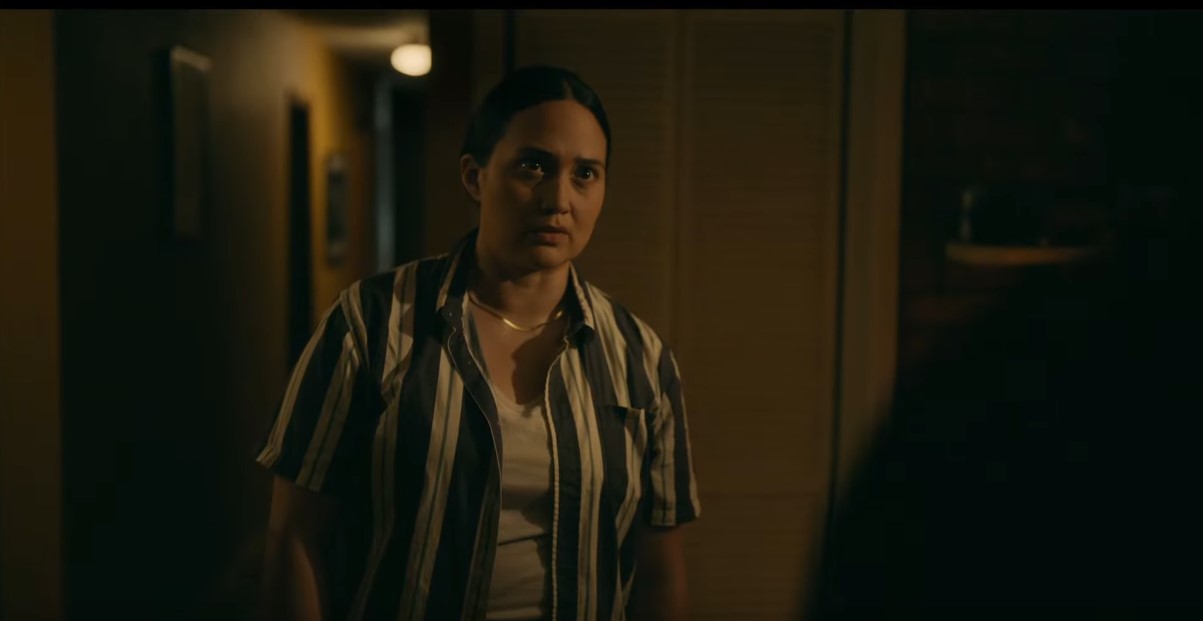
Lily Gladstone's lesbian aunt character Jax, curtly talking to an offscreen relative/policeman. The room is poorly lit, lots of beige.

If you can only see one Lily Gladstone film this year, you now have two choices if someone hurries up and distributes this one.

Previously on Midlife Crisis Crossover:

Since 1992 Indianapolis has held its own celebration of cinema with the Heartland International Film Festival, a multi-day, multi-theater marathon every October of documentaries, shorts, narrative features, and animated works made across multiple continents from myriad points of the human experience, usually with an emphasis on uplift and positivity. Ever since the “International” modifier was added in recent years, their acquisition team steadily escalated their game as they’ve recruited higher-profile projects into their lineups. For years my wife Anne and I have talked about getting into the spirit of the festivities. This year we will do better. The festival’s 32nd edition will run October 5-15. I’ve committed to at least five different Heartland showings — one of them virtual in-home, while the others will screen at four different theaters throughout central Indiana…

Erica Tremblay’s name rang a bell when I saw it on Heartland’s website: she’s served as Executive Story Editor for AMC’s Dark Winds (based on Tony Hillerman’s Leaphorn & Chee novels) and Sterlin Harjo’s Reservation Dogs, and wrote one of the latter’s funniest episodes, “Decolonativization”. One of those shows is great so far; the other is among Best TV Ever and deserves its own MCC entry sometime. Hopefully they lead the way for more Native/indigenous stories to be told across screens great and small. She’s now directed her first feature film, Fancy Dance, which she also produced and co-wrote (with Miciana Alise) and which opened at Sundance earlier this year. Heartland’s artistic director who introduced our showing mentioned Tremblay has had several shorts previously at this festival. I’m kicking myself for having missed out, more so after watching her heartfelt, heartbreaking results here.

Continue reading

Lafayette Vignettes, Part 5: Prophets and Poultry

Woodland Indians settlement.

The history aficionado and birthday girl at the replica native settlement.

Previously on Midlife Crisis Crossover:

In addition to our annual road trips, my wife Anne and I have a twice-yearly tradition of spending our respective birthdays together traveling to some new place or attraction as a one-day road trip — partly as an excuse to spend time together on those most wondrous days, partly to explore areas of Indiana we’ve never experienced before. We’re the Goldens. It’s who we are and what we do.

Once upon a time in 2019 Anne decide she wanted to celebrate her birthday with a jaunt around the city of Lafayette, an hour northwest of our Indiana home. She cobbled together a short to-do list of things she wanted to see, not lengthy but enough for a leisurely afternoon — a bit of Indiana history, a bit of downtown tourism, and a bit of healthy walking…

Upon visiting the centerpiece of our trip, the Tippecanoe Battlefield Museum, we covered the Battle of Tippecanoe in a somewhat reductive fashion:

On November 7, 1811, when future short-term President [William Henry] Harrison led an army against a confederation of tribes led by Tecumseh of the Shawnee and the adviser Tenskwatawa, alias “the Prophet”. The tribes weren’t thrilled with the pervasive intruders, the incoming settlers had reason to believe they weren’t safe, and it didn’t help that our old arch-nemesis England was taking steps to ratchet up the tension shortly before things escalated into the War of 1812. Harrison led a thousand men into two hours of combat against several hundred Native Americans. The latter retreated after dozens of casualties were incurred on each side. The following day, Harrison led his men to Prophetstown, where their opponents had been living but fled. On orders from Harrison, Prophetstown was burned to the ground, and the former residents’ supplies either appropriated or destroyed.

The museum and battlefield weren’t far from where the village of Prophetstown once stood. (Fun MCC trivia: they also weren’t far from Wolf Park, which we previously visited on Easter weekend 2008.) The acreage where the village was founded in 1808 and burned to the ground in 1811 is now Prophetstown State Park, established in 2004 with multiple missions — among them, to commemorate the village and to restore the original tallgrass prairies that were the dominant terrain before humanity arrived and redecorated. Or un-decorated, as it were.

Continue reading

Our 2009 Road Trip, Part 13: Warrior in Progress

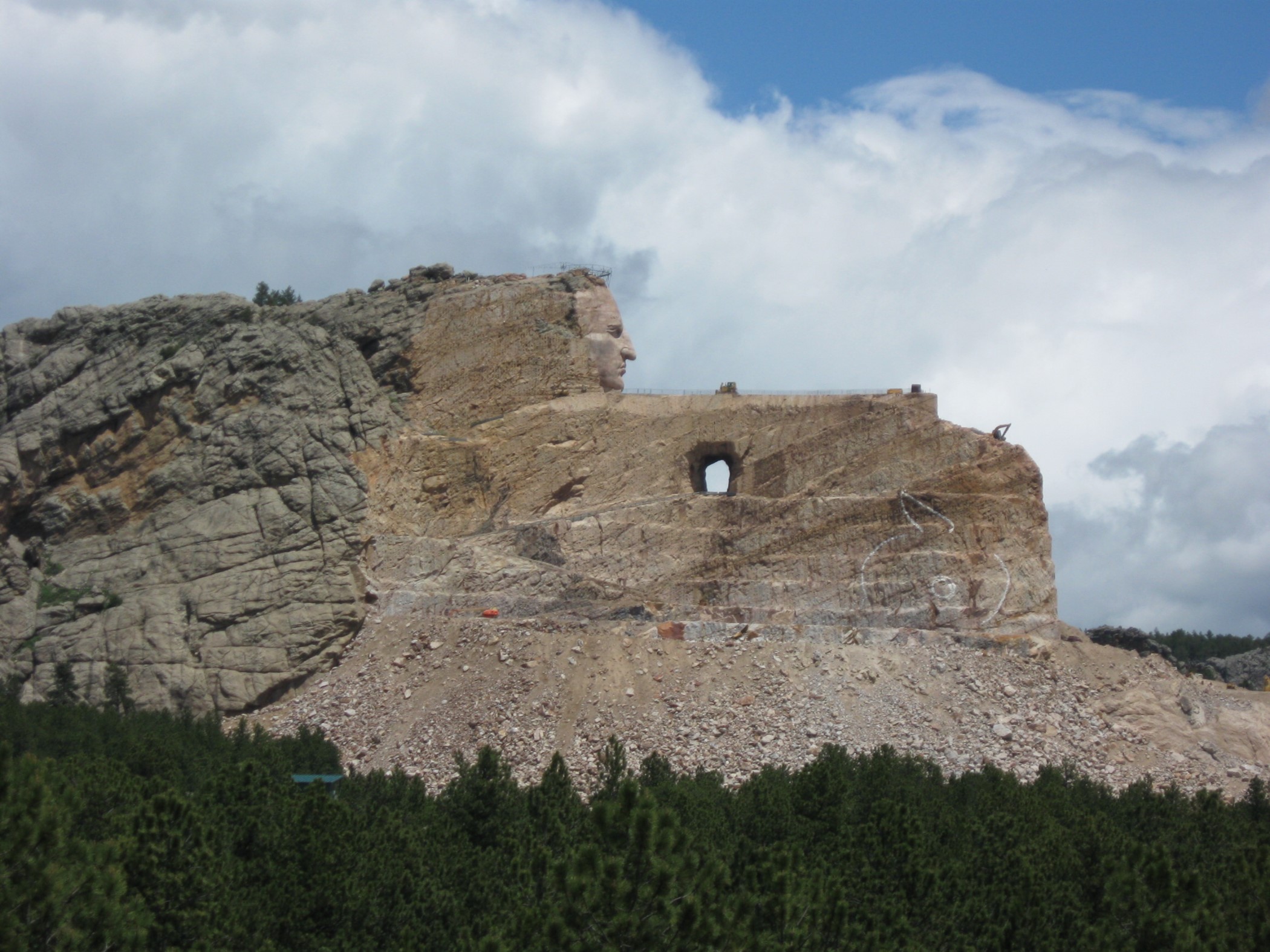
Crazy Horse!

Y’know what’s cooler than sharing a world-famous monument with three other guys? Having your own.

Some MCC readers may be following this miniseries and thinking, “When did you get to Mount Rushmore? Are you to Mount Rushmore yet? Where’s Mount Rushmore? How much longer to Mount Rushmore? Are we there yet? Are we there yet? Are we there yet? Are we there yet? Are we there yet? Are we there yet? Are we there yet?”

First of all, knock it off. Second of all, as of this chapter we’re seventeen miles away. We had someone else to see first. He’s taller, he’s wider, and he’s been funded with exactly $0.00 of your tax dollars, making one of the most independent art projects in American history. Show some respect and some patience. We’ll get to the white guys soon enough.

Continue reading

Our 2008 Road Trip, Part 2: Doing the Charleston

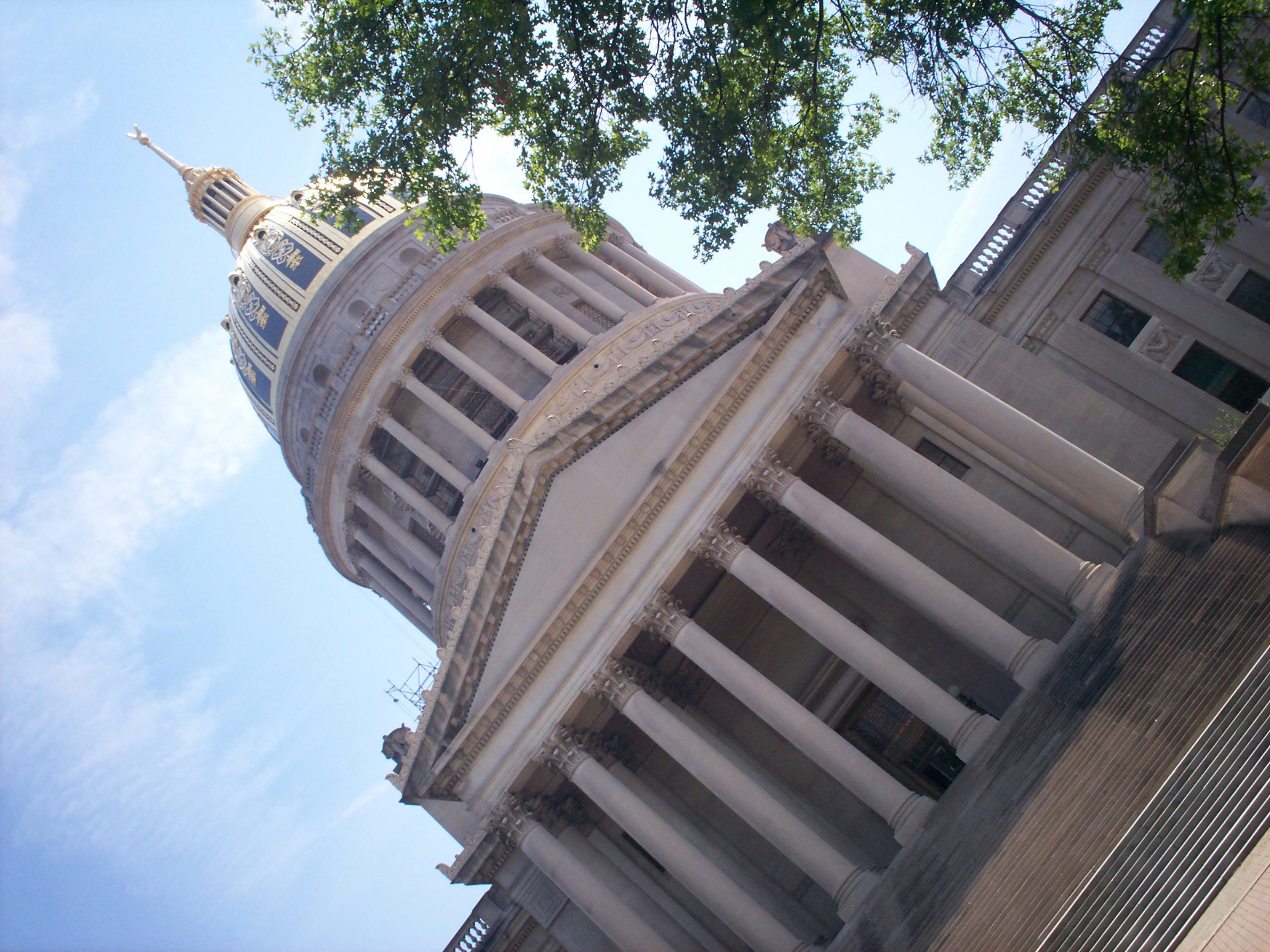
Gold Capitol Dome!

I think I shot the West Virginia State Capitol at a weird Batman ’66 angle because I wanted to get as close to it as possible without cutting off the top or bottom. Turning it into a hypotenuse must have seemed logical at the time.

Previously on Midlife Crisis Crossover:

Every year since 1999 Anne and I have taken a road trip to a different part of the United States and seen attractions, marvels, history, and institutions we didn’t have back home in Indianapolis. From 1999 to 2003 we did so as best friends; from 2004 to the present, as husband and wife. Beginning with 2003’s excursion to Washington DC, we added my son to the roster and tried to accommodate his preferences and childhood accordingly.

Our 2007 drive down to Orlando had one personal milestone for me: my first contact with the Atlantic Ocean. My moment lasted about ten minutes before thunderstorms chased us away from the coast. As Atlantic beach experiences go, Florida gave me a lousy first impression. For 2008 we decided a second try was in order. Rather than take back-to-back trips to the same state, we researched other east-coast beach options, judged them by their nearby attractions, adjusted for our modest budget that couldn’t possibly afford upper-class oceanfront accommodations, and settled on what we hoped would be a suitable sequel.

Thus in this year of our Lord did we declare: the Goldens are going to Virginia Beach!

The first few hours of our drive to West Virginia took us through familiar parts of Indiana, Ohio, and Kentucky, all of which sped past uneventfully. Parts of eastern Kentucky that were new to us looked the same as the rest, unless you count the water tower with signage welcoming us to “FLORENCE Y’ALL”, or the gas station in Lexington that sold more liquor than gas and was unequipped for pay-at-the-pump, or the dumb Beavis-‘n’-Butthead giggles to be had as we passed Big Bone Lick State Park. After so many hours in a car, some families get punchy and become too easily entertained.

Continue reading

2012 Road Trip Photos #11: An Hour Inside the Denver Art Museum, Part 1 of 2

Our itinerary for the first half of Day Four didn’t feel overbooked when we first arranged it. By the time we finished touring the Molly Brown House and standing next to the Colorado State Capitol, we had a little over an hour to walk a few blocks east to the Denver Art Museum, walk a few blocks back to our parking space, and arrive at the Buckhorn Exchange in time for our 1:30 reservation. After allotting for the hot round-trip walk through the artsy part of town, we found ourselves pressed for time on our whirlwind self-guided tour of the Denver Art Museum.

Further complicating matters: my camera batteries died, and my spares were safe and sound in our hotel room back in Aurora. Fortunately my wife is diligent in keeping her camera’s built-in battery recharged nightly. Between Molly Brown and the museum, we found not a single shop of any kind that sold batteries. Even the Art Museum gift shop was of no help — theirs isn’t the kind of place that stocks up on incidentals for inconvenienced tourists. At best, they might’ve carried a commemorative spoon with a painting of a battery on it. Once again, as with the GenCon costume contest, the day is saved thanks to my wife and her superior camera.

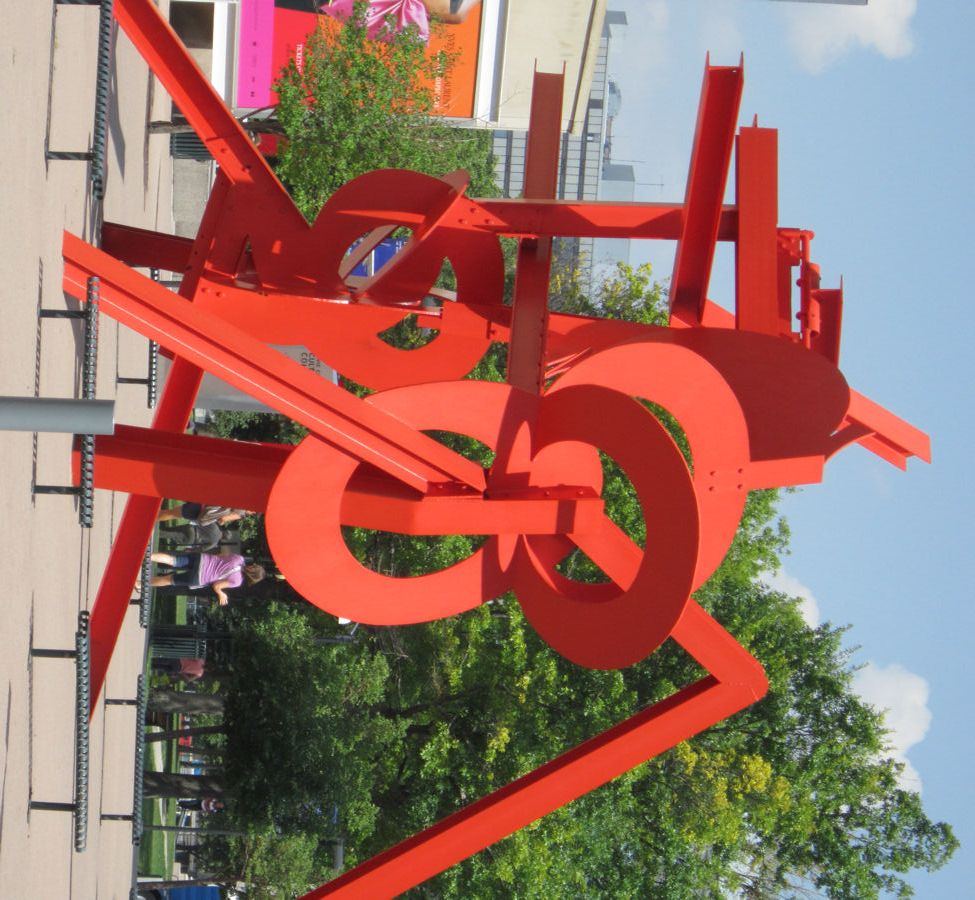
A few outdoor sculptures greet you as you approach the Art Museum from the east. Between the museum and the Denver Public Library is Acoma Plaza, in which stands Mark di Suvero’s sculpture “Lao Tzu”, named after the author of the Tao Te Ching. I read the latter in college, but wasn’t prepared to interpret the artist’s meaning here, unless some of these shapes represent Chinese pictographs.

Lao Tzu, Mark di Suvero, Acoma Plaza, Denver, Colorado

Our game plan, once inside: we three each selected one museum section for the group to peruse. I chose the Pacific Northwest section, featuring art from the U.S. and Canadian tribes who dominated that particular coast. Our museums in Indiana and the surrounding states have more than their share of Native American art and artifacts, but I was curious to know if other tribes had their own individual styles unavailable for display in the Midwest. I’ve seen all the maize-based manufactured goods I’ll ever need to see in our museums, but this exhibit was successfully different from those, highlighting the works of the Haida, the Tlingit, the Inupiaq, and the Kwakwaka’wakw (I’m not sure which letters are silent, if any).

Continue reading