 TV animation fans are still coming to terms with recent announcements that Cartoon Network had canceled two Saturday morning series, both part of the DC Nation programming block — Young Justice after two seasons, and Green Lantern after a single season. Cancellation isn’t unusual for the basic-cable channel — their programming history is a long shopping list of short-term productions. In fact, if you set aside the frequent Ben 10 reboots (the Scooby-Doo of a new generation in its own way), their longest-running series outside the Adult Swim block (i.e., still producing new episodes and not existing solely as reruns) is Adventure Time, which will celebrate its third birthday next month. The minds behind Young Justice should probably count their blessings that they were allowed two entire seasons instead of being truncated after six episodes.
Typical Cartoon Network cancellations tend to come and go without a public post-mortem or much of a protest. However, the curious circumstances surrounding these shows’ unforeseen terminations was addressed last weekend at the Emerald City Comic Con in Seattle, where longtime Warner Brothers Animation producer Bruce Timm was asked about the cancellations at a Q&A. In the wake of a January article about Young Justice ending due not to low ratings but to anemic toy sales, multimedia news/rumor site Bleeding Cool followed up with Timm’s response regarding Green Lantern, referencing weak merchandise sales as the primary cause of death:
Since the Ryan Reynolds’ film, retailers were stuck with film merchandise that just wasn’t selling. This led to those retailers being very reluctant, if not downright refusing, to any carry merchandise from the Animated Series. Therefore, a lack of sales on that front lead to a lack revenue for an admittedly expensive CG series.
In reading the paraphrasing of Timm’s comments, I couldn’t help feeling a little naïve and a whole lot disappointed. Though the shows weren’t quite for me, I can respect the efforts that went into them and the fan bases they garnered. The part that struck me in the worst way was that, if those two articles linked above are to be believed — and I’ve seen no evidence that anyone in authority disagrees with them — then the crews of both shows essentially lost their gigs regardless of the quality of their own work. If the stories were engaging and the animation was suitably competent, it didn’t matter. Even though Nielsen commoners didn’t exactly boycott the show, ratings were seemingly a secondary consideration. The bottom line, as I understand it: they failed as toy commercials.
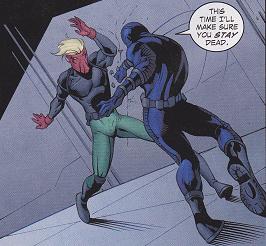 Today’s subject: Grifter, one of the initial titles from DC Comics’ “New 52” relaunch of September 2011. For review purposes I picked up the most recent issue, #13, which was new in stores last Wednesday.
 Midlife Crisis Crossover!