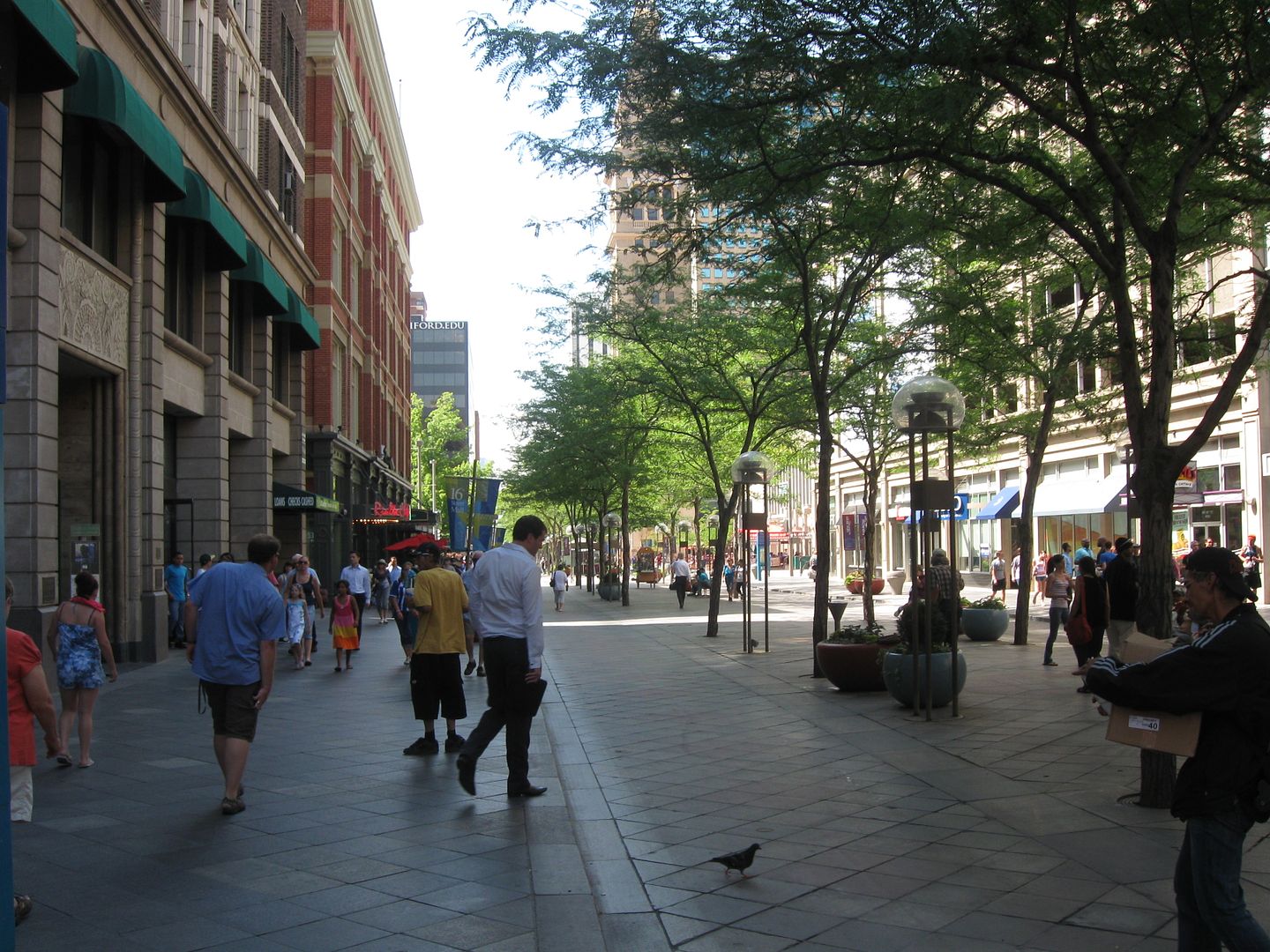
Our itinerary for the first half of Day Four didn’t feel overbooked when we first arranged it. By the time we finished touring the Molly Brown House and standing next to the Colorado State Capitol, we had a little over an hour to walk a few blocks east to the Denver Art Museum, walk a few blocks back to our parking space, and arrive at the Buckhorn Exchange in time for our 1:30 reservation. After allotting for the hot round-trip walk through the artsy part of town, we found ourselves pressed for time on our whirlwind self-guided tour of the Denver Art Museum.
Further complicating matters: my camera batteries died, and my spares were safe and sound in our hotel room back in Aurora. Fortunately my wife is diligent in keeping her camera’s built-in battery recharged nightly. Between Molly Brown and the museum, we found not a single shop of any kind that sold batteries. Even the Art Museum gift shop was of no help — theirs isn’t the kind of place that stocks up on incidentals for inconvenienced tourists. At best, they might’ve carried a commemorative spoon with a painting of a battery on it. Once again, as with the GenCon costume contest, the day is saved thanks to my wife and her superior camera.
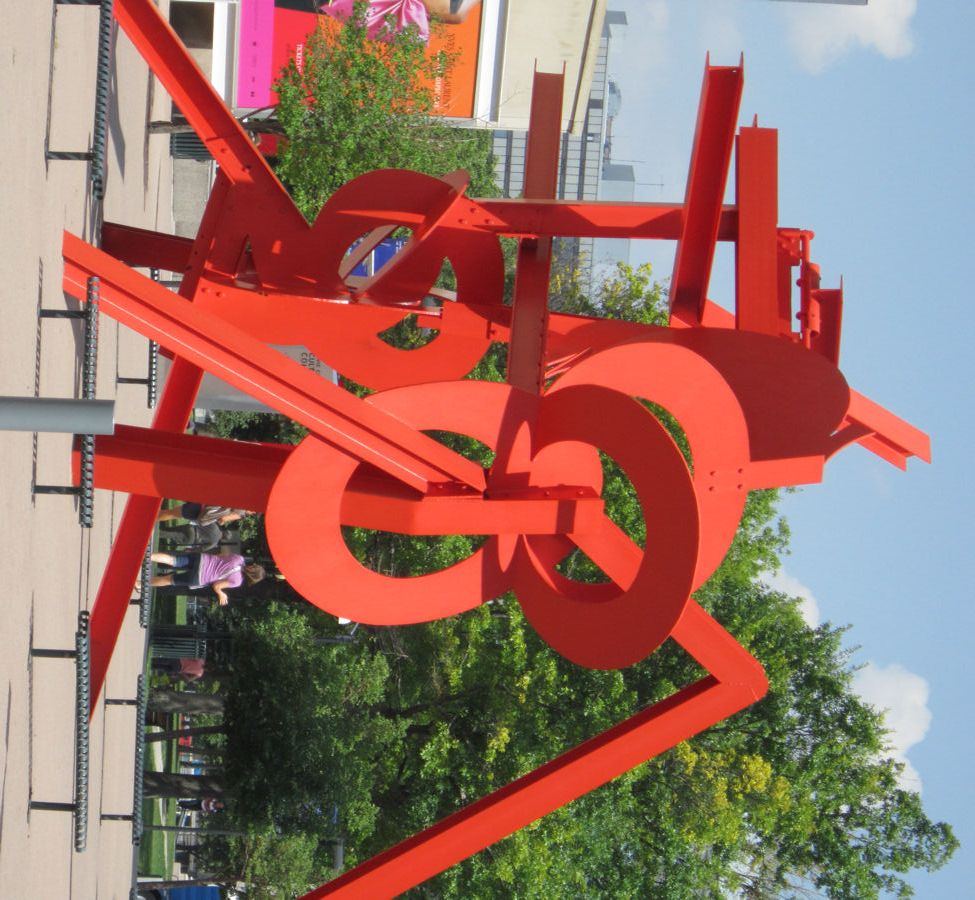
A few outdoor sculptures greet you as you approach the Art Museum from the east. Between the museum and the Denver Public Library is Acoma Plaza, in which stands Mark di Suvero’s sculpture “Lao Tzu”, named after the author of the Tao Te Ching. I read the latter in college, but wasn’t prepared to interpret the artist’s meaning here, unless some of these shapes represent Chinese pictographs.

Our game plan, once inside: we three each selected one museum section for the group to peruse. I chose the Pacific Northwest section, featuring art from the U.S. and Canadian tribes who dominated that particular coast. Our museums in Indiana and the surrounding states have more than their share of Native American art and artifacts, but I was curious to know if other tribes had their own individual styles unavailable for display in the Midwest. I’ve seen all the maize-based manufactured goods I’ll ever need to see in our museums, but this exhibit was successfully different from those, highlighting the works of the Haida, the Tlingit, the Inupiaq, and the Kwakwaka’wakw (I’m not sure which letters are silent, if any).
Continue reading →
Share this with your friends and followers!