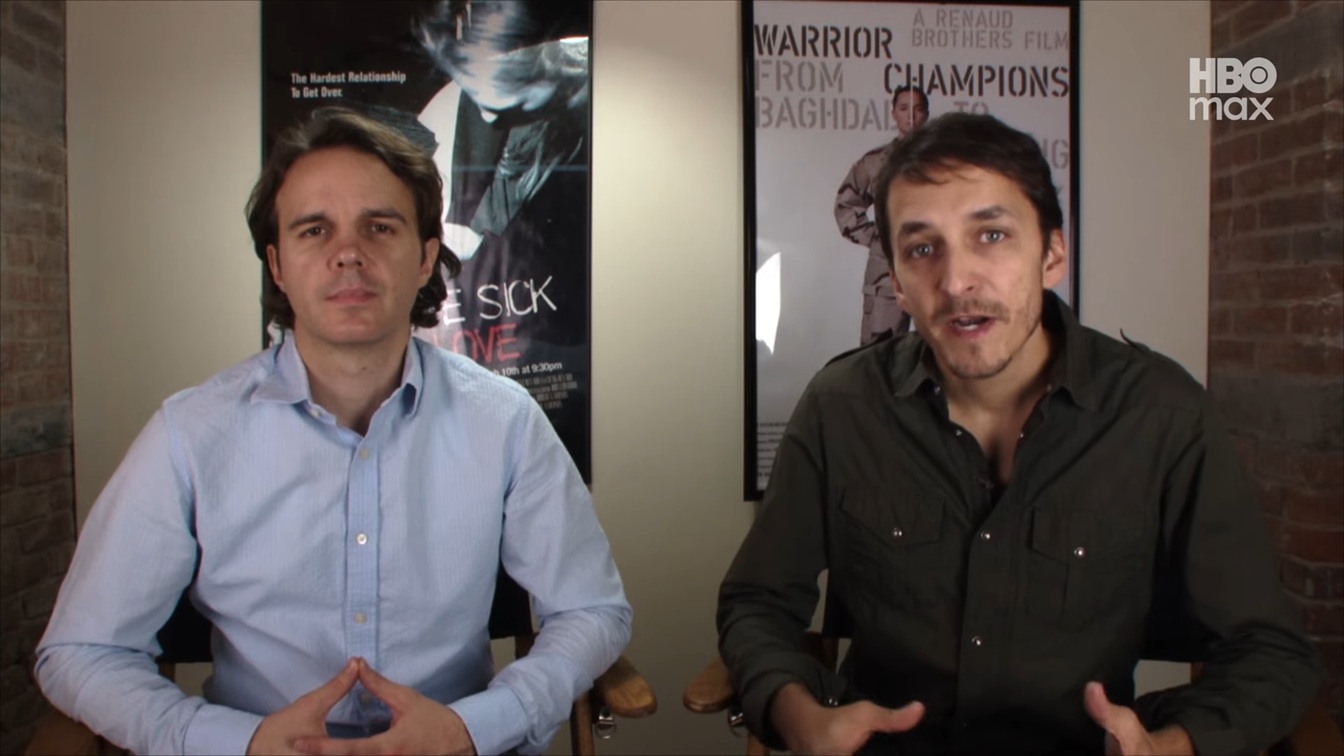
Craig and Brent Renaud, brothers and journalists.
Previously on Midlife Crisis Crossover: Oscars Quest ’26 continues! Once again we see how many among the latest wave of Academy Award nominees I can catch before the big ABC ceremony on March 15th, including all the shorts we’d never heard of before the Academy brought attention to them.
Each year since 2009 (except for 2021’s pandemic lockdown marathon) I’ve ventured out to the few Indianapolis theaters carrying the big-screen releases of the Academy Award nominees for Best Live-Action Short Film and Best Animated Short Film. Results vary each time and aren’t always for all audiences, but I appreciate the opportunities to sample such works and see what the Academy of Motion Picture Arts & Sciences deemed worthy of honoring, whether I agree with their collective opinions or not.
Then there’s the Best Documentary Short Film collection, which gets treated like the black sheep of the trilogy and wasn’t even exhibited in Indy until the dedicated cineastes at Kan-Kan Cinema began carrying them a few years ago. I’ve usually skipped those and settled for trying to stream as many of those nominees as I legally could. That worked out to 100% completion for me exactly once; otherwise, there’s always a holdout or two that thwart me and aren’t legally available anywhere online until months after the Oscars telecast. Time and again, I fail to complete my scorecard before deadline and I heap shame upon myself.
After last year’s as-yet-unrequited omission Death by Numbers, this year I’m tired of being thwarted. Even though I’d already watched four of this year’s five shorts online, I got off my duff, drove out to the Kan-Kan on the other side of town, sat through those same four again and got to see the fifth and final short and cross it off my to-do list. Of course they showed that one dead last so I couldn’t leave early. I would’ve cheerfully let them keep my money if they’d shown it first and let me skedaddle, but no. That was no easy feat, either — this year’s lineup is more morose and soul-crushing than ever. Nevertheless, the deed is done.
And now, our final round of nominated shorts, ranked. Streaming options are provided for those other four.
1. Armed Only With a Camera: The Life and Death of Brent Renaud (Max). “Journalism has become one of the most dangerous professions in the world.” Thus concludes the elegy for the Peabody Award-Winning New York Times correspondent who at age 50 became the first foreign journalist to die in the war on Ukraine. The compiled footage — some culled from Renaud’s own cameras, some through the perspective of his brother and fellow journalist Craig — traces his story from their Arkansas upbringing to their self-compelled treks through the international war zones of Iraq, Afghanistan, and Somalia, as well as confrontations with gang-war violence in Honduras and Chicago alike. Seemingly unflappable amid such unimaginable adversity — which, speculatively mentioned, his autism may have made manageable — the film honors Renaud’s lifetime of telling the stories of innocents caught in those crossfires, only to end with the final, uneasy transport of his body from the crime scene to the de facto mortician’s backroom to the flight home for his funeral.
…
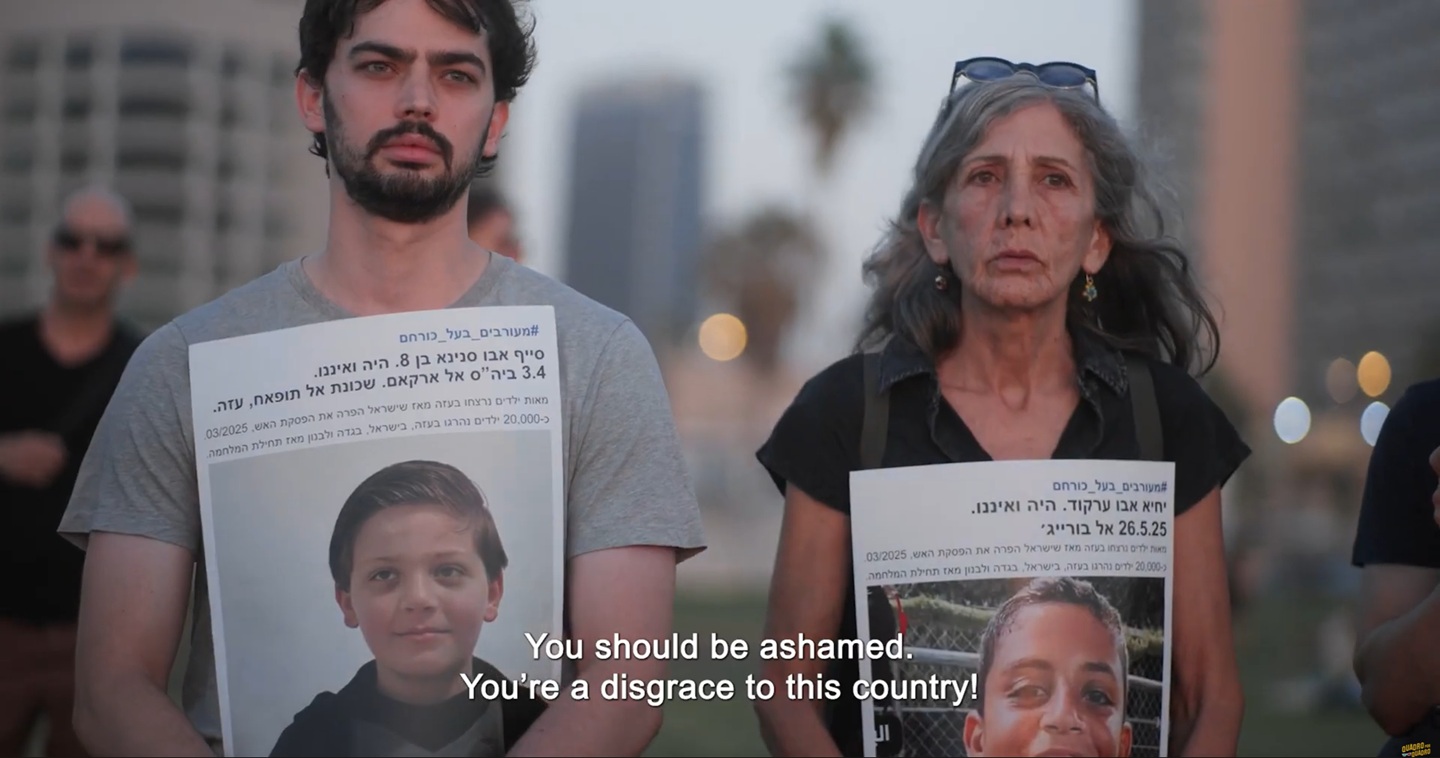
2. Children No More: “Were and Are Gone”. In the spirit of last year’s Oscar-winning doc feature No Other Land, another group tries disregarding enemy lines to plead for Israel and Palestine to figure out peaceful coexistence despite the body counts. Filmmaker Hilla Medalia follows antiwar Israeli protestors who stage silent, nonviolent roadside vigils (a bit like the Guilty Remnant, minus dress code and cigarettes) while holding posters bearing photos and bios of some of the thousands of Palestinian children who’ve been killed by Israeli forces since October 7th. Sometimes researching and printing within a few days of their deaths, they insist repeatedly their whole “Won’t someone think of the children” theme doesn’t mean they’re ignoring the hostage crisis, only intimating that maybe the prolonged retaliation is an arguably disproportionate response (like, say, siccing the Authority on the Beagle Boys) that, as of this film’s release, didn’t seem to be freeing too many hostages. Medalia’s cameras also capture numerous Israeli passersby who’re outraged at the protestors, enraged about their own suffering at Hamas’ hands, and are about a hair-trigger away from responding to these perceived traitors in non-nonviolent ways.
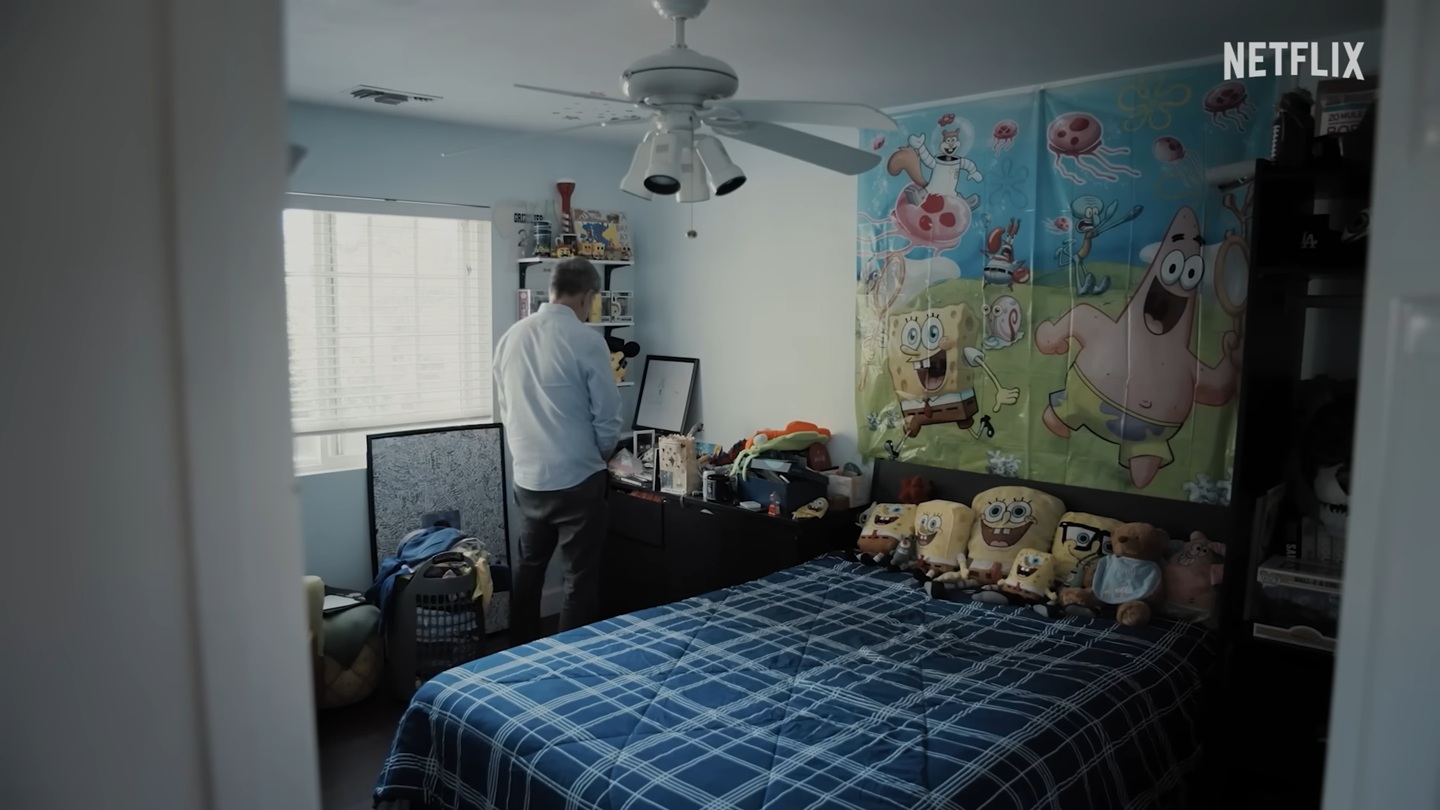
An ordinary child’s bedroom, except for what’s missing.
3. All the Empty Rooms (Netflix). CBS human-interest correspondent Steve Hartman has made a career of doing those end-of-show puff-pieces meant to cheer up viewers after they’ve just endured 25-55 minutes of humanity’s latest rounds of headline atrocities and political heartlessness. Driven to seek a serious change of pace for once, Hartman teams up with photographer Lee Bopp and director/producer Joshua Sefte (the Oscar-nominated Stranger at the Gate) to accompany him on a cross-country piece that the network was unlikely to buy: the duo travels to the homes of children killed in mass shootings, whose families have kept their bedrooms in the exact state they left them on the day they were murdered. (You’ve definitely heard of at least one such town on their itinerary.) They take the guided tour, they take photos and video, they sit with the parents and invite them to share warm memories. No one offers incendiary screeds about gun control, extemporizes on mental health, or rants about America rotting from within. Hartman also doesn’t probe their states of minds about these shrines some have been maintaining for years — dusted yet encased in amber-like shell-shock that might never fade. The most powerful moments aren’t in Hartman’s words or gaze, but in clips from the kids’ own home movies — showing us who they were, denied what they could’ve become.
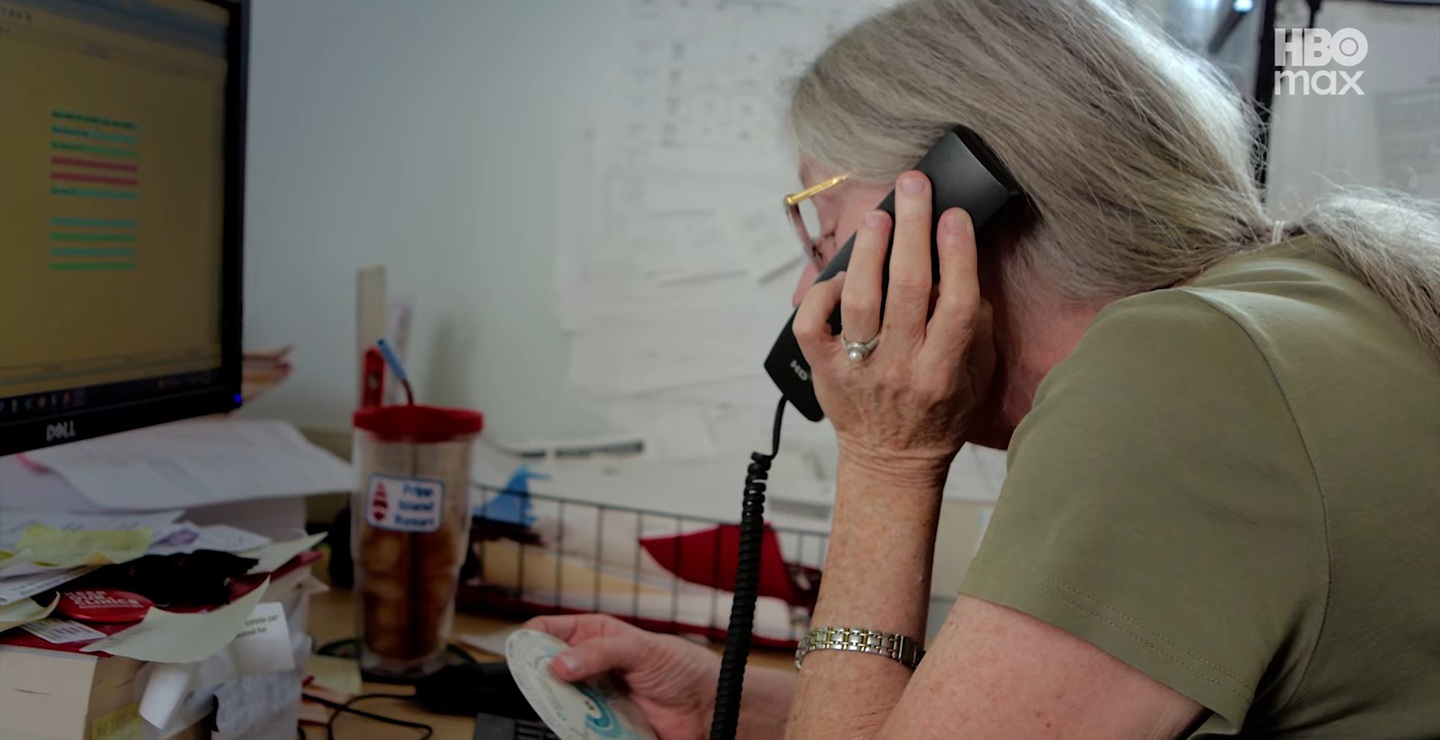
A staffer at the Feminist Women’s Health Center takes calls from out-of-state women, checking whether they legally qualify to make the long journey in.
4. The Devil Is Busy (Max). Filmmakers Geeta Gandbhir (also nominated this year for the doc feature The Perfect Neighbor) and Christalyn Hampton walk us through a day in the life of the head of security at an Atlanta abortion clinic. No, we don’t witness the procedure, but the mundane and sometimes contentious steps leading up to them, a process often complicated/defeated by Georgia’s six-week limit. The almost entirely POC staff stick to their rigorous routines, juggle their dueling versions of God, and maintain constant vigilance for fear of retaliation/uprising from the mostly white male protestors hovering around the perimeter at minimum legal proximity with their megaphones, their signs proclaiming “Child Sacrifice Center” and “Black Lives Matter” (in reference to the case for abortion as minority-targeted genocide), some of them with known criminal records. Uneasiness pervades the piece, but the participants felt a lot tenser than I did as day eventually deflates into night, and they prepare for the next day’s do-over.
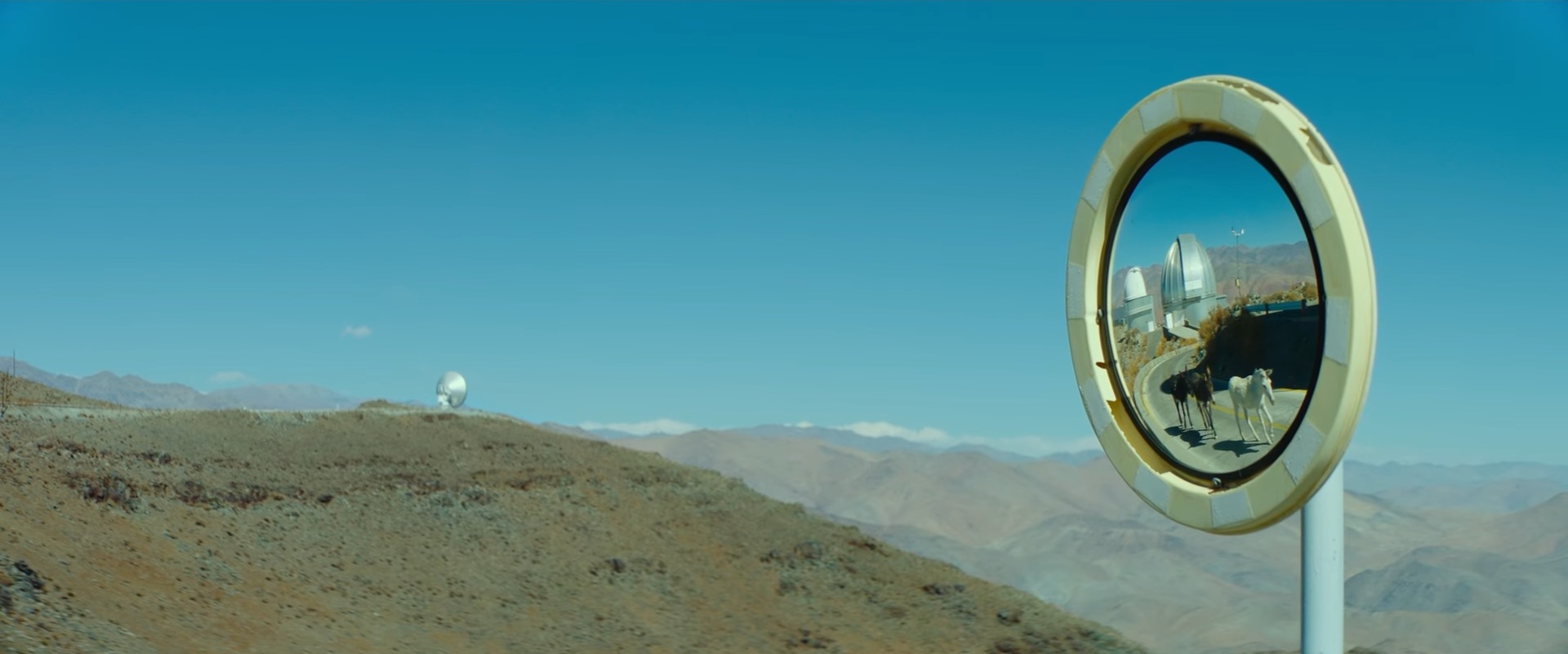
If you loved EO but wish nothing had happened to him, have we got the movie for you.
5. Perfectly a Strangeness (I saw it via Pleins Écrans, who reportedly offered access January 22nd only, but it’s since come to Kanopy and the Criterion Channel). The first nominee I watched in this category explores the inner and outer desolation of an abandoned observatory in Chile (not mentioned in the film) where a trio of donkeys wander around outside, uncomprehending and aimless as the beauteous starlit skies invite our imaginations to meditate upon the earthbound stillness…which I couldn’t quite manage because I had questions. What exactly did the film crew plan to document? Did they approach this empty outpost with the intent to explore a stabilized ruin, but then donkeys showed up unannounced? is there some well-to-do donkey owner who uses the observatory property as a playground for his herds, and the crew thought that sounded like a wild subject to shoot? Or did they rent the donkeys and dump them onsite just so they could watch what happens, which sounds like more of a Jackass stunt or a scripted construct that’d better belong in the Live-Action Short Film category? I was distracted till the end credits confirm the donkeys have names, which narrowed down the possible premises. On the bright side: nature = pretty!
[Updated 3/1/2026 2:05 EST.]
Discover more from Midlife Crisis Crossover!
Subscribe to get the latest posts sent to your email.
 Midlife Crisis Crossover!