“No Other Choice”: There’s Been a Murder at Dunder Mifflin Korea

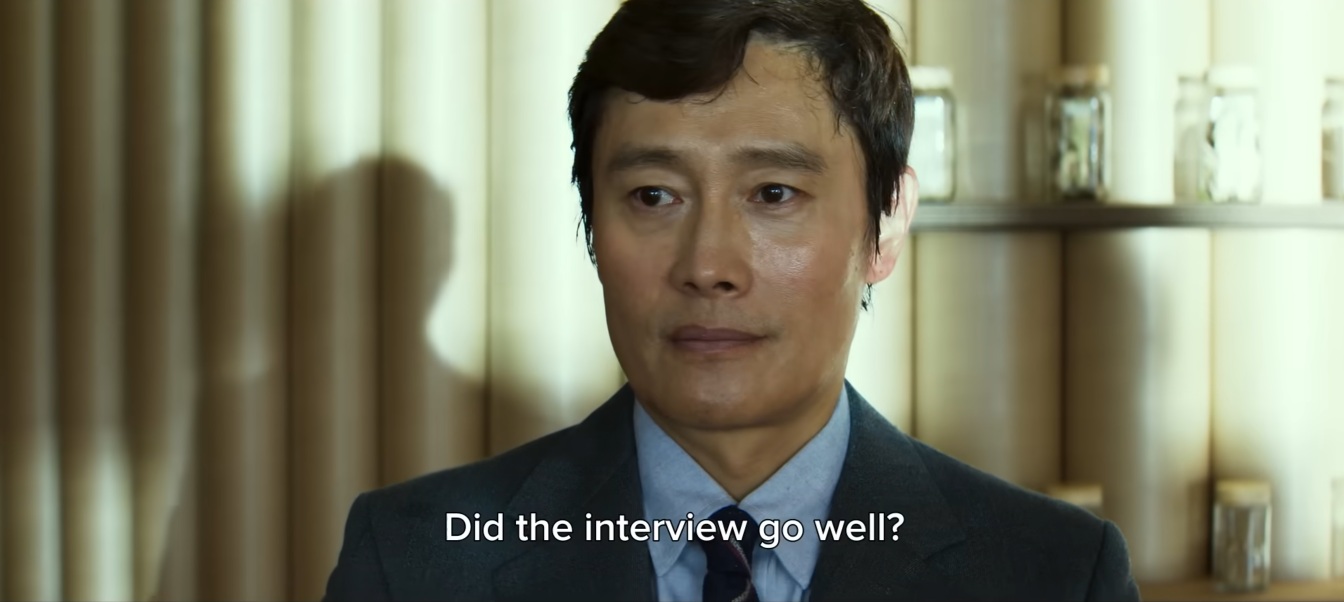
A sweaty Lee Byung-hun in business suit being asked by his wife, "Did the interview go well?"

To any head-of-household having a hard time out there: keep in mind your spouse will not consider your flop-sweat a turn-on.

Previously on Midlife Crisis Crossover: It’s Lee Byung-hun’s time to shine! Zillions of Netflix subscribers tuned in for the South Korean actor’s machinations as Squid Game‘s nefarious Front Man, but that wasn’t his first villainous turn for American moviegoers. He was a T-1000 in the wisely forgotten Terminator Genisys, the worst in the series. As the murkily motivated ninja Storm Shadow, he was among the few highlights of the two G.I. Joe movies. And discerning youngsters out there caught him voicing the demon king in last year’s animated sensation KPop Demon Hunters. (I’ve yet to convince myself to check him out in the most recent Magnificent Seven alongside Denzel Washington. Maybe someday, but it wouldn’t fit this paragraph anyway, unless there’s a shocking twist in which he betrays them and shoots Chris Pratt in the face.)

Continue reading

“Decision to Leave”: The Mountain Between Us

Movie poster for "Decision to Leave" with the two leads atop a mountain, standing next to a victim's chalk outline.

The detective. The widow. The mountaintop. The fall.

If you’ve seen director Park Chan-wook’s Oldboy, perhaps you get why his name might strike fear into my heart, because I can never unsee that film nor unfeel the Grand Guignol trauma I carried for days after. (I can’t think of a single reason to seek out Spike Lee’s remake, and pray no one ever makes an all-ages cartoon prequel called Oldbaby.) I’ve been afraid to watch any of Park’s other films until now. His latest, the crime-drama romance Decision to Leave, likewise follows broken souls careening off each other amidst secrets and death, but is far more interested in examining the emotional contents of two hearts than in spatchcocking them.

Continue reading

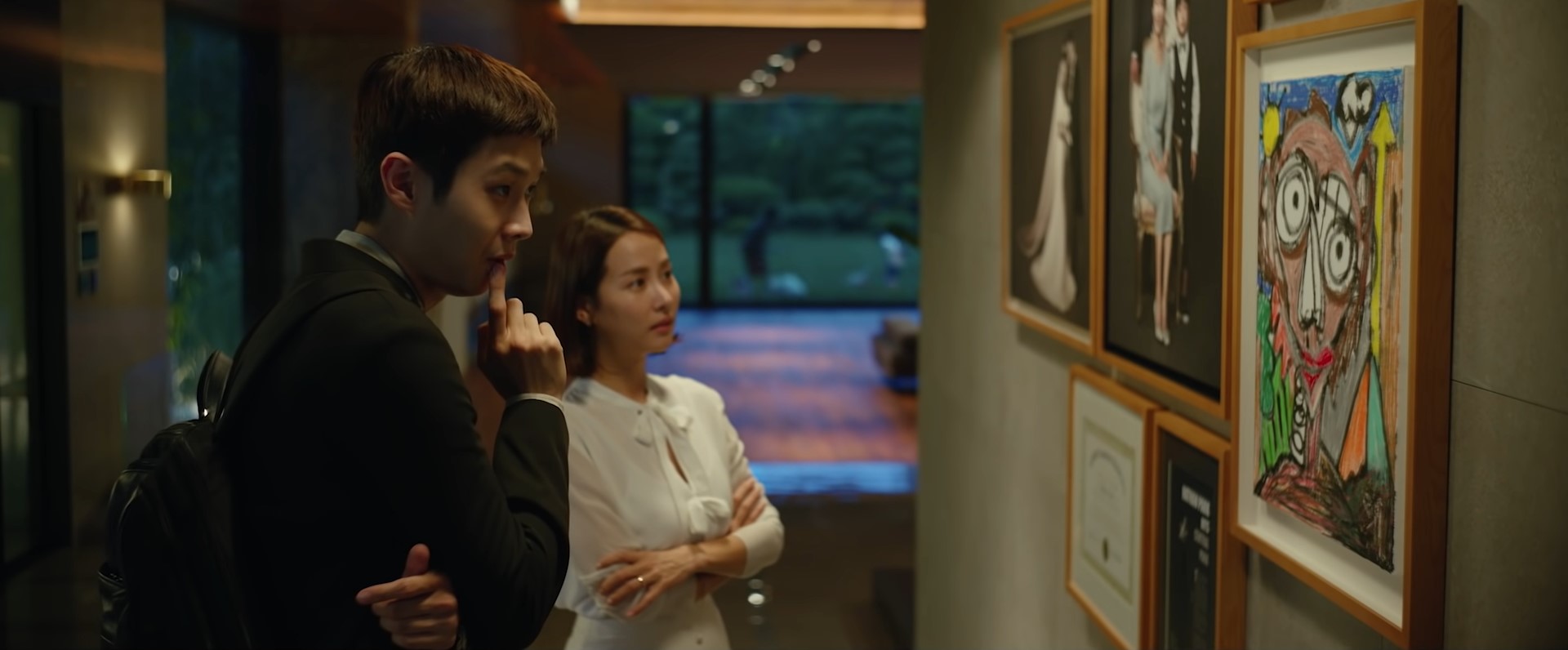
“Parasite”: Scenes from the Class Struggle in South Korea

Parasite!

Beauty is in the eye of the beholder. Truth is in the ear of the believer.

From Bong Joon-Ho, the director of The Host, Snowpiercer, and Okja, a movie with a name like Parasite implies sooner or later there’ll be a monster and bloodletting and bigger, badder, wilder, all-out, off-the-wall, jaw-dropping pandemonium, because moviegoers expect escalation. Several words in that sentence come true and thus is the prophecy fulfilled, but with Joon-Ho it’s best never to think we can expect the unexpected. What most of us think of as “unexpected” is actually very expected because we think along a select number of unconsciously rigid tracks. We clench Occam’s Razor between our fingers and use it to sketch our predictions, drawn from among the most common forms of what average storytellers consider “unexpected” rather than unimaginable forms of unexpected. Preconceptions are a drag even when we think we don’t have any.

Parasite tinkers with quite a few of them. Among the most common and beloved in many a Hollywood tales of late: “Poor = good. Rich = bad.” As us-vs.-them conformist mentalities go, “rich vs. poor” has become among the most exploited. If that’s among your favorite simplistic conflicts, I’m pretty sure Hustlers is still playing in a multiplex near you. Go have fun!

Continue reading