Yes, There’s a Scene After the “Inside Out 2” End Credits

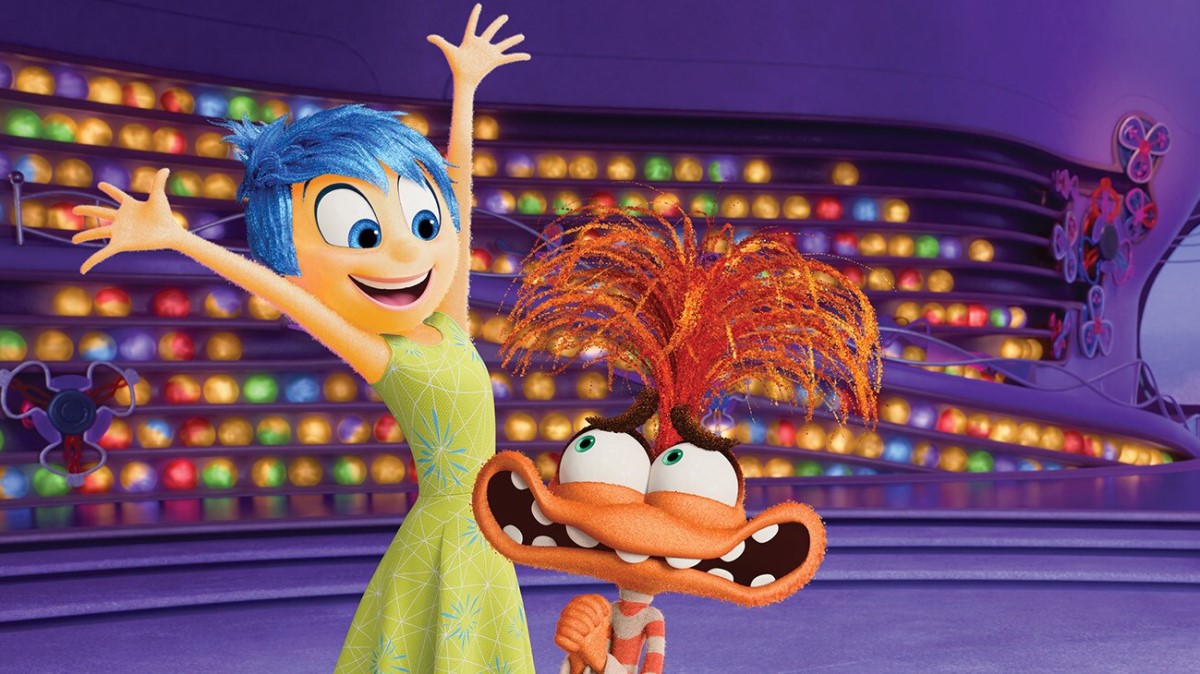
Joy stands excitedly at the control panel with Anxiety, who looks sheepish and very orange. The room is all purple with rows of yellow light bulbs.

Manic Pixie Dream Joy welcomes Frazzled Rock!

Previously on Midlife Crisis Crossover: Pixar made an entire movie about feels feeling feels! As someone who responds well to films that probe deeper emotions than “wheeeee”, I named Pete Doctor’s Inside Out my favorite film of 2015 – against the heavyweight competition of Creed, Spotlight, and Fury Road — after its in-depth examination of baseline emotions via cutesy anthropomorphization, as well as its complicated theses about the importance of sadness and the beginning of the end of childhood, wrecked me in the theater twice, back in that bygone era when I’d go see a film in theaters more than once if I thought it was that awesome.

Nine years later, Pixar has the blemished scorecard of any ordinary animation studio. I’ve had such mixed reactions that I only saw one of their last five films in theaters (and regretted giving in to the cash-grab). Nevertheless, I agreeably let them redeem Inside Out‘s stack of goodwill chips and left the house to catch the new Inside Out 2 while my inner voices of Skepticism and Hope squabbled with each other like Siskel and Ebert. Each of them scored points off the other, leaving me wrecked and nitpicky.

Continue reading

“Inside Out”: Oceans of Commotions from Notions of Emotions

Inside Out!

Two women on the go and an unforgiving canyon. It’s just like Thelma and Louise except this time men aren’t to blame for everything and they didn’t cut off the ending.

Pixar has wowed us before, but this is the first time they’ve adapted one of my wish-list items into a major motion picture. With their new spectacle Inside Out I finally got that Parks and Rec/The Office crossover I’ve been imagining in my head for years. Amy Poehler’s Joy basically is Leslie Knope — she has the unlimited zest, the relentless positivism, the stubborn refusal to accept dissent, and the disturbing attachment to large binders. Phyllis Smith’s Sadness and Mindy Kaling’s Disgust represent for an animated Dunder Mifflin exactly as they would in live-action, but without the guys around to get in their way. It’s probably for the best that NBC didn’t force the showrunners into a crossover years ago, and instead let it happen organically when the time was right. I’m just thrilled that it came to pass in my lifetime.

Continue reading