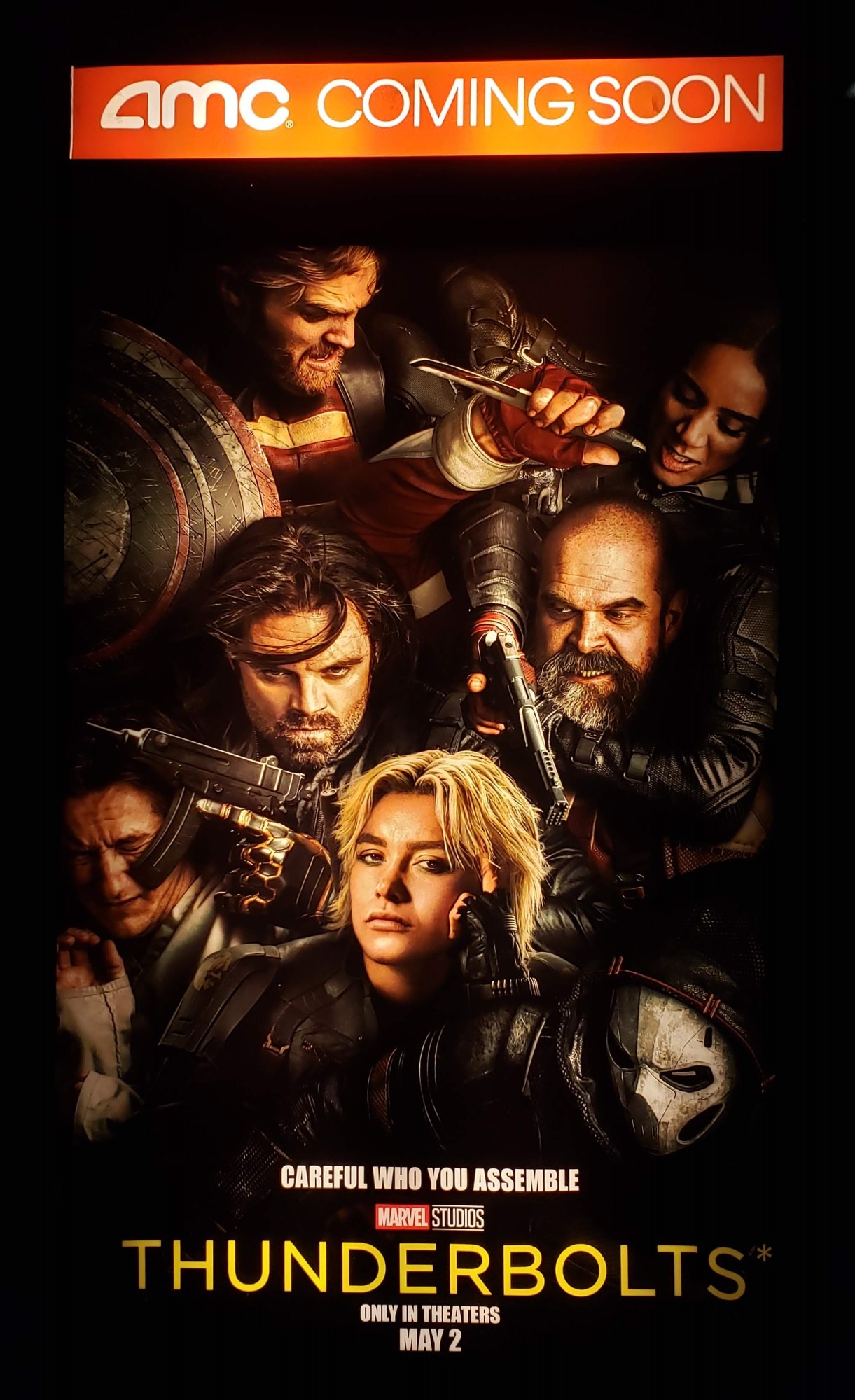
They’re here to save Marvel from themselves.
Previously on Midlife Crisis Crossover: we mention Marvel a lot! It isn’t perfect, but it’s our thing — the movies, the comics and the TV shows, though I generally only compel myself to write about the movies. We enjoy keeping up with all the shows as well, for better or worse, which has been a boon to our viewing comprehension as the Marvel Cinematic Universe (which turns 17 this month!) has accumulated an entire transmedia continuity that sees characters commuting back and forth between small screens and the silver screen with very few footnotes to catch up latecomers. The filmmakers do try to simplify matters in the theatrical releases, recapping in thin brushstrokes and sometimes reducing years-old backstories to loglines buried inside badinage, like a stapler suspended in Jell-O. You can reach in, grab it and deal with the mess; or just stare at it hanging there and go on with your day.
Sometimes strong performances can go a long way toward convincing an audience to just roll with it. Such is the case with Thunderbolts*, the MCU’s 36th feature film and the final film in Phase V, which means nothing anymore. In the same way our last Marvel film Captain America: Brave New World was essentially a sequel to 2008’s underrated Incredible Hulk, Thunderbolts* is a direct follow-up to 2021’s pandemic-hobbled Black Widow, where much of the cast debuted. The events here mean a lot more if you watched that first (among a few other prior works), but director Jake Schreier (Paper Towns, Netflix’s Beef), Widow screenwriter Eric Pearson, and co-writer Joanna Calo (The Bear, BoJack Horseman) do a noteworthy job of tying character arcs together while balancing accessibility for first-timers.
(And really, why not invite more partygoers from outside? Hard as it might be to believe, every MCU film is someone’s first. One of my coworkers never watched a single Marvel movie before sitting down in front of Avengers: Endgame. Yes, she definitely had questions, but my point is it happens. In an era where we keep hearing Theaters Are Dying, the solution is not to imitate comics’ impenetrable continuity and turn them into a geek country club, a market-driven approach that’s arguably contributed to the last three or four Comics Are Dying eras.)
 Midlife Crisis Crossover!