The winner of the “Have Dinner With a Marvel Star!” Sweepstakes was really hoping she’d be meeting Chris Evans.
Previously on Midlife Crisis Crossover: Oscars Quest ’26 continues! Once again we see how many among the latest wave of Academy Award nominees I can catch before the big ABC ceremony. Sometimes it’s surprising how many actors and filmmakers return from previous years to pop up on my to-do list again, whether from Hollywood or from faraway lands.
I wasn’t the biggest fan of writer/director Joachim Trier’s The Worst Person in the World, a sex-forward Norwegian dramedy of thirtysomething dysfunction that definitely wasn’t made for fussy prudes like me. Trier, his co-writer Eskil Vogt, and star Renate Reinsve (who subsequently crossed over into the U.S. in 2024’s A Different Man opposite Sebastian Stan) reunite and return to the Oscar spotlight with Sentimental Value, this year’s only Best Picture contender that I hadn’t already seen before the nominations were announced. With 20/20 hindsight I’m sorry I didn’t make time for it sooner.
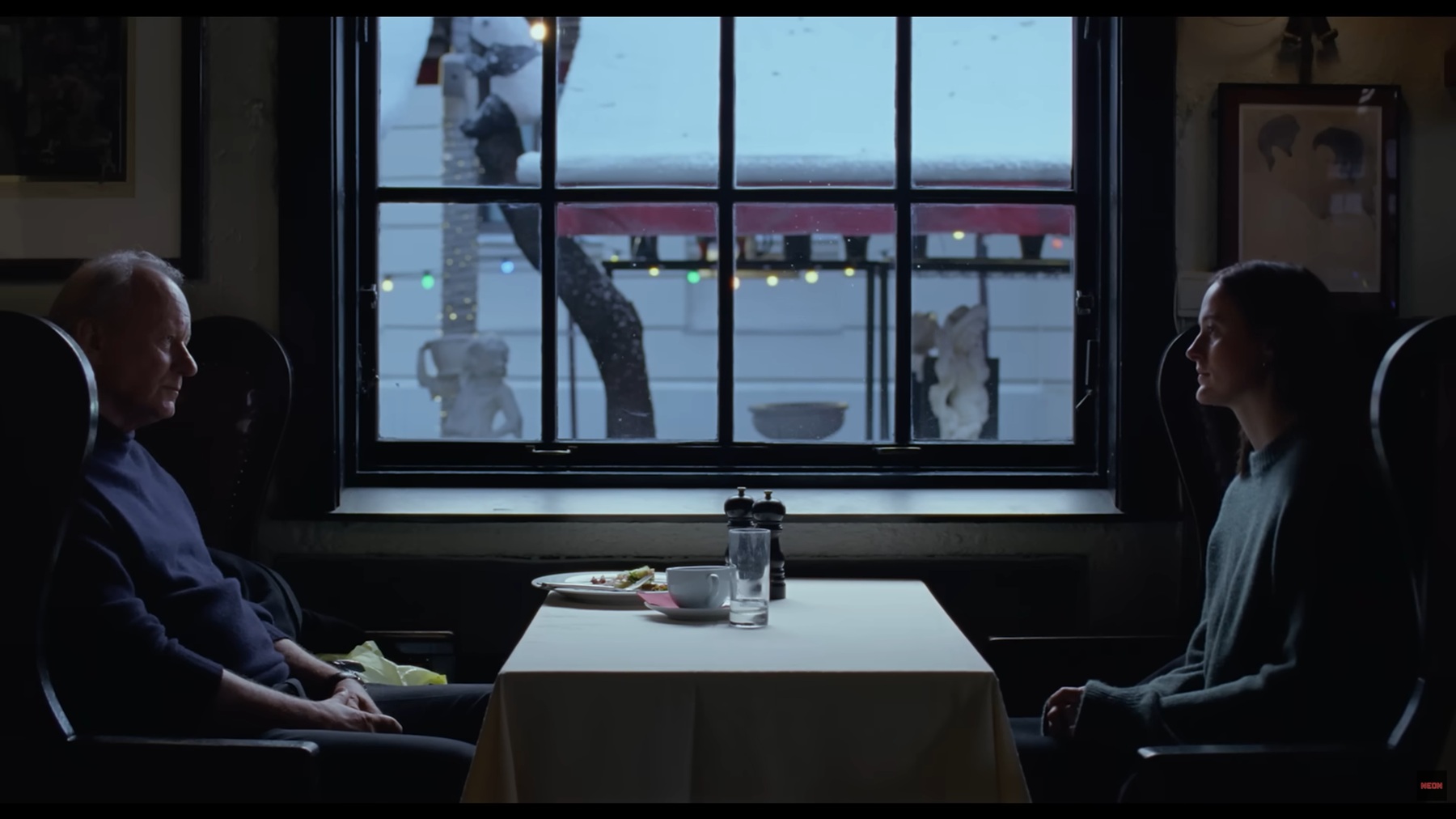
The Gist: Andor‘s head martyr Stellan Skarsgard is Gustav Borg, an acclaimed filmmaker who overcame the childhood trauma of his mother’s suicide. He chased his dreams at the expense of his wife and two daughters Nora and Agnes, unless you count the time he cast tween Agnes as the lead in a period-piece drama. Once father/daughter quality time was done and Gustav got what he wanted, he withdrew once more into his fame and/or deadbeat-dad exile. Nora (Reinsve) grew up to become a stage actress — a tiny bit in Dad’s footsteps and possibly also to spite him, a hater of live theater — though she’s occasionally hobbled by her lingering issues. Agnes (Inga Ibsdotter Lilleaas) somehow grew up well-adjusted with a career as a historian and a happy family of her own. Watching movies is about as close as she gets to artistic pursuit nowadays.
After a 15-year hiatus from the silver screen, Gustav is at long last pursuing a new project. He’s written the screenplay specifically with Nora in mind for lead role. He gathers his old, equally elderly collaborators around him once again and plans to shoot in the old house where they all used to live, which he still owns to this day. He’s taken aback when Nora is vehemently disinclined to acquiesce to his request, refusing even to glance at the stack of pages he tries to hand her. It doesn’t help that he’s waited until after their mom has just died before reconfirming his homeownership and trying to reconnect with his girls. Agnes at least reads it, and finds it more than a little weird then its protagonist’s final fate bear a strong resemblance to her grandma’s. Gustav swears he’s totally not writing about his mom or exploiting his own scars or anything. And the show must go on, so he finds himself another Nora.
The familiar faces: Elle Fanning (last seen in Predator: Badlands) is endearing as famous young American actress Rachel Kemp, who’s awestruck over the prospect of working with such a legend. She’s congenial and open to taking direction, but unaware that she’s about to trip over the tangled webs of a complicated situation.
Fanning’s entourage includes Cory Michael Smith (Gotham, Mountainhead) and Catherine Cohen (briefly in The Running Man). Reinsve’s Worst Person costar Anders Danielsen Lie is less prominent here as Nora’s married lover. Jesper Christensen (Casino Royale, The Young Victoria) is Gustav’s longtime producer; Lars Väringer (Midsommar), his longtime cinematographer.
The Impressions: Sight unseen, it’s cavalier and ignorant to dismiss Sentimental Value‘s nominations — for Oscars and other awards this season — as showbiz once again celebrating a Movie About the Magic of Movies. Coming off his absolutely enthralling role as underground resistance leader Luthen Rael in the Star Wars universe, here Skarsgard portrays a different kind of single-minded obsessive willing to accomplish his goals even if it means sacrificing anything that an average Joe would consider too important to lose. Granted, his scope is smaller: it’s not the freedom and liberty of an entire galaxy at stake, just one man’s stubborn storytelling choices. The world might hold up Gustav as a paragon of Art, but his strides toward the limelight left some personal wreckage unnoticed in his wake. And the price he’s paid isn’t just emotional — he looks like Werner Herzog after multiple breakdowns and we catch him dosing from Chekhov’s Bottle of Heart Pills.
Reinsve is only slightly less disheveled as Nora lugs her own baggage around, from stage-fright attacks to grief repression to anger sparked by all of the above and then some. Lilleaas’ part is less showy yet trickier to modulate — Agnes is the closest we have to a Voice of Reason, willing to enable each opposing relative to an extent, but goes full mama-bear when Gustav oversteps the wrong boundary. Not one to hide in the background, she takes control of her own subplot, researching Grandma’s story for a better understanding of what she’s witnessing in her loved ones. The revelation is no small contributor to the underlying symptoms and shares cinematic DNA strands with fellow Oscar nominee The Secret Agent.
I underestimated Worst Person for my own reasons, but Sentimental Value dug in much more deeply for me. Trier dissects the buried nuances of unresolved generational traumas among the broken family here, throwing them and us with occasional hard pivots (much as reality is wont to inflict) and allowing the characters fair touches of levity (oh, how I laughed when August barks, “The worst thing is children doing jazz hands in a movie!”) and ample space for ambiguity at their discretion as they waffle over what to reveal to each other, to us, or to themselves. So far I’ve come up with three different interpretations of the final scene, but what’s more important is the understandings its participants share, when they might finally reckon with the things that mean nothing to others, yet mean everything to us and anyone who might feel compassionate toward us if we haven’t already driven them too far away.
The end credits? No, there’s no scene after the Sentimental Value end credits, though the ever-gracious Mr. Trier once again thanks “all extras”, same as he did with Worst Person. The credits also list title and artist of each of the few dozen paintings and other artworks used throughout. And the long list of Special Thanks and regular Thanks include Elle Fanning’s big sister Dakota. I imagine the film probably sparked some lively conversations between the two of them.
Discover more from Midlife Crisis Crossover!
Subscribe to get the latest posts sent to your email.
 Midlife Crisis Crossover!