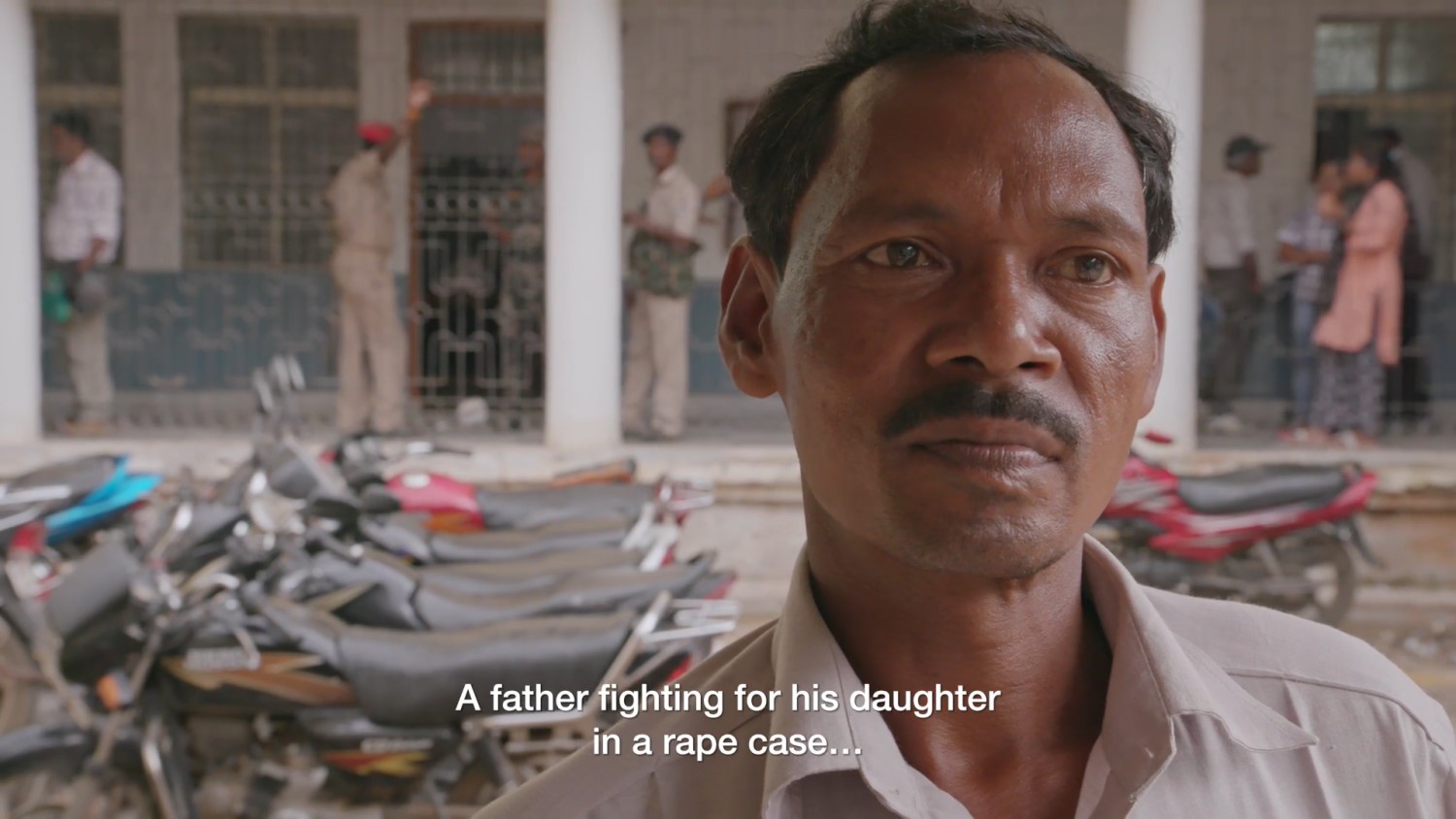
…is apparently a rarer specimen in India than unicorns.
Previously on Midlife Crisis Crossover: our fourth annual Oscar Quest continues! We do our best to see how many freshly nominated works we can catch before ABC’s big, indulgent Academy Awards ceremony ends the viewing season. Oscar Quest means seeking out every studio feature we didn’t already watch for fun on our own, every art-house film we underestimated the first time around, every short we’d never heard of, and each and every last-minute procrastinator released on New Year’s Eve in New York or L.A., America’s only two cities. I understand a recent rule change will negate the latter cheaters in the future, a limitation I wholly approve.
Relevant to this entry, the Quest of course also covers the documentaries — long or short, foreign or domestic, cheerfully uplifting or fatally dreary. (Uplift was in short supply worldwide this year. I blame humanity.) Most years, the Best Documentary Feature category divides two ways: those readily available to stream versus those frustratingly sat-upon until after the season ends and my Oscarmania has subsided. This is the first year I’ve caught all five nominees on time, though one of them required a little extra effort.
For the past several weeks, To Kill a Tiger has been streaming exclusively in Canada and denying any interested parties like me who tried pulling it up from an American IP. Rigging a Canadian VPN might’ve served as a workaround; for a while, that was tempting. My impatience was relieved at last when its makers sprung for an extremely limited release in select cities above a certain size. I assumed Indianapolis wouldn’t qualify because we’re nearly always below the cutoff for such lists. My jaw dropped when it opened here the same weekend as the Oscar shorts, in a single theater for one week only, screening exactly once per day in a lousy mid-afternoon slot. That tiny exhaust-port window was enough for me to rearrange my schedule, catch it, cross it off my to-do list, and spend the next few days recovering from the disruption in my weekday routine.
On to far severer disruptions, then: To Kill a Tiger follows the story of a 13-year-old girl in the state of Jharkand who attends a wedding party circa 2013, stays out late, and is raped by a trio of young men, one of them a relative. Her parents want them prosecuted to the fullest extent of the law. Their village, rooted in ancient traditions that by Western standards fall somewhere between misogynist and sadistic, prizes community unity above all else at the expense of any single individual or baseline morality. A local official, allegedly channeling the village-majority suggestion box, offers the family a “compromise”: they’ll let the daughter marry one of her attackers, and call it even. That’s it, that’s the compromise. At this exact moment a tiny, vengeful voice in my head hoped the movie would end early with the family absconding to the I.S.S. and nuking the village from orbit.
Their ways are not the ways of tidy escapist fiction. Director Nisha Pahuja (born in India, raised in Canada, hence the streaming exclusivity) follows the parents as they seek higher authorities, connect with local gender-rights advocates, and find an attorney willing and bold enough to help press charges — one with alarmingly considerable experience on the subject. He’s taken on 400-500 other such cases around India, where rapes are rarely reported, let alone successfully convicted. The ink had barely dried on the Protection of Children from Sexual Offences Act of 2012, created and passed to combat exactly this form of horror. Nevertheless, the dismal stats are just one among countless factors working against them in what becomes a grueling, expensive, years-long process.
Sustaining the tension becomes a challenge for the film as the process keeps going and going in what’s essentially a courtroom drama without any courtroom scenes due to legal limitations (and almost no sketch art), which means the before-and-after prep-work and armchair analysis have to be all the more compelling in their absence. The threat of ennui is especially palpable in the middle when the tribulations mount upon Ranjit, the dad — the drawn-out legal process, village peer pressure, the year’s pitiful rice-farming yield — and his weakening resolve sends him spiraling into drinking and gambling binges. Much of the narrative has remained levelheaded, even oddly muted at times, as the cameras apparently give him space, but things are blessedly galvanized by Tiger‘s only visible moment of unchecked anger, when a member of the legal team has had it with Ranjit and goes off on him. Hers is a much-needed reminder of the understated fury driving the entire crusade.
POCSO notwithstanding, resistance to their efforts never backs down, and not just against the family. Early encounters with the various villagers clearly happen in a post-Office world where even citizens in the farthest-away lands know well how cameras capture everything, and that their best defense therefore is to show nothing. Several attempts to spark unwitting Candid Camera confessionals instead observe walls of blank faces as paralyzed by the all-seeing electronic eye as David Brent’s mortified subordinates. The villagers cannot let go of their lifelong fealty to maintaining The Way Things Are and have written off the incident as “boys will be boys” misadventure, but as they continue having the spotlight shone in their faces — especially after the trial makes international headlines — their unified no-comment front begins to crumble and their slow-burn wrath turns toward the film crew themselves. Because, y’know, “those people” are making things worse, as opposed to the hometown rapists.
The filmmakers do what they can to work around what they don’t, won’t, or can’t show. They’re careful in how they interview and portray the victim/survivor herself, who was still a minor during their years of filming. She’s since reached adulthood and consented to let her story be told today, but Tiger is prefaced from the get-go with viewer discretion advisement that they’ve withheld her real name and asked anyone who’s seen it not to share images of her outside the viewing experience. Nevertheless, a crucial piece of the final courtroom showdown is an audio recording of her taking the stand and reciting a prepared recount of what happened to her — a brief yet necessary stance against her would-be oppressors. We don’t necessarily get any sense of direct reactions to her testimony, or any sense that cross-examination is a thing in the Indian court system…but all this leads to what I would definitely call a surprise ending, given everything that preceded it. Ultimately, she’s a commendable, active participant in this vivid demonstration against the power of groupthink gone wrong and what it takes to fight back.
When one village can’t see how it’s turned to the dark side, sometimes it takes an even bigger village to hold them accountable.
…
Meanwhile in the customary MCC film breakdowns:
Hey, look, it’s that one actor!: Um, no, this isn’t that kind of film — nary a celeb cameo, even. Viewers in India might recognize a few shots of their newscasters, and I believe an overseas CNN division ops onto the telly once. Otherwise, no.
How about those end credits? No, there’s no scene after the To Kill a Tiger end credits, though the lengthy list of Executive Producers includes such luminaries as Mindy Kaling, Dev Patel, and talk-show host Andy Cohen. Cohen also receives extra credit as a Creative Consultant, and Patel repeats in the Special Thanks section alongside a couple dozen other folks such as David Byrne.
* * * * *
As a value-added special bonus, please enjoy capsules covering the other four Best Documentary Feature nominees, all of which are streaming. I listed where I saw them, but two have since become available elsewhere.
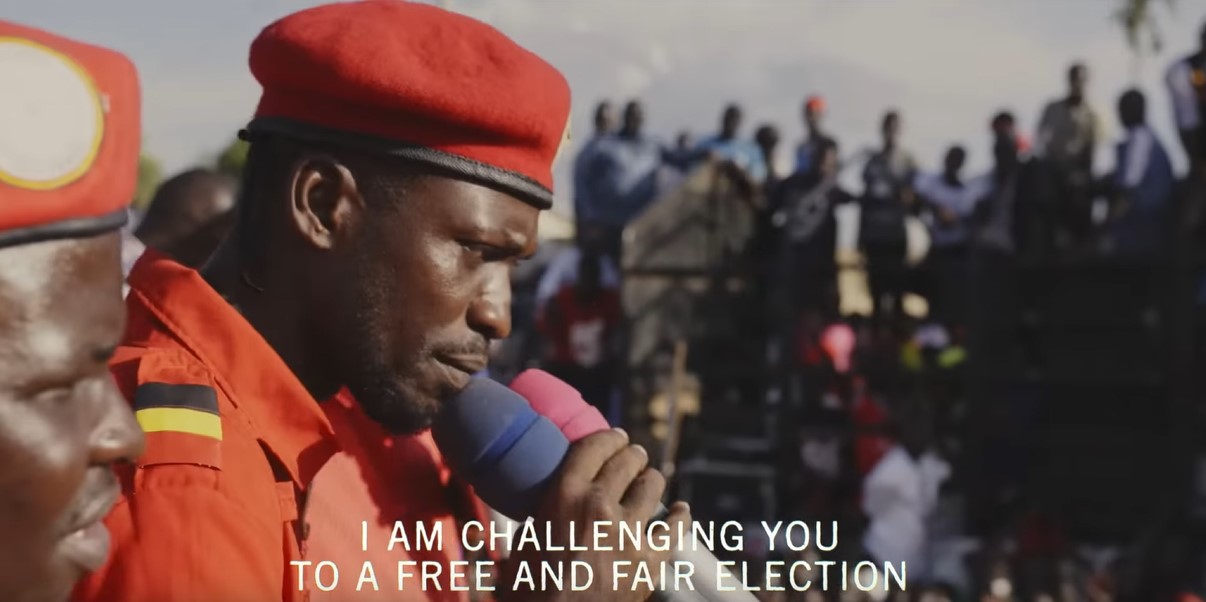
Remember when elections in any country felt free and fair? Are any of us even old enough to?
* Bobi Wine: The People’s President (Disney+). I had this preconceived notion that all National Geographic specials covered shiny happy topics – triumphs of the human spirit like the Oscar-winning Free Solo, animals frolicking and occasionally eating each other, and so on. When I read the description of this ride-along with a massively popular Ugandan pop musician running for president against their ostensibly democratic, objectively oppressive regime…I’m lousy at keeping up with international headlines, so I figured maybe he’d win against all odds and Uganda finally found peace and freedom, and nobody mentioned it on Twitter? Because otherwise this wouldn’t have been in the National Geographic section of Disney+, right? My preconceptions were shockingly dispelled by footage of oppression, rioting, mass detainment, torture injuries, on-camera kidnapping, rigged electioneering, troop deployments on the country’s own residents, and high-ranking minions who super-love and benefit from their dictator of quote-unquote “choice”. Despite a coda that tries assuring the viewer hope is still alive, Bobi Wine’s fate couldn’t help reminding me of last year’s Documentary Feature winner, Navalny…albeit without that one’s recent, infuriating one-year-later postscript. So far.

Sounds advice for anyone watching this year’s nominated documentaries in general.
* The Eternal Memory (Paramount+). Yes, this one’s mostly a reprint of what I already wrote about the one nominee I watched before it was locked in, but here we go again for completeness’ sake. This bittersweet piece from Chilean director Maite Alberdi (whom we last saw with 2021’s also-nominated The Mole Agent) charts the ups and downs of an aging power couple of sorts — TV journalist Augusto Góngora, whose career dates back to the Pinochet regime; and actress Paulina Urrutia, who was elevated to the position of Minister of Culture and the Arts once democracy took hold. Fast-forward a few decades: Góngora is in the throes of Alzheimer’s and only really has Urrutia to guide him through the twilight years. They’re both super lovable and it’s heartbreaking to see her limits tested as his consciousness flits from keenly jocular to sudden befuddlement and back again, alternating with clips of their glory days, especially through the most turbulent of times. It is also the end credits’ sad duty to inform us Góngora passed away in 2023, making any and every souvenir of his very self and his contributions critical to make known to those like us who missed him in his prime.
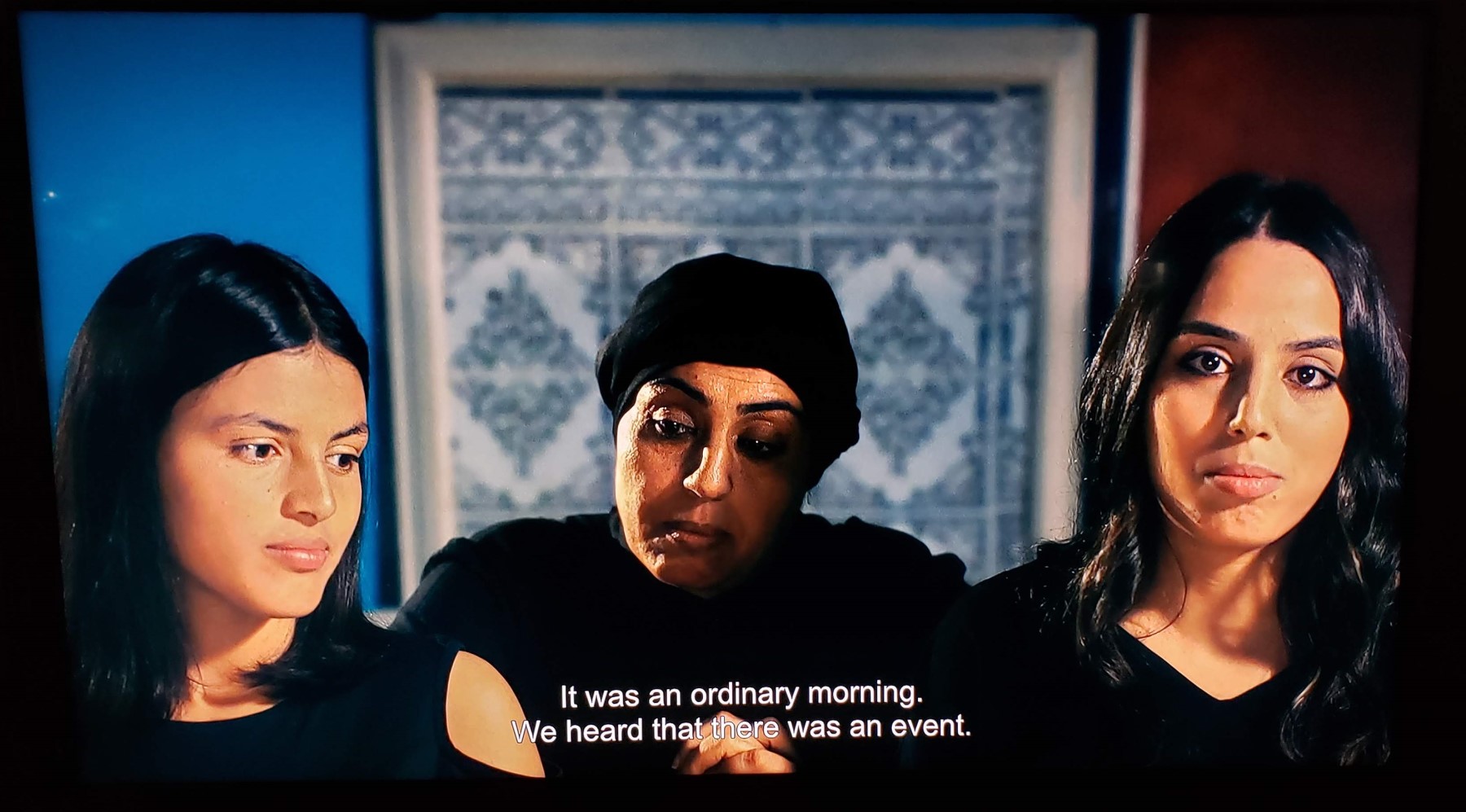
The real mother and the two real daughters who remained by her side.
* Four Daughters (Vudu rental; now on Kanopy). Director Kaouther Ben Hania was a previous nominee with the 2020 Tunisian narrative The Man Who Sold His Skin, a mostly fictional but loosely ripped-from-real-life drama in which a man is willingly turned into a walking performance art-piece in exchange for legal escape from Syria. She’s returned to the Oscar competitions with a differently unusual performance art-piece, a fascinating semi-meta documentary about a mother who watched helplessly as two of her four girls ran off to Libya, joined the Islamic State, and made internationally infamous headlines upon their arrest and sentencing. As a departure from typical interviews and dramatic reenactments, Ben Hania cast two actresses to play the runaways and invites them into the family’s home, where everyone gets to know each other, coaches the two in their substitute performances, then together recreates the warm memories and wounding conflicts that led to their eventual fracture. A third actress also comes aboard as a Mom stand-in for the most painful sketches. She’s called in quite a bit as the initially awkward Brady Bunch patchwork job becomes a delightful female bonding experience, only to turn therapeutically questionable as everyone really digs in. One particular daughter is most eager to share all the truths — about her prodigal sisters for better and worse, about Mom’s deep-seated flaws that contributed, and about her quest for candor in all things, which reveals far more hurt than she knew. Whether healing or harmful, it’s an eye-opening glimpse into what it’s like suffering the radicalization of loved ones and a cautionary tale about why most filmmakers recast all the roles in their dramatizations rather than invite the traumatized to relive their emotional agony for the cameras.
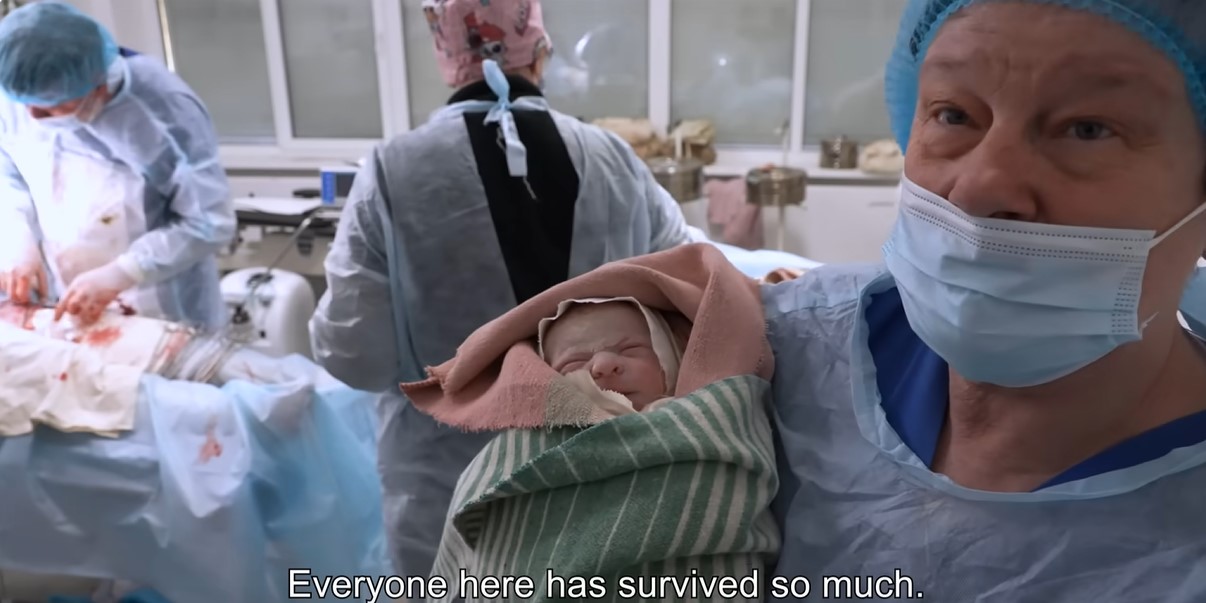
Narrator/director Mstyslav Chernov sums it up: “This is painful to watch. But it must be painful to watch.”
* 20 Days in Mariupol (Amazon Prime rental; now on the PBS app as episode 19 of the 2023 season of Frontline). Time was, Oscar season used to bring out all the latest Holocaust remembrances for critical acclaim. In the past decade, those gave way to brutal reports from the never-ending conflicts in Syria such as The White Helmets, Last Men in Aleppo, Of Fathers and Sons, and For Sama. Today we’re on the cusp of Ukraine assuming that unwanted Oscar-nom mantle. What began with last year’s Lysychansk-set A House Made of Splinters continues with this real-life thriller comprising footage from two AP journalists who happened to be in the city of Mariupol when Russian invaders arrived and began blowing everything to smithereens. They kept their equipment rolling during their three-week gauntlet from one hidey-hole to the next, capturing the devastation in their path, all while searching for Wi-Fi connections to send out their footage and seeking an escape hatch. They watch Russian tanks destroy civilian buildings — apartments, hospitals, and the like — then slowly swivel their turrets toward the watchers. Rubble and chaos are everywhere. Attempts to resuscitate dead children on camera are in vain. One retired soldier sacrifices himself for the sake of the filmmakers’ survival. Ukraine’s official submission for the Best International Feature category (it made that shortlist but not the final cut) reminds us too starkly how some tyrants think the seemingly obvious sentiment “war sucks” is debatable. One day in the future, the new documentaries will come from some other not-yet-war-torn country that inevitably supersedes theirs. In the meantime, for anyone who’s watched Mariupol and still thinks “Well actually Ukraine deserved this,” your kind is the reason antiwar filmmakers will never, ever stop.
…
For those keeping score alongside MCC at home, that’s 48 of this year’s 53 Academy Award nominees we’ve written up so far. Still more are coming soon! Hopefully at least one of them will contain the FDA’s minimum daily allowance of uplift!
Discover more from Midlife Crisis Crossover!
Subscribe to get the latest posts sent to your email.
 Midlife Crisis Crossover!