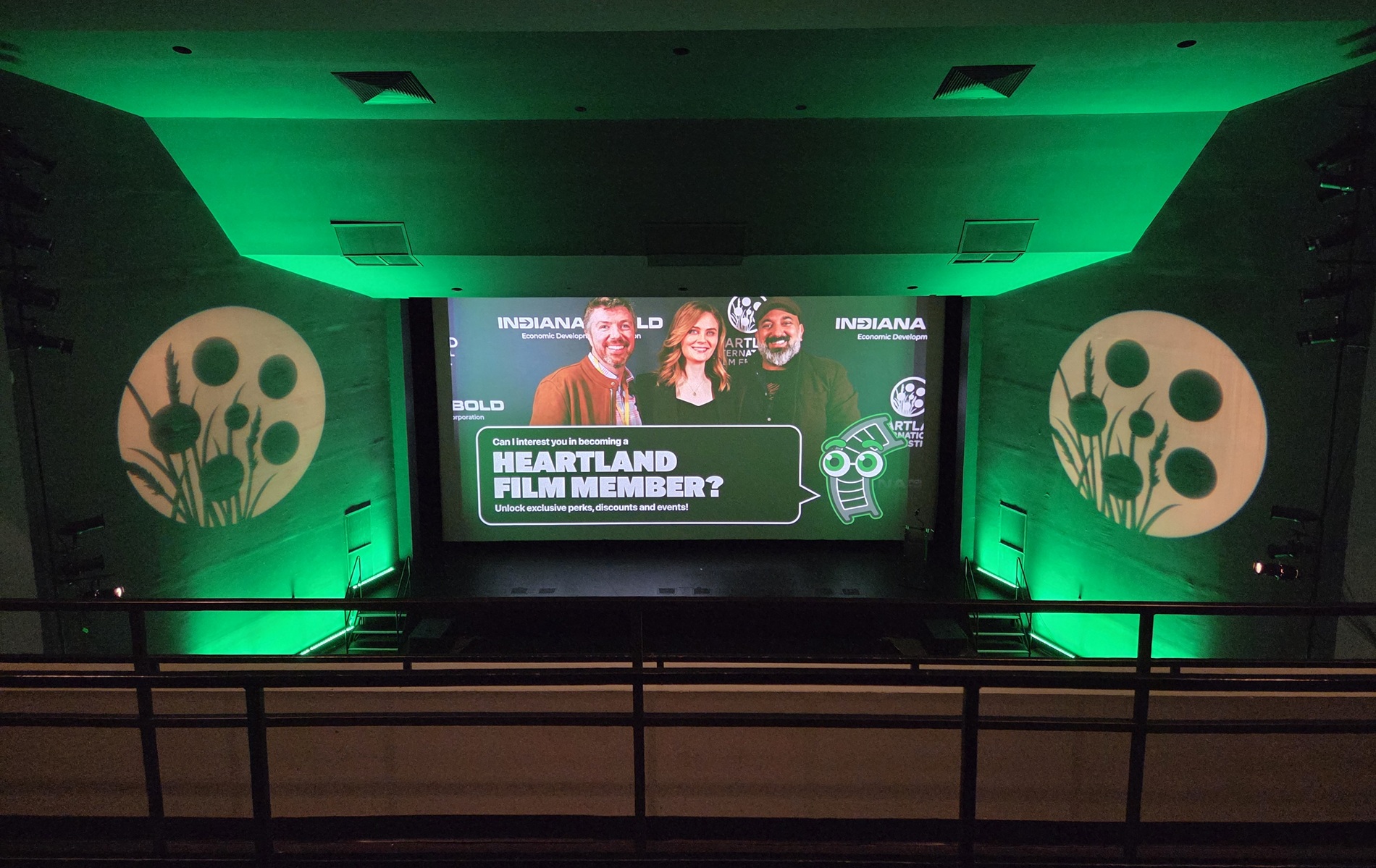
Our Sunday night view from the balcony of the Tobias Theater at Newfields. The slideshow still is from last year’s world premiere of ReEntry.
Previously on Midlife Crisis Crossover:
It’s that time again! Since 1992 my hometown of Indianapolis has presented the Heartland International Film Festival, a multi-day, multi-theater celebration of cinema held every October. Local moviegoers have the opportunity to see over a hundred new works in the realms of documentaries, narrative features, shorts, and animation made across multiple continents from myriad points of the human experience. Some participants stop in Indy on their grand tour of Hollywood’s festival circuit; some are local productions on shoestring budgets; and a wide spectrum of claims are staked in the innumerable niches between, projects with well-known actors screening alongside indies with enormous hearts.
This’ll be my third year diving in and seeing more than just a single entrant. Heartland’s 34th edition runs October 9-19, for which I’ve made plans to catch at least six films in all (Lord willing) — maybe more if time permits…
Once again I took a week’s vacation from my day job and posted for eight consecutive days about the six films I saw at three theaters in nine days, one virtual screening we’ll get to in a moment, plus a few other entries that included still another movie, albeit more of an anti-Heartland studio product that opened the same weekend. I doubt anyone out there read every single word, but I’m not even done yet!
For those just joining us, those six films were as follows, ranked:
…and I was overjoyed to learn Happy Birthday — the tiny, heartbreaking, Egyptian child-maid drama from the makers of Marvel’s Moon Knight — had won the festival’s Narrative Feature Grand Prize. I’m usually lousy at prognosticating their winners. It really is worth seeking out, but as of this writing it has no distribution deal and is still making the festival-circuit rounds. Among the others, The Invisible Half (which made its U.S. debut at Heartland) is in the same boat. Blue Moon and It Was Just an Accident opened in limited release this past weekend (read: NYC and L.A.), while Christy and Nuremberg will begin rolling out in November. It was fun standing on a level playing field with the Big Two for a few days.
For viewers who wanted to travel less, Heartland also offered a selection of virtual screenings for certain films. My wife Anne and I availed ourselves of one such option last Saturday night…
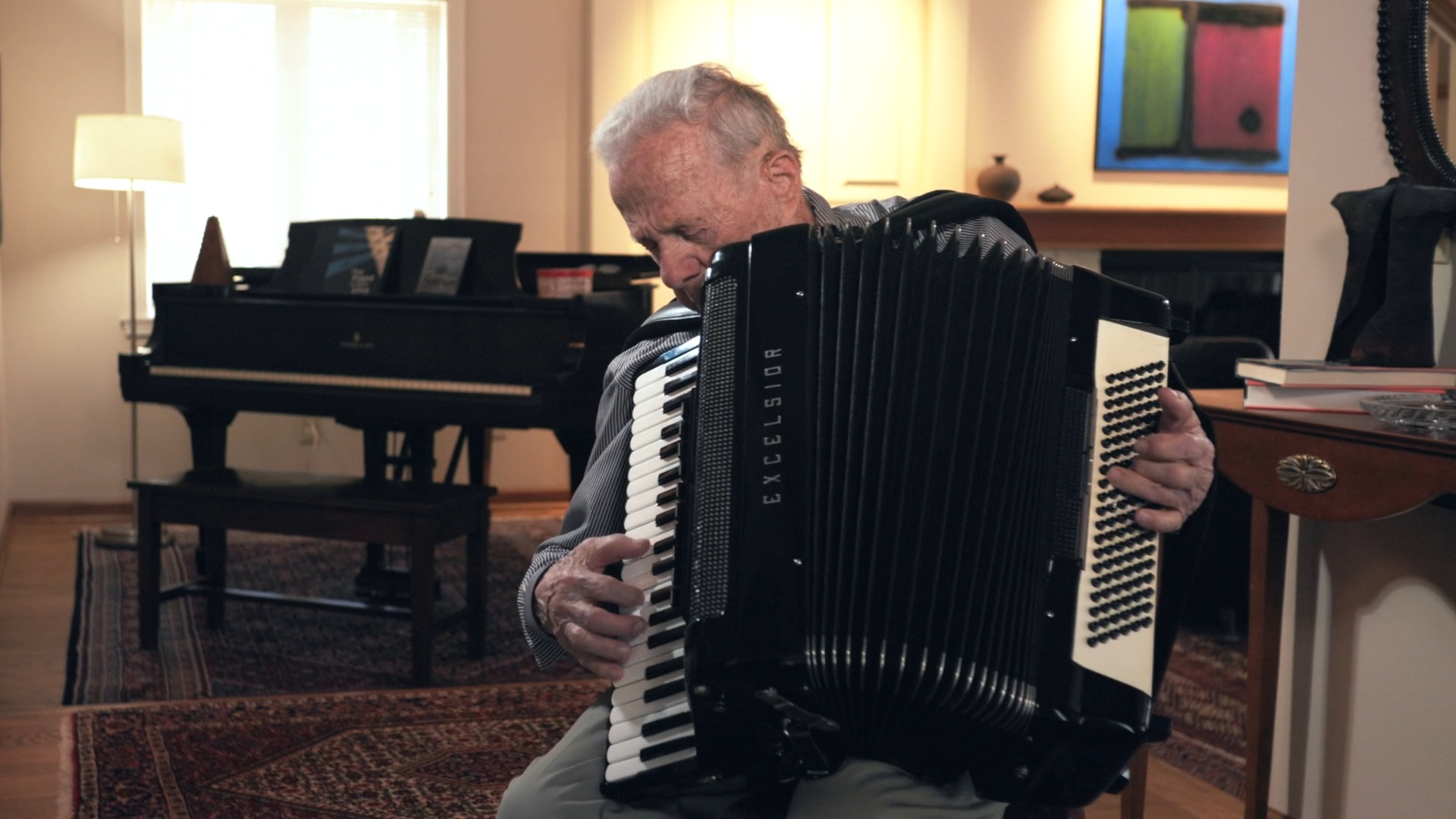
Frank Grunwald in Sweet Lorraine in Auschwitz.
From local filmmaker Philip Paluso, Sweet Lorraine in Auschwitz is a documentary produced by the Indianapolis Jewish Community Relations Council about Frank Grunwald (1932-2023) — an Indianapolis resident for years, jazz accordionist since childhood, and Holocaust survivor. Through a series of interviews conducted before his passing, Grunwald opens up about his happy family life in Czechoslovakia before die Anschluss in Austria segued to the Nazi seizure of his homeland (as we saw chronicled in the 2016 film Anthropoid, with Cillian Murphy and Jamie Dornan).
Once they were forced out of their home, Grunwald’s perilous journey over the next several years would have them enduring cruel imprisonment in the “spa town” of Theresienstadt, then transferred to the notorious Auschwitz-Birkenau concentration camp. He remembers the last time he ever saw his mother and brother alive (accompanied by a heartbreaking reading of the last lines from his mom’s last letter to his dad), then separation from his dad, who was shipped off to Sachsenhausen while — through lifesaving kindnesses involving a criminal-turned-kapo and a watercolor painter whose works sparked their own documentaries — the preteen Grunwald would be marched onward to the Gleiwitz subcamp, then diverted to Mauthausen, its notorious quarry, and its Melk subcamp until the war’s end. Yes, I took some notes while we watched, far easier at home than in a darkened theater.
Using Grunwald’s personal story as a framework, Paluso takes the opportunity to cover the Nazis’ oppression of the Jews and other groups in general, unconscionable concentration-camp experiences on average, and the genocide of six million Jews and millions of others. Other interviews are included from Midwest historians and professors, including at least two from Ball State (where my sister-in-law teaches). As usual for such works, the extensive footage is not for the squeamish and candidly goes beyond what we saw within Nuremberg‘s PG-13 limits. I already wrote about the necessity of such works in that entry, and recommend Sweet Lorraine to one and all on principle, but here the overarching historical context — while especially illuminating for anyone who hasn’t watched a few of these — overwhelms the runtime and often reduces Grunwald’s singular story to a subplot.
Whenever he returns to the spotlight, he describes how his childhood love of jazz gave him a much-needed outlet for mental retreat from the everyday horrors that drove others mad. Given its importance, there’s a lot less jazz in the film than we’d expected, though we do hear Grunwald perform a few times. The standard “Whatever Happened To…?” documentary text epilogue also gives the impression that the film ends prematurely, casually mentioning that when the Communists overran Czechoslovakia in 1948, he and his dad had to escape that ordeal by going through Italy and seeking refuge in the States. That brief aside sounds like a film unto itself, which…are they saving it for the sequel?
(Also, five demerits for the narrator mispronouncing Goebbels’ name to rhyme with “nobles”.)
I wish I could’ve seen more than just these seven, but being the blogging creature that I am, I strove to strike a balance between the viewing experiences and the post-game write-ups here. At the Blue Moon showing Saturday night, our host solicited a round of applause for a retiree in the audience who’d seen forty-eight films in this year’s festival thus far. A show of hands revealed quite a few guys who’d “only” caught 30 or more by then. That’s pretty wild and enviable, and a great reason to buy a Heartland membership or at least a ten-pack of tickets, which pays for itself if you have the free time. But how many of them went home and immediately churned out 1300-2200 words about each and every film? For the fun of it? With zero networking cred and without getting journalism pay to do it? How many of those dudes will go fully unpaid-intern and have 66,000 words on J. Jonah Jameson’s desk by Tuesday morning, plus maybe photos of Spider-Man? See, this is the kind of obsessive hobbyism our society should be celebrating!
Anyway. This year’s festival screened films at five theaters. My six screenings were spread across three of those, with live intros by Heartland staffers — Film Programmer Julie Landrum, Programming Coordinator Sam Opsahi, Artistic Director Greg Sorvig, and Senior Creative Manager Angelo Auriemma. I ended my run with Nuremberg on closing night at the Tobias Theater at Newfields. The lead photo shows our perspective from the balcony, which was an odd angle I’d never tried for watching a movie before, but I stopped thinking about it as the film carried us away.
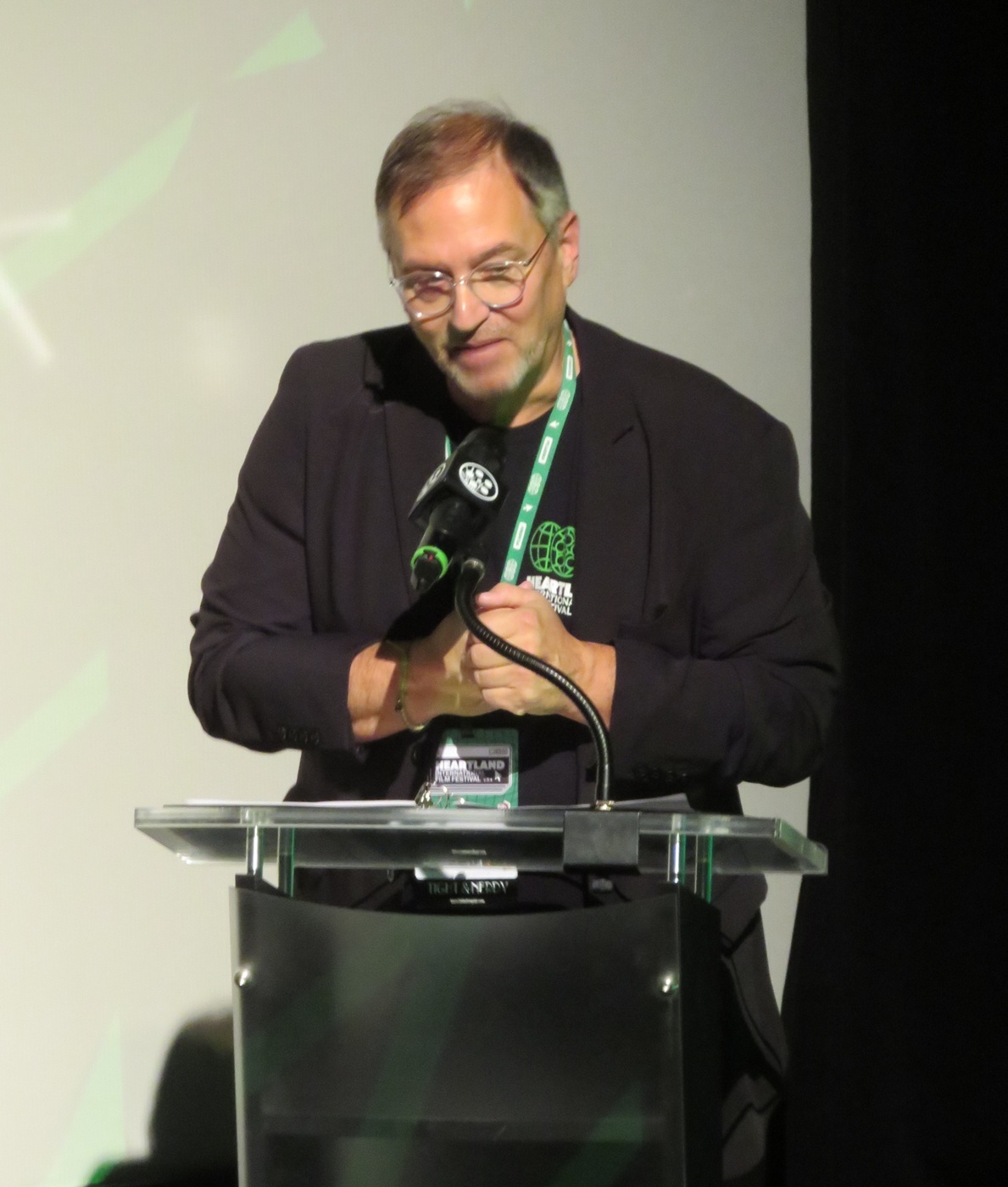
Closing night included opening remarks from Heartland CEO Michael Ault…

…and the aforementioned Greg Sorvig.
Every trip to Newfields, the place formerly known as the Indianapolis Museum of Art, comes with free glimpses of their current lobby art installations and hints of their big Harvest Nights outdoor art-walks held every October.
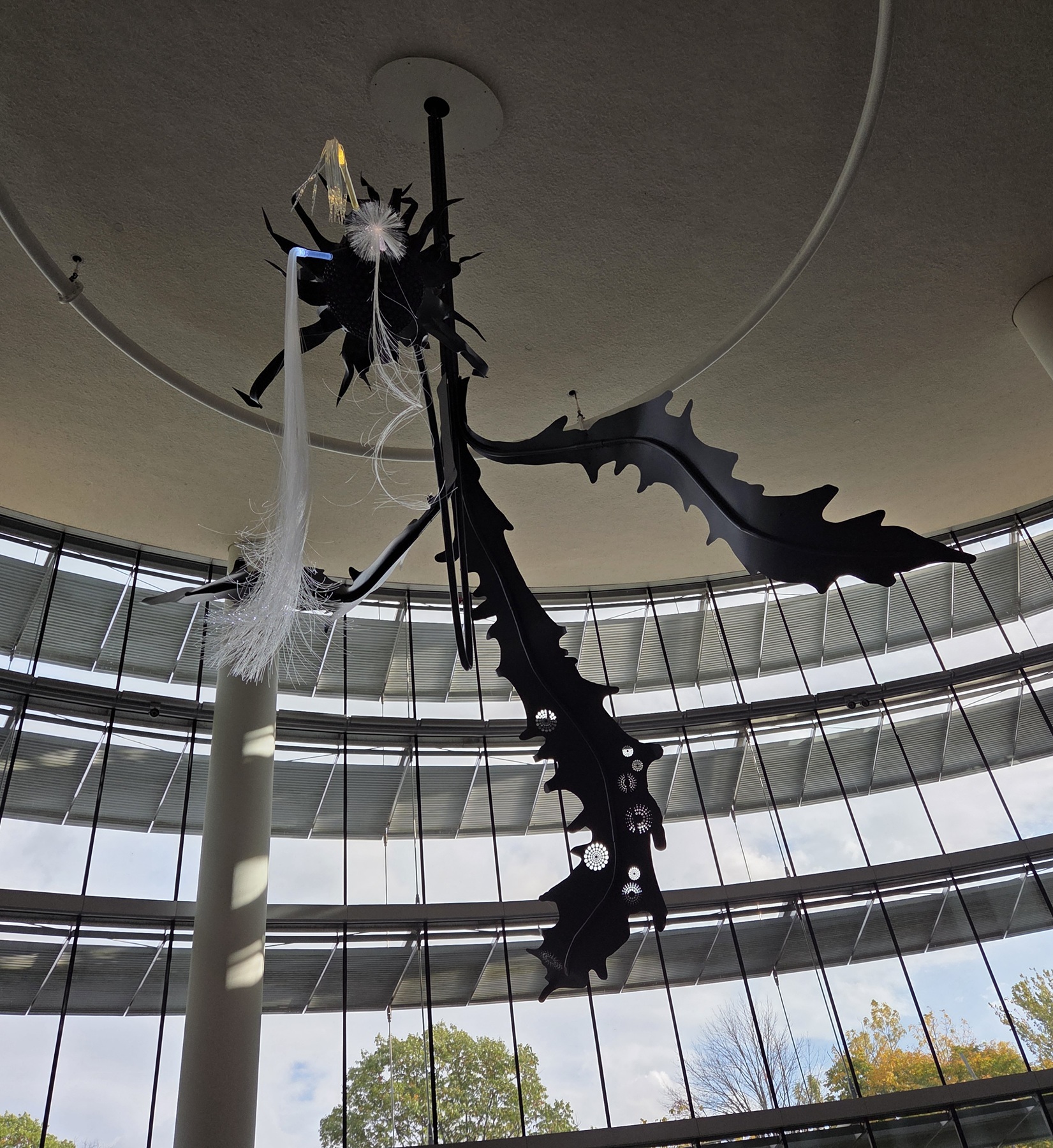
Currently dominating the atrium is Black Dandelion by Kori Newkirk.
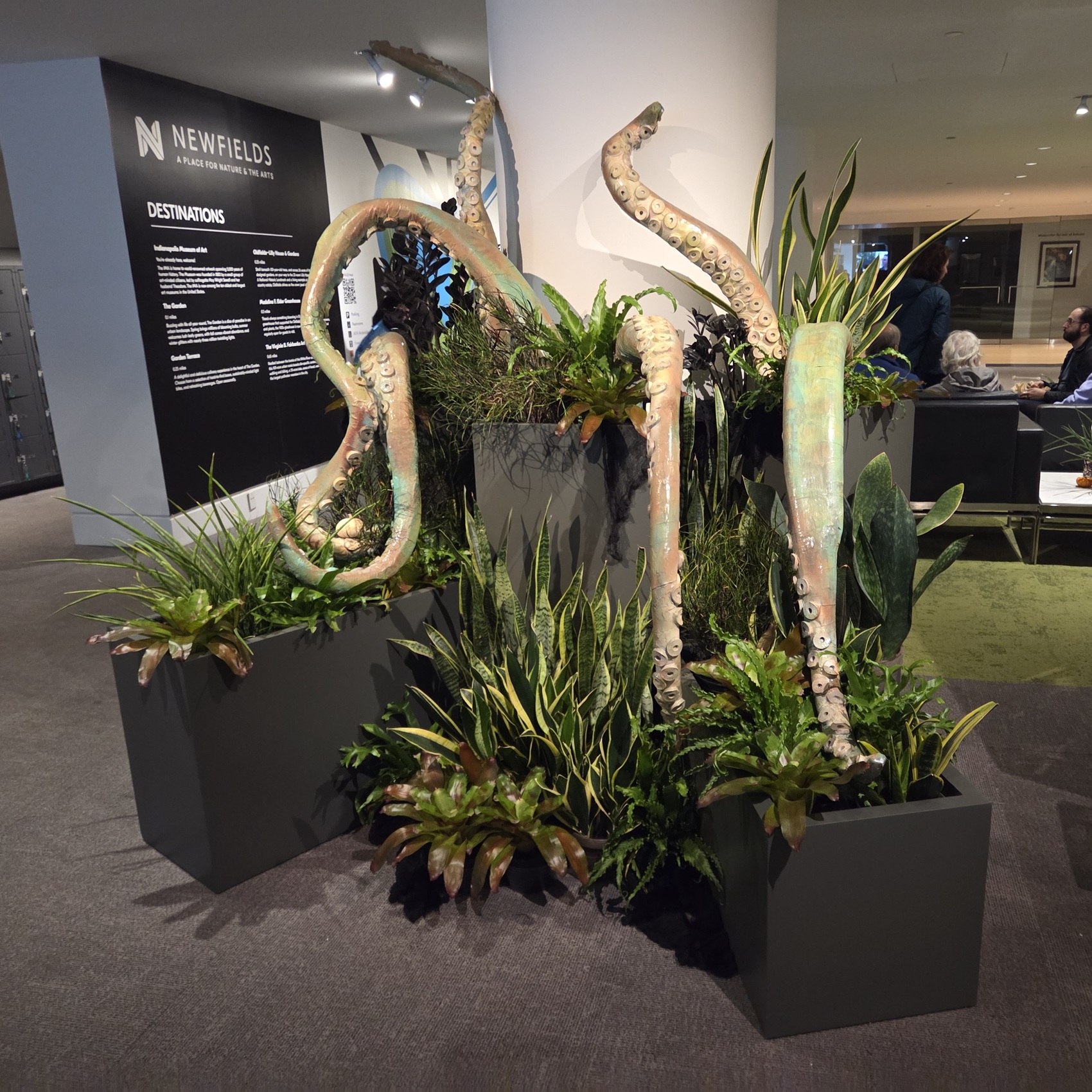
Octopus tentacles! Because Halloween!
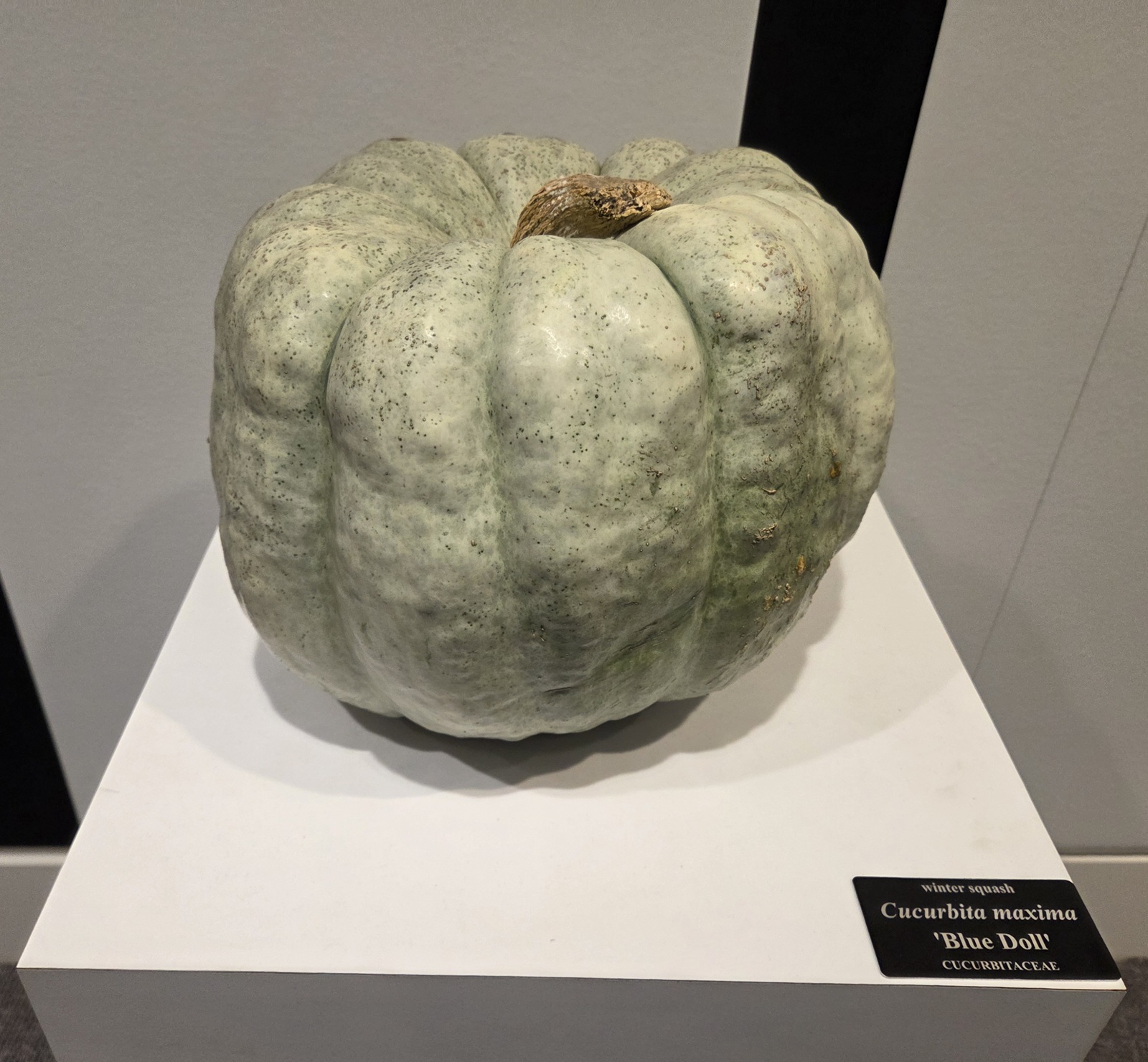
One in a series of uncommon pumpkins in the hallway leading to the theater.
Heartland was also a great excuse for me to at long last check out Alamo Drafthouse, which opened a location here last year, though not in time for the festival. They repurposed the same chassis that once housed the erstwhile Georgetown Cinemas, which in turn had replaced a Cub Foods, which in turn had replaced the Lafayette Drive-In, which in my childhood routinely played exactly the kind of horror flicks and schlock that Joe-Bob Briggs would’ve loved and told everyone to come check out. The circle of cinema continues.

They’re a couple miles north of the Indianapolis Motor Speedway and consequently put up murals of racing-movie tributes and mash-ups.
Alamo have been a favorite venue in other major cities for year, widely known among cineastes for their liquor collection and their ushers’ willingness to call out and even expel audience members who insist on various forms of rudeness, such as using their phone during a movie. This year they stepped up as sponsor-above-the-title and did a stupendous job of raising enthusiasm for the proceedings. I don’t drink and didn’t get to cheer on a bouncer, but I applaud their well-organized food service, can recommend their chocolate shakes, and love that it’s only fifteen minutes from my house, the closest of any participating theater to date.
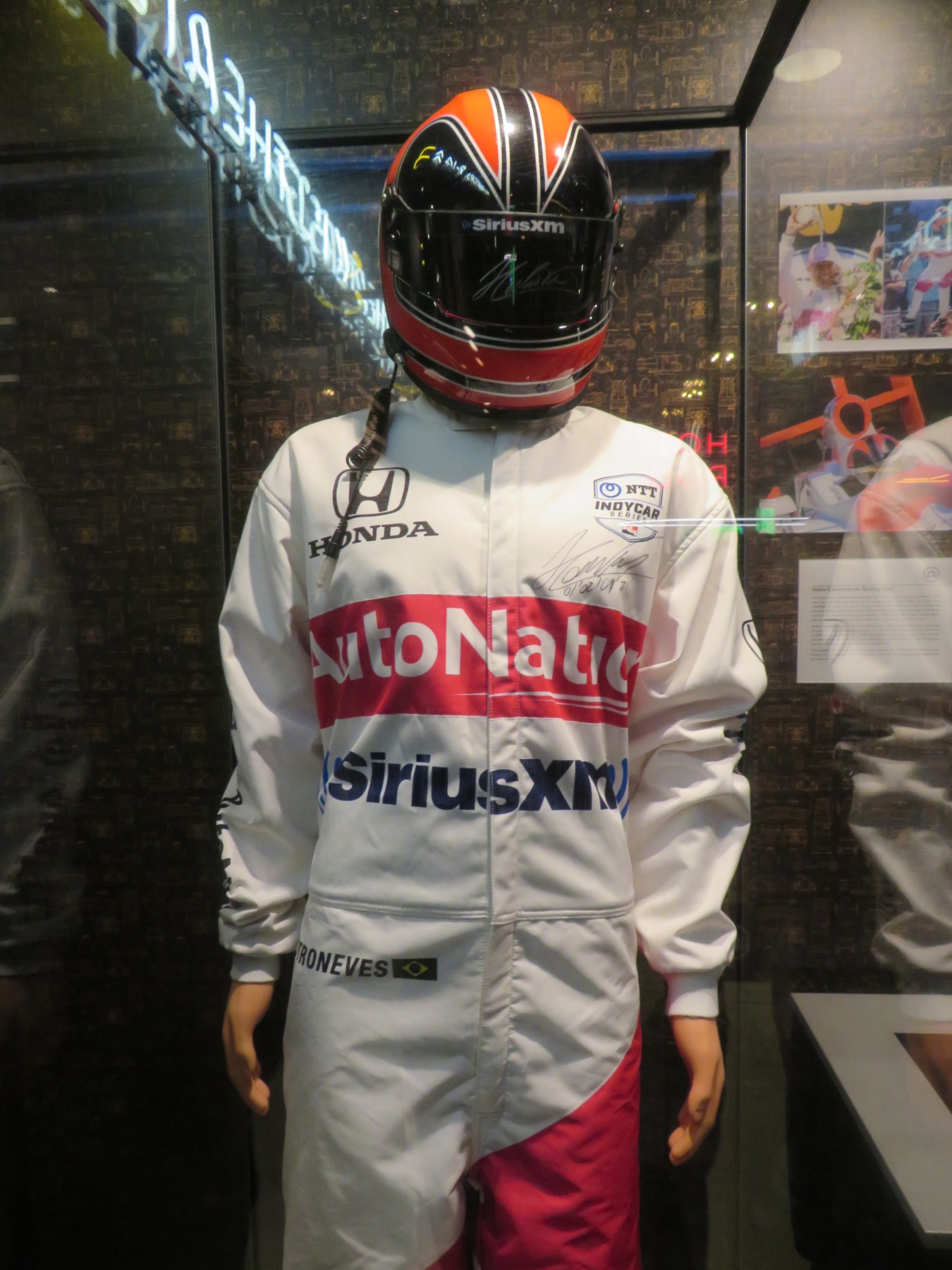
In addition to vintage posters for racing movies (some from other countries!), decor in their claustrophobic lobby includes one of Helio Castroneves’ old jumpsuits…
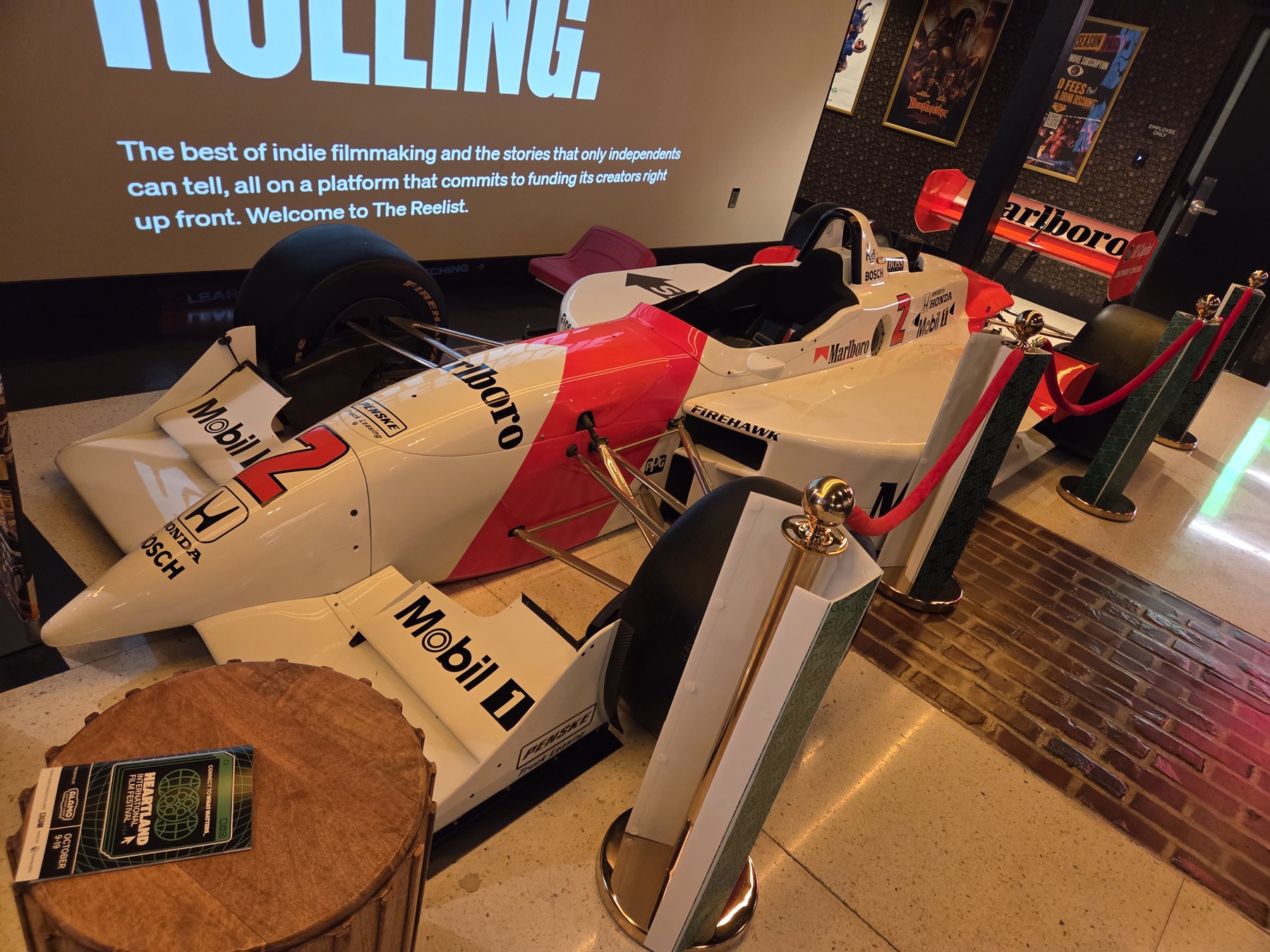
…and don’t hold me to it because I couldn’t find a placard to confirm, but this might be Rick Mears’ #2 car that he drove for Penske in the 1990 Indy 500? (Corrections welcome!)
Three of my screenings were at the Kan-Kan Cinema, which has some drawbacks but consistently presents the most eclectic assortments of any theater in town. They’ve become one of my main go-to spots for Oscar Quest every year, especially for indie nominees in the smaller categories.
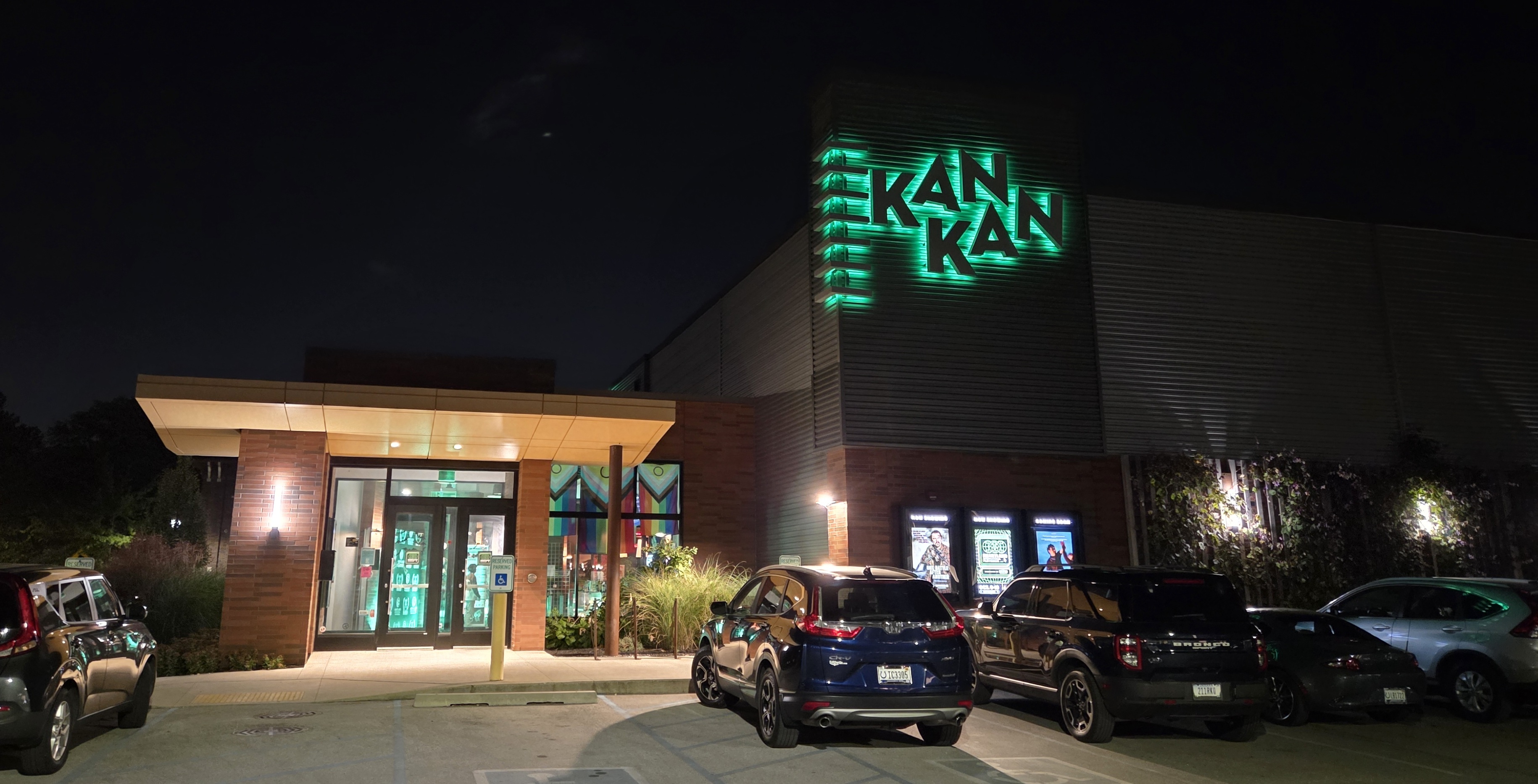
The Kan-Kan at night.
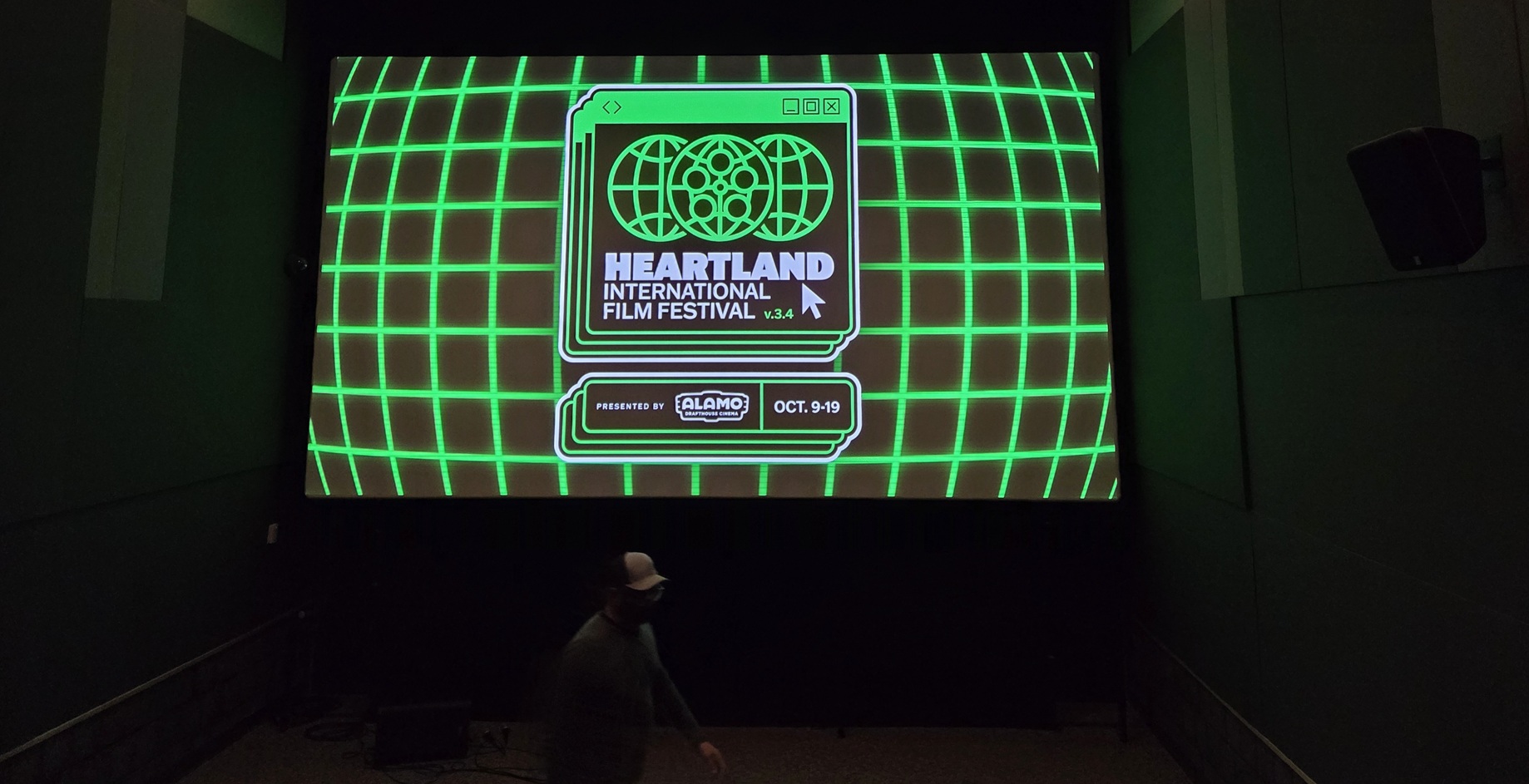
Screen shot before my showing of Happy Birthday. Have I mentioned my disappointment that it was the least crowded showing I attended?
If you’re still here: thanks for that. I’m a nobody locally (or on most other measurable scales, really) and consequently saw most of my Heartland entries fly unobserved into the aether shortly after publishing. Fun ironic trivia in closing: of all the entries I cranked out during this special nine-day posting marathon, the one that drummed up the most traffic, multiple times over, was the one about the aforementioned anti-Heartland studio product.
Nevertheless: thanks for reading! Lord willing and time permitting, we’ll be back next year.
(Final count: seven Heartland entries totaling 11,200 words, including this one. Cheers!)
Discover more from Midlife Crisis Crossover!
Subscribe to get the latest posts sent to your email.
 Midlife Crisis Crossover!