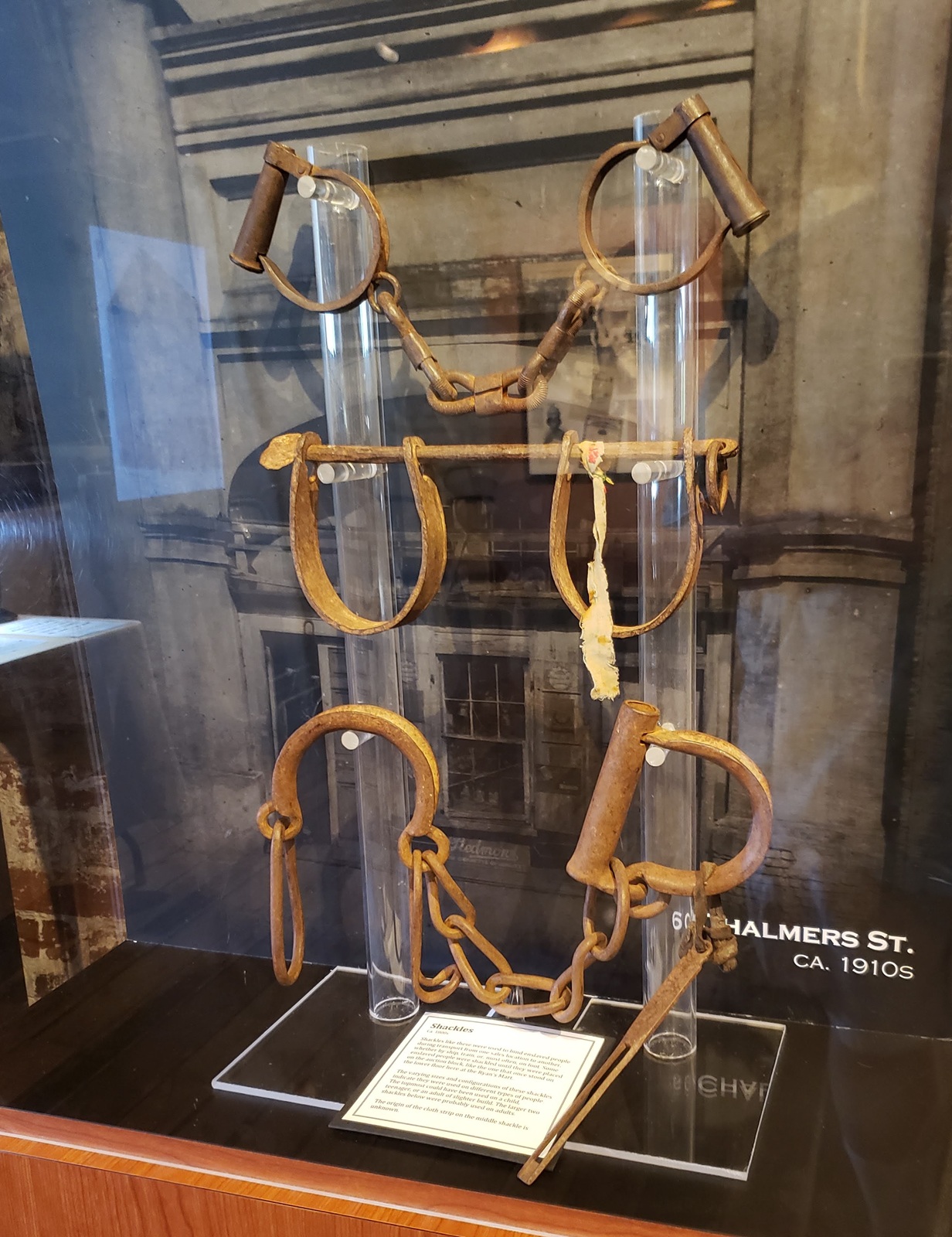
Shackles on display at Charleston’s Old Slave Mart Museum.
Previously on Midlife Crisis Crossover:
Every year since 1999 Anne and I have taken one road trip to a different part of the United States and seen attractions, wonders, and events we didn’t have back home. From 1999 to 2003 we did so as best friends; from 2004 to the present, as husband and wife. After years of contenting ourselves with everyday life in Indianapolis and any nearby places that also had comics and toy shops, we overcame some of our self-imposed limitations and resolved as a team to leave the comforts of home for annual chances to see creative, exciting, breathtaking, outlandish, historical, and/or bewildering new sights in states beyond our own. We’re the Goldens. This is who we are and what we do.
For 2023 it was time at last to venture to the Carolinas, the only southern states we hadn’t yet visited, with a focus on the city of Charleston, South Carolina. Considering how many battlefields we’d toured over the preceding years, the home of Fort Sumter was an inevitable addition to our experiential collection…
Our day-long walk through downtown Charleston continued beyond King Street’s south end as we digressed from browsing boutique windows to observing two commemorations of American history along our path — one a cemetery, the other a museum. Those functions are common stops for us in past trips, but rarely do we find one of each within close proximity to each other and yet representing opposite ends of the moral spectrum, insofar as the unavoidable topic of slavery.
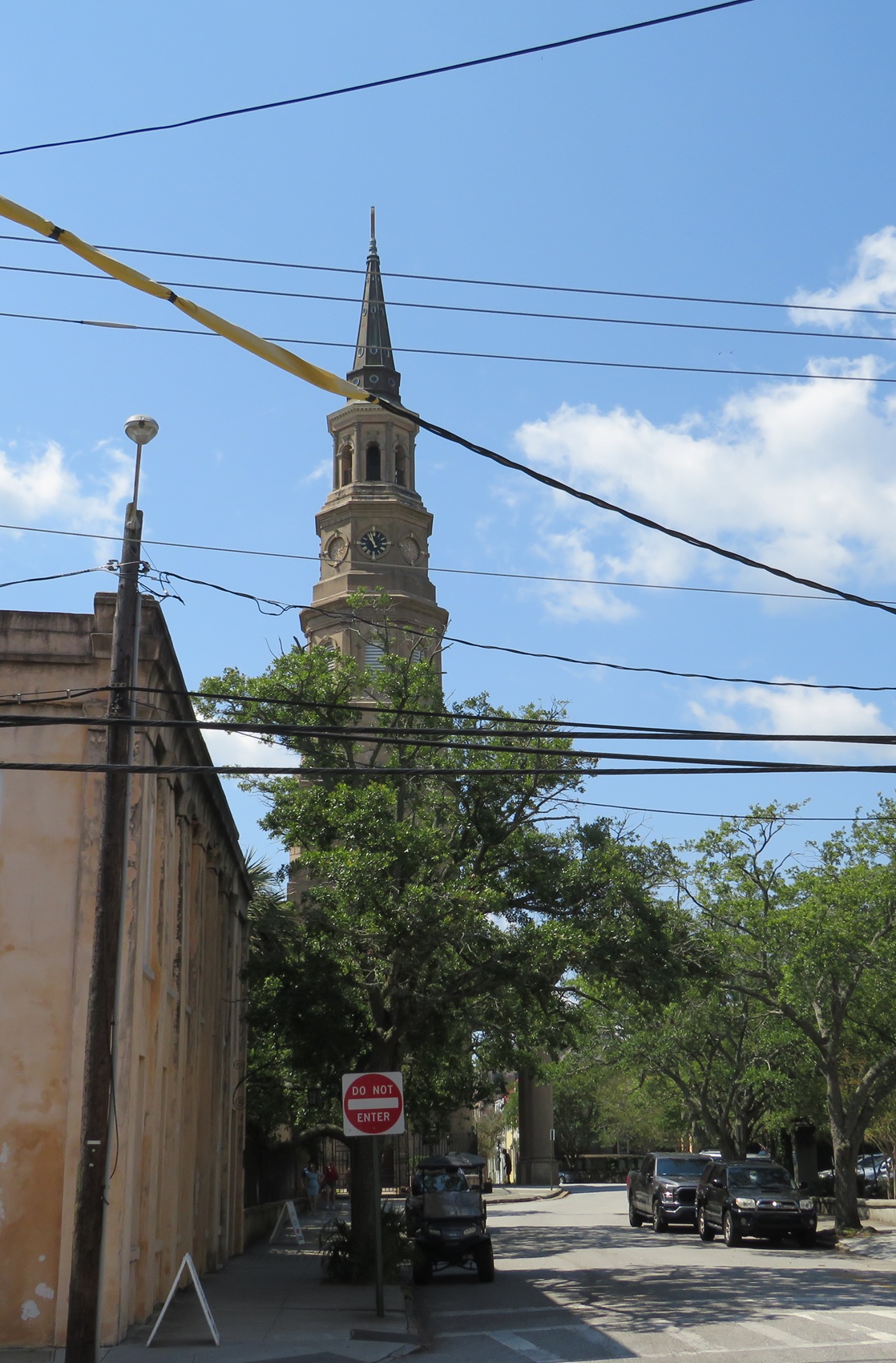
We travelers do appreciate easy-to-find historic attractions that literally stand out from their surroundings.
Two short blocks south of the City Market was St. Philip’s Church, appropriately located on Church Street, which runs parallel to State Street. (Intentional commentary on the party of a city planner, mayhap?) The congregation dates back to the 1680s, the church itself has stood since the 1830s, and the impressive steeple was completed in 1850. St. Philip’s also has an old cemetery whose graves include a handful of notable personages from times past, with “notable” being a value-neutral term here. The cemetery is divided into east and west wings, but the East Wing was closed upon our visit.
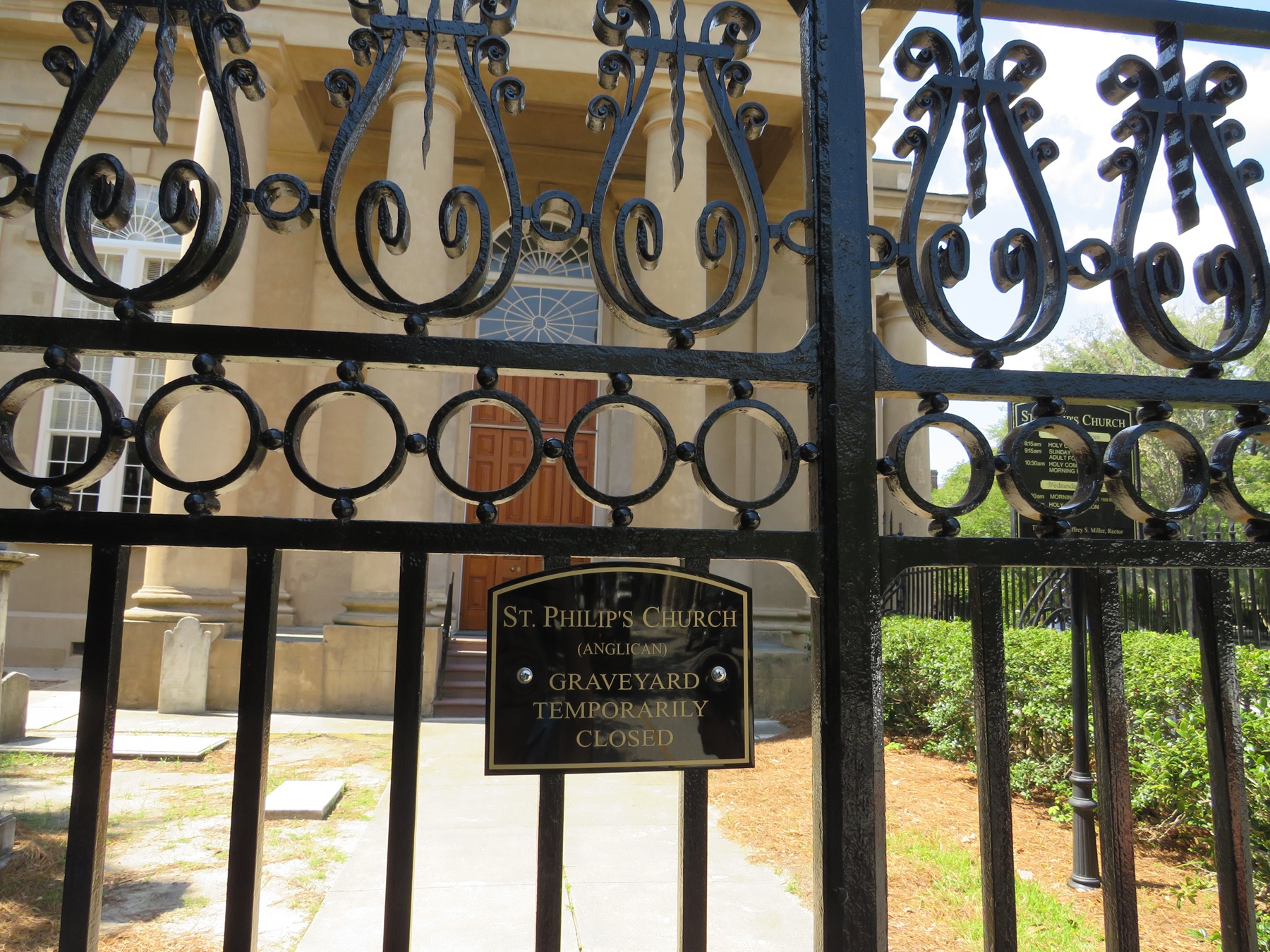
Tourism partially DENIED.

No, we couldn’t just climb the fence and do guerilla tourism.
Either most of the personages were in that wing, or they were in the open West Wing and we simply overlooked them despite several minutes’ dedicated search. The only one we could find was also among the largest stones around. John C. Calhoun (1782-1850) was a Southerner who wore many hats. Among other job titles, he served as Vice President under John Quincy Adams and Andrew Jackson (the last VP to try dual service and the very first VP ever to resign); Secretary of War under James Monroe; Secretary of State under John Tyler; a U.S. congressman in both houses; and more, more, more.
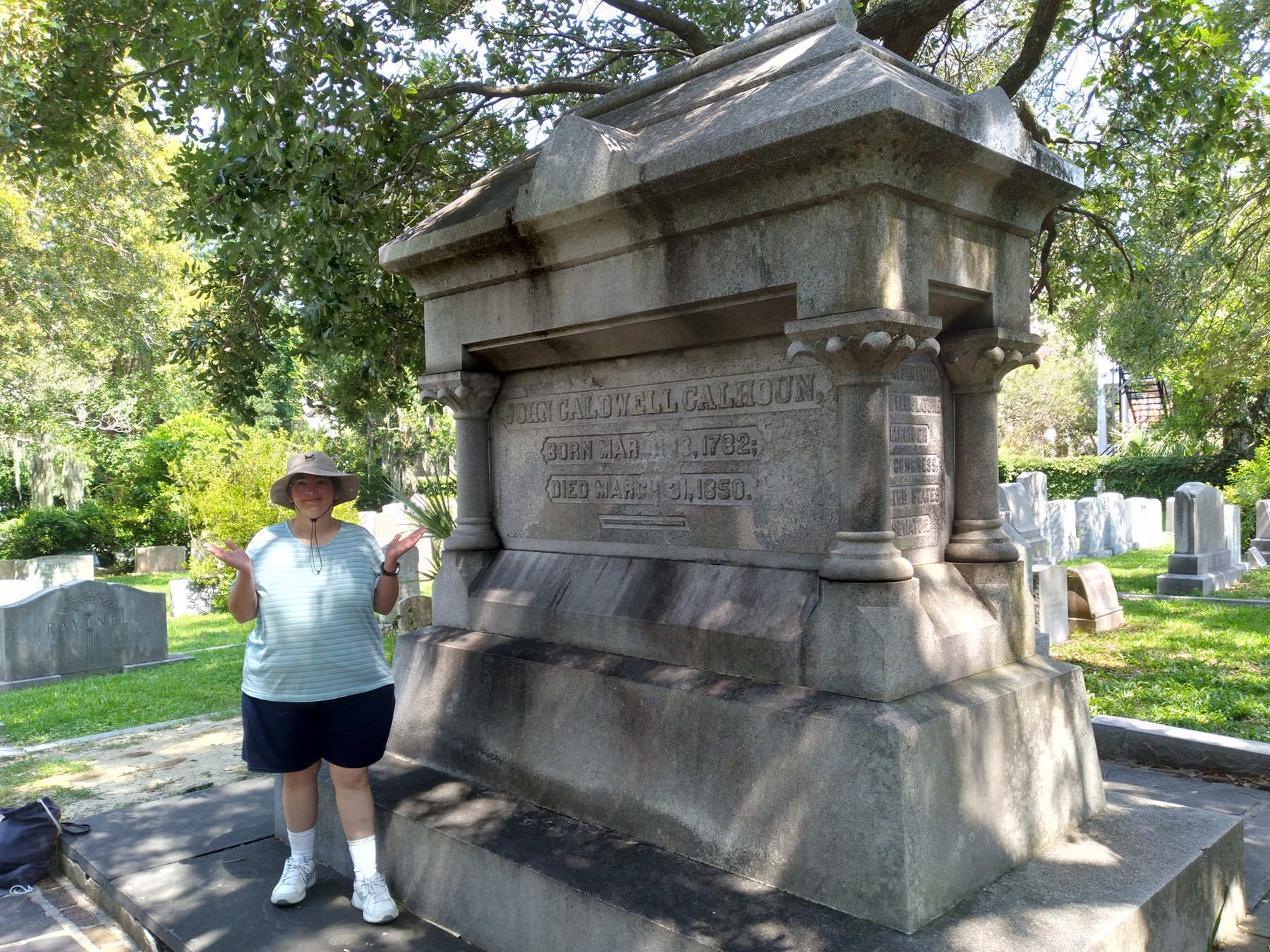
Also not hard to find.
Not all the burial sites we visit are for our heroes. We haven’t seen as many Vice-Presidential gravesites as we have Presidential ones, but we’ll brake for those in our path, though we might not necessarily drive dozens of miles out of our way to do so. Longtime MCC readers know we’ve visited dozens of Presidential gravesites and there’s no way I’d call all of them heroes. On Anne’s part it’s the history aficionado side of her. For me it’s a sort of curiosity about witnessing the final chapter of “Whatever Happened To…?” for a given famous person. That said…well, it’s extremely rare for me to toss in factoids to the effect of “he owned dozens of slaves”, but in this case Calhoun and the topic of slavery are inextricably linked. Tuberculosis took him a decade before the Civil War, but his vehement pro-slavery stance, political actions and speeches were hugely influential to the evolution of the future Confederacy.
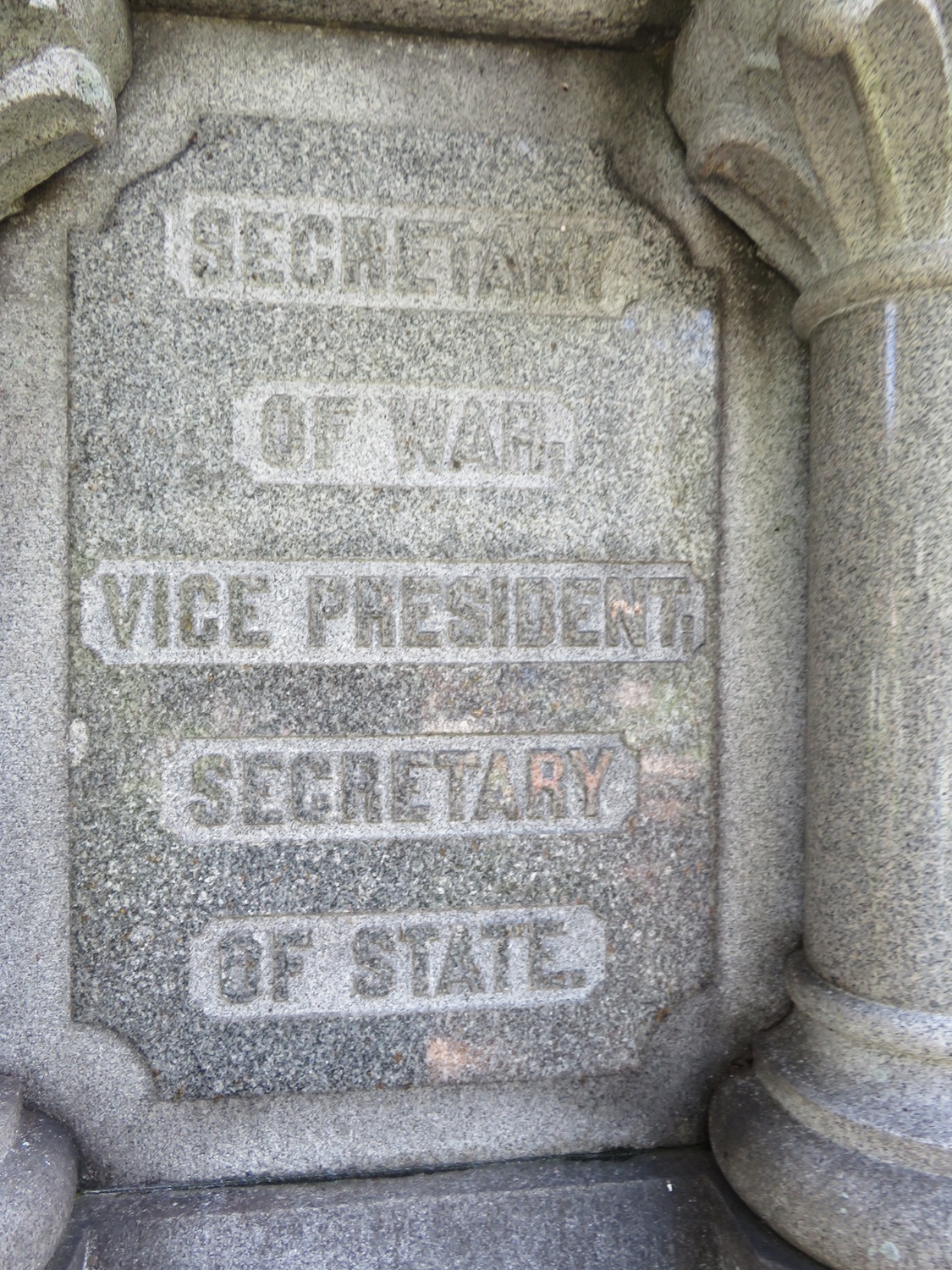
The engraved portions can’t cover all the details.
Some of the surroundings held our attention a bit longer…
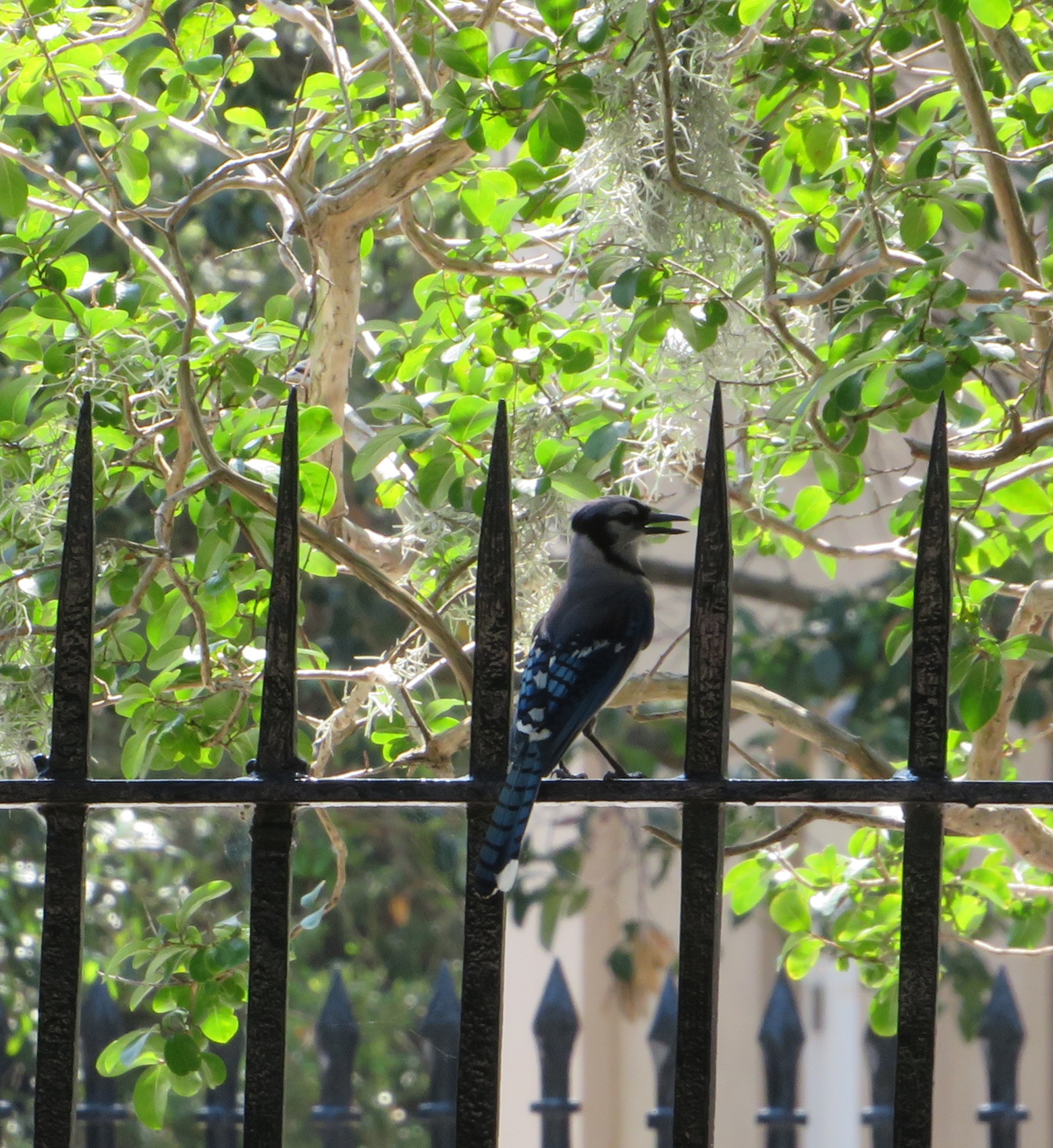
A blue jay welcomes us to the hallowed grounds.
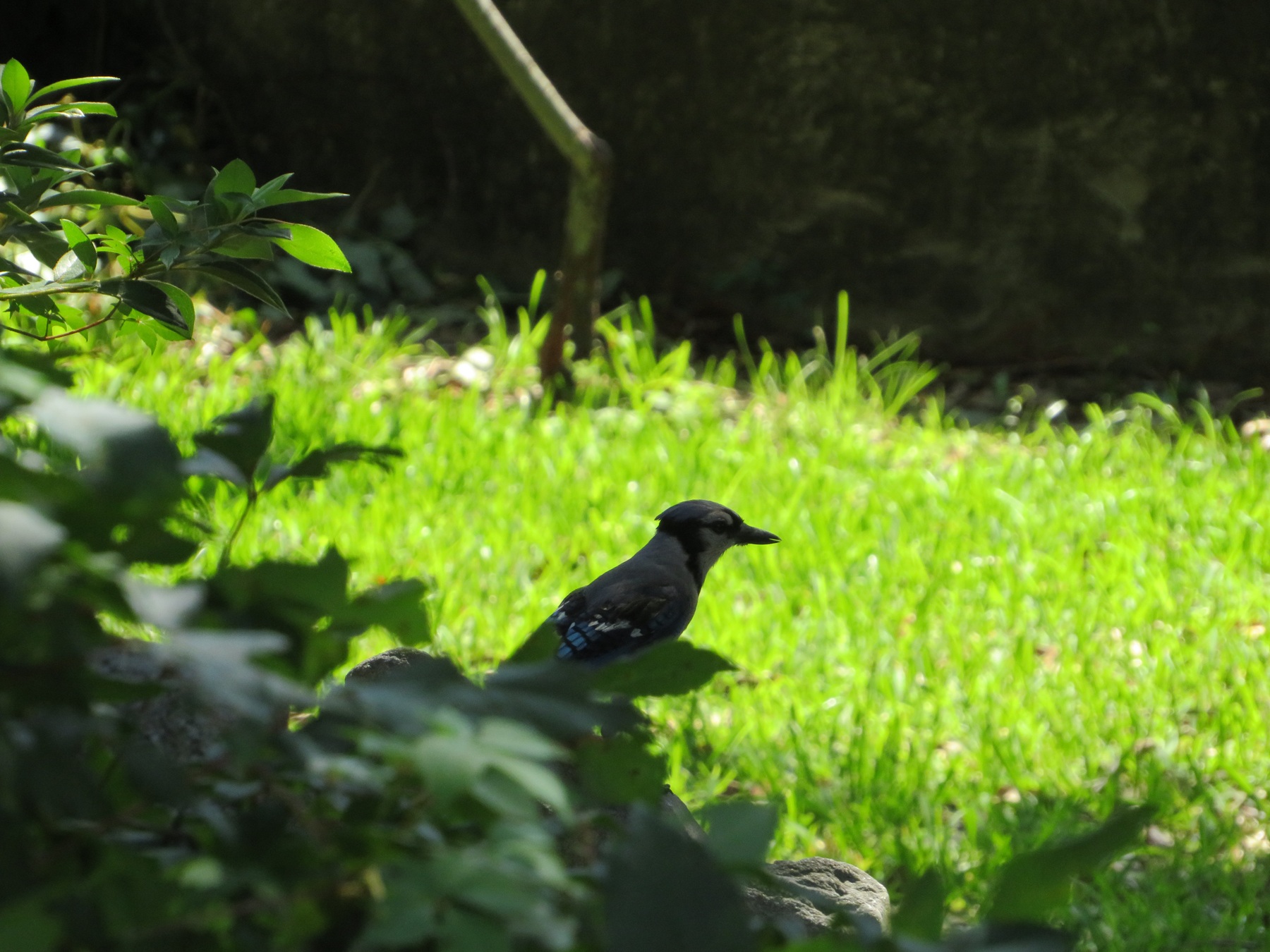
The blue jay flutters down and hangs out with us.
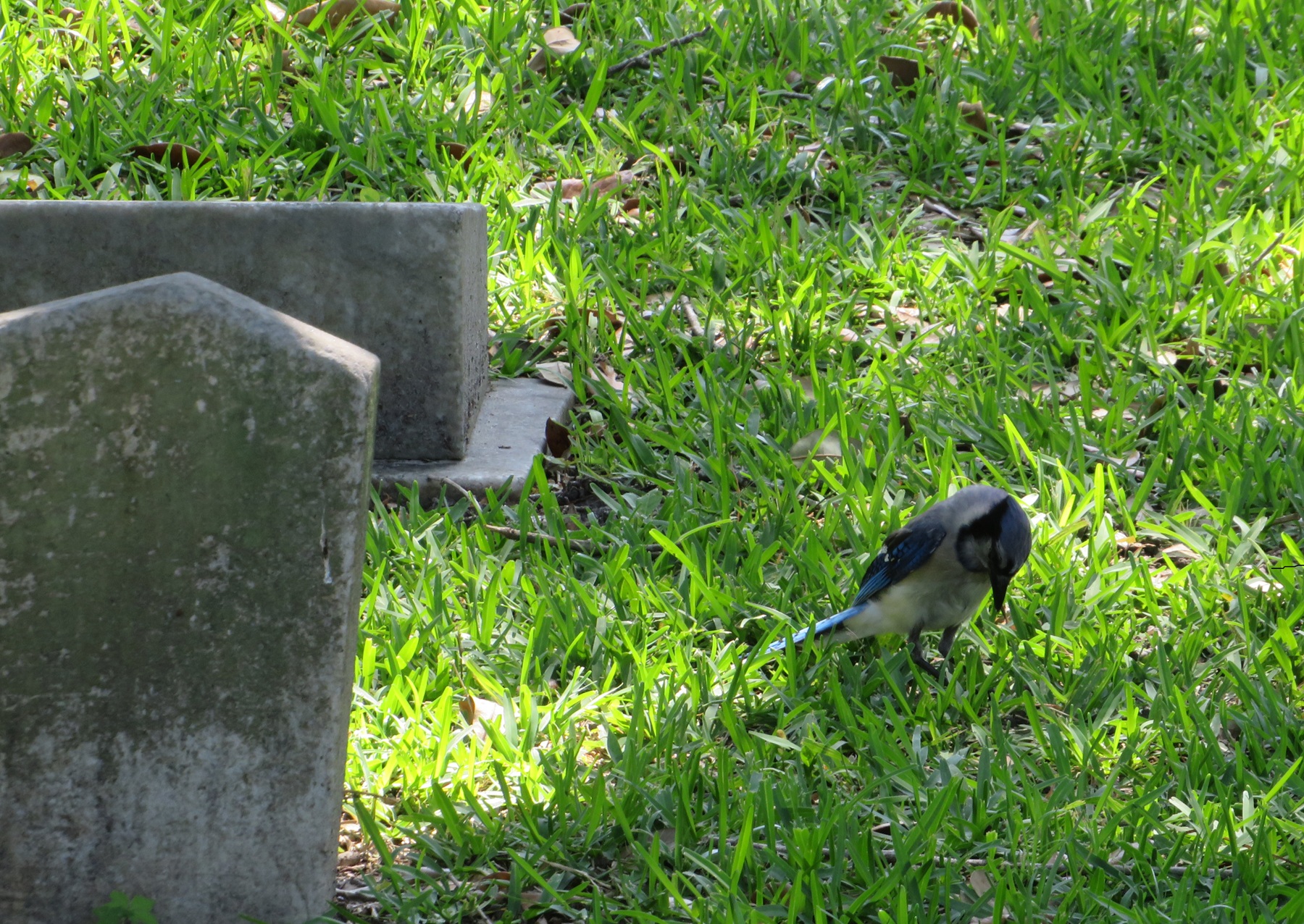
Our new friend was no help locating the other graves on our list.
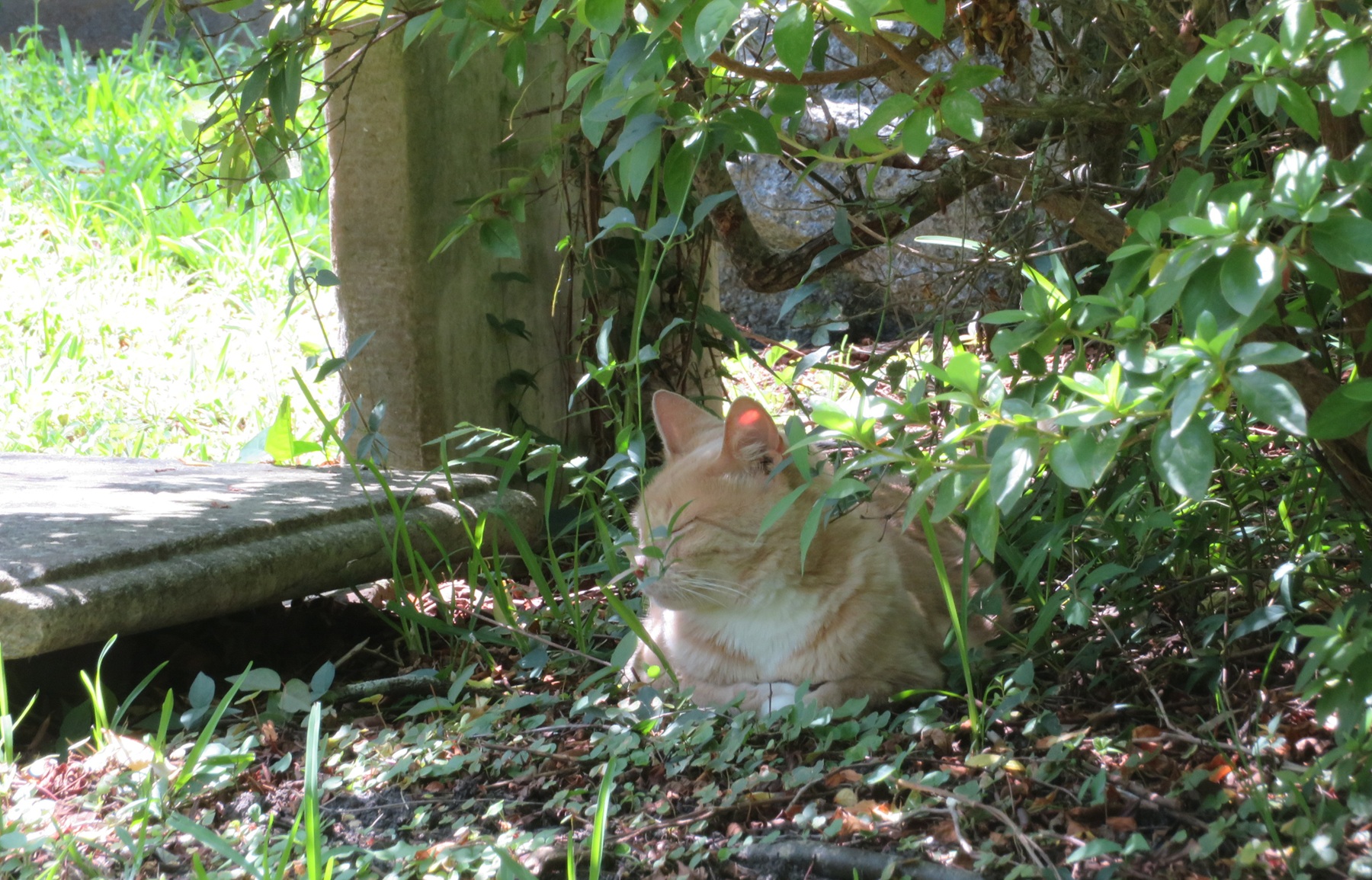
Another cemetery visitor probably had thoughts about the blue jay.
It was a short hop around the cobblestone corner to our next stop, the Old Slave Mart Museum. Once upon a time right before the Civil War, the site was built as a slave auction house, albeit short-lived once Union forces occupied Charleston in February 1865. After changing hands and purposes a few times, it was first reopened as a museum in 1938, albeit as an African-American art gallery hosted from a perspective of Well Actually Slavery Was Good. It’s changed ownership and focus since then.

At various times the building had also been a tenement and a car dealership.
The museum is not intended as a comfortable experience. It’s two stories, cramped, and has restrooms, but no educational gift shop or water fountains. (That inconvenience was unfortunate after our dehydrating, mile-long walk. By this time we were out of water.) Photos weren’t allowed on the first floor, and most of the displays comprised enlarged photos and text placards, which we often don’t photograph for posterity (and I don’t like posting them when we do). It’s a somber learning experience, not an Instagram hot spot.
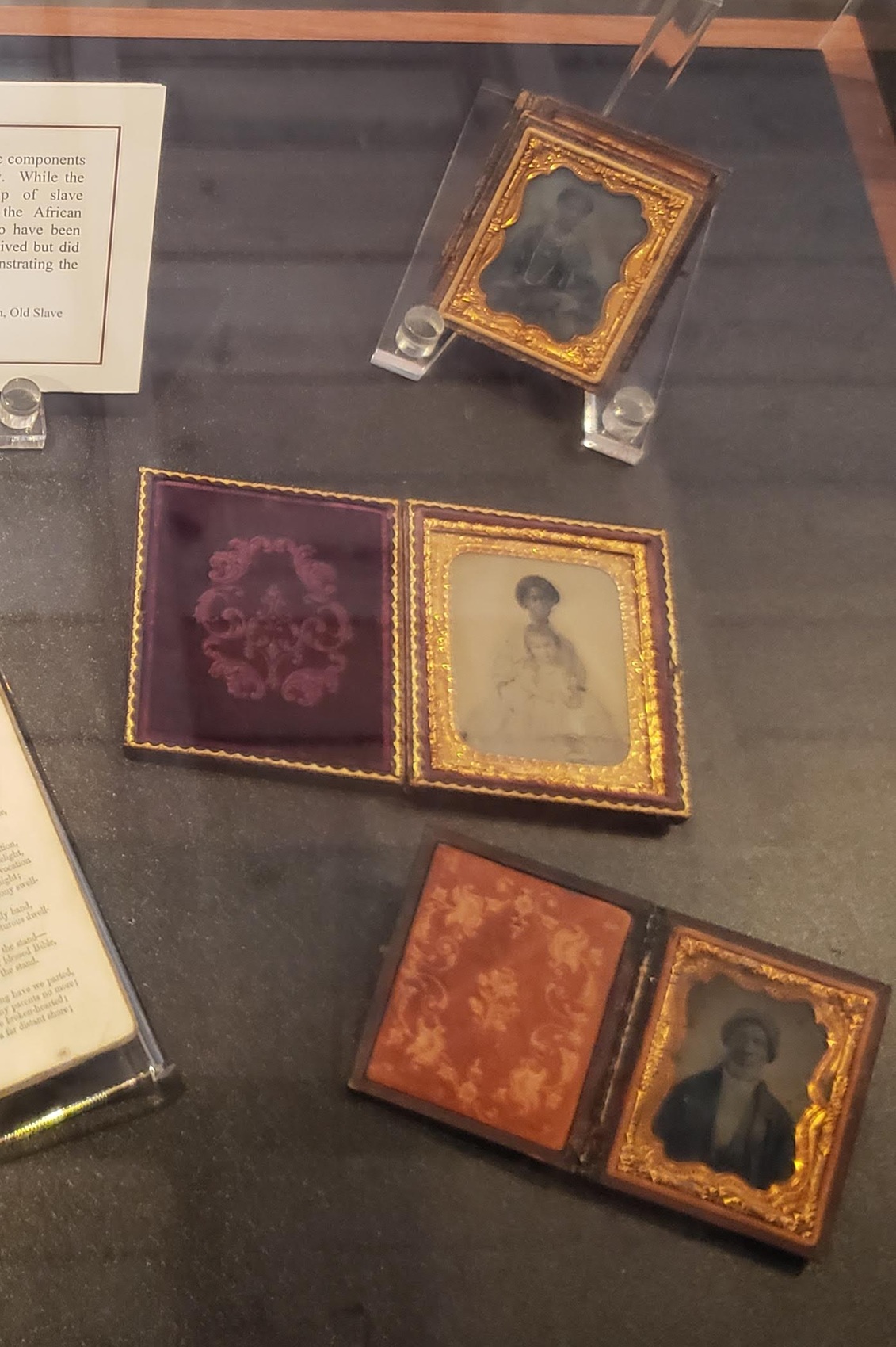
Artifacts in their modest collection included lockets and framed photos of loved ones.

A slaver’s itemized bill of sale.
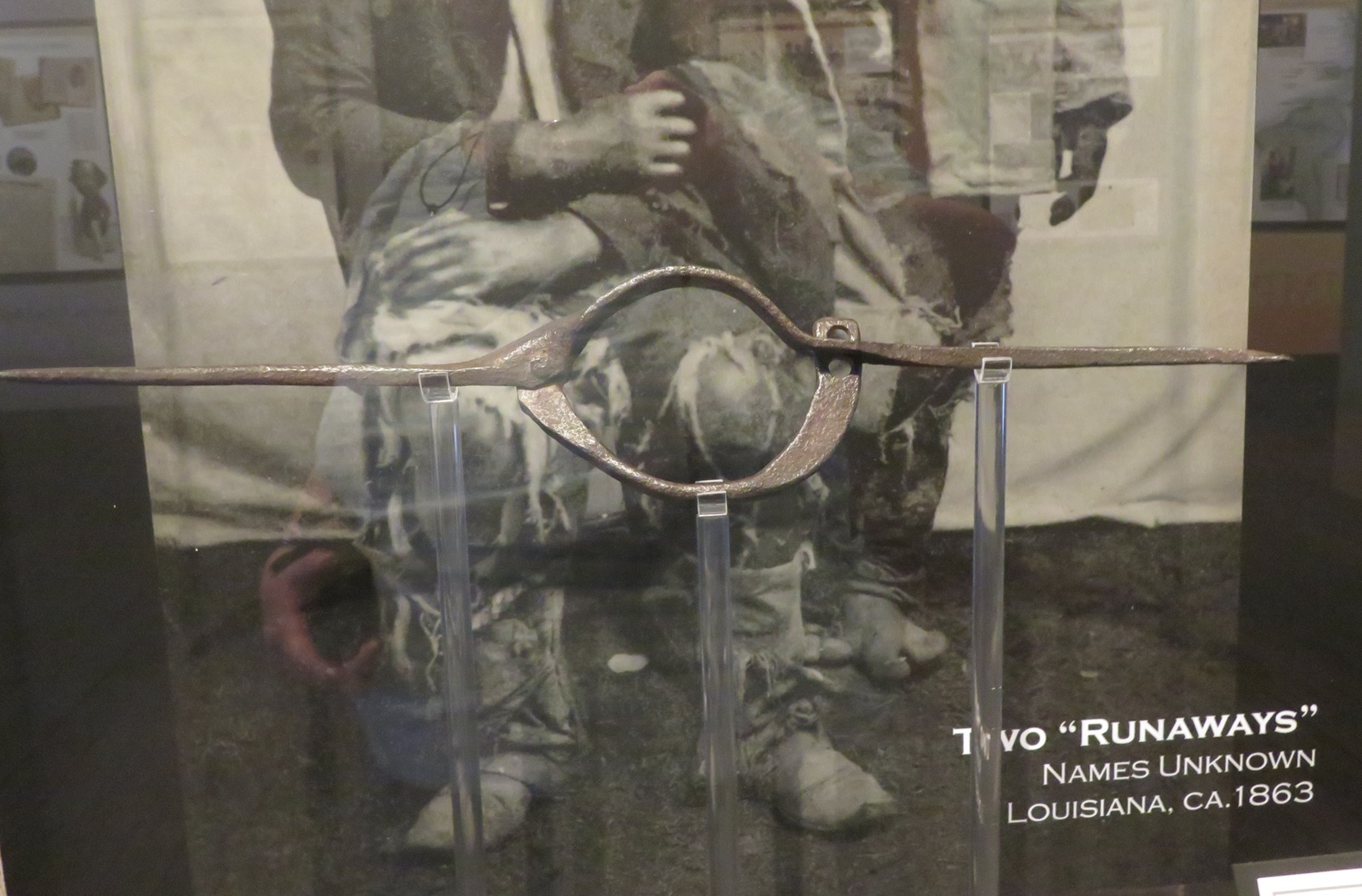
Along with the shackles in the lead photo, the yoke does not convey “Slavery Was Good”.
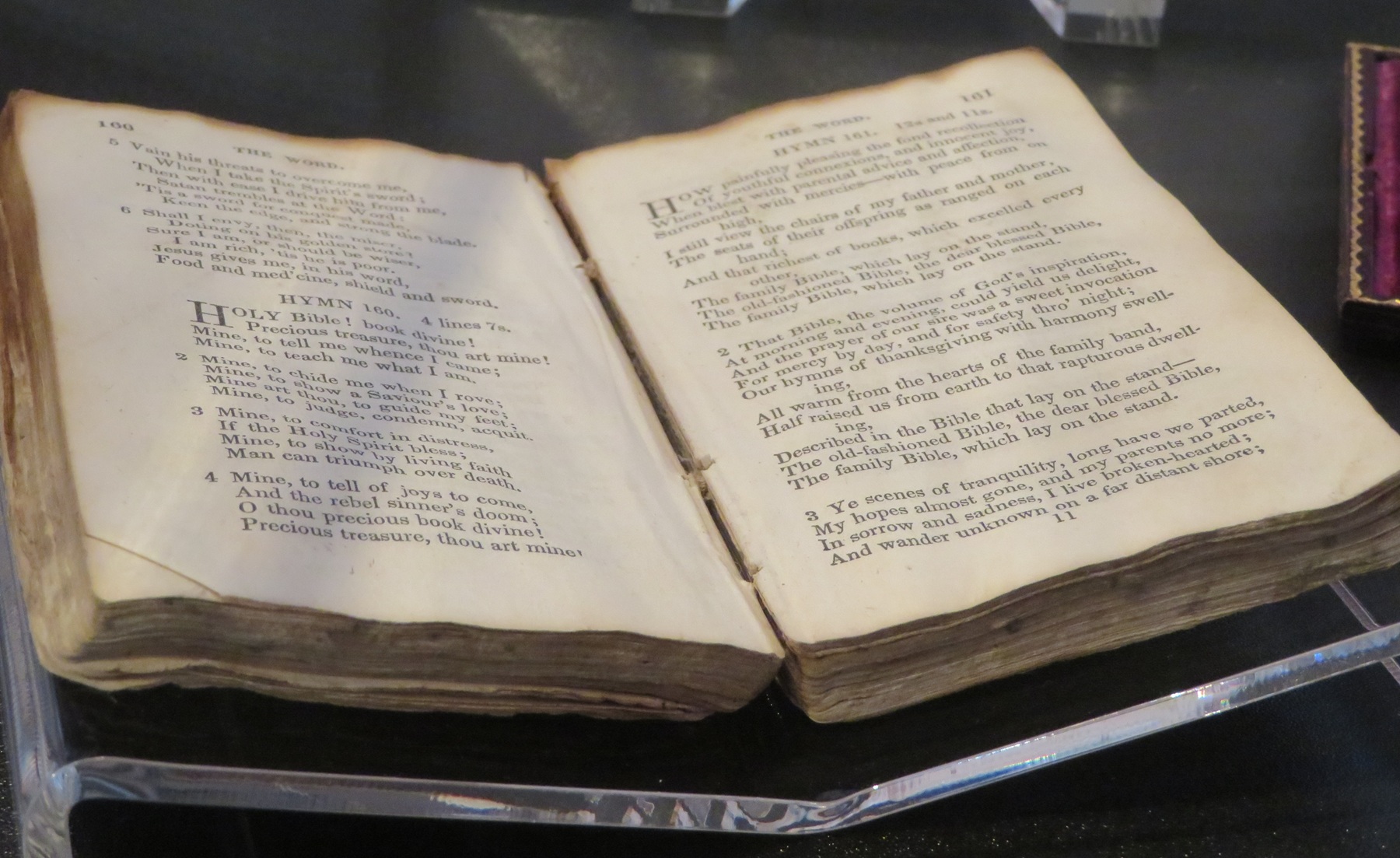
An old hymnal turned to “Holy Bible, Book Divine“.
To be continued…
* * * * *
[Link enclosed here to handy checklist for other chapters and for our complete road trip history to date. Follow us on Facebook or via email sign-up for new-entry alerts, or over on BlueSky if you want to track my faint signs of life between entries. Thanks for reading!]
Discover more from Midlife Crisis Crossover!
Subscribe to get the latest posts sent to your email.
 Midlife Crisis Crossover!