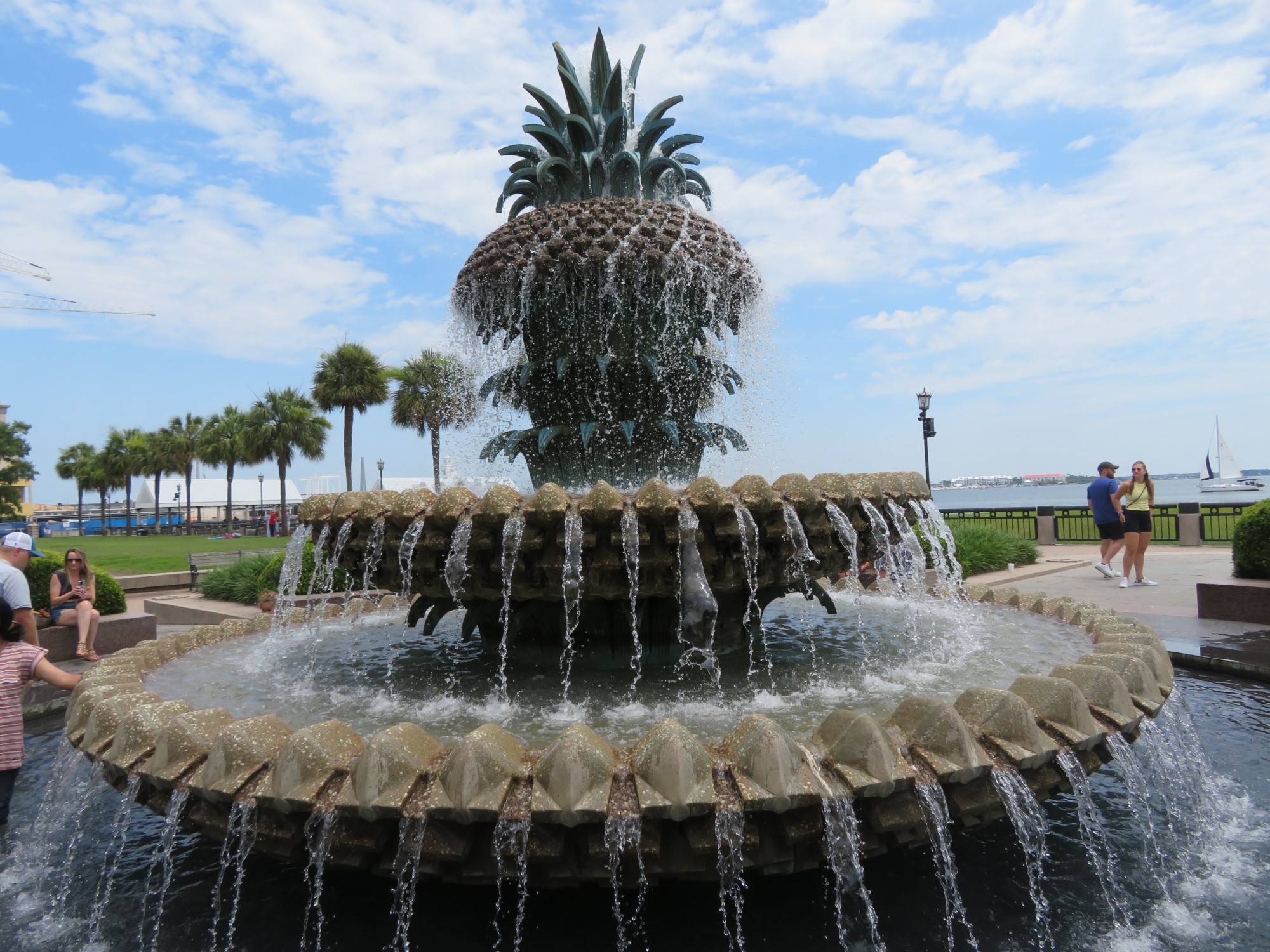
As I’m posting this two years later, temps have been in the 90s here all week. Right now Pineapple Fountain really looks like my kind of fruit.
Previously on Midlife Crisis Crossover:
Every year since 1999 Anne and I have taken one road trip to a different part of the United States and seen attractions, wonders, and events we didn’t have back home. From 1999 to 2003 we did so as best friends; from 2004 to the present, as husband and wife. After years of contenting ourselves with everyday life in Indianapolis and any nearby places that also had comics and toy shops, we overcame some of our self-imposed limitations and resolved as a team to leave the comforts of home for annual chances to see creative, exciting, breathtaking, outlandish, historical, and/or bewildering new sights in states beyond our own. We’re the Goldens. This is who we are and what we do.
For 2023 it was time at last to venture to the Carolinas, the only southern states we hadn’t yet visited, with a focus on the city of Charleston, South Carolina. Considering how many battlefields we’d toured over the preceding years, the home of Fort Sumter was an inevitable addition to our experiential collection…
…and after the history tour, Charleston offered lots more to explore. With time to spare between the ferry ride and our lunch reservation, we walked the varying areas along the edge of the Cooper River as it leads into Charleston Harbor, starting with Riley Waterfront Park. Once a bustling maritime commerce area in centuries past, by the ’80s the area was all weedy overgrowth and ruins until later that decade, when a project supported by longtime Mayor Joseph Riley Jr. (amid a record-setting 40-year run) converted the mess into an extremely pretty public space. Despite a touch of wreckage brought on by Hurricane Hugo in September 1989, the all-new park opened in May 1990 and remained inviting 33 years later.
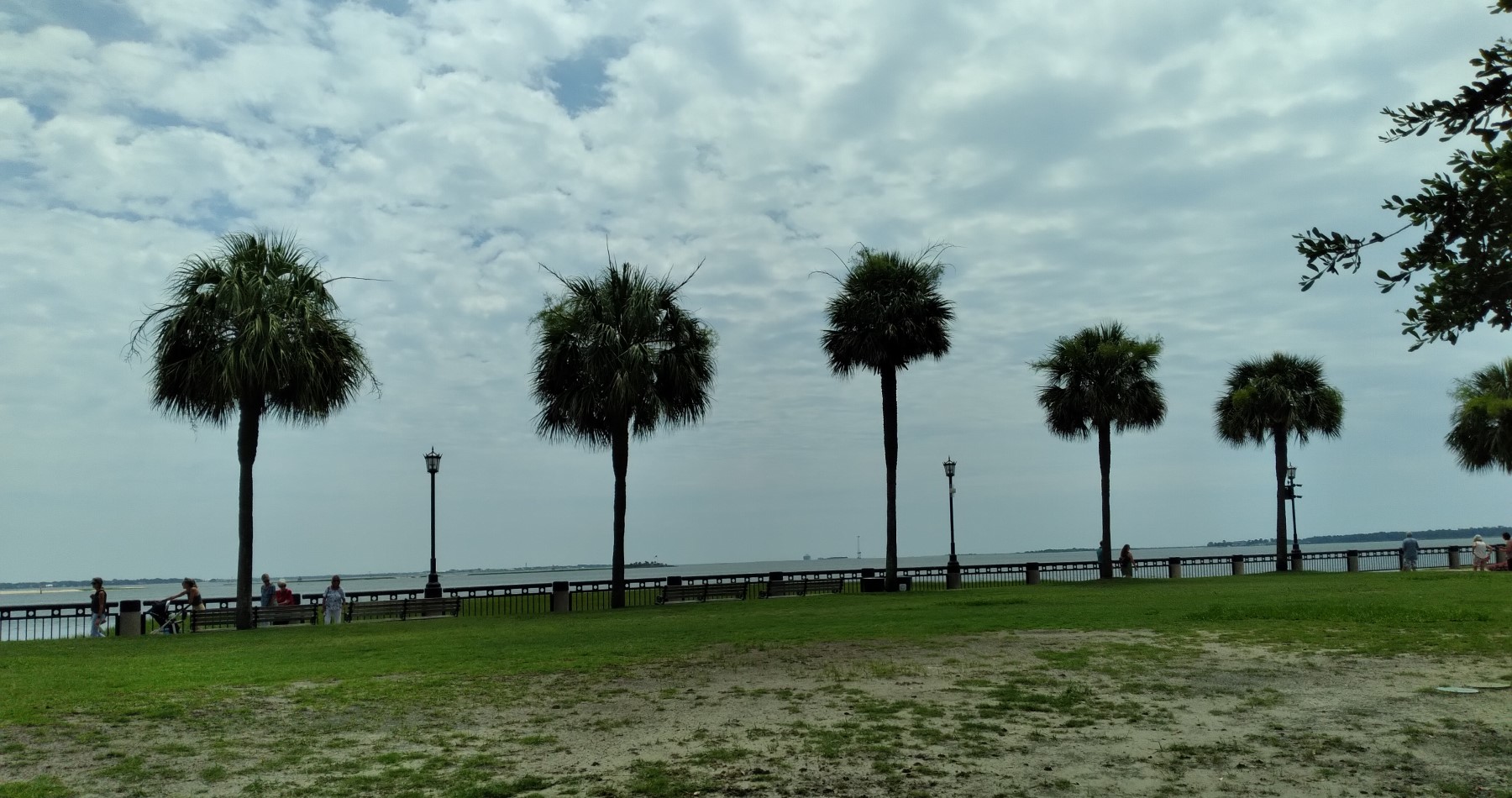
I don’t expect I’ll grow tired of posting palmetto pics anytime soon.
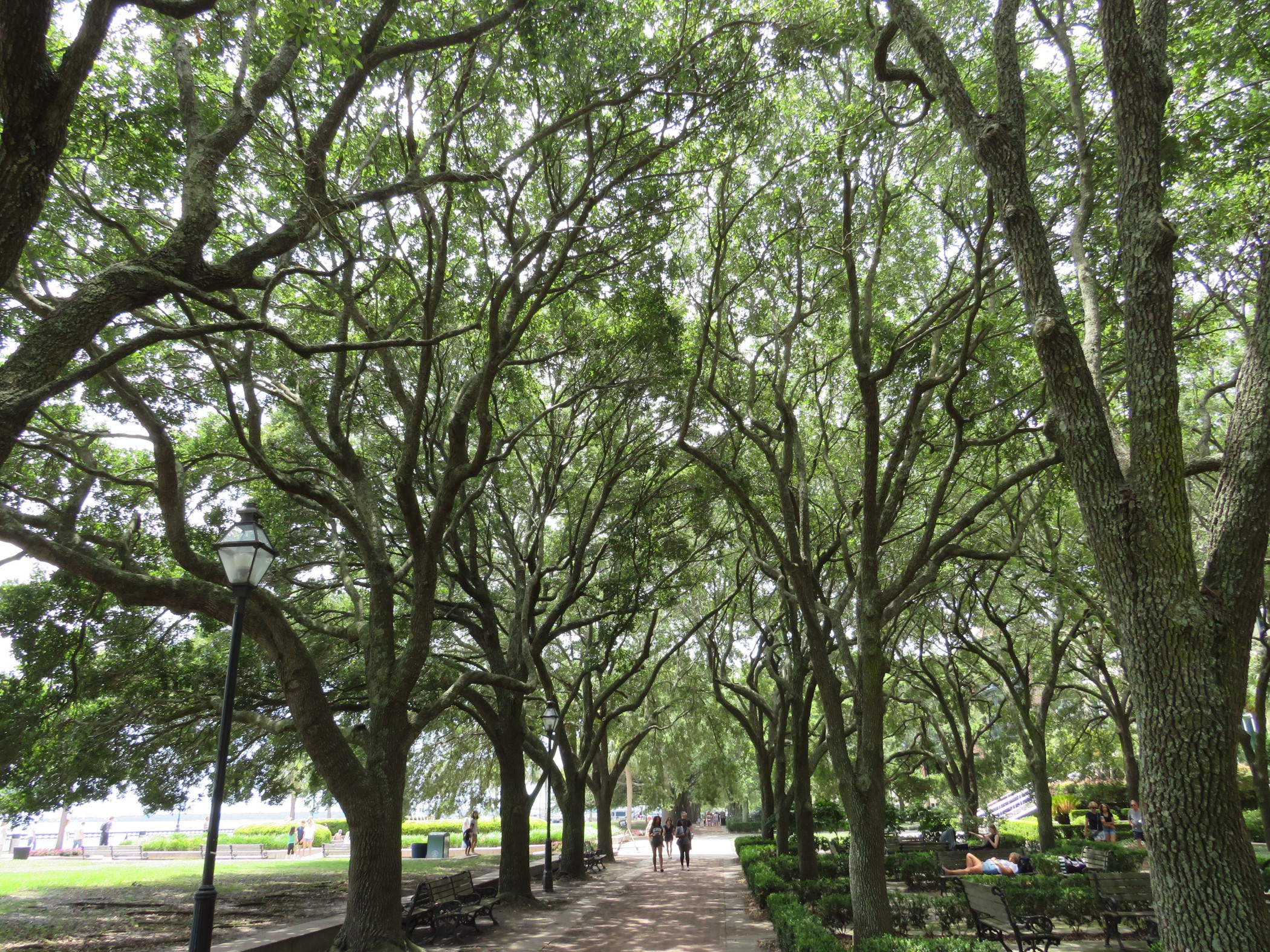
In an arboreal twist, the park’s main walkway is lined with oaks, not palmettos.
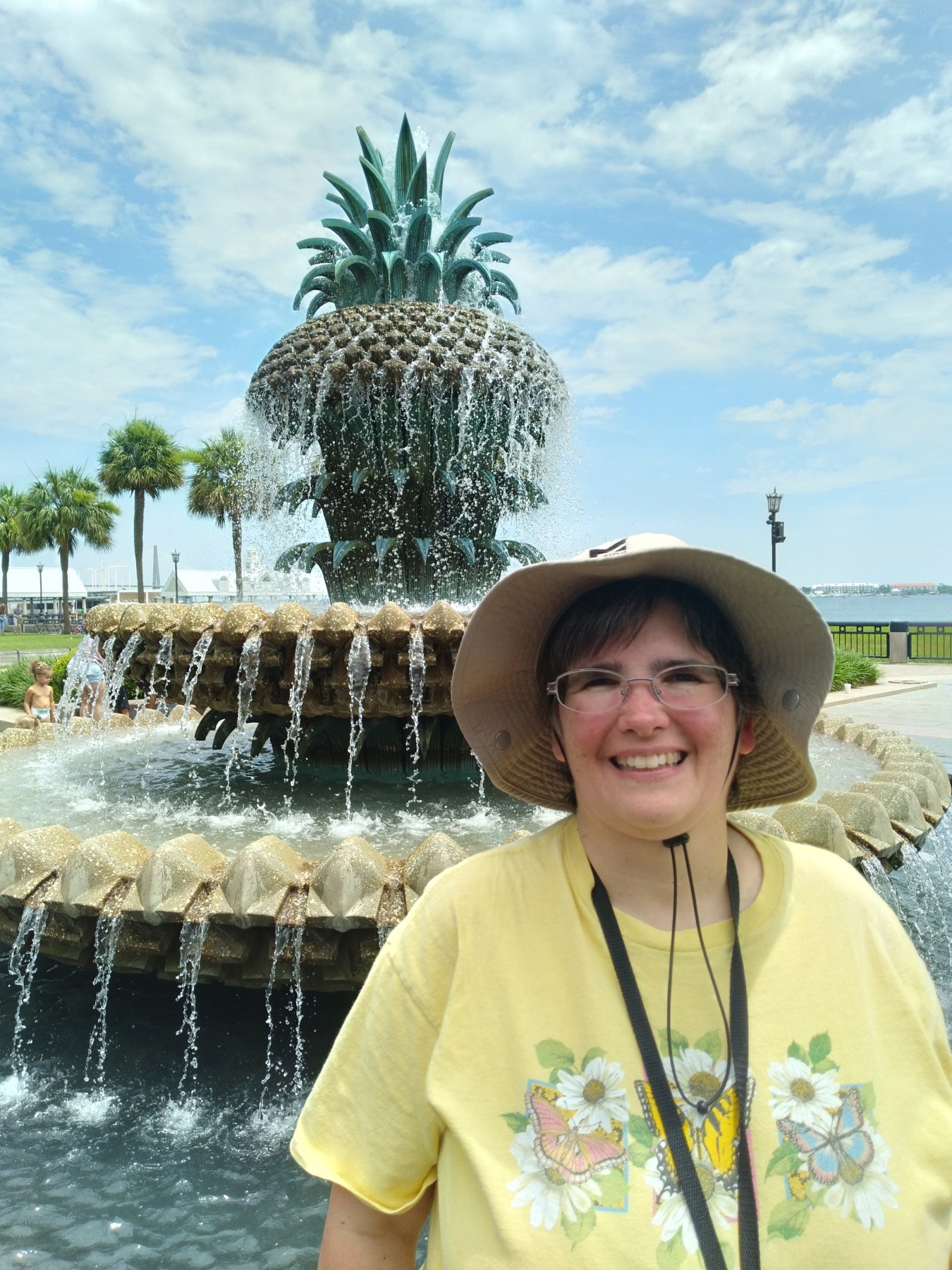
Pineapple Fountain is by far the park’s coolest man-made feature.
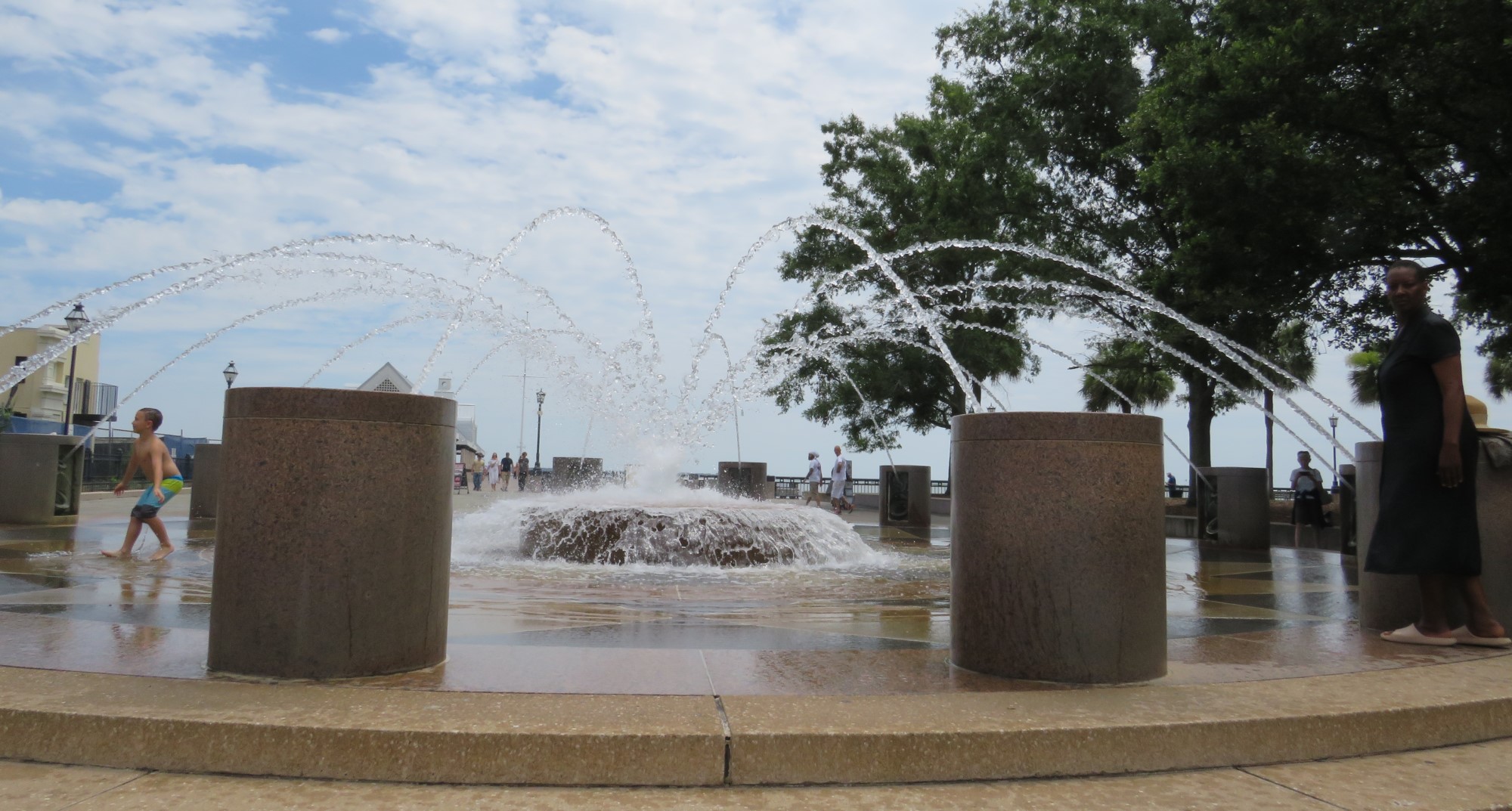
The other fountain bears no fruit, not that the frolicking kids care.
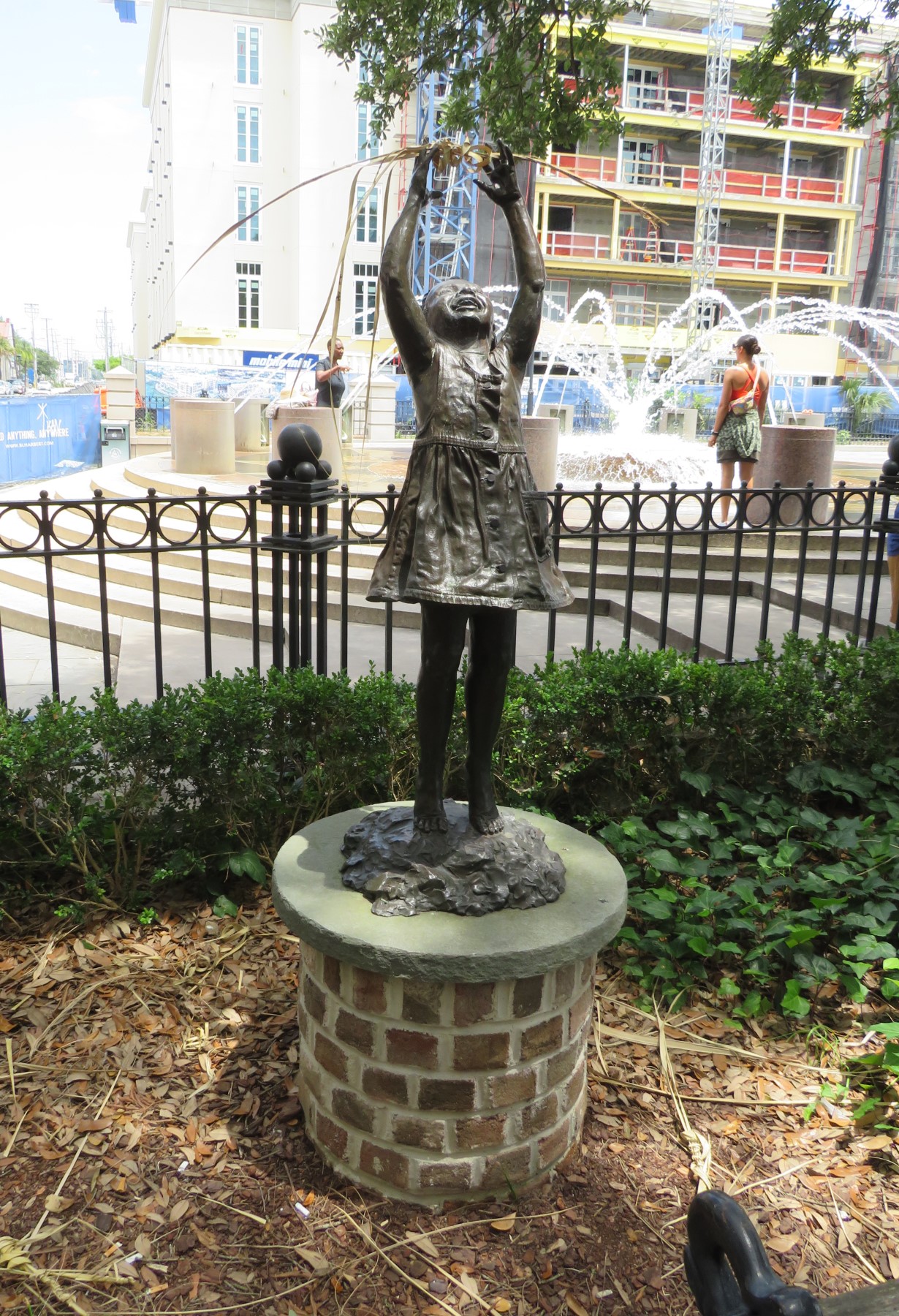
Other features include a 1995 statue donated to the park in 2022 by the sculptor Mary Whyte. Its original model Lilly Jones has since grown up and gone on to study at The Citadel.
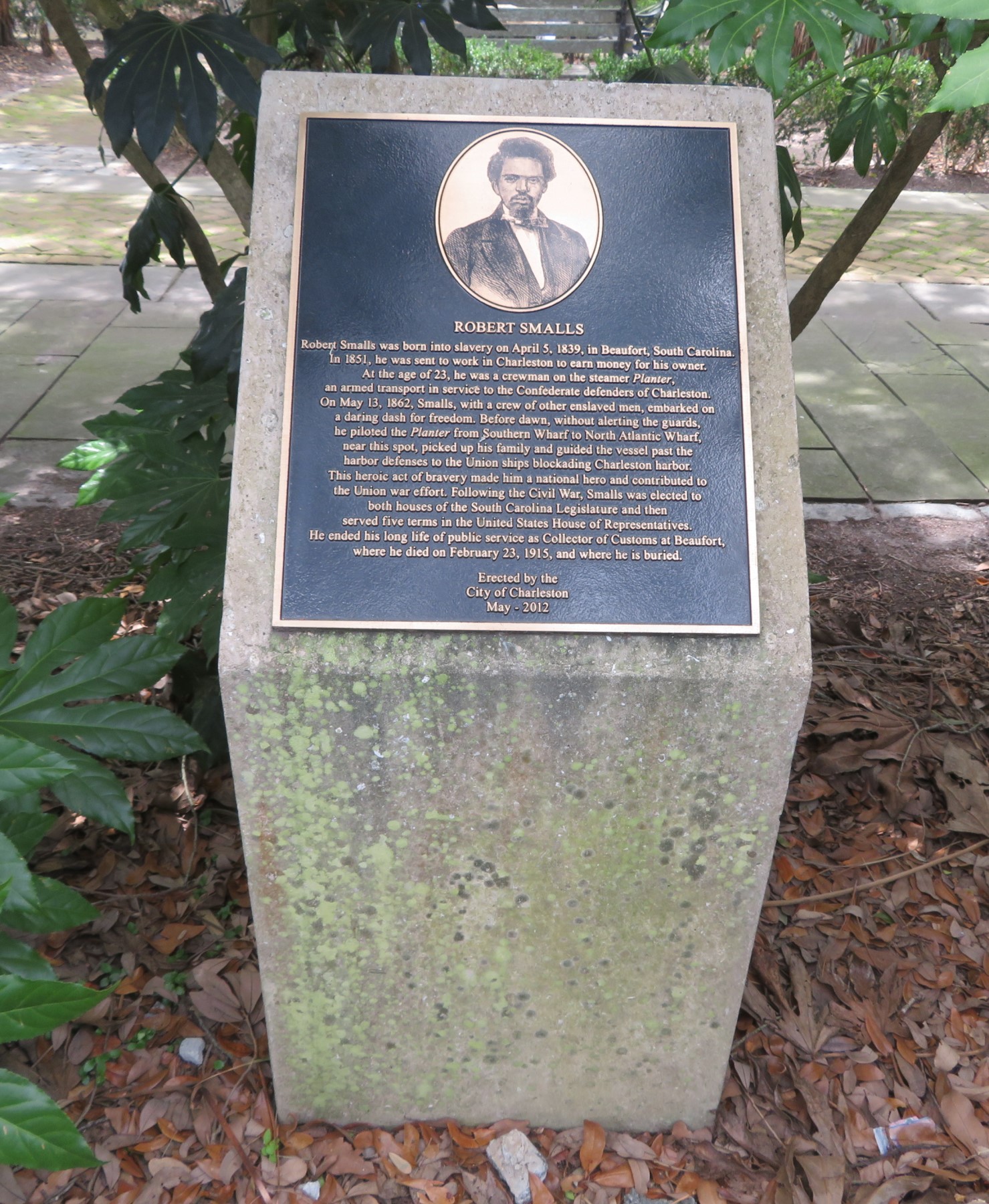
A plaque honors hero Robert Smalls, who in 1862 led an enslaved crew in grabbing a steamer and escaping their captors. Small went on to a long political career that included five U.S. Congressional terms.
From the park we continued south and slightly west toward Charleston at large…
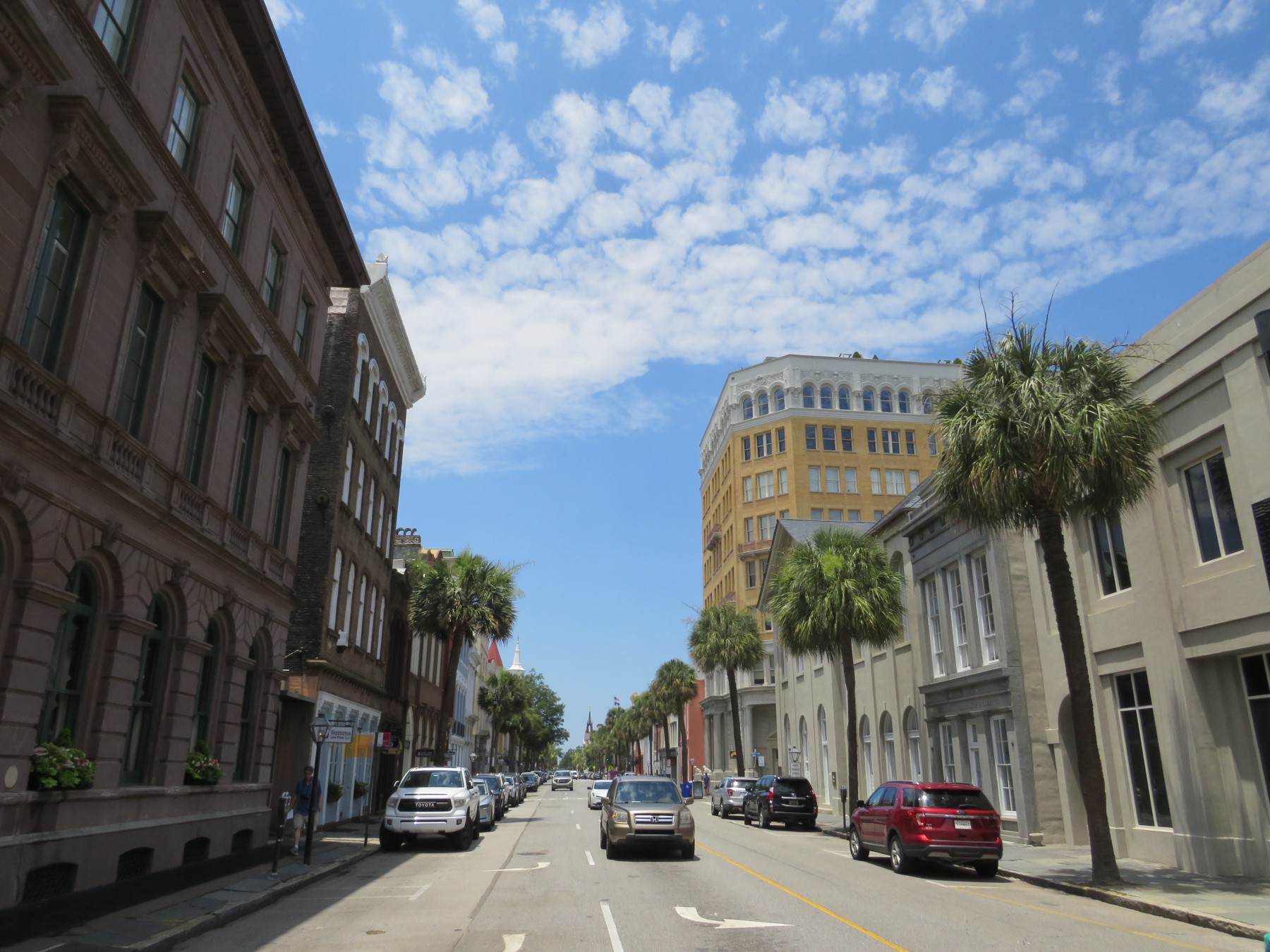
Sample everyday Charleston ambiance.
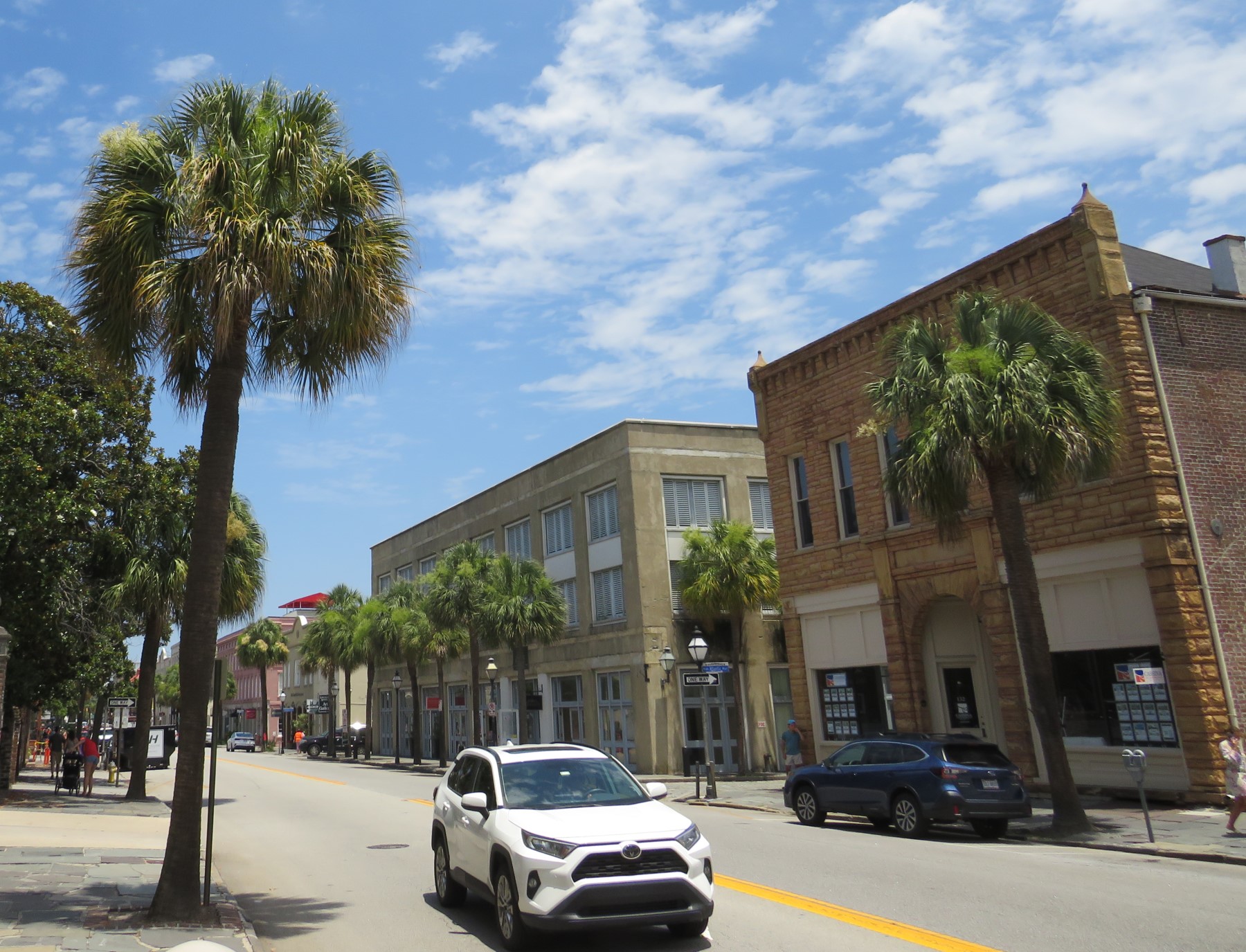
More palmettos everywhere. Yes, we’re Yankees and we’re mesmerized and happy to take a break from all the maples back home.
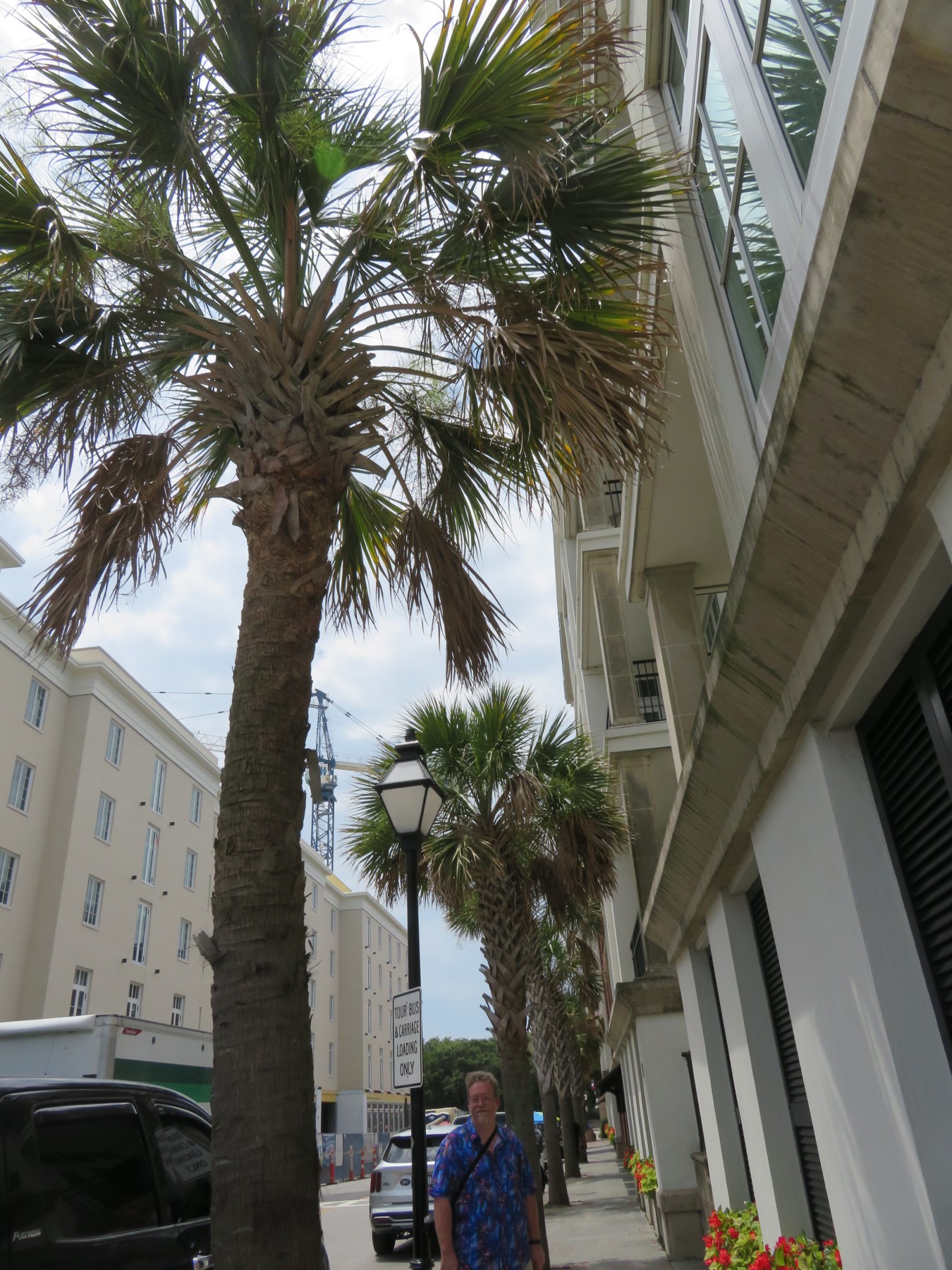
Did I mention the palmettos?
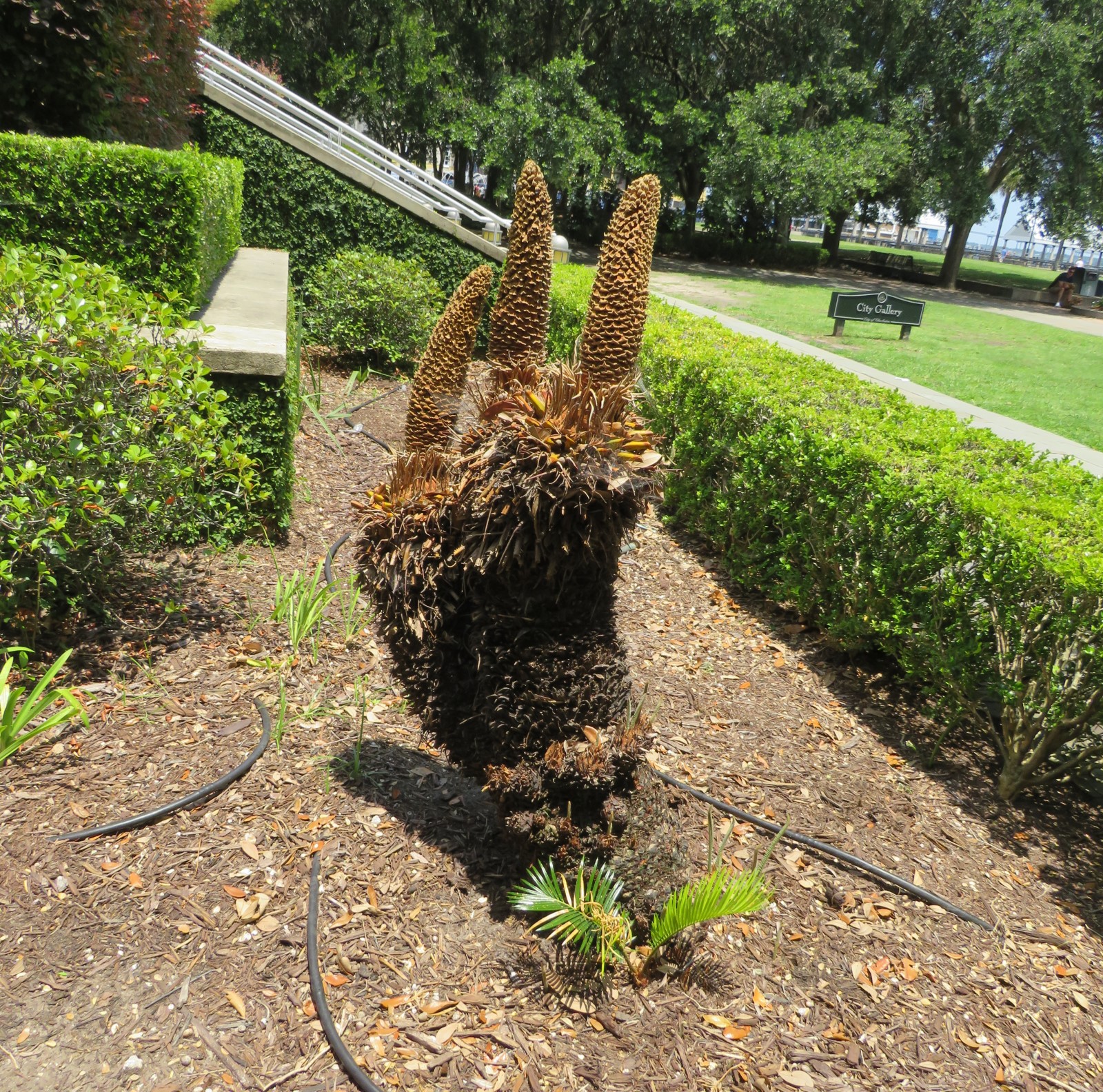
THE CLAAAW! Wait, no, just a sago palm — a rather different form of flora for us.
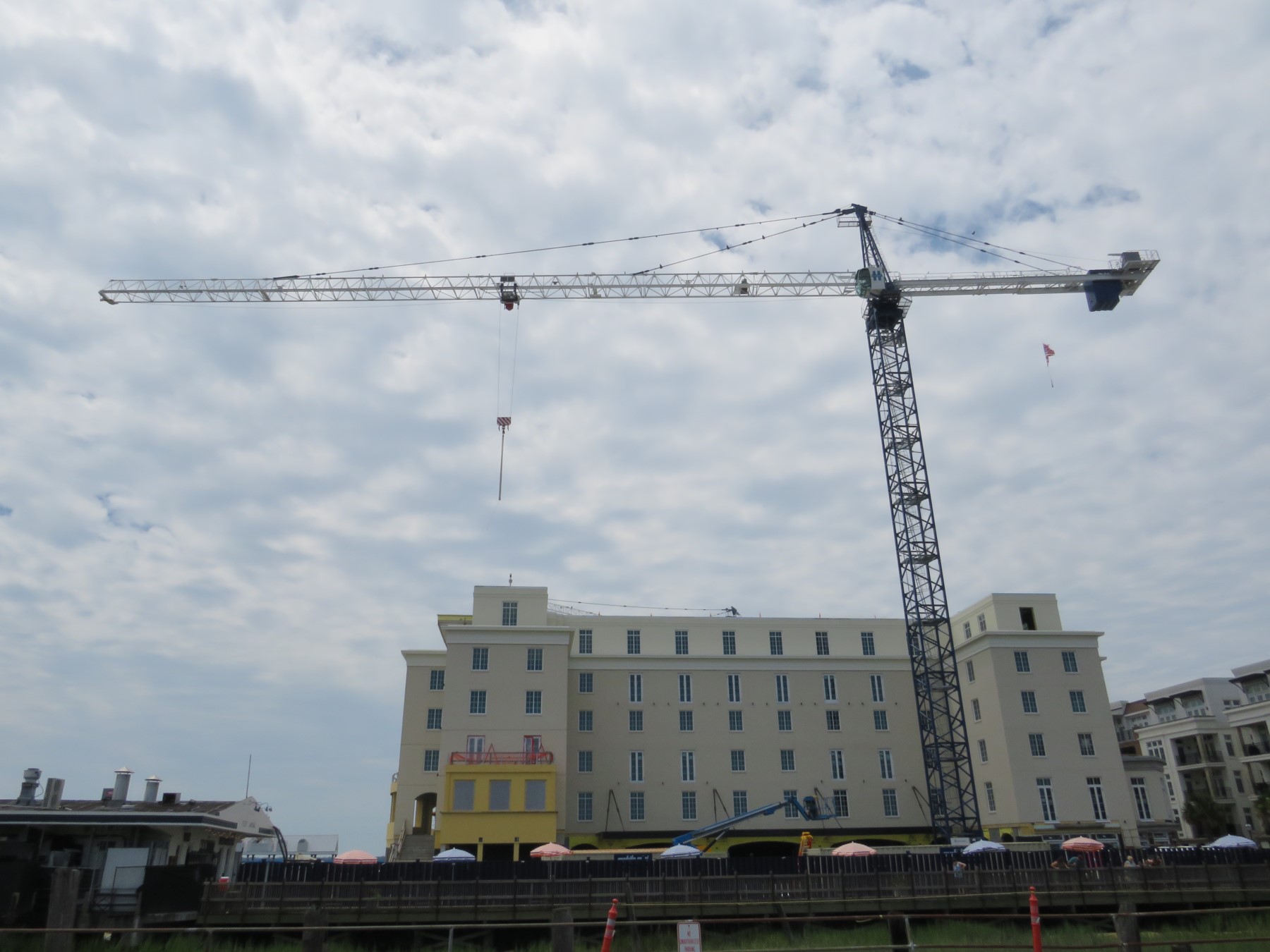
A lone crane was among the few signs of anything new ushering out the old.
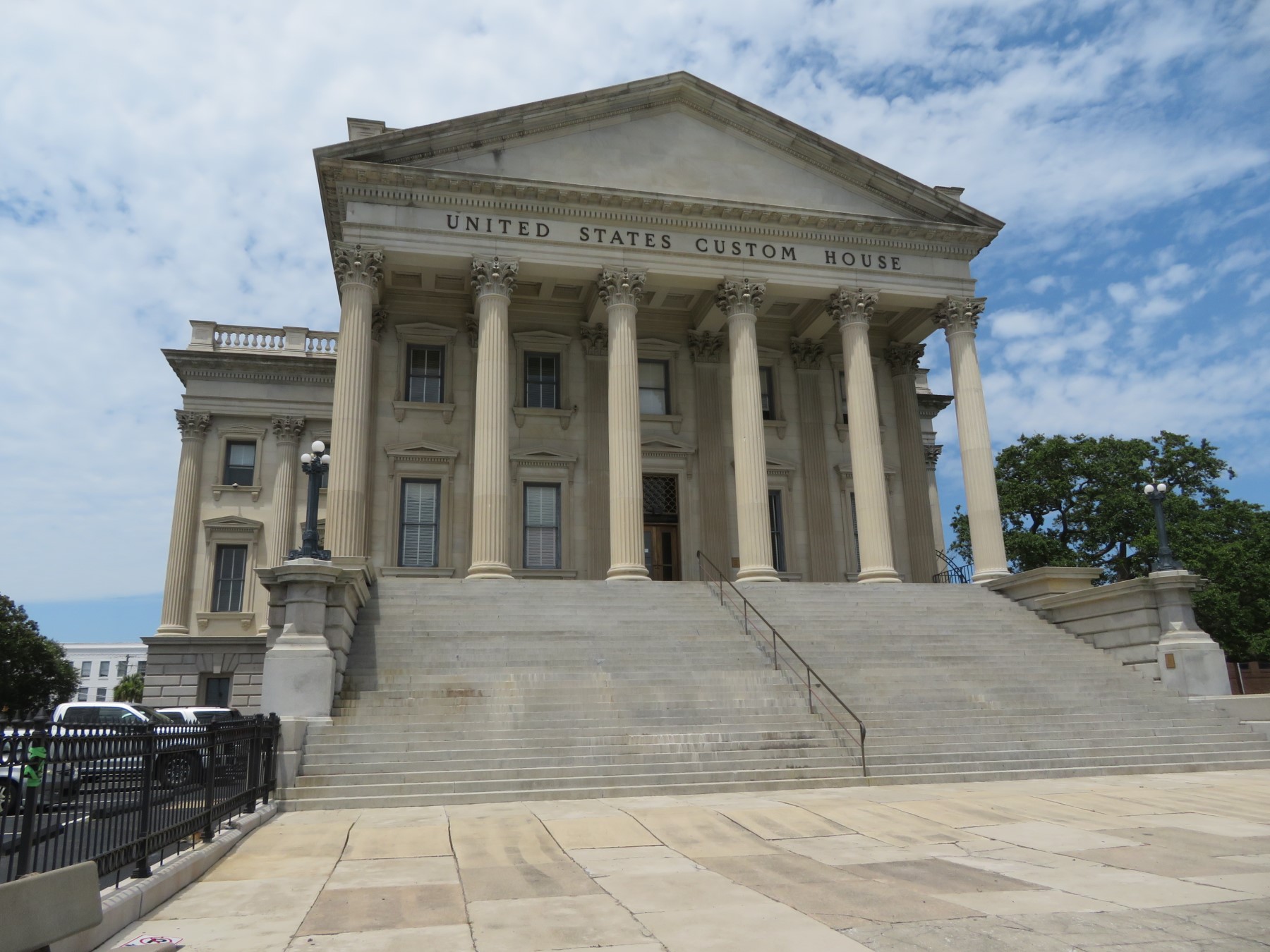
Ye olde U.S. Custom House, across the street from the second place we parked.
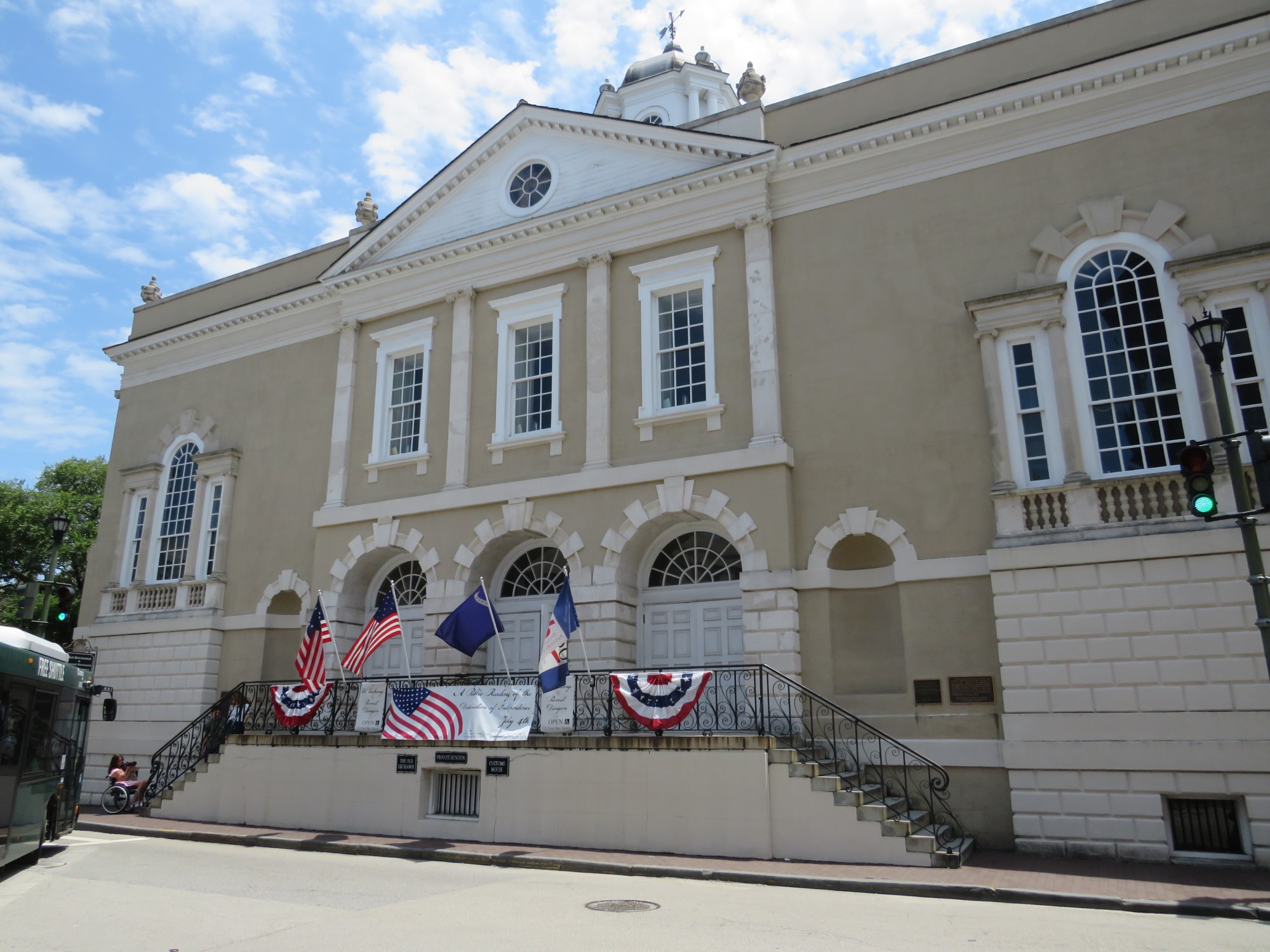
The Old Exchange and Provost Dungeon is a museum that somehow completed evaded our pre-trip research. At times it served as a Revolutionary War prison, a slave auction house, a post office, et al.
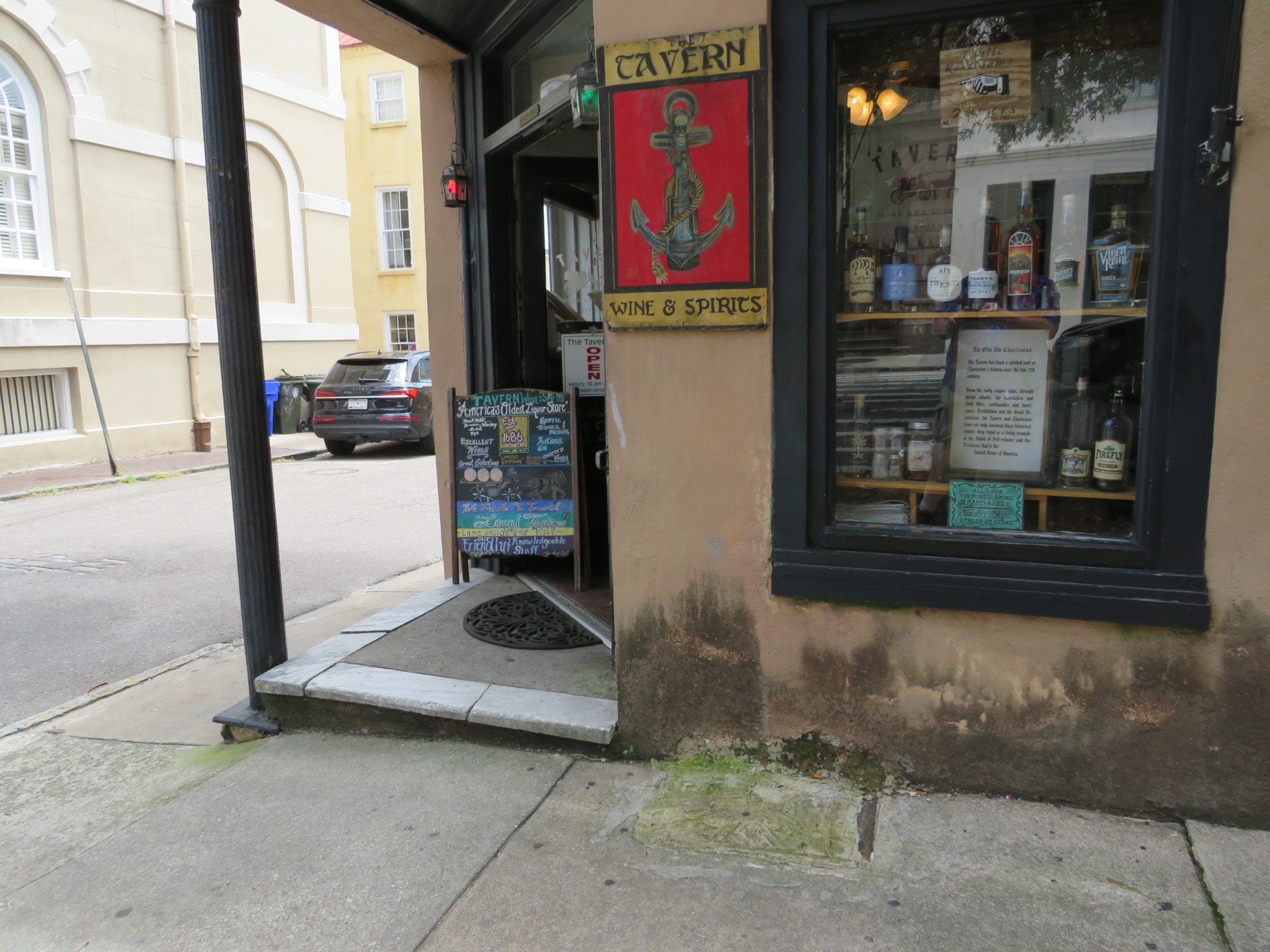
A sidewalk sign proclaims America’s Oldest Liquor Store. Huge, if true.
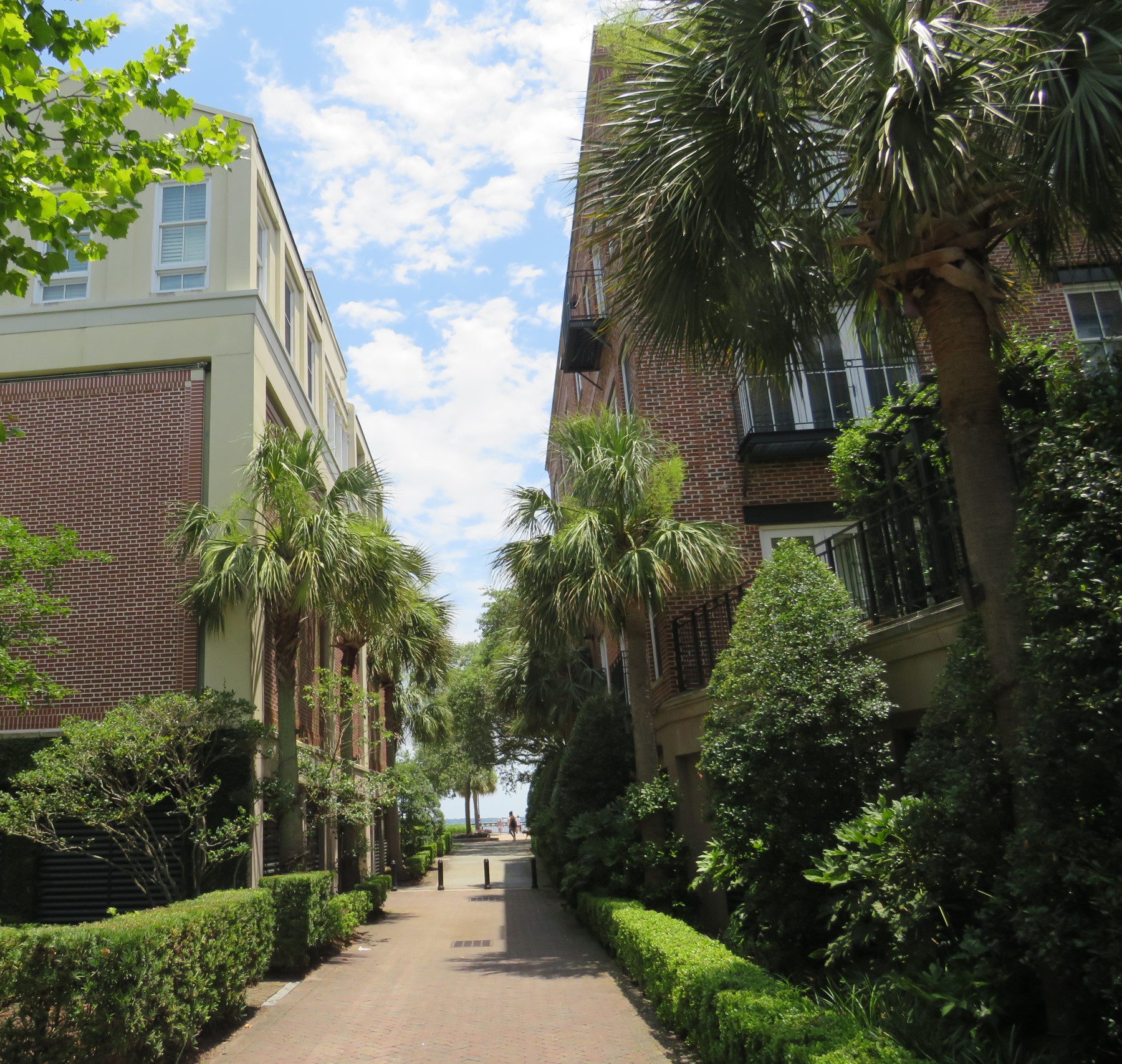
A magical alley where greenery from both sides of the Mason-Dixon Line grow in harmony.
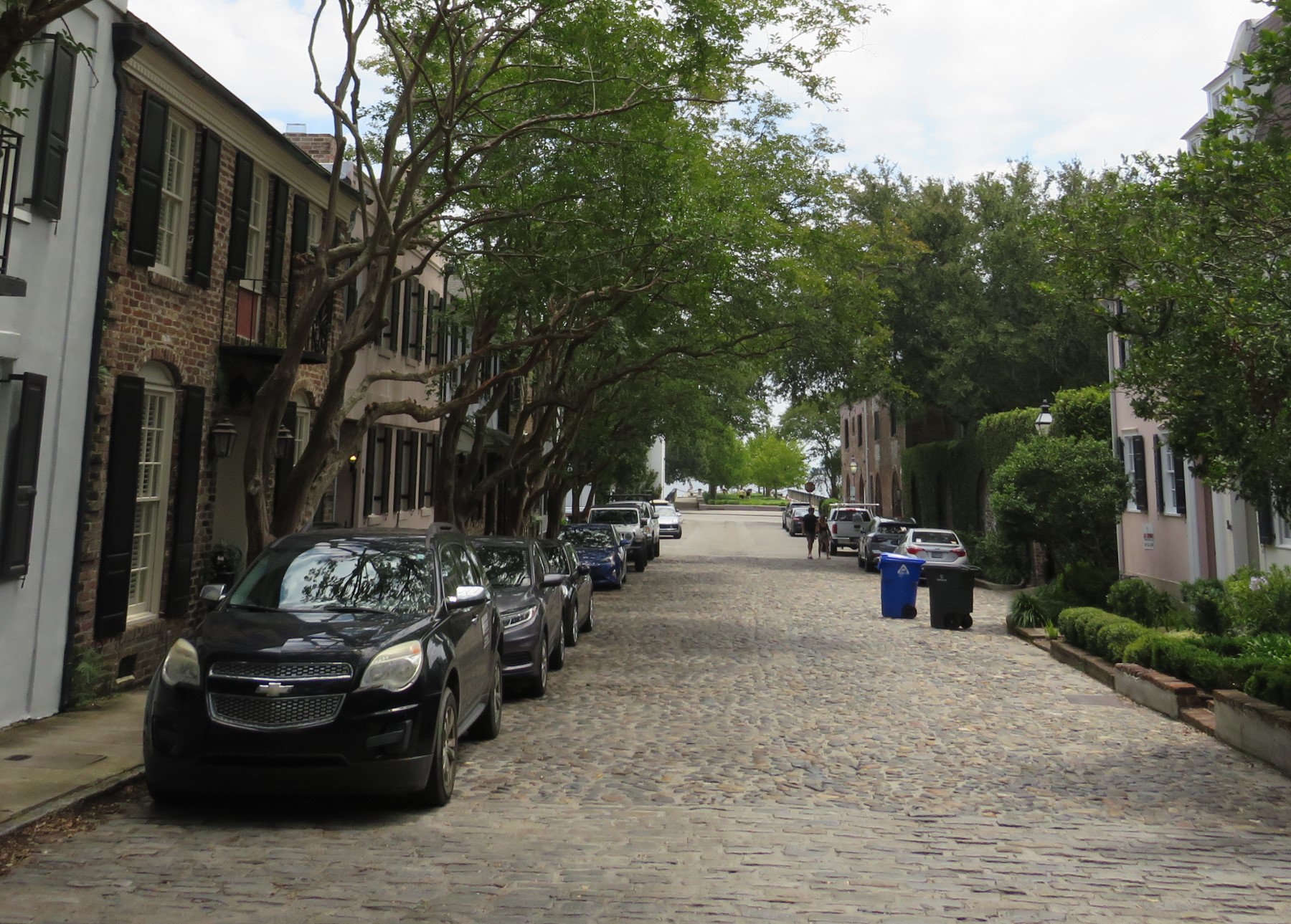
One of the cobblestone residential streets.
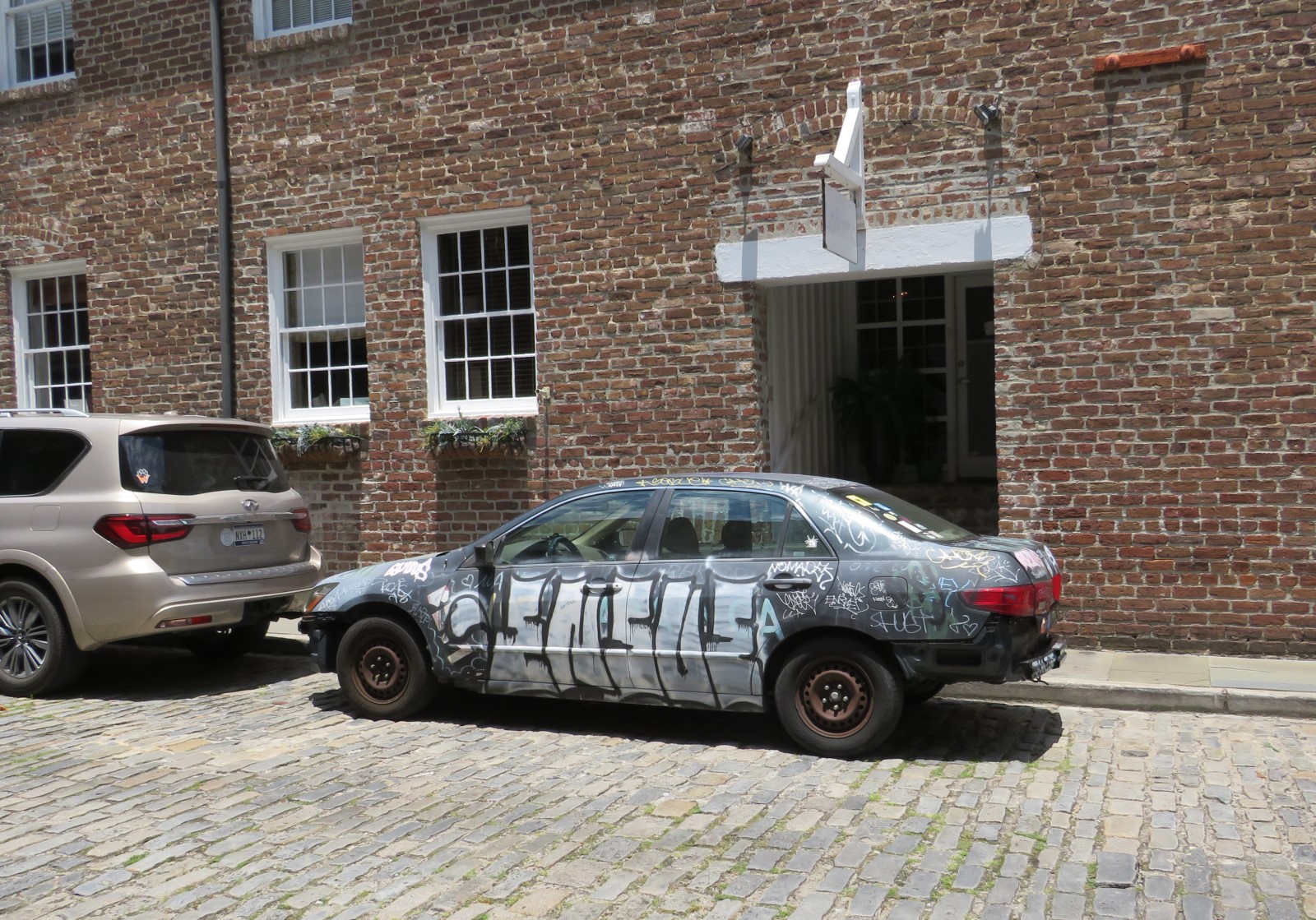
Unexpected flashback to Manhattan’s Lower East Side.
Along the way we heeded the silent tourists’ siren and ducked inside a gift shop to peruse Charleston souvenir options. We chatted briefly with the clerk, who’d actually been to Indiana before — ’round Bainbridge (not far from some of Anne’s family, in fact), where she’d once been part of an experimental agri-tech water purification project. Anne bought a patch and nearly threw in a few postcards till the clerk tipped us off that the City Market sold the latter at lower prices. We noted that for future reference, by which I mean our next day’s itinerary. (Foreshadowing: your key to quality literature!)
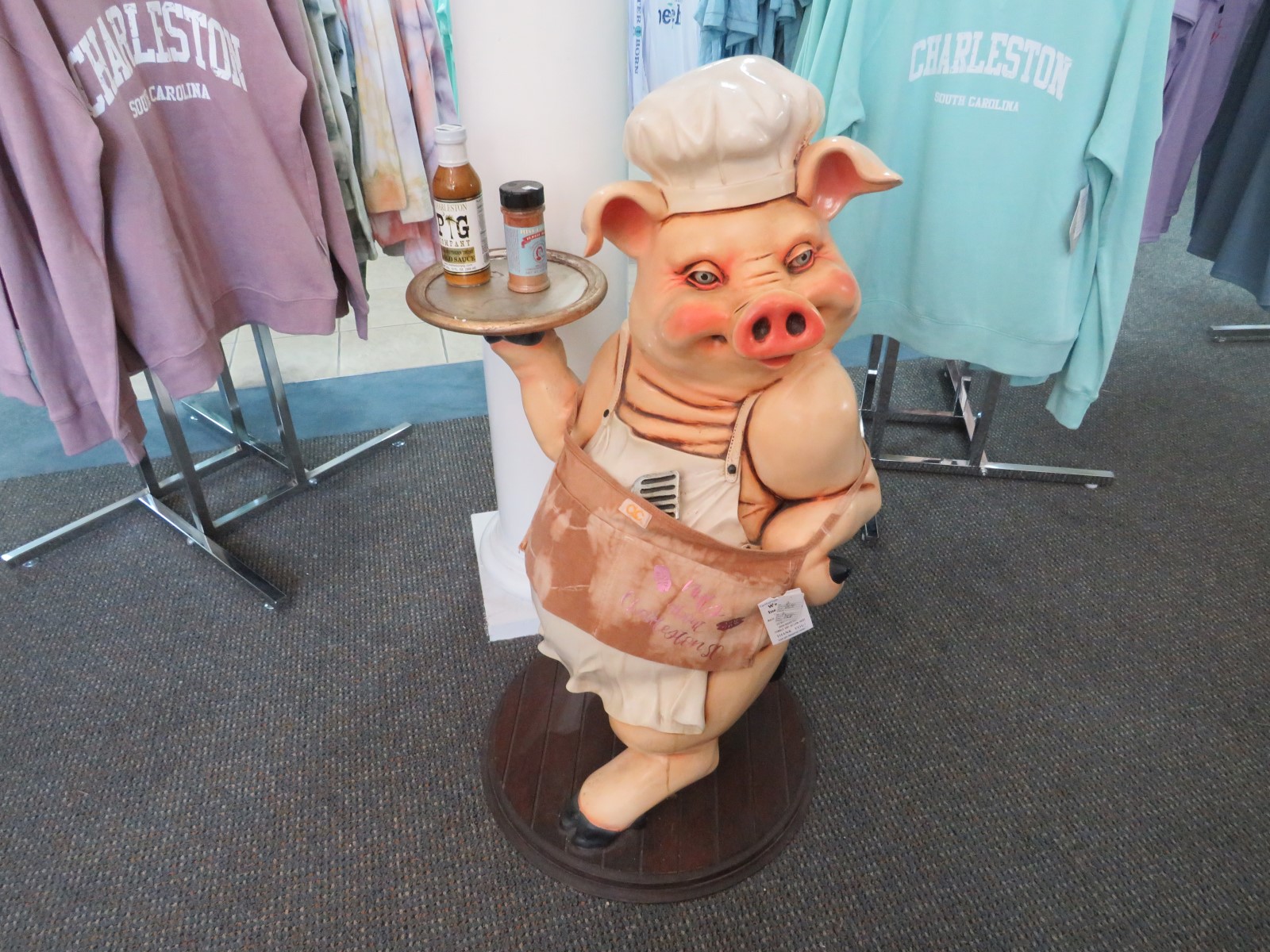
Chef Pig welcomes us.
Our southernmost destination for the day was famous Rainbow Row — a distinctive stretch comprising thirteen homes dating back to the 1700s, each painted in different pastel colors that would horrify any stodgy modern-day HOA. The exact reasons for the colors are lost to the public record and occasionally debated among local theorists. Though they were falling into disrepair by the turn of the 20th century, preservation efforts took hold and they’ve enjoyed historical landmark status since 1931.
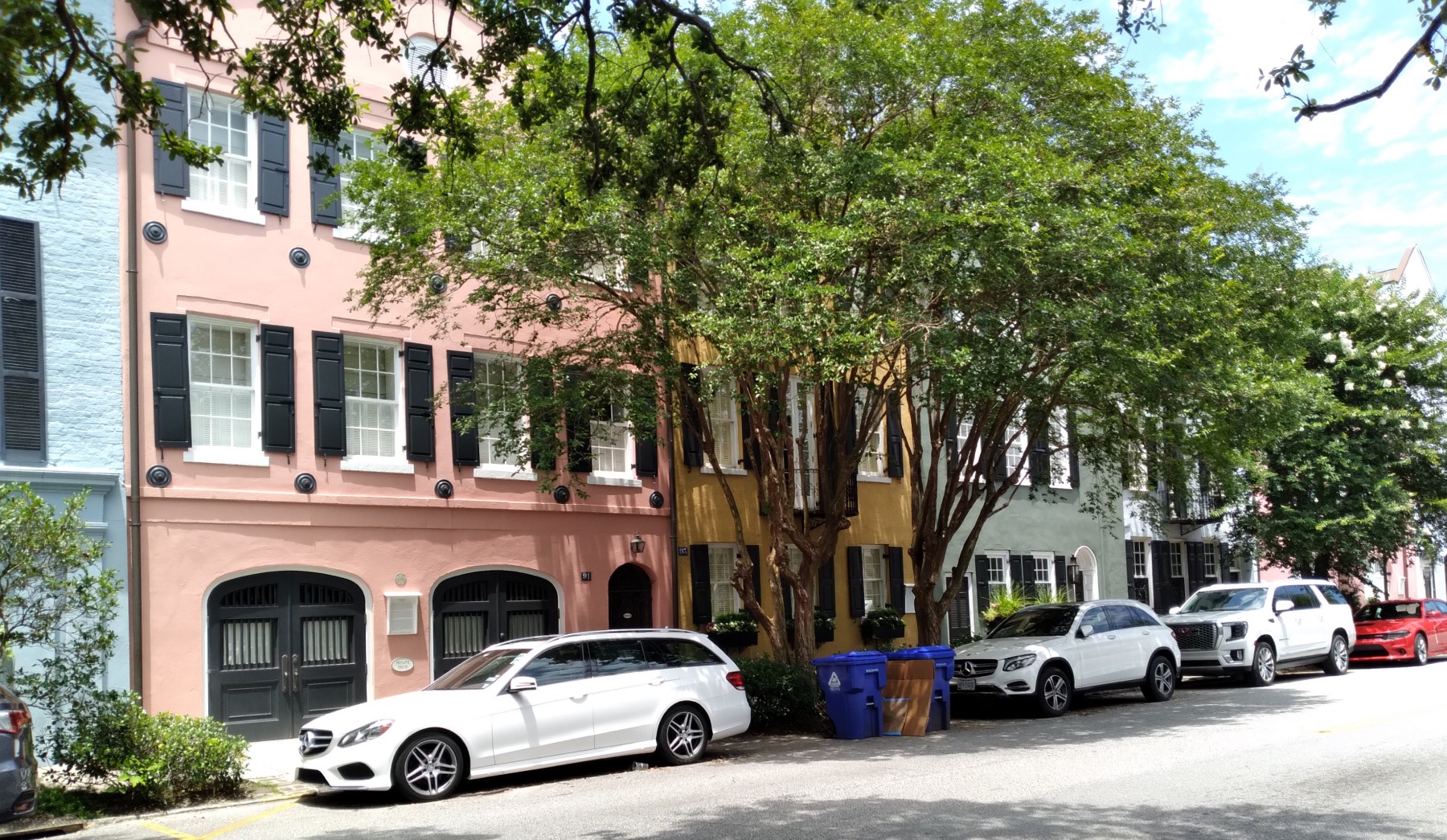
Welcome to Rainbow Row! Our pics are not in geographic order. I’m not even sure if we captured all thirteen.
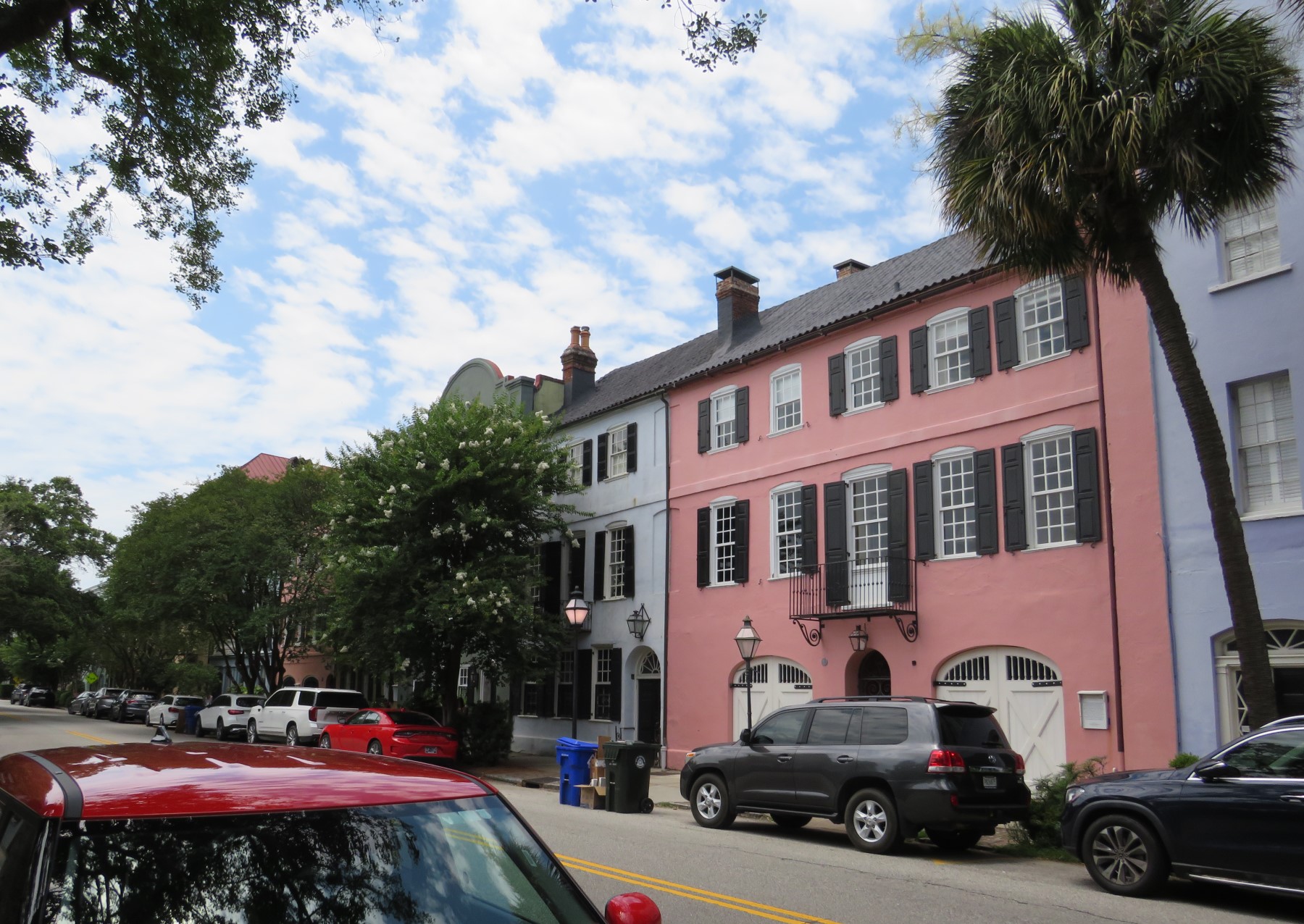
Admittedly the exteriors looked far brighter in the travel brochures than in person at sunny noontime.
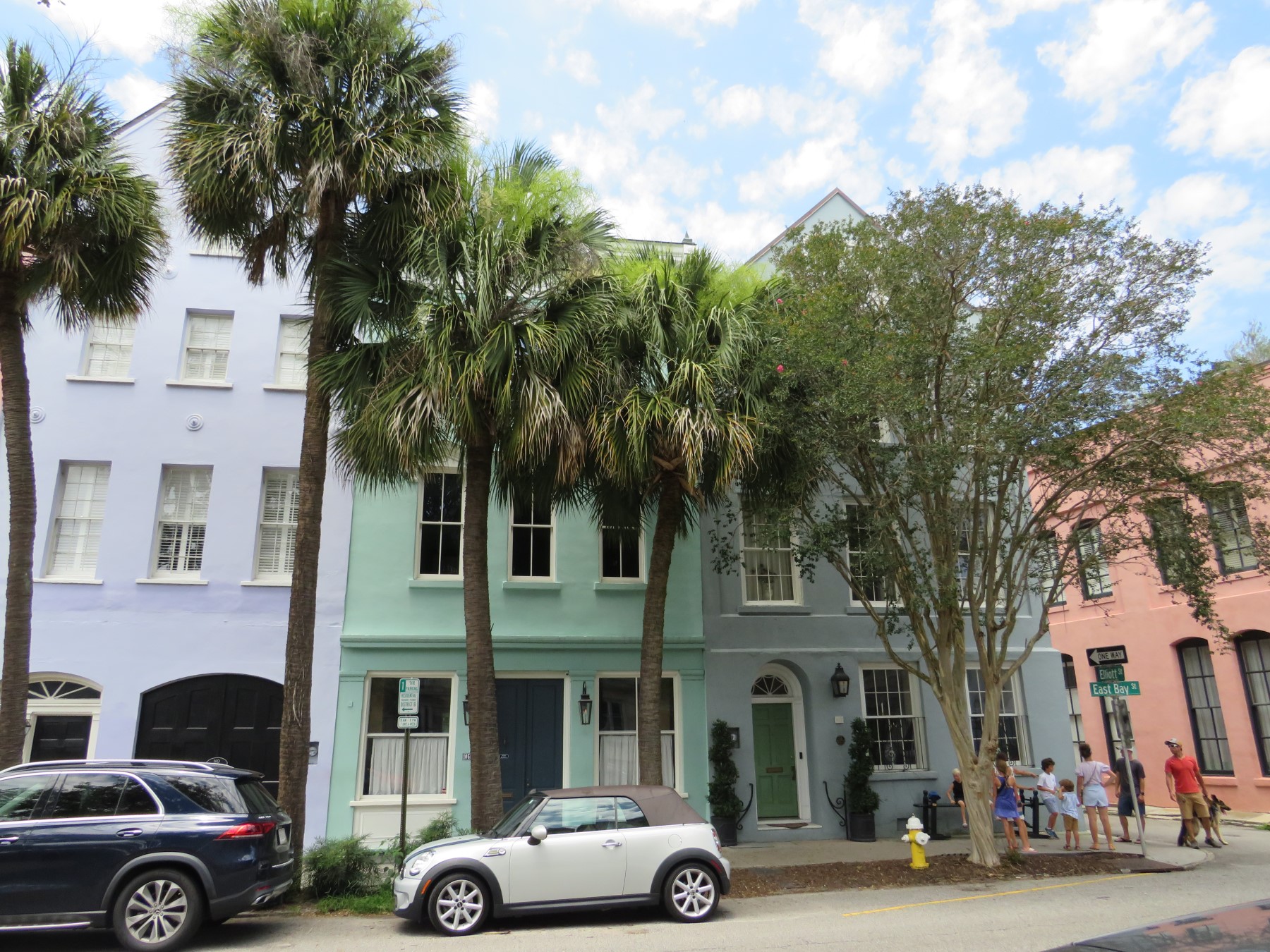
Note the compromised mix of palmettos and non-palmettos lining the blocks.
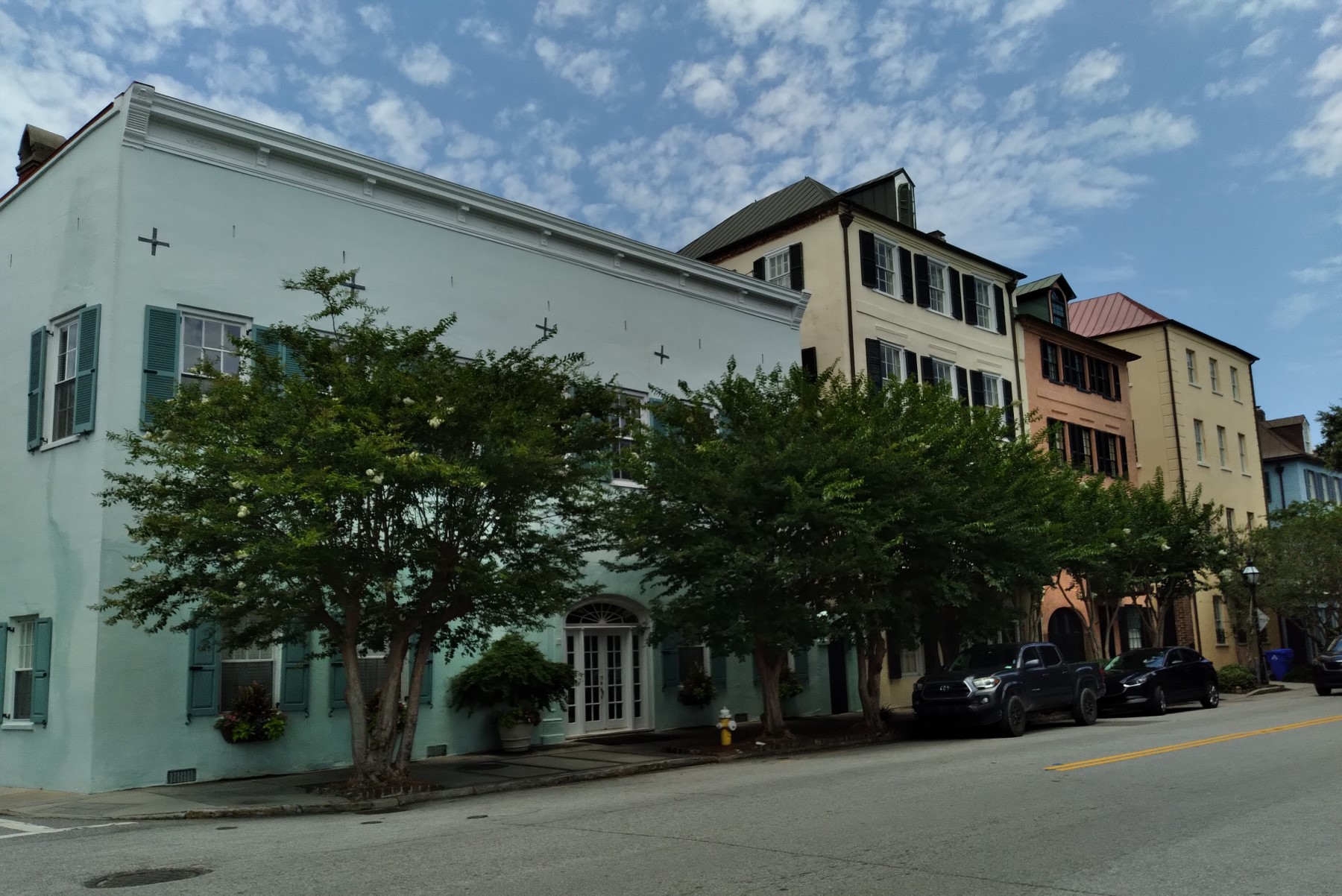
Note how said trees made it impossible to get basic shots of just the houses.
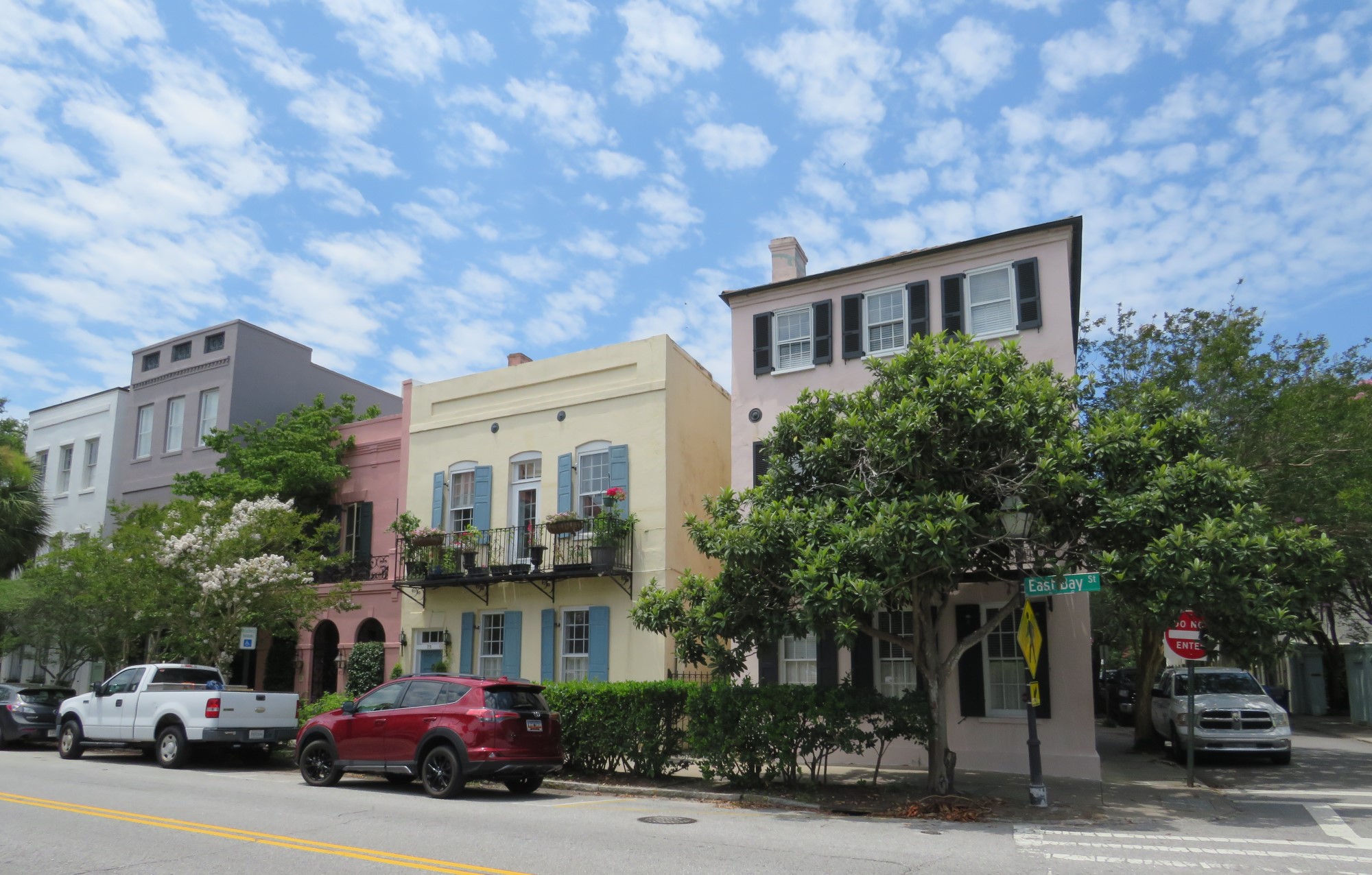
Okay, this view’s not bad, maybe even adorable.
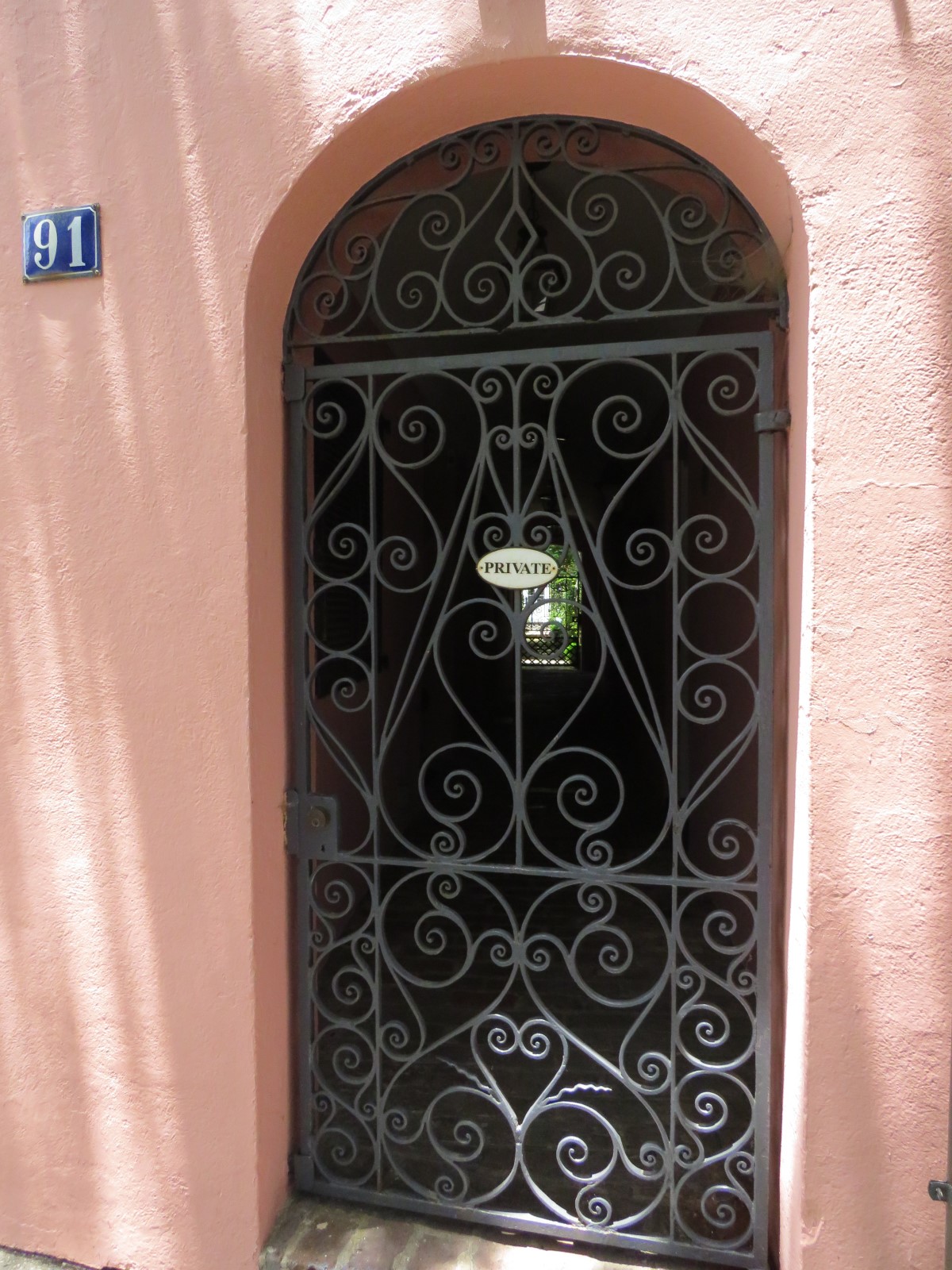
Important note: these are private residences, not museums or a theme park. One does not simply walk into a Rainbow Row house and expect milkmaid cosplayers demonstrating how to churn butter.

One house featured a sign for historical context regarding a former kindly owner and one or more subsequent slumlords.
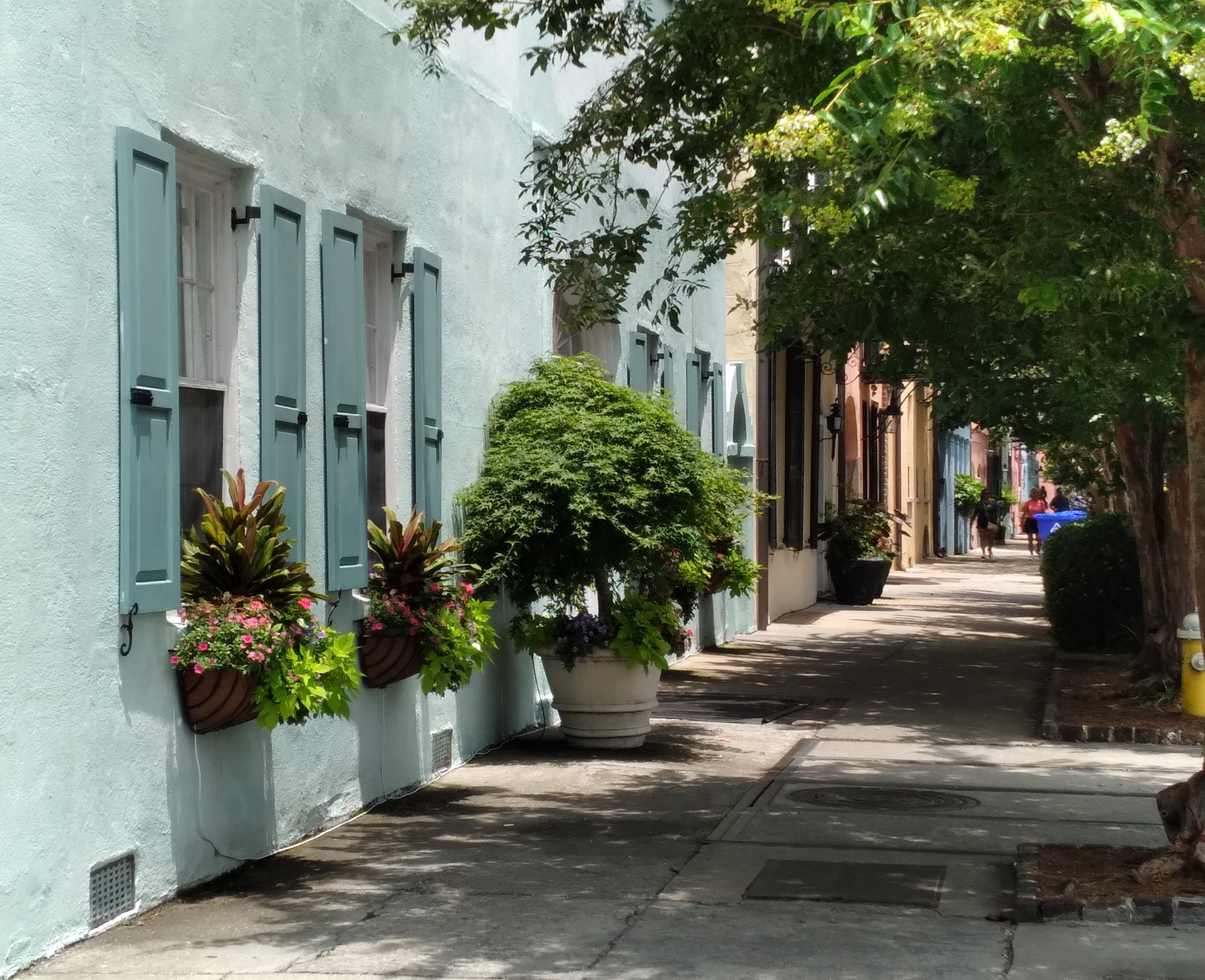
Splendid efforts of one green-thumbed resident who grew other kinds of plants presumably because they couldn’t figure out how to stuff an entire palmetto into a window box.
To be continued!
* * * * *
[Link enclosed here to handy checklist for other chapters and for our complete road trip history to date. Follow us on Facebook or via email sign-up for new-entry alerts, or over on BlueSky if you want to track my faint signs of life between entries. Thanks for reading!]
Discover more from Midlife Crisis Crossover!
Subscribe to get the latest posts sent to your email.
 Midlife Crisis Crossover!