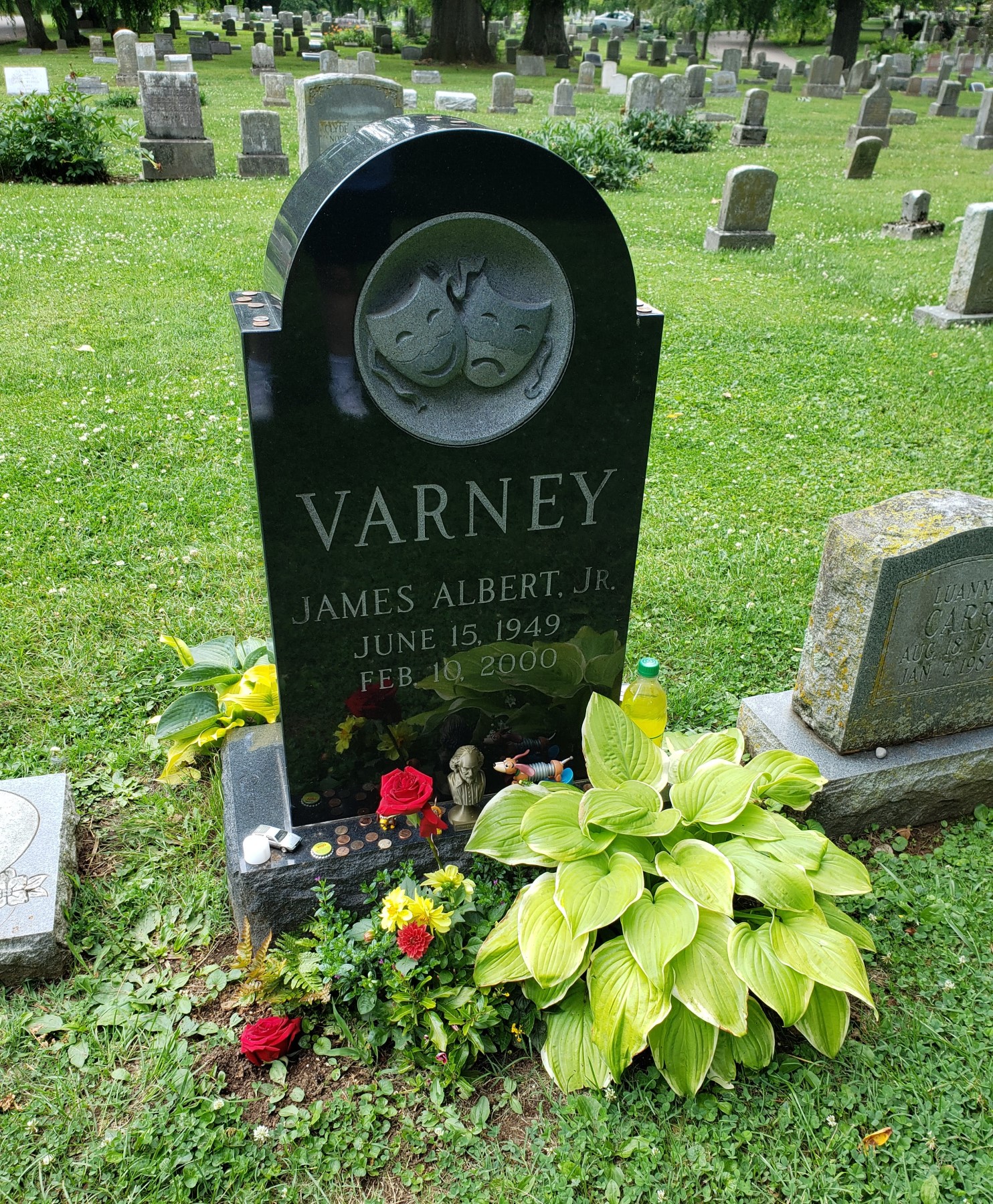
Somewhere in the multiverse is a timeline where this counted toward our list of Presidential burial sites. Our timeline, not so much.
Previously on Midlife Crisis Crossover:
Every year since 1999 Anne and I have taken one road trip to a different part of the United States and seen attractions, wonders, and events we didn’t have back home. From 1999 to 2003 we did so as best friends; from 2004 to the present, as husband and wife. After years of contenting ourselves with everyday life in Indianapolis and any nearby places that also had comics and toy shops, we overcame some of our self-imposed limitations and resolved as a team to leave the comforts of home for annual chances to see creative, exciting, breathtaking, outlandish, historical, and/or bewildering new sights in states beyond our own. We’re the Goldens. This is who we are and what we do.
For 2023 it was time at last to venture to the Carolinas, the only southern states we hadn’t yet visited, with a focus on the city of Charleston, South Carolina. Considering how many battlefields we’d toured over the preceding years, the home of Fort Sumter was an inevitable addition to our experiential collection…
Over halfway into Day One we were already running behind schedule in Kentucky, but wanted to commit at least one act of sightseeing before heading to our next state. Our not-so-obvious choice: Lexington Cemetery! Longtime MCC readers know we’ve visited the final resting places of over half the Presidents of the United States of America, but on rare occasion we’ll pay respects to other notable personalities as well. Lexington has no Presidents to its credit (though we’ll get to an erstwhile Commander-in-Chief later in this miniseries), but a few well-known names were laid to rest there. One of them was even born after 1900.
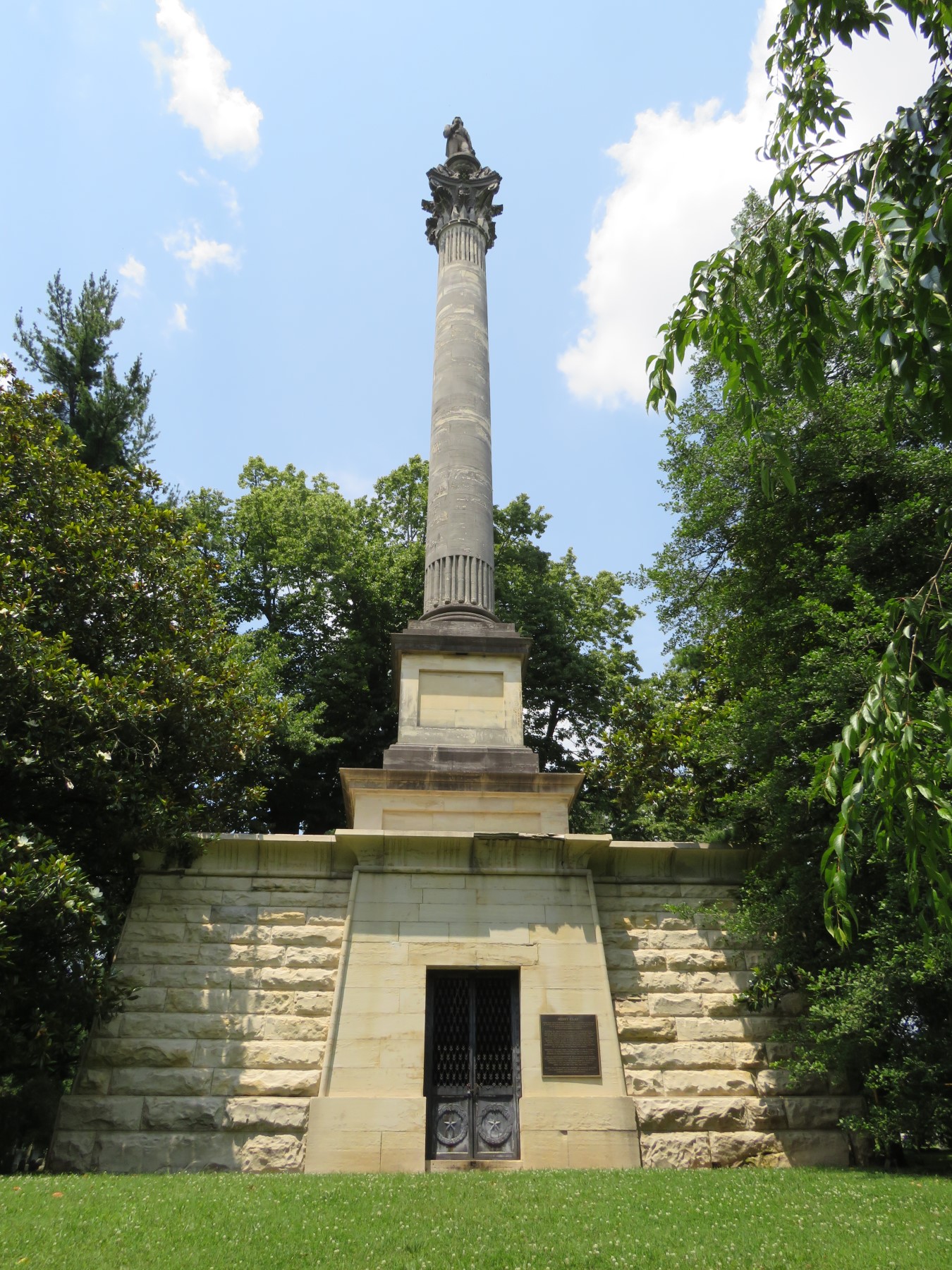
The Henry Clay Monument and Mausoleum, built in 1857. His wife Lucretia joined him upon her passing in 1864.
For Anne the unpaid hobbyist-historian, the resident headliner was the revered politician Henry Clay (1777-1852), who served on both sides of the United States Congress, would be named Speaker of the House and Secretary of State, and co-founded two different political parties. He ran for President three times, but lost to Andrew Jackson in 1824 (placing a distant fourth) and again in 1832 (219-49), then in 1844 to James K. Polk (170-105). As a renowned lawyer and speaker, Clay would —
— oh, wait, his monument already comes with a free book report:
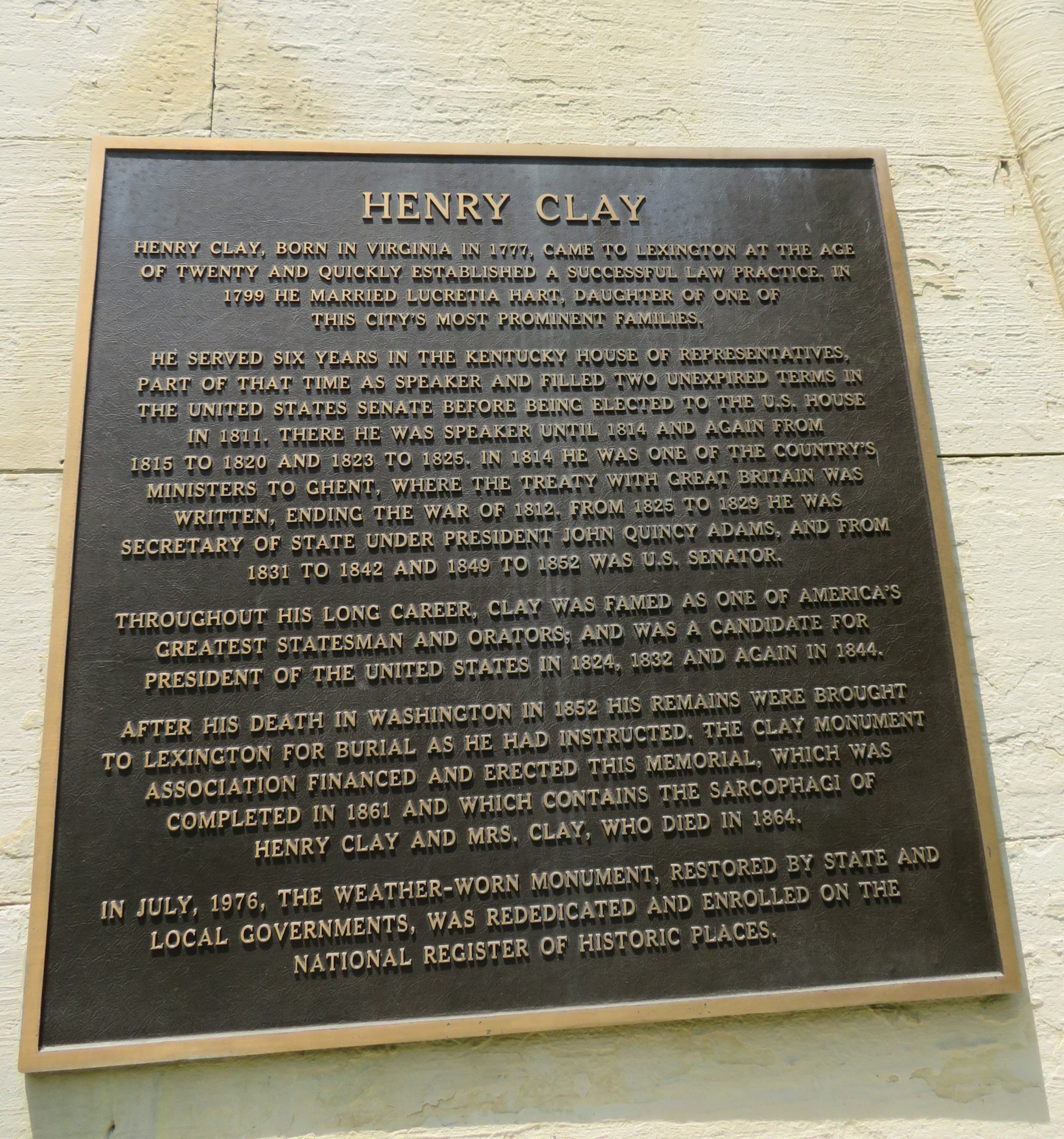
There, you’re all caught up except for some anecdotes.
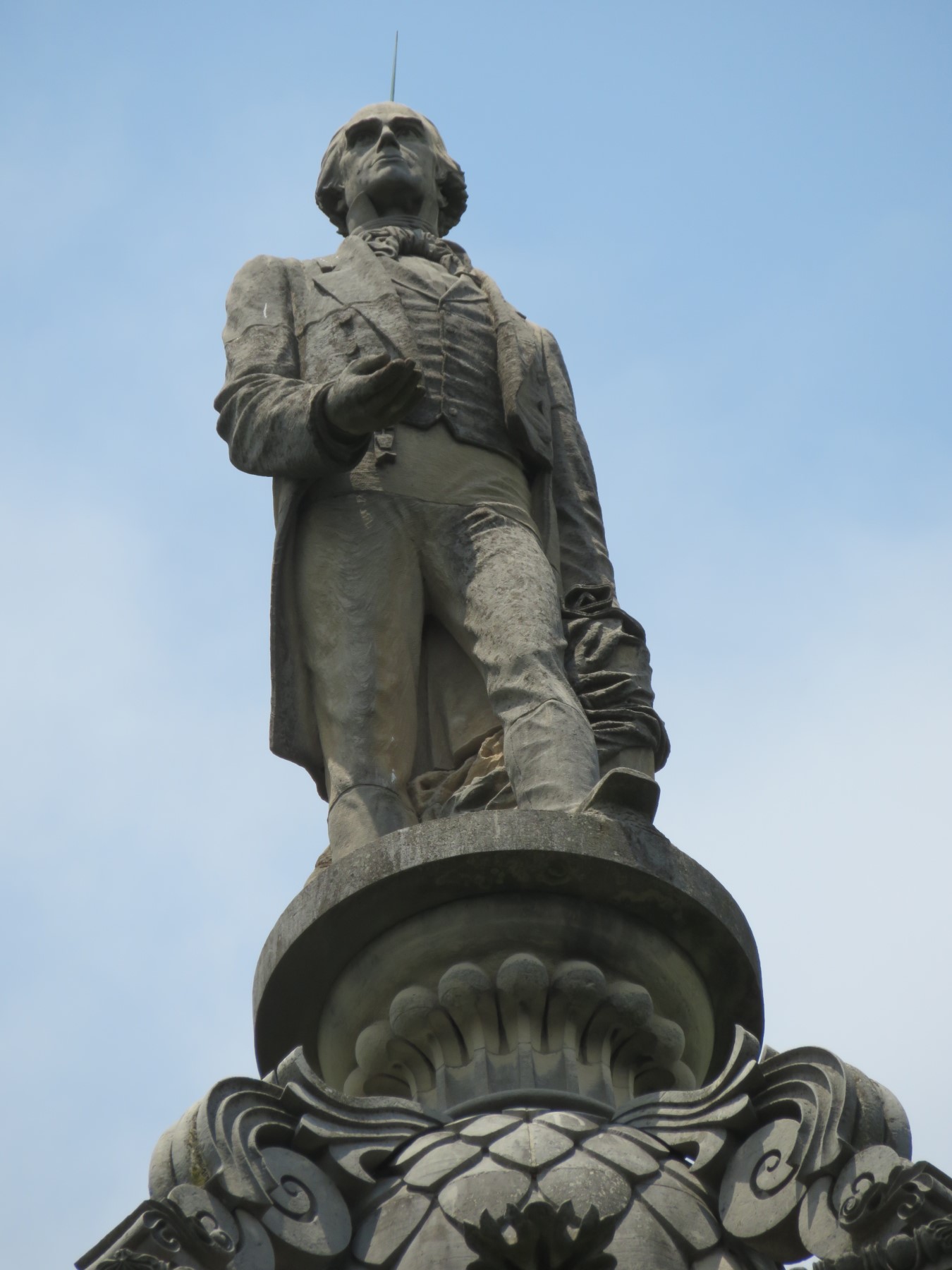
A statue of Clay himself atop the 120-foot-tall column.
Befitting someone of Clay’s stature, the greenery around his monument is classier than we’ve come to expect from cemeteries of a certain age. Next to it stands a titanic American basswood tree that once held the title of National Champion Basswood — i.e., the largest of its kind in the country. Over 200 years old (possibly over 300, per some sources), over 100 feet tall and with a 23-foot trunk circumference, even being third-best of its kind or whatever strikes more than enough awe.

Note the tiny people-shaped ants next to it for comparison.

The basswood’s Certificate of Authenticity.
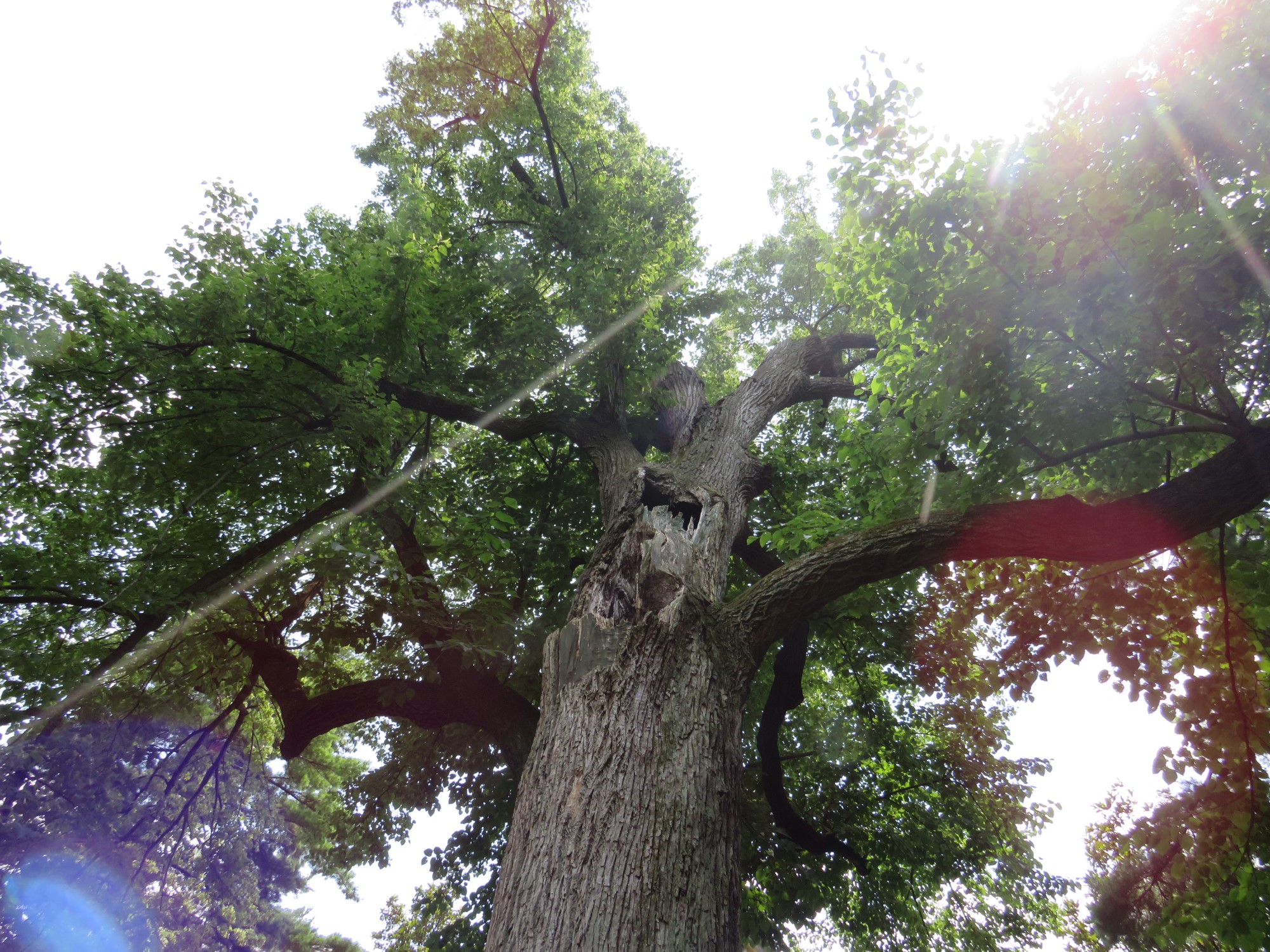
The basswood’s contribution to the cemetery overstory.

A pretty magnolia is among its neighbors.
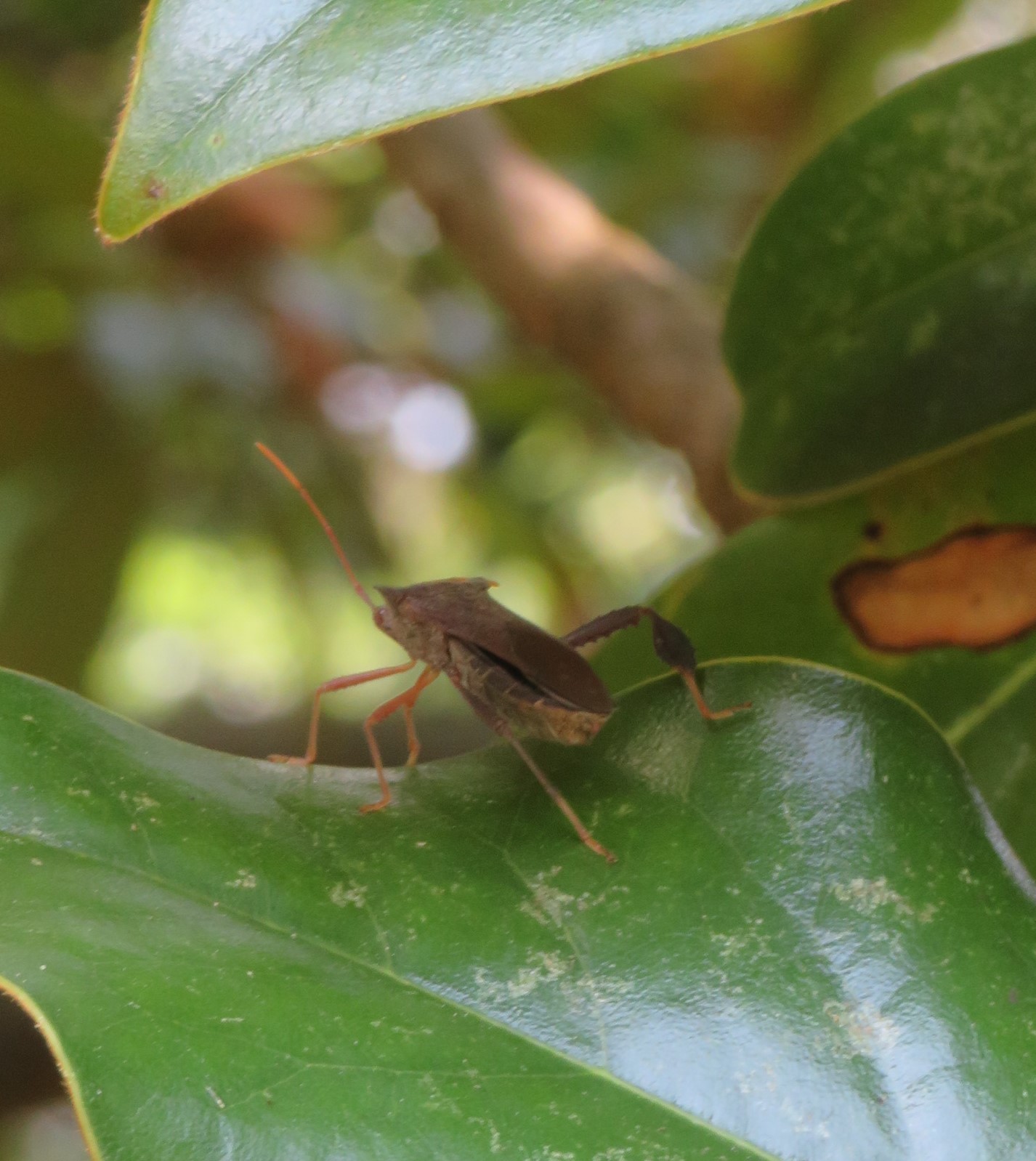
On the opposite end of the organic size spectrum: a leaffooted bug.
For those interested in our multifaceted American history — its wars and its sides, its protagonists and its antagonists — also in the same cemetery is John Hunt Morgan, a Confederate officer and perpetrator of one of the few Civil War battles fought on Union soil. In October 2022 on the occasion of Anne’s annual birthday outing, we learned about Morgan’s role in the Battle of Corydon, the farthest-north incursion the CSA ever managed. Though his forces won that battle, they’d later suffer attrition and surrender. Brigadier General Morgan died in Tennessee in 1864, shot in the back by surprise Union soldiers.
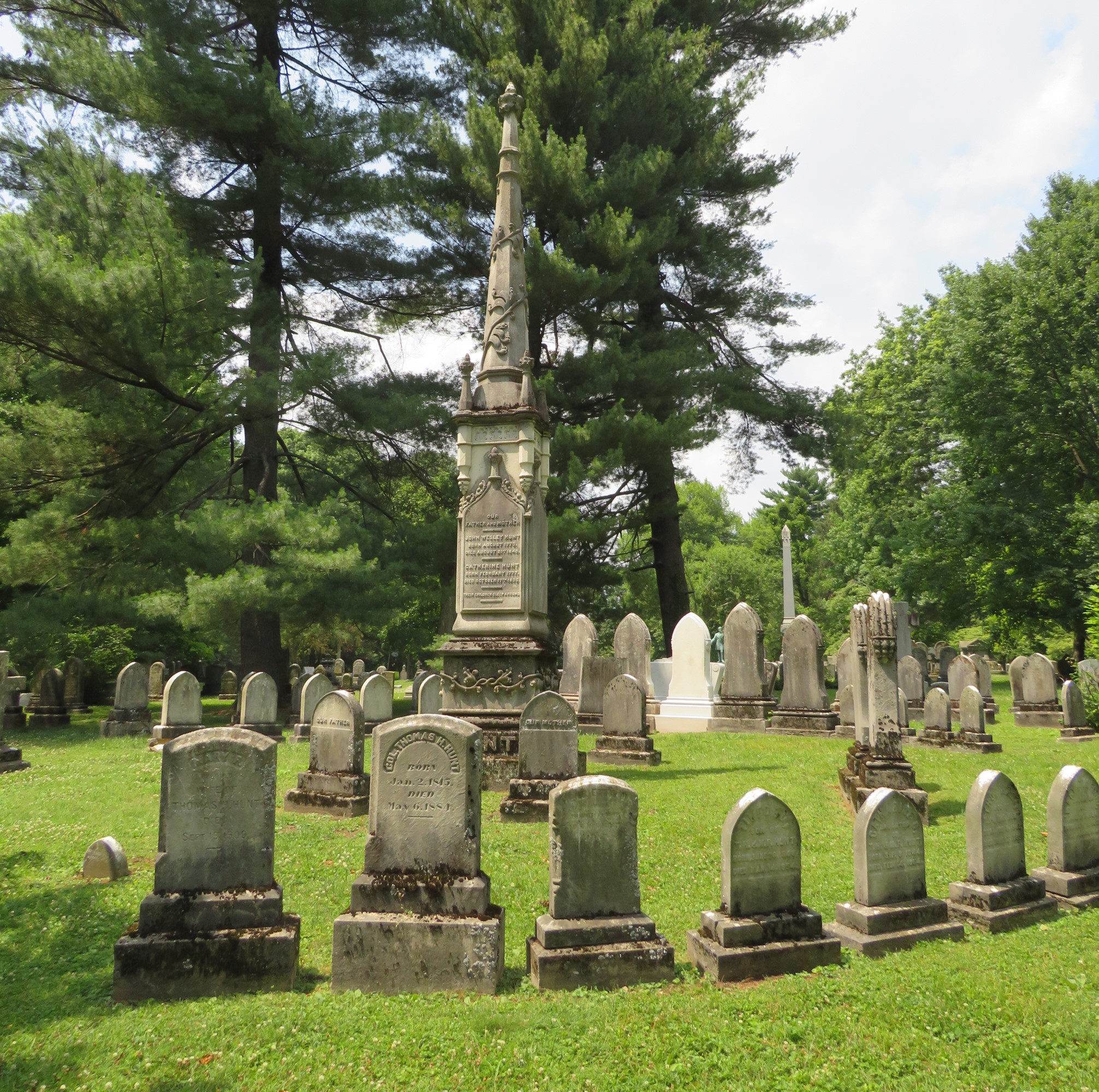
The extended family plot.
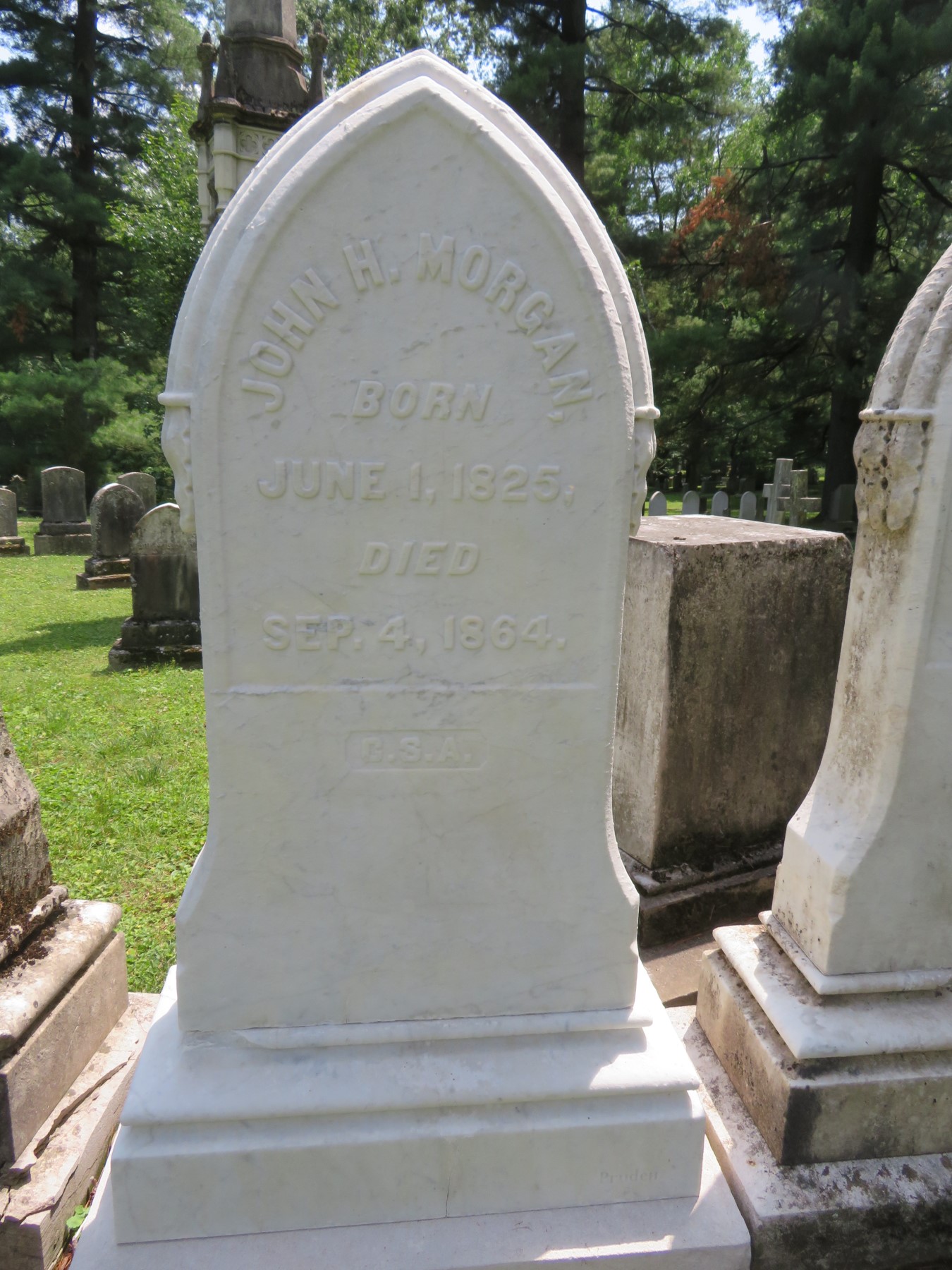
Morgan’s tombstone.
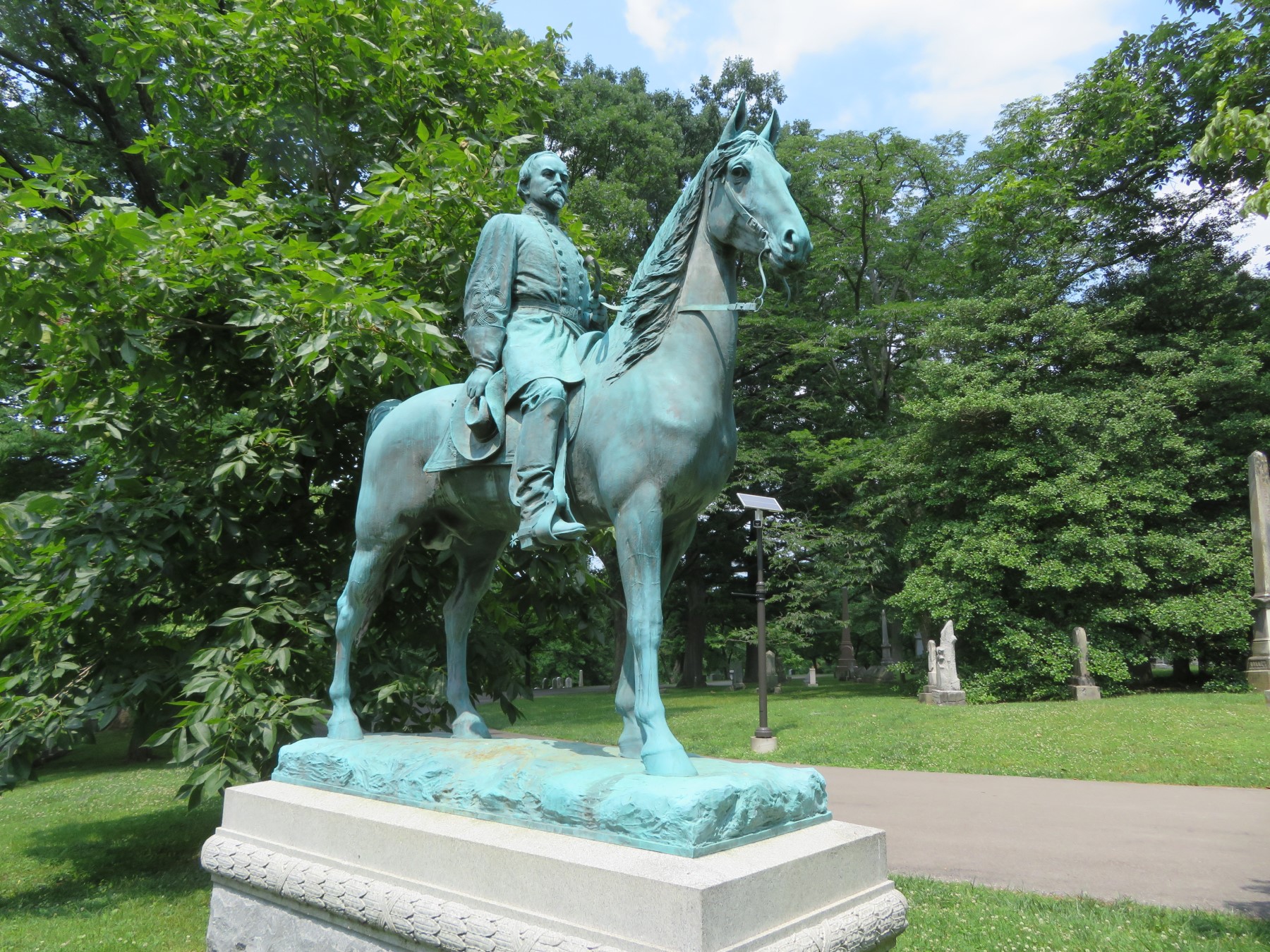
During the height of Confederate Statue Jenga Mania, Morgan and his horse were relocated here in 2018 from the old Fayette County Courthouse lawn.
Also on the wrong side of history: John C. Breckinridge, who served as Vice President under James Buchanan. Age 36 at the start of their term, to this day he remains our all-time youngest VP, a mere sprite compared to the 40-year-olds J.D. Vance and Richard Nixon. He became a Confederate officer like Morgan, escalating through the ranks in four years from brigadier general to Jefferson Davis’ Secretary of War by the end. He fled the country postbellum and lived afar for the next few years.
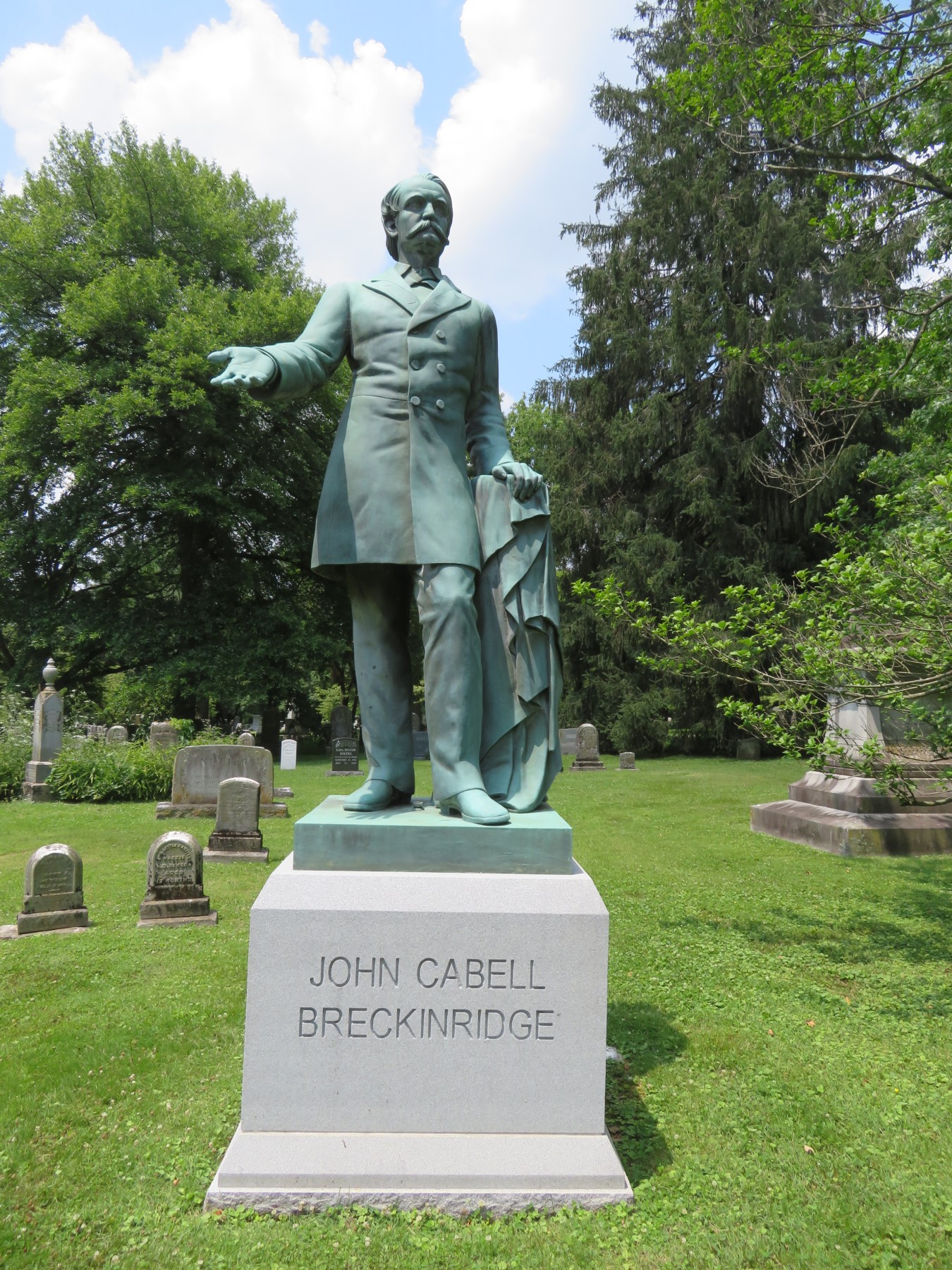
Breckinridge’s statue, sculpted in 1887, was likewise moved from the same place as Morgan’s and around the same time.
The cemetery has plots for both sides’ forces — nearly a thousand soldiers in all, the majority Union.
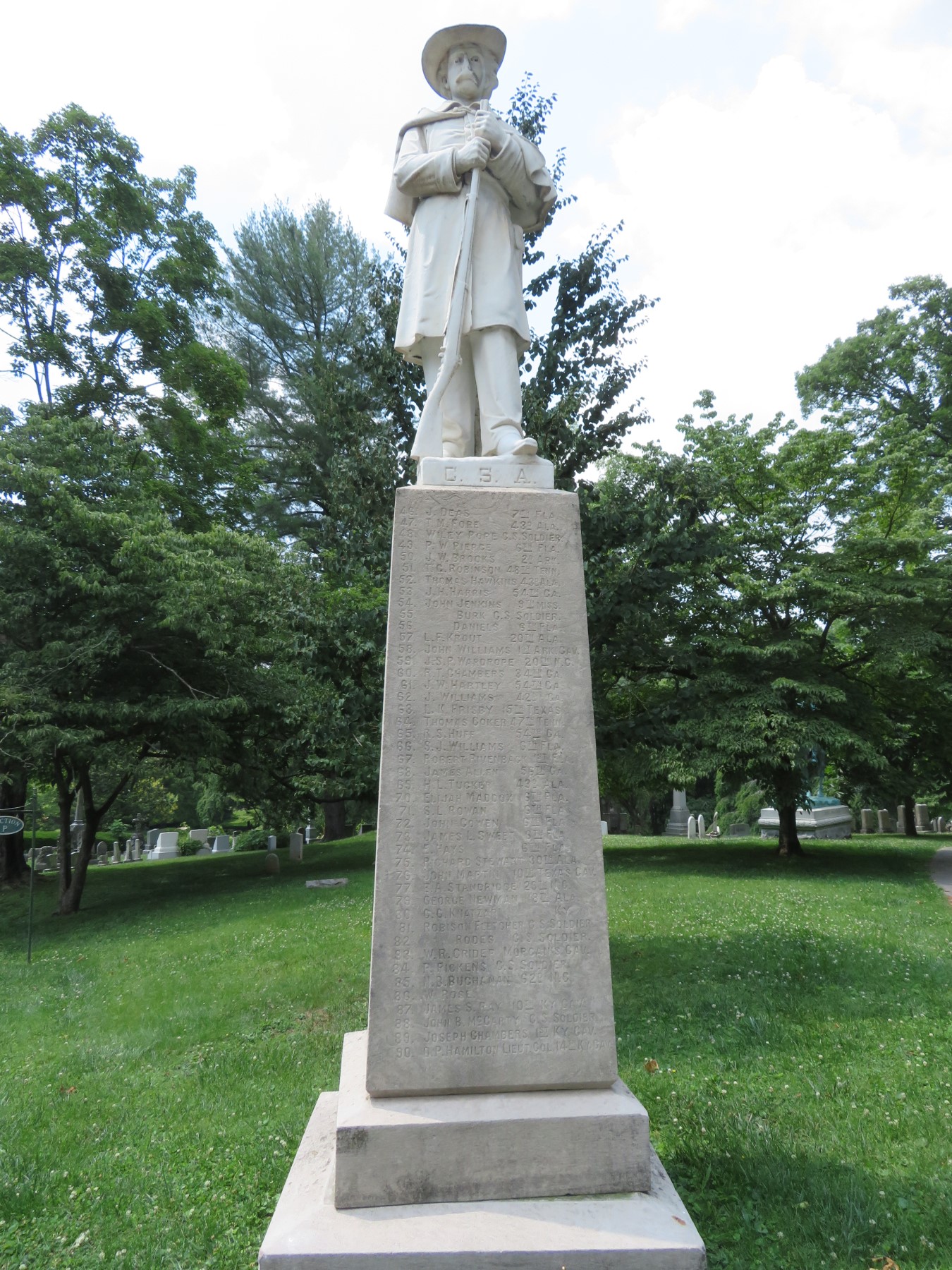
A marker for the 160 CSA soldiers buried here.
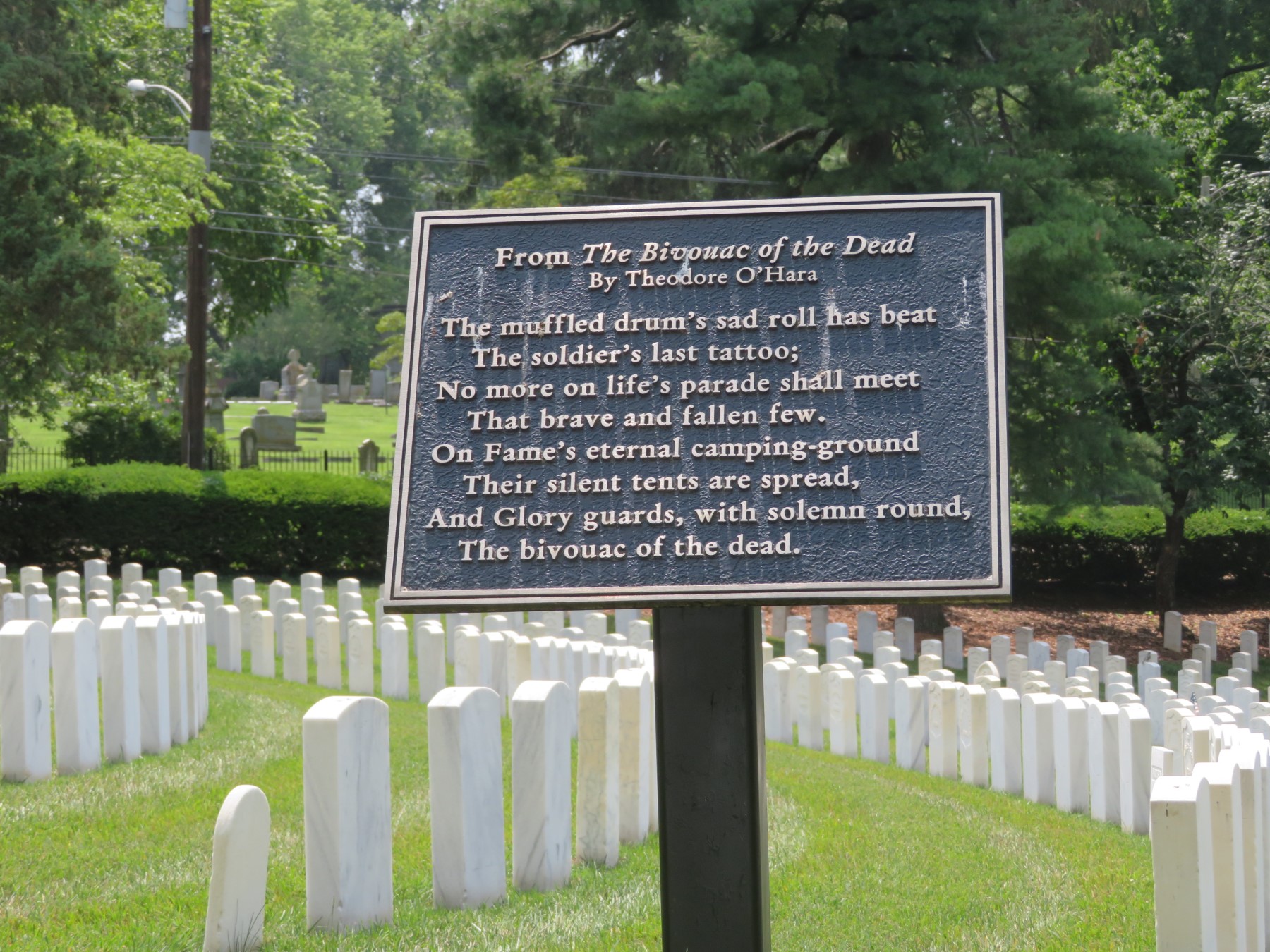
Plaques throughout their section quote “The Bivouac of the Dead”, written by local poet Theodore O’Hara, who served under Breckinridge.
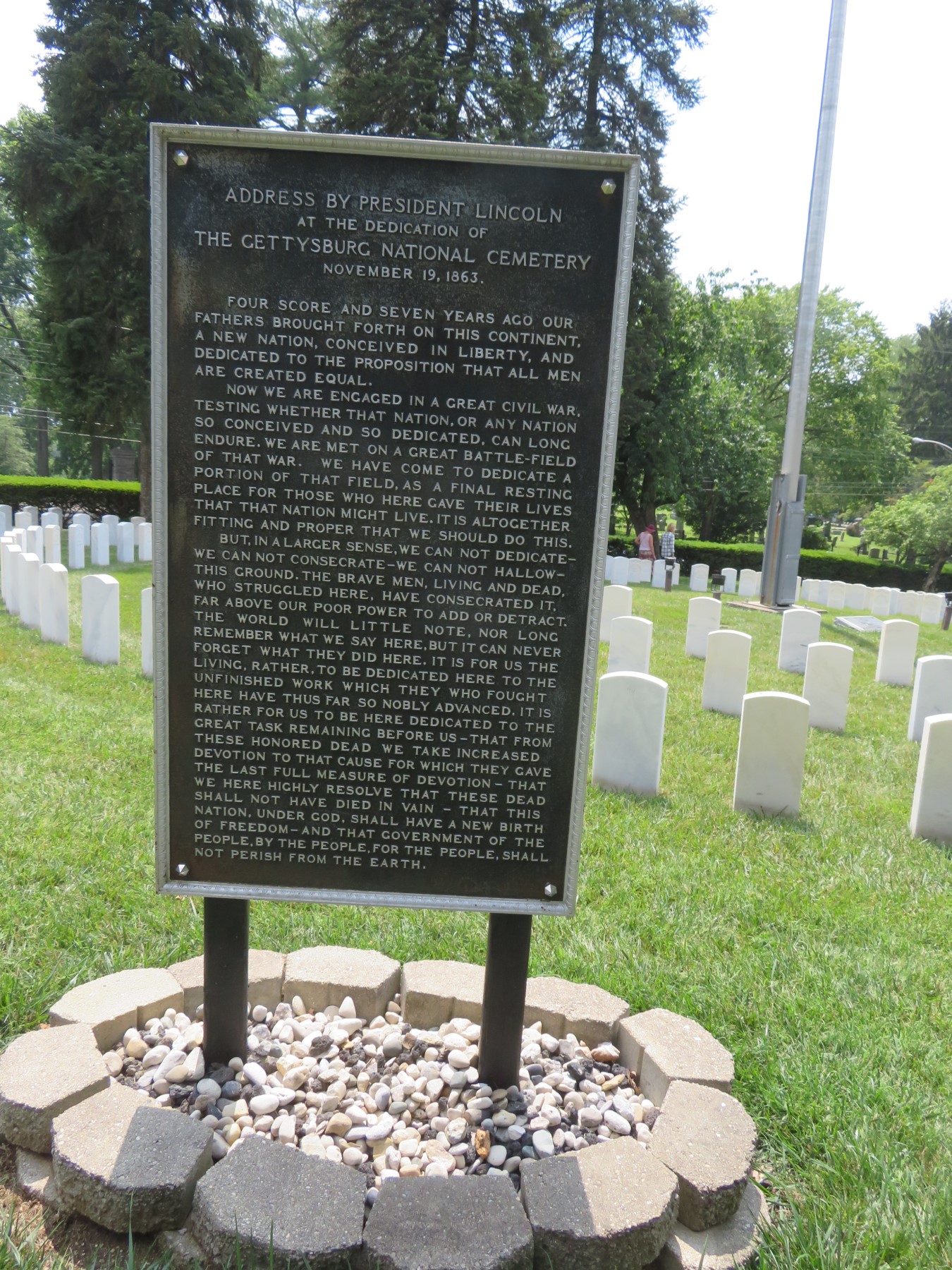
A rebuttal from our side: the full text of the Gettysburg Address.

One more tribute to the sacrifices on behalf of the United States.
I’d mapped out locations for several notable people throughout the grounds, but we couldn’t get to them all — a co-founder of the Daughters of the American Revolution, at least two prominent suffragists, Mary Todd Lincoln’s father, the U.S. Postmaster under President John Adams (who was also Morgan’s grandfather), the first woman to earn a degree in mechanical engineering, and more. Because I am maddeningly mercurial in my priorities, I devoted a ridiculous amount of time on site searching for the grave of one Samuel McCullough, the 19th-century manufacturer of Burrowes Ole Mustard who alleged to have counted Queen Victoria herself among his satisfied customers.
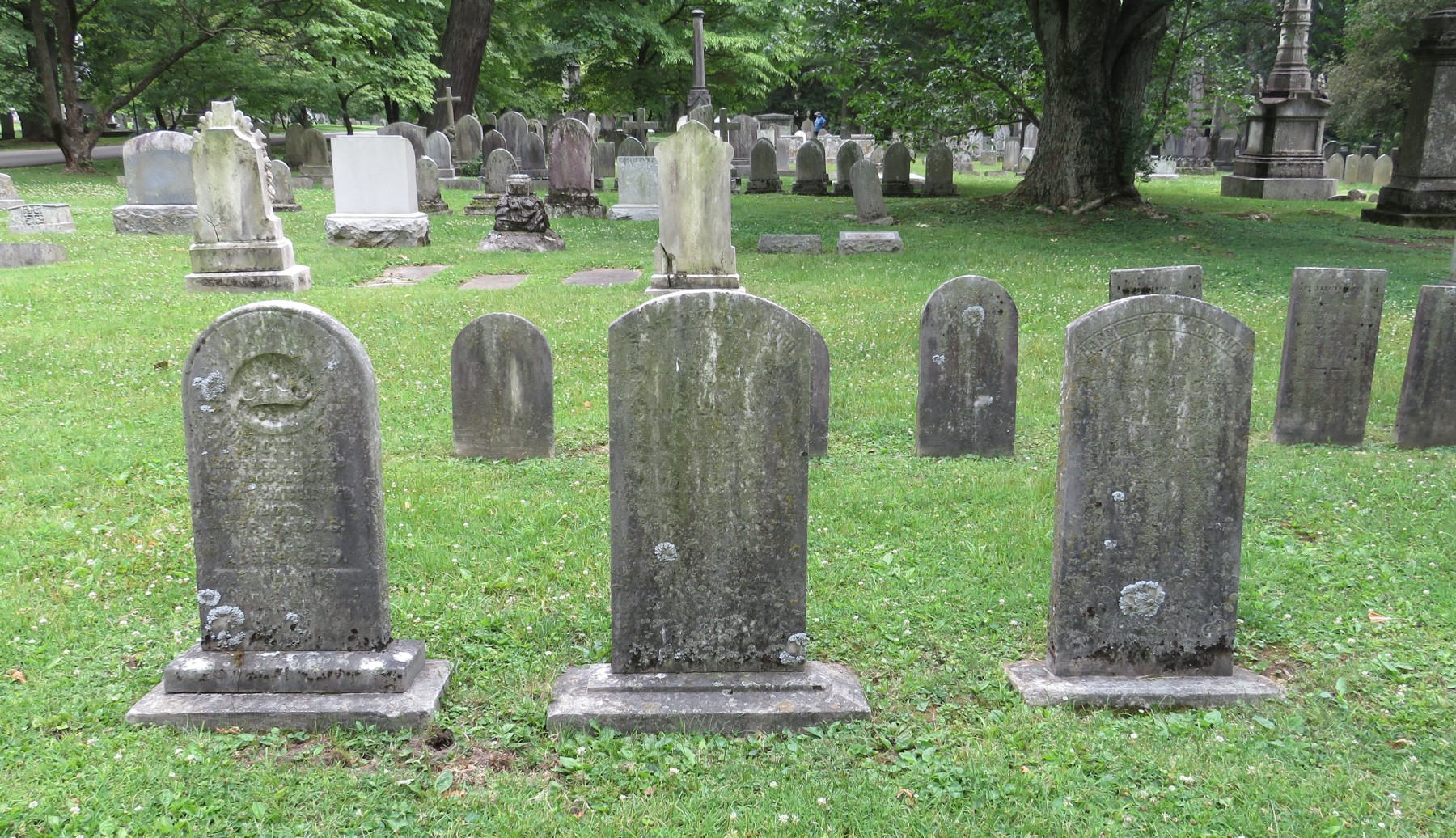
I’m confident the tombstone at right is that of his wife Harriet, but the adjacent headstones were too eroded to make out.
We knew which lot listed McCullough, who passed away in 1873, but most of the markers had faded down to gray illegibility. I could just make out the stone for his wife Harriet Christina Wallis McCullough, who was — fun trivia! — the great-granddaughter of Samuel Davies, the fourth president of Princeton University. His was not among the names we sought out when we visited their very specific cemetery in 2018, but we undoubtedly would’ve walked right by his. All of this is totally normal minutiae to be researching on one’s phone while standing in a cemetery and frittering away supposedly precious minutes of a vacation.
As our tourism priorities went, “the cemetery where Henry Clay is” went from mid-list to Priority One when I discovered a far more familiar and less historical name on the list: Jim Varney! The actor was originally known to Generation X as ubiquitous TV-commercial character Ernest P. Worrell, whose congenially goofy shtick and constant badgering of his offscreen pal (catchphrase: “HEY, VERN!”) would eventually a Saturday morning show that lasted just as long as “Weird Al” Yankovic’s and the Ernest movie series, which might remain an easy go-to punchline for Film Twitter to this day, but the man had his fans.
His most endearing legacy to youngsters of all generations was as the voice of Slinky Dog in the first two Toy Story movies and some of the spun-off video games. Sadly he passed away in 2000 from lung cancer at age 50, younger than Anne and I are now. I cannot wrap my head around that. He’s one of those famous folks whose official age I assumed was eternally Older Than Me. His final film role was another Disney production — Atlantis: The Lost Empire, as the voice of good-guy chef Cookie.
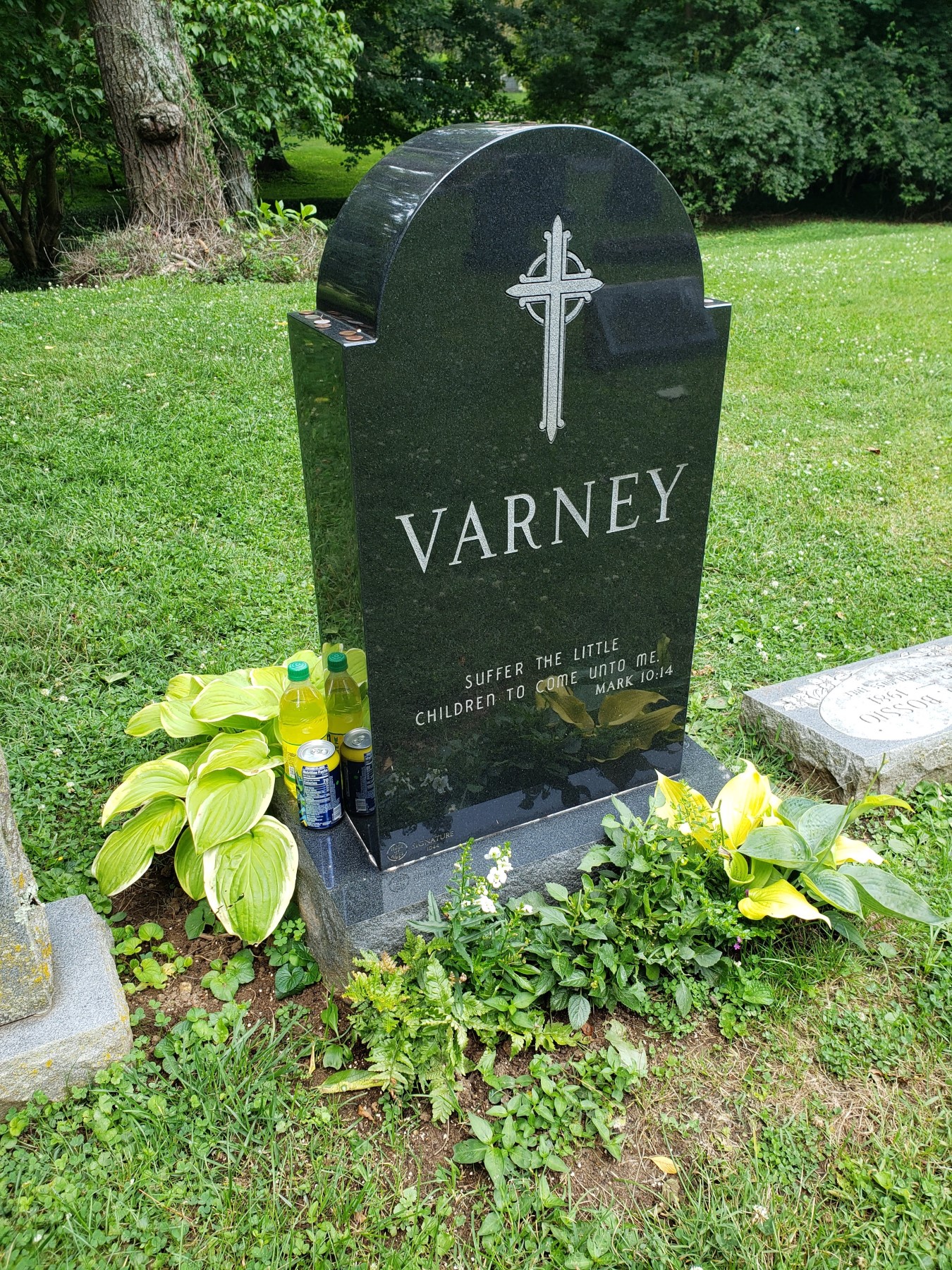
On this side, an ordinary tombstone same as the rest.
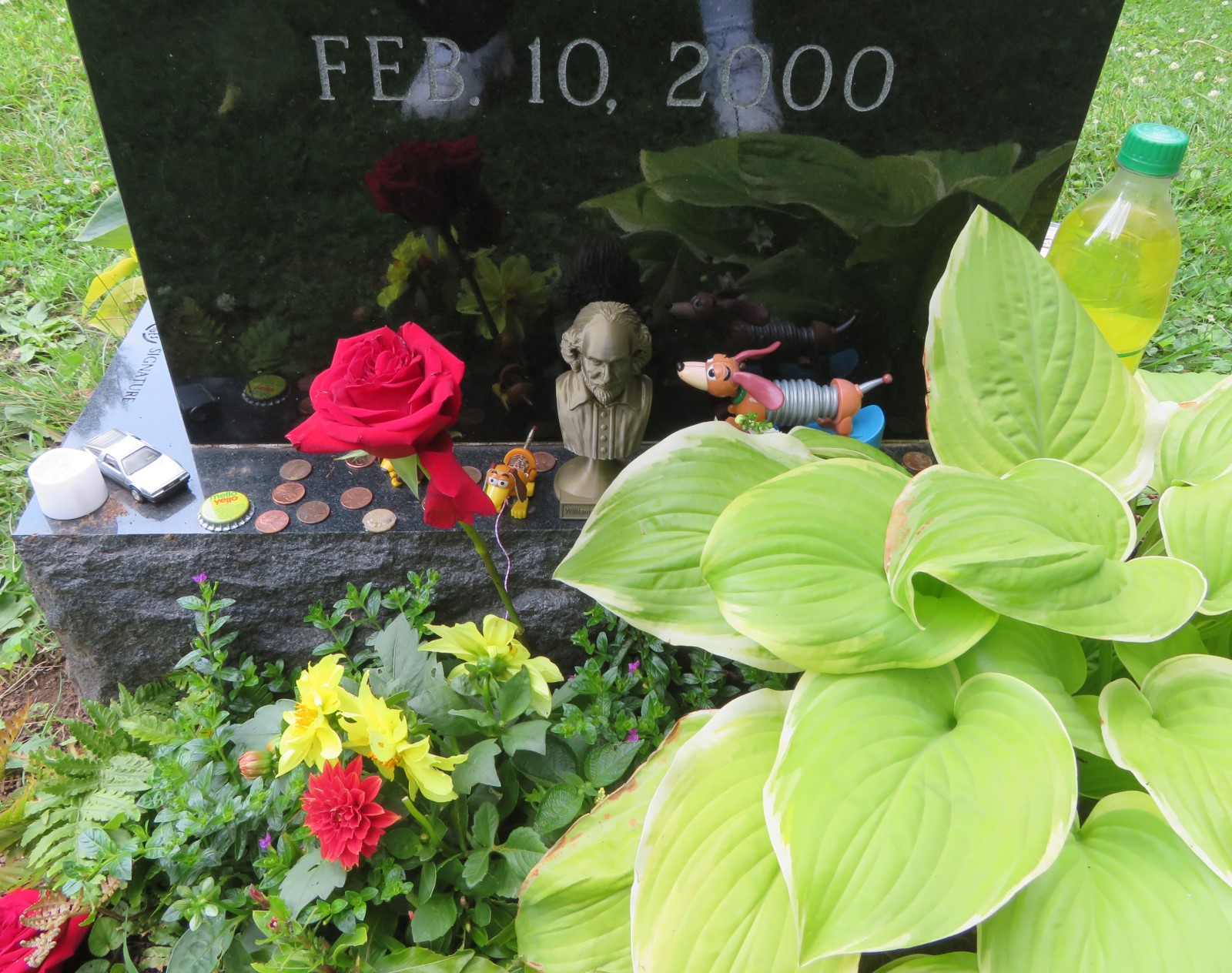
The tributes were on the other side.
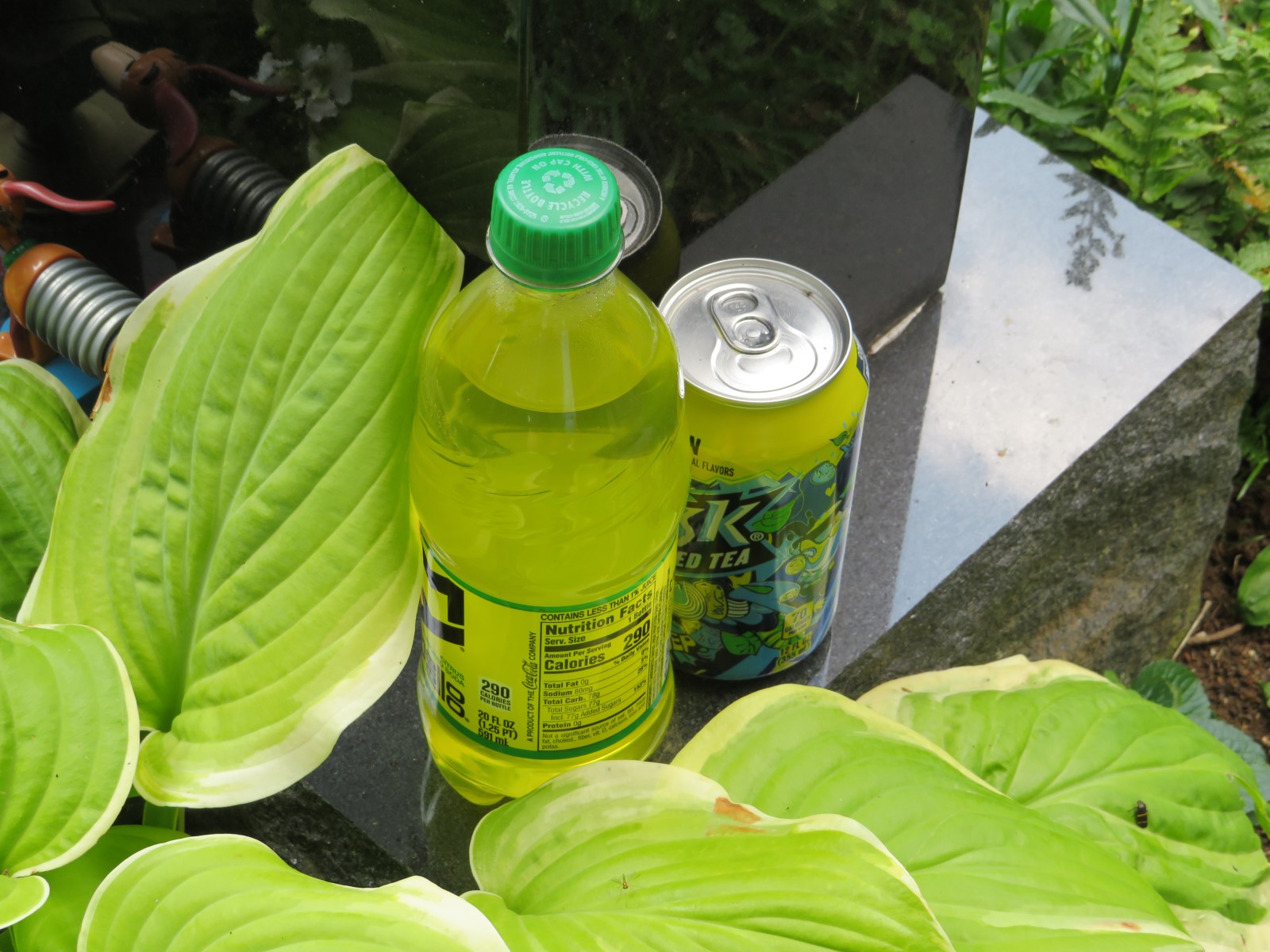
Drinks to pour out in his honor.
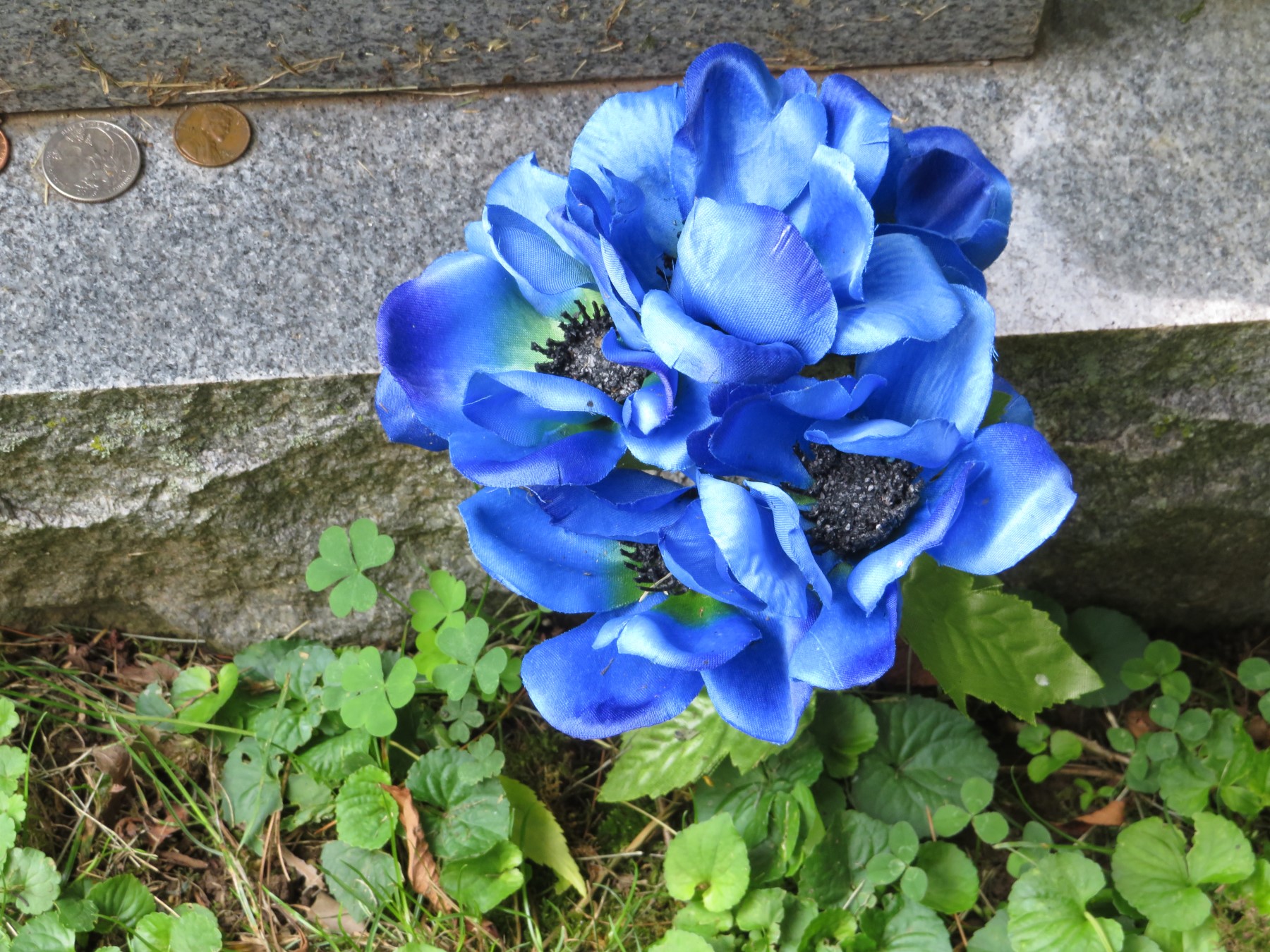
His grave was next to his parents’, where we found a lone pretty flower.
Afterward we made one pit stop…
TOTAL ROAD TRIP MILEAGE AS OF GAS STOP #1: 218.5.
…before heading onward to Tennessee, where we’d be spending our first night. Eventually.
To be continued!
* * * * *
[Link enclosed here to handy checklist for other chapters and for our complete road trip history to date. Follow us on Facebook or via email sign-up for new-entry alerts, or over on BlueSky if you want to track my faint signs of life between entries. Thanks for reading!]
Discover more from Midlife Crisis Crossover!
Subscribe to get the latest posts sent to your email.
 Midlife Crisis Crossover!