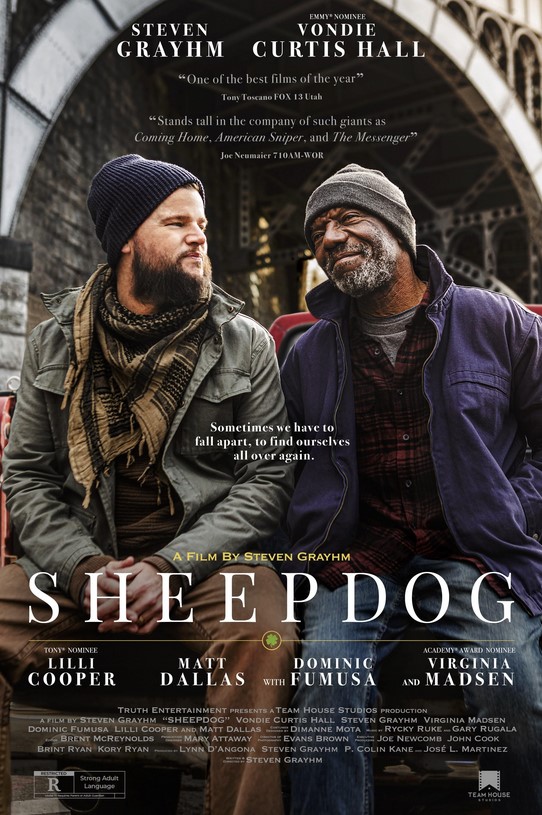
It’s extremely tough finding screen shots of films that don’t yet have a distributor, an official site with a gallery, or a trailer available for Fair Use purposes…
Previously on Midlife Crisis Crossover:
It’s that time again! Since 1992 my hometown of Indianapolis has presented the Heartland International Film Festival, a multi-day, multi-theater celebration of cinema held every October. Local moviegoers have the opportunity see over a hundred new works in the realms of documentaries, narrative features, shorts, and animation made across multiple continents from myriad points of the human experience. Some participants stop in Indy on their grand tour of Hollywood’s festival circuit; some are local productions on shoestring budgets; and a wide spectrum of claims are staked in the innumerable niches between, projects with well-known actors screening alongside indies with enormous hearts.
Heartland’s 33rd edition runs October 10-20, for which I’ve made plans to catch at least eight films in all (Lord willing). Longtime MCC readers know the rule: every film I see in theaters gets its own entry…
Nowadays films about veterans poorly adjusting to post-deployment civilian life (apart from five whole minutes of The Hurt Locker) tend to get made only if the afflicted veteran becomes a bad guy for the heroes to defeat or an antihero to put down like a rabid dog — twisted by their combat traumas into a serial killer, a terrorist, a super-villain, or a politician scheming himself an evil long game. We used to have a smattering of modestly budgeted adult dramas back in the day when Americans first began feeling ashamed of how Vietnam veterans were treated. (Anyone else remember Unnatural Causes, a 1986 TV-movie starring John Ritter and Alfre Woodard, about vets stricken by side effects of Agent Orange?) It’s not like society actually solved that problem and all our veterans feel great now — filmmakers just stopped attempting any serious explorations.
Sheepdog is the sort of movie the major studios believe isn’t worth their time or effort anymore. Its writer/director/producer/star Steven Grayhm (from a Canadian SF series called Between) spent over a decade putting it together anyway. It premiered at the Boston Film Festival last month (the event nearest to where it was filmed) and is currently traveling the circuit, including two showings at Heartland. (We missed its first showing last Friday, which concluded with a post-screening Q&A with Grayhm and two other producers, but that was the same night as ReEntry‘s World Premiere and Q&A.) I have aesthetic quibbles, which tend to be my thing, but Grayhm’s heart is absolutely in the right place.
Grayhm is Calvin Cole, an Army soldier who returns home from four (!) tours of duty in the Middle East, bearing the psychological scars of seeing friends die in combat. His superiors trained him for maximum battlefield acumen, but he comes home a flippant, intimidating rage-monster (an apt Hulk metaphor does come up) who can’t land a job (though we never see any distress over bills or debts) and soon gets arrested for flagrant rage-monstering. With some coaxing from a friend and the legal reps in the room, a deal is struck: he agrees to attend a minimum sixty days of therapy sessions or else he goes to prison. He’s a proud, stubborn manly-man — the sort who thinks I’m an Adult, Nobody Tells Me What to Do (the primary motive for some 90% of all sins worldwide) — so to him, therapy is literally the cruelest punishment in the American legal system.
Enter Academy Award Nominee Virginia Madsen (Sideways, Candyman) as his therapist. She’s new to the practice, having changed career tracks late in life after a bad moment of her own. He sees her inexperience as yet another reason not to trust the process, failing to get she’s a symbol that It’s Never Too Late to Change. Their sessions aren’t exactly Good Will Hunting, but Madsen explores some therapeutic tools and exercises I’ve not personally seen before, which is a start. In one particularly intriguing scene, she brings out a thick file containing veterans’ brain scans and her theoretical analyses comparing their results to the rampant cases of concussion-induced CTE in football players, but her superior shuts her down because We Don’t Talk About CTE. (Now that sounds like a fascinating thesis in the making.) Between their sessions, flashbacks are also interspersed throughout the film revealing his time overseas and his arrest aren’t the only trauma she’ll have to help him reckon.
Meanwhile, our top-billed actor on the call sheet is Vondie Curtis-Hall (Chicago Hope, Justified: City Primeval) as a much older ex-Marine named Whitney who returned from Vietnam only to end up in prison for the next thirty years on charges that could’ve been dismissed on grounds of self-defense if he’d been of sounder mind and white. (Given the film’s depiction of public defenders that makes Jimmy McGill look like Perry Mason, I’d bet he needed a better lawyer, too.) Free at last on good behavior, Whitney tries to locate the remaining long-lost relatives who walked away from him, only to cross paths with Calvin. The two guys realize they have a connection beyond the U.S. military world, but first clash as strangers, leading to Curtis-Hall delivering the film’s most passionate monologue in which he vents decades’ worth of frustration on behalf of disenfranchised, ignored, spat-upon Vietnam vets everywhere. Then he finds a place to stay where he can wait for aggrieved parties to calm down, and disappears from the film for a long stretch as his problems gradually work themselves out.
Grayhm’s sincerity and goals here are beyond reproach, but a few weaknesses come up. The dialogue tries to avoid cliches but comes off clunky in spots. (I chuckled at one line that hints Calvin definitely hasn’t seen Full Metal Jacket, or if he did, Kubrick’s entirely obvious thesis flew over his head.) My wife and I tried to work out the timeline math with Whitney’s family history, which may have been distorted simply because the film took so long to make. Viewers who are new to symbolism in film may be wowed if they think hard enough about the ending, in which Calvin stands and thinks at an actual crossroads.
Most noticeable is the imbalance between our lead and his far more experienced costars. Calvin is meant to be grim, stoic, short-tempered, and prone to poor choices, but Madsen and Curtis-Hall compassionately perform on a level above Grayhm in their scenes together. I’ve no idea whether Grayhm took the lead role himself as a cost-saving measure, because everyone else said no, or he stubbornly insisted no one else in the world could do Calvin justice but him…but I’m left wondering if perhaps a more seasoned actor could’ve elevated the role to better realize his vision.
After the roughness of earlier scenes in which Calvin is about as endearing as a nameless Mob minion, Grayhm seems to grow more comfortable as Calvin unpacks more of his baggage. Once Sheepdog leads us through those showier rough spots and reveals all the tragedies at play, ultimately he offers the reassurance that was his point all along — that there is hope for all those veterans, suffering untold issues and an alarming suicide rate. One place to start is in offering them patience, attention, and hands-on assistance — recognizing they need help even if they’d rather die than admit they have feelings.
…
Meanwhile in the customary MCC film breakdowns:
Hey, look, it’s that one actor!: Lili Cooper (Hazbin Hotel, Fraggle Rock: Back to the Rock) is the key connection between our main veterans — Calvin’s ex-wife and Whitney’s daughter. She has HAD IT with these men, but she has her reasons and eventually softens for the sake of an optimistic ending.
Dominic Fumusa (Nurse Jackie, Godfather of Harlem) is Calvin’s longtime buddy who’s now a policeman and in a position to intervene for his sake. Matt Dallas, once the teen star of ABC Family’s Kyle XY, is now old and plays another veteran pal named Darryl who seems more open about his feelings at first. (As co-producer he was also here in Indy last week with Grayhm for that Q&A.) Maggie Geha (Gotham‘s second, time-jumped Poison Ivy) is Darryl’s barely seen wife.
How about those end credits? No, there’s no scene after the Sheepdog end credits, but their first couple minutes are accompanied by a clip from a 2013 Larry King Live interview with Grayhm and Dallas — evidence of their long, long journey. The thank-you section also contains hundreds of names, at least as long as all the other credits combined. All this really did take a village.
Discover more from Midlife Crisis Crossover!
Subscribe to get the latest posts sent to your email.
 Midlife Crisis Crossover!